The Classics Club Spin Result

The spin number in The Classics Club Spin was announced yesterday. It’s number …

4

which for me is Martin Chuzzlewit by Charles Dickens. The rules of the Spin are that this is the book for me to read by December 31, 2017.
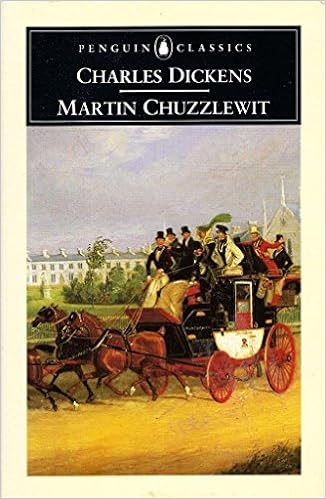
I’m pleased with the result as I’ve been meaning to read this book ever since I saw a TV version. I’ve just checked and it was shown in 1994 with Paul Scholfield as Old Martin Chuzzlewit – that’s 23 years ago! It really is time I read it.

Here’s the blurb from Goodreads:

While writing Martin Chuzzlewit – his sixth novel – Dickens declared it ‘immeasurably the best of my stories.’ He was already famous as the author of The Pickwick Papers and Oliver Twist . Set partly in America, which Dickens had visited in 1842, the novel includes a searing satire on the United States. Martin Chuzzlewit is the story of two Chuzzlewits, Martin and Jonas, who have inherited the characteristic Chuzzlewit selfishness. It contrasts their diverse fates of moral redemption and worldly success for one, with increasingly desperate crime for the other. This powerful black comedy involves hypocrisy, greed and blackmail, as well as the most famous of Dickens’s grotesques, Mrs Gamp. 

Did you take part in the Classics Spin? What will you be reading?

My Friday Post: Call the Dying by Andrew Taylor

Book Beginnings Button

Every Friday Book Beginnings on Friday is hosted by Gillion at Rose City Reader where you can share the first sentence (or so) of the book you are reading, along with your initial thoughts about the sentence, impressions of the book, or anything else the opener inspires.

This week’s first paragraph is from Call the Dying by Andrew Taylor, crime fiction set in the 1950,  the seventh in Taylor’s Lydmouth series.

Call the Dying (Lydmouth, #7)

It begins:


I saw a ghost today. It was very foggy, I know, but I’m sure I wasn’t mistaken. He was coming through the door of Butter’s, and he looked like a ghost because of the fog. But he really was a ghost from a time that’s dead and gone.

Also every Friday there is The Friday 56, hosted by Freda at Freda’s Voice. These are the rules:

  1. Grab a book, any book.
  2. Turn to page 56, or 56% on your eReader.
  3. Find any sentence (or a few, just don’t spoil it) that grabs you.
  4. Post it.
  5. Add the URL to your post in the link on Freda’s most recent Friday 56 post.

Page 55 (page 56 is blank)

I’ve done nothing wrong. Not really. So it’s not fair. It’s as if everyone’s ganging up against me.

Or is it just me? Am I going mad? did I really see him?

I’m afraid. I’m lonely, too. Keep busy that’s the answer. Make my self tired. You don’t have time to feel afraid when you’re deadbeat, you just sleep instead.

I like the thought of sleeping. I can’t remember when I last had an unbroken night.

From the back cover:

Love and need make unexpected bedfellows, and both are blind. As the grip of a long hard winter tightens on Lydmouth, a dead woman calls the dying in a seance behind net curtains. Two provincial newspapers are in the throes of a bitter circulation war. A lorry-driver broods, and an office boy loses his heart.

Britain is basking in the warm glow of post-war tranquillity, but in the quiet town of Lydmouth, darker forces are at play. The rats are fed on bread and milk, a gentleman’s yellow kid glove is mislaid on a train, and something disgusting is happening at Mr Prout’s toyshop.

Returning to a town shrouded in intrigue and suspicion, Jill Francis becomes acting editor of the Gazette. Meanwhile, there’s no pleasure left in the life of Detective Chief Inspector Richard Thornhill. Only a corpse, a television set and the promise of trouble to come.

I bought this book a couple of years ago, keen to read it as I’d enjoyed Taylor’s Roth trilogy so much.

My Week in Books: 15 November 2017

This Week in Books is a weekly round-up hosted by Lypsyy Lost & Found, about what I’ve been reading Now, Then & Next.

IMG_1384-0

A similar meme,  WWW Wednesday is run by Taking on a World of Words.

Now:

Victoria: A Life

I’m still reading Victoria: a Life by A N Wilson and have just finished Part One, ending with the death of William IV at 2.20 on the morning of 20 June 1837. Victoria is woken to the news that she is now Queen.

The Skeleton Road

I’ve also started The Skeleton Road by Val McDermid, the third  of her DCI Karen Pirie novels.  So far I’m finding it a bit slow going with rather a bewildering number of characters introduced one after the other. When a skeleton with a bullet hole in its skull is found at the top of a crumbling, gothic building in Edinburgh Karen and her Historic Cases Unit is called in to identify the body and investigate how long it has been there.

Then:

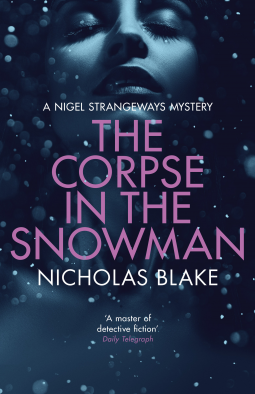
I’ve just finished The Corpse in the Snowman by Nicholas Blake, first published in 1941 as The Case of the Abominable Snowman. This is a manor house murder mystery  in which it first appears that Elizabeth Restorick has committed suicide. Or was it murder? Nigel Strangeways and Inspector Blount investigate.

Next:

Call the Dying (Lydmouth, #7)

I’m not sure, but Andrew Taylor’s Call the Dying caught my eye this morning when I passed the bookshelves in the hall. It’s set in the 1950s in the grip of a long, hard winter when dark forces are at play – a dead woman calls the dying in a seance, in a town shrouded in intrigue and suspicion. This is the seventh in Taylor’s Lydmouth series. I haven’t read any of the earlier books and I’m hoping that won’t matter.

Have you read any of these books?  Do any of them tempt you? 

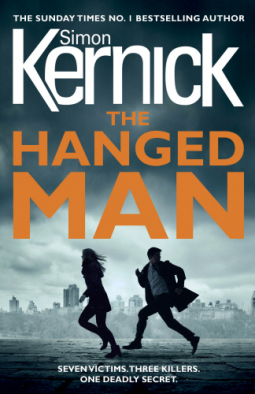
The Hanged Man by Simon Kernick

Expected publication date 16 November 2017

Review copy from the publishers, Random House, Century, via NetGalley

My rating: 2.5 stars

In December 2016 I read the first book in this series The Bone Field by Simon Kernick. It ended on a cliff-hanger in the last sentence (just when you thought it was all over). The Hanged Man is the second book in the series and refers back to events in The Bone Field, but in enough detail so it probably doesn’t matter much if you haven’t read the first book. It’s packed full of action right from the opening chapter as Hugh Manning and his wife are on the run from some very dangerous and violent people who are out to kill them. The police are also looking for Hugh as he is the only witness to what had happened at the farmhouse (dubbed ‘The Bone Field‘) where the bodies of seven women had been found.

Ray Mason, suspended from the police after the events told in The Bone Field, and now exonerated, is back on the case, working with Dan Watts in the National Crime Agency. The main suspects are the Kalamans,  brother and sister, Alastair and Lola Sheridan and a mysterious character called Mr Bone. It’s  told through different characters’ viewpoints, including Ray’s partner, ex-cop and now a PI, Tina Boyd. With so many characters acting as narrator it’s useful that Kernick uses the first person when telling what happens as seen through Ray’s eyes, whereas the rest are told in the third person.

It’s complicated, maybe over-complicated and I found myself racing through it. There are too many characters and sub-plots. Some characters are like cardboard cut-outs, the ‘baddies’ really bad and the ‘goodies’, particularly Ray Mason, who breaks all the rules, not much better. It’s a world full of corruption and secrets, where life is of little account and murder commonplace, and nobody is safe. But because I knew the identities of the criminals from the start there is no mystery – it’s just a matter of who will get to Manning first, the police or the villains and will the villains be caught? There’s climatic ending – but is this really the end …?

My thanks to the publishers for a review copy via NetGalley.

Amazon UK
Amazon US


A Pile of Books

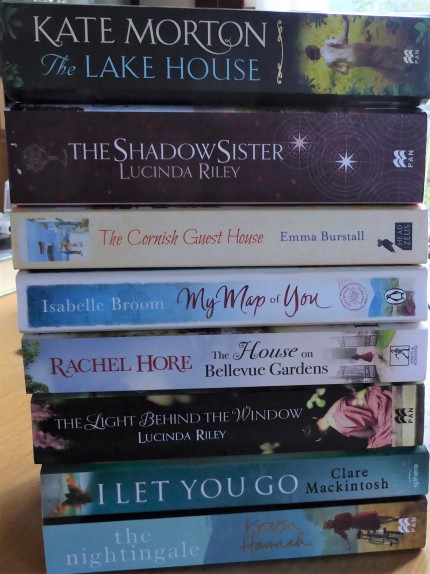
I had a lovely surprise yesterday when a friend gave me this pile of books – which another friend had given to her.

Pile of Bks Nov17 P1020312

Some are by authors I’ve never heard of before and am not sure what to expect. From top to bottom they are:

  • The Lake House by Kate Morton (on of my favourite authors), historical fiction spanning different time periods and characters, centred on the disappearance of a baby boy from his home in 1933.
  • The Shadow Sister by Lucinda Riley, historical fiction and book three in The Seven Sisters series. I haven’t read the first two books. There’s an antiquarian bookshop, and links with Beatrix Potter and Alice Keppel.
  • The Cornish Guest House by Emma Burstall, the second book in the Tremarnock series (I haven’t read the first book), set in a small fishing village, crowded with holidaymakers.
  • My Map of You by Isabelle Broom, set on the Greek island of Zakynthos (Zante), where Holly has inherited a house.
  • The House on Bellevue Gardens by Rachel Hore – different characters seeking refuge in Leonie’s house in a tranquil London Square.
  • The Light Behind the Window by Lucinda Riley, in which Emilie inherits a chateau in southern France and an old notebook of poems that leads her in search of Sophia and a web of deception in occupied France in 1943.
  • I Let You Go by Clare Mackintosh, a book already on my list of books I want to read, about Jenna Gray as she moves to a ramshackle cottage on the remote Welsh coast, trying to escape the memory of the car accident, haunted by her fears and grief.
  • The Nightingale by Kirstin Hannah, another book on my list of books I want to read. This is also historical fiction about two French sisters during World War 2 and in 1955.

These should keep me going for quite a while – before I pass them on to another reader.

If you’ve read any of these books please let me know what you thought of them!


The Fear Index by Robert Harris

The Fear Index

The Fear Index by Robert Harris is a fast-paced story set in the world of high finance and computer technology but it didn’t appeal to me as much as the other books by him that I’ve read. It’s about scientist Dr Alex Hoffman, who together with his partner Hugo Quarry, an investment banker, runs a hedge fund based in Geneva, that makes billions. Alex has developed a revolutionary form of artificial intelligence that tracks human emotions, enabling it to predict movements in the financial markets. It’s built around the standard measure of market volatility: the VIX or ‘Fear Index’.

Alex wakes up one morning in the early hours to find an intruder has managed to bypass the elaborate security of the house. He challenges him only to receive a blow to his head that knocks him out and the intruder escapes. That is just the start of his troubles. A brain scan indicates he may have MS or possibly dementia and he is advised to take further advice, which of course, he doesn’t want to do. It appears that someone is out to destroy him and his company and even worse it soon looks as though this will cause a major global economic crisis. He is at a complete loss as to who it can be. It’s someone who has infiltrated into all areas of his life, affecting his marriage as well as his business.  He even begins to doubt his sanity.

On the one hand it helped me understand a bit more about hedge funds and how they operate but I got lost in the computer technology details. The characters are all not particularly likeable, but it’s definitely a page turner with plenty of suspense as the story raced to a conclusion, and it kept me puzzling over what or who was really causing the paranoia and violence. I thought it began well but didn’t find the ending very illuminating or satisfying and was left wondering what it was really all about.

I liked the chapter headings with extracts from books such as Charles Darwin’s On the Origin of Species and The Descent of Man and Mary Shelley’s Frankenstein which made me wonder if the book was about the evolution of man into machine. Just an idea – if you’ve read the book what did you make of it all?

  • Hardcover: 336 pages
  • Publisher: Hutchinson; First Edition, First Printing edition (29 Sept. 2011)
  • Language: English
  • ISBN-10: 0091936969
  • ISBN-13: 978-0091936969
  • Source: Library book
  • My rating: 3*