Six Degrees from It to The Vanishing Box

I love doing Six Degrees of Separation, a monthly link-up hosted by Kate at Books Are My Favourite and Best. Each month a book is chosen as a starting point and linked to six other books to form a chain. A book doesn’t need to be connected to all the other books on the list, only to the one next to it in the chain.

This month the chain begins with It by Stephen King – in the storm drains, in the sewers, IT lurks, taking on the shape of every nightmare, each one’s deepest dread. Sometimes IT appears as an evil clown named Pennywise and sometimes IT reaches up, seizing, tearing, killing…

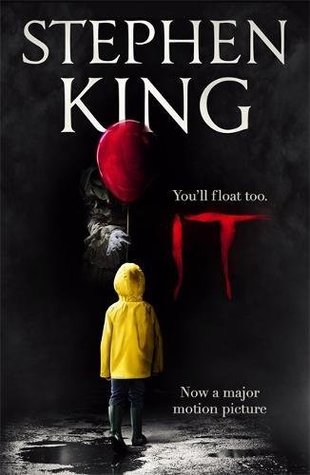
It

I haven’t read It but I have read  a few of Stephen King’s books including Joyland, which is a ghost story, a love story, a story of loss and heartbreak, set in a funfair. It’s also a murder mystery and utterly compelling to read. (my review)
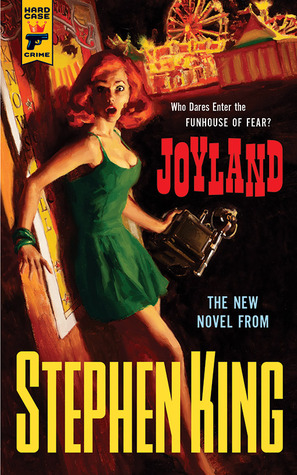
13596166

The next link in my chain is to an another ghost story – Dark Matter by Michelle Paver, a chilling book, very chilling, both in the setting in the High Arctic and in atmosphere.

Dark Matter

It’s a ghost story in the form of a diary – that of Jack Miller who in 1937 was part of an expedition to the High Arctic to study its biology, geology and ice dynamics and to carry out a meteorological survey. As the darkness descends, Jack is left alone at the camp and his nightmare really begins. And it is very scary! (my review)

I’m moving away from dark and scary stories to another book with ‘matter in its title – to Alive, Alive Oh! And Other Things That Matter by Diana Athill.

Alive, Alive Oh!: and Other Things that Matter

It’s only a short book but it covers a wide range of Diana Athill’s memories, many images of beautiful places, and the friends and lovers she has known. The chapters follow on chronologically but are unconnected except for the fact that they demonstrate her love of life. It was heart breaking to read her remarkably candid account of  the miscarriage she had when she was in her early 40s and she nearly died. (my review)

Katherine of Aragon also suffered from miscarriages during her marriage to Henry VIII. Antonia Fraser’s Six Tudor Queens: Katherine of Aragon, the True Queen is fictional biography at its most straight forward, written in an uncomplicated style.
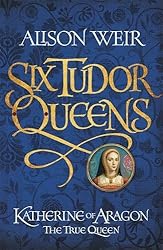
It’s a long and comprehensive study, told from Katherine’s point of view it follows her life from the time she arrived in England at the age of sixteen to marry Prince Arthur, the elder of Henry VII’s two sons, to her death in 1536. (my review)

Another Katherine living in the Tudor period is Lady Katherine Grey, who was one of the heirs to the throne and a rival to the Tudor Queens, Mary and Elizabeth I. Leanda de Lisle tells her story and that of her sisters in The Sisters Who Would Be Queen: The tragedy of Mary, Katherine and Lady Jane Grey. 

The Sisters Who Would Be Queen


Lady Jane Grey  is remembered in British history as the monarch with the shortest reign… just nine days. In 1553 after the death of her cousin, the protestant King Edward VI she was proclaimed Queen in place of his Catholic half sister, Mary Tudor. Mary overthrew Jane 13 days later, and she was tried for treason, found guilty and was executed. (this is one of my TBR books)

Lady Jane Grey features in The Vanishing Box by Elly Griffiths, the fourth book in the DI Stephens and Max Mephisto series.
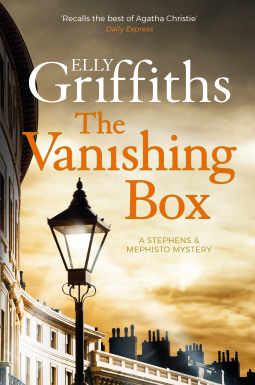
Lily Burtenshaw was murdered. She was found in her room tied to a chair, leaning forward and pointing to an empty crate with ‘King Edward Potatoes’ written on the side. She had been posed to look like Lady Jane Grey in the painting by Delaroche, of her execution at the moment she was being helped to lay her head upon the block. (my review)

My chain began with a book  about a scary clown, moved to a scary funfair to yet another scary book set in the Arctic. It then travelled to a different matter – that of miscarriages, then to the sister of a short-lived queen and finally to a murder mystery in which the victim was posed as Lady Jane Grey.  From America to England in both the past and the present, from fiction to historical biography and then to a murder mystery – from horror to murder in six steps!

Next month January 6, 2018), the chain will begin with an international bestseller (that I haven’t read) – Alexander McCall Smith’s No.1 Ladies Detective Agency.

A – Z of TBRs: M, N and O

I’m now up to M, N, and O in my A – Z of TBRs, a series of posts in which I take a fresh look at some of my TBRs to inspire me to read more of them by the end of the year, or maybe to decide not to bother reading them after all. These TBRs are all physical books – I’ve not included e-books. Looking at my books like this is encouraging me to read more of my own books as I’ve read two of the books I’ve featured in the earlier posts.

I’m enjoying searching my shelves – finding books I’d forgotten were there (the disadvantage of shelving books behind others).

MNO bks P1020320

– is for Mercy by Jodie Picoulta book I’ve had since 2008. LibraryThing predicts that I probably won’t like this book. Two cousins are driven to extremes by the power of love, as one helps his terminally ill wife commit suicide and the other becomes involved in a passionate affair with his wife’s new assistant.

I bought this book because I’ve read and enjoyed three other books by Jodie Picoult.

According to the sworn voluntary statement of James MacDonald, his wife had been suffering from the advanced stages of cancer and had asked him to kill her. Which did not account for the raw scratches on his face, or the fact that he had traveled to a town he had never set foot in to commit the murder. Maggie had not videotaped her wishes, or even written them down and had them notarized to prove she was of sane mind – Jamie said that she hadn’t wanted it to be a production, but a simple gift.

What it boiled down to, really, was Jamie’s word. Cam’s only witness was dead. He was supposed to believe the confession of James MacDonald solely because he was a MacDonald, a member of his clan. (page 39)

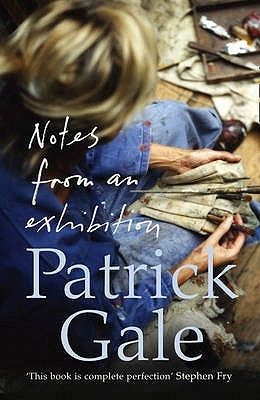
N – is for Notes from an Exhibition by Patrick Gale (on my TBR shelves since 2011). LibraryThing predicts that I probably will like this book. When troubled artist Rachel Kelly dies painting obsessively in her attic studio in Penzance, her saintly husband and adult children have more than the usual mess to clear up. She leaves behind an extraordinary and acclaimed body of work – but she also leaves a legacy of secrets and emotional damage that will take months to unravel.

I haven’t read any of Patrick Gale’s books, but I was attracted to it by the blurb.

‘We are here to say goodbye to our dear Rachel, who was a regular attender since Anthony first brought her to Penzance a little over forty years ago. For those of you who have never been to a Friends’ Meeting before, this may not be the kind of funeral you’re used to. The proceedings take the form of a Quaker Meeting for Worship. This is based on silent contemplation. There are two aims in our worship: to give thanks for the life that has been lived and to help those who mourn to feel a deep and comforting sense of divine presence within us. The silence may be broken by anyone, Quaker or not, who feels moved to speak, to pray or offer up a memory of Rachel.’ (page 62)

O – is for An Officer and a Spy by Robert Harris a book I’ve only had for nearly two years. LibraryThing predicts that I probably will like this book. A recreation of a scandal that became the most famous miscarriage of justice in history, this is the story of the infamous Dreyfus affair told as a chillingly dark, hard-edged novel of conspiracy and espionage. Paris in 1895. Alfred Dreyfus, a young Jewish officer, has just been convicted of treason, sentenced to life imprisonment at Devil’s Island, and stripped of his rank in front of a baying crowd of twenty-thousand.

I bought this on the strength of the other books by Robert Harris that I’ve enjoyed. I’ve heard of the Dreyfus affair but know very little about it.

Beneath the letters is a thin manilla envelope containing a large photograph, twenty five centimetres by twenty. I recognise it immediately from Dreyfus’s court martial – a copy of the covering note, the famous bordereau, that accompanied the documents he passed to the Germans. It was the central evidence against him produced in court. Until this morning I had no idea how the Statistical Section had got its hands on it. And no wonder. I have to admire Lauth’s handiwork. Nobody looking at it could tell it had once been ripped into pieces: all the tear marks have been carefully touched out, so that it seems a whole document. (pages 40 -41)

What do you think? Do you fancy any of them? Would you ditch any of them?

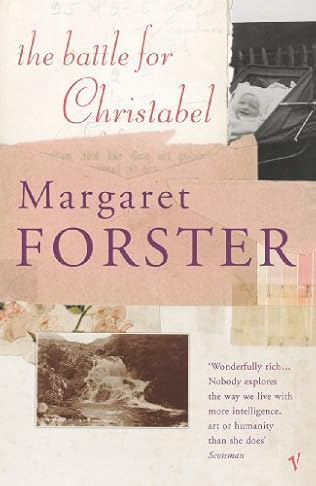
First Chapter First Paragraph: the Battle for Christabel

eca8f-fistchapEvery Tuesday Diane at Bibliophile by the Sea hosts First Chapter First Paragraph Tuesday Intros to share the first paragraph sometimes two, of a book that she’s reading or is planning to read soon.

This week’s opening is from The Battle for Christabel by Margaret Forster.

book cover of The Battle for Christabel

It begins:

Today I lost the battle for Christabel. I lost the whole war (this is a war story, make no mistake). There is nothing to salvage from it, no medals, no trophies, but my God the scars, the wounds, the shell shock … If I were a man, and had this  been a man’s war, I would have been invalided out, flown from the war zone, heavily sedated, and when the plane had landed and I was put into the ambulance waiting on the tarmac, people would have wept at the pity of it and the waste of a fine young man’s life.

From the Guardian:

Forster has the essential capacity to see everyone’s point of view, whether it is the social workers who resent the upper-middle class assumptions of Christobel’s grandmother, Isobel’s lover who believes she should adopt the child, or Christabel’s foster-mother Betty … in that territory of dread and reconciliation which is the family, Forster reigns supreme.

Margaret Forster wrote 25 novels and 14 biographies, about social history, memoir, and journalism. I’ve read and enjoyed quite a few of them – they’re often about family life and  women and their role in society. This one looks quite challenging, I think.

What do you think – would you read on?

The Skeleton Road by Val McDermid

The Skeleton Road (Inspector Karen Pirie, #3)

The Skeleton Road by Val McDermid is the third of her DCI Karen Pirie novels. Investigating the identity of the skeleton found, with a bullet hole in its skull, on the rooftop of a crumbling, gothic building in Edinburgh takes Karen and her Historic Cases Unit into a dark world of intrigue and betrayal during the Balkan Wars in the 1990s.

It begins slowly, introducing rather a bewildering number of characters one after the other. It moves between the past and the present in Scotland, England and Croatia, told through different viewpoints, and interweaving the sequence of events in the past and the present in a way that I found rather disjointed. Dr River Wilde a forensic anthropologist, discovers that the skeleton is a male, he’d been dead between five and ten years and his dental work shows he was originally from one of the Eastern bloc countries.

It’s a complex story with several strands, including the search for war criminals through the work of two lawyers at the International Criminal Tribunal for the former Yugoslavia. Karen’s investigations take her to Oxford and then to a small village in Croatia, a place scarred by fear, where people have endured unspeakable acts of violence.

At times I thought I was reading an account of the wars and the search for justice and revenge rather than a murder mystery. Even given the traumatic events it describes I didn’t feel there was much tension in the search for the killer and I was able to figure out who it was fairly quickly. I enjoyed the sections focusing on Karen’s and her assistant DS James, ‘the Mint’ Murray’s detective work, and I liked all the details of her relationship with her partner, Phil (also a police officer, now working on a different team).  But I didn’t enjoy this as much as the first two Karen Pirie books – in fact I think the first book, The Distant Echo is by far the best.

  • Hardcover: 416 pages
  • Publisher: Little, Brown (11 Sept. 2014)
  • Language: English
  • ISBN-10: 1408704579
  • ISBN-13: 978-1408704578
  • Source: a library book
  • My rating: 3*

The Corpse in the Snowman by Nicholas Blake

A Golden Age Mystery

Publication date 2017, Ipso Books, 305p. First published as The Case of the Abominable Snowman in 1941 by Collins UK (The Crime Club)

Review copy from the publishers, Ipso Books, via NetGalley

My rating: 3 stars

I enjoyed The Corpse in the Snowman by Nicholas Blake* a vintage murder mystery with a complicated plot. There’s a death and a body hidden in a snowman that is only discovered when a thaw sets in. It is set in 1940 in an isolated country house with a closed cast of characters and an amateur detective, Nigel Strangeways, helping the police and eventually solving the mystery. There are numerous twists and turns and red herrings before the murderer is revealed.

Easterham Manor in Essex, the home of the Restorick family is cut off from the neighbouring village by snow. Strange things have been going on. On Christmas Eve the family and their guests had gathered in what was said to be a haunted room waiting to see if the ghost would appear when  Scribbles, the family cat  sprang at a corner of the room and repeatedly struck her head against the wall and turned herself into a whirling dervish.

Some weeks later Nigel Strangeways and his wife Georgia  have been invited by Georgia’s cousin, Clarissa to stay at the Manor’s Dower House to investigate the cat incident. The next morning Elizabeth Restorick is found hanged and naked in her room, a hint of a smile playing on her painted lips. Was it suicide, or a murder made to look like suicide? Nigel is convinced it was murder and finds there are plenty of suspects. Elizabeth was a drug addict – so, was she killed by the doctor who was treating her addiction, or by Will Dykes, a romantic novelist in love with Elizabeth, or her friend Miss Ainsley, described as a ‘nondescript sort of fribble‘ -a frivolous or foolish person – or by one of the family?

The title and the first chapter give away a vital element of the plot – the snowman, built by the Restorick children, twins John and Priscilla, melts to reveal a corpse hidden inside. But at this point the identity of the corpse is unknown and as I was reading the rest of the book I kept trying to work out who it could be. It wasn’t too difficult, but it did detract a little from the mystery and I didn’t enjoy it as much as his earlier book Malice in Wonderland.

*Nicholas Blake was the pseudonym of Poet Laureate Cecil Day-Lewis (1904 – 1972), one of the leading British poets of the 1930s. He began writing mysteries in 1935 to supplement his income from poetry and published his first Nigel Strangeways detective novel, A Question of Proof in 1935. The Corpse in the Snowman aka The Case of the Abominable Snowman is the 2nd in the series.

My thanks to the publishers for a review copy via NetGalley.

The Other Side of the Bridge by Mary Lawson

The Other Side of the Bridge

The Other Side of the Bridge is a beautiful book set in  in Northern Canada about two brothers, Arthur and Jake Dunn who grow up on a small farm near Struan (a fictional town) in the 1930s. The brothers are poles apart in nature. Arthur is older, shy but reliable and hardworking, whereas Jake, the younger brother is handsome, reckless, unreliable and a troublemaker. Their story spans the 1930s and 1940s as they grow up through the Depression years and the Second World War, up to the early 1960s.

It’s also the story of Ian, Dr Christopherson’s son, beginning in the late 1950s when he became infatuated with Arthur’s wife Laura. I think the dual time frame works well, moving almost seamlessly between the years, and the characterisation is excellent. I was totally engrossed in the story and able to visualise the scenery, including the Ojibway reserve where Ian’s school friend Pete lived:

He [Ian] cycled down Main Street to the outskirts of Struan, which took all of three minutes, and then out along the road to the Ojibway reserve, which took a further five. The reserve was spread along the shore of a bay, with a point of land jutting out into the lake between it and Struan, a symbolic barrier as well as a geographic one. The road ran out of pavement half a mile before it reached the reserve, and the land itself was so low it would grow nothing but bulrushes and bugs – black flies by the million in early summer then mosquitoes big enough to pick you up and carry you away. The reserve store, though where Peter Corbiere lived, was situated right down by the lake, which meant it got the benefit of the wind and was less buggy than the rest. Pete’s grandfather was sitting on the steps when Ian arrived, smoking and staring off into the woods. He had scars on his fingers from letting cigarettes burn down too far. (page 18)

There is much joy in this book mixed in with immense sorrow and pain. The title of the book refers to the time before and after a shocking incident on the bridge  – a roughly made bridge across the river that separated the Dunns’ and their neighbours, the Lintz’s farms. It was a shortcut that saved more than a mile. The River Crow was fifteen feet below the bridge as it boiled its way over rocks. That incident changed not only Arthur’s and Jake’s lives but its effect lingered on the their community the rest of their lives.

The Other Side of the Bridge is Mary Lawson’s second novel. I loved her first, Crow Lake (which I read ten years ago) and I love this one just as much. It’s one of the best books I’ve read this year. It was longlisted for the Man Booker Prize in 2006, which was won by Kiran Desai’s The Inheritance of Loss.

Reading Challenge: the 21st book I’ve read this year for Bev’s Mount TBR 2017 – a book I’ve had for 10 years.