I’ve been missing from my blog for most of September, but I’ve still been reading. We’ve just returned from a few days in the Lake District – such a beautiful part of the UK!
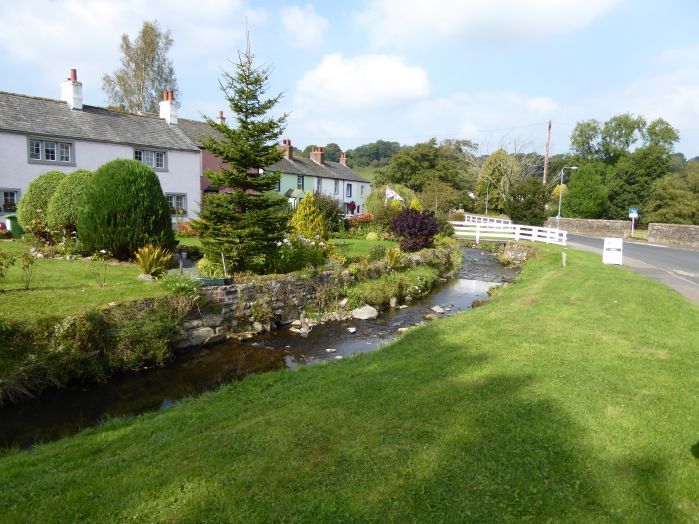
I managed to squeeze in some reading time as well as walking in the fells near Caldbeck and visiting the Pencil Museum in Keswick, Castlerigg Stone Circle, the Honister Pass, Ullswater and Aira Force. I’ll post some photos later on.
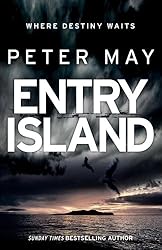 I took two books with me that I had already begun reading and finished one of them – Entry Island by Peter May. I’ve previously read May’s Lewis Trilogy – The Blackhouse, The Lewis Man and The Chessmen all of which I loved and whilst I did enjoy Entry Island I don’t think it quite lives up to the Lewis books. However, as I discovered when I came home this weekend Entry Island has been awarded the third annual Deanston Scottish Crime Book of the Year Award at the Bloody Scotland Crime Writing Festival.
Entry Island is set in present day Magdalen Islands, part of the province of Quebec, in the Gulf of St Lawrence, and in the nineteenth century on the Isle of Lewis at the time of the Highland Clearances. It mixes together two stories and two genres, crime fiction and historical fiction. It has a strong sense of place in both locations and beautiful descriptions of the landscape as for example in this passage:
It was another ten minutes before the ferry slipped out of the harbour, gliding past the outer breakwater on a sea like glass, to reveal Entry Island in the far distance, stretched out on the far side of the bay, the sun only now rising above a gathering of dark morning cloud beyond it. The island drew Sime’s focus and held it there, almost trancelike, as the sun sent its reflection careening towards him, creating what was almost a halo effect around the island itself. There was something magical about it. Almost mystical. (page 14)
The characters are convincing – Detective Sime Mackenzie, based in Montreal is part of the team sent to Entry Island to investigate the death of the wealthy businessman, James Cowell found stabbed to death. His wife, Kirsty is the obvious suspect. Sime is suffering from insomnia, a situation made worse by the fact that his ex-wife is also on the investigating team. Sime is convinced that he knows Kirsty, although they have never met before and he doubts that she is the culprit. Running parallel to this crime fiction element is the historical one, linked by Sime’s ancestor, also called Sime who was a crofter’s son on the Isle of Lewis and whose love for the laird’s daughter seemed doomed from the start. The story of life on Lewis and the harsh treatment the crofters received during the potato famine, followed by the terrible conditions they endured during their transportation to Canada is powerfully and emotionally portrayed.
The two stories are linked together well, but I found the present day investigation not too convincing and rather contrived as the team seemed to jump to conclusions without much thought or thorough investigation of the evidence. And I thought that the historical element was dominant at the expense of the modern day crime story making the book a little unbalanced. However, as I said I liked the book, which is an entertaining read that held my interest to the end.
Peter May is a prolific author. He was born and brought up in Scotland, but he now lives in France. As well as The Lewis Trilogy he has also written The Enzo Files, a series of seven books featuring Scottish forensic scientist, Enzo MacLeod, who lives in France, teaches at a university in Toulouse, and is working on solving seven of France’s most famous cold cases by applying the latest scientific techniques and The China Thrillers, a series of six books featuring Beijing detective Li Yan and Margaret Campbell, forensic pathologist from Chicago. He has also had a successful career as a television writer, creator, and producer.
I still have three other books to write about, including my first book for this year’s R.I.P. Challenge, Testament of a Witch, which like Entry Island also qualifies for the Read Scotland 2014 Challenge. Will I ever catch up with myself?
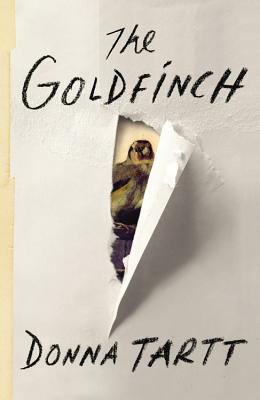 Donna Tartt’s The Goldfinch for example at 771 pages is not a quick read. I’m nearing the end on page 623, but even so my Kindle tells me that it will take me another 2 hours and 38 minutes to finish the book. I’m not sure I really like this feature, maybe it sounds better saying I’ve read 81%, or that I have 148 pages left to read! I began to think this book was too long ages ago, with too much description and too many minor characters, but then I come across sections that have me gripped and wanting to carry on regardless. So, I will be glad to finish it – the story could really have been over pages ago!
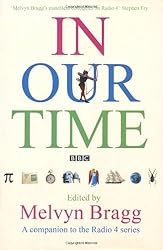 One of the other books I’m reading is also long at nearly 600 pages. This is non-fiction, though, and I’m deliberately taking it slowly, reading short sections most days. It’s In Our Time edited by Melvyn Bragg, which has episodes from his radio programmes – a selection from several hundred episodes broadcast over eleven years. It’s ideal for anyone, who like me, likes to read a wide variety of subjects. It covers such a wide range of subjects, such as The Field of the Cloth of Gold in 1520, programmes about Darwin, The Peasants’ Revolt in 1381 (I haven’t got to this chapter yet), programmes about the Origins of Mathematics, and Anti Matter, Shakespeare’s Language and J S Mill to mention just a few. My copy is a hardback book, which is a pleasure to read – even if a little heavy to hold, so I can’t read it in bed. I have no idea how long it will take me to finish it, but in contrast to The Goldfinch, I’ll be sorry when I reach the end.
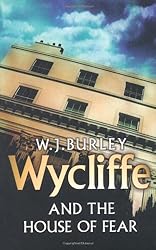 As always I keep looking at my TBRs – those books that I’ve had for a while (years for some of them) and I find myself itching to read them. So this morning whilst my Kindle was re-charging I got Wycliffe and the House of Fear down off the shelves and began that. I think it’s just starting to rain so I’m going to get back to it this afternoon (and maybe read a bit of The Goldfinch too).
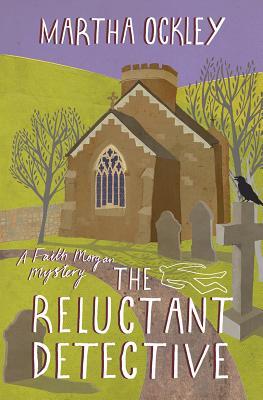 I had little idea what to expect from Martha Ockley’s first Faith Morgan mystery,
