What's In A Name 7: Completed

Whats in a name 7Hosted by  by Charlie at The Worm Hole this challenge runs from January to December 2014. During this time you choose a book to read from six categories.

I’ve now completed the challenge and these are the books I read:

  • A reference to time €“ The Time Machine by H G Wells, first published in 1895, is a work of imagination and an early example of science fiction, but it is also a commentary on late 19th century society and a vehicle for H G Well’s views on socialism and industrialisation.
  • A position of royalty €“ The King’s Evil by Edward Marston. This is historical crime fiction set in London in September 1666, just as the Great Fire of London has begun, eventually devastating a large part of the old medieval City of London
  • number written in letters – Five Little Pigs by Agatha Christie, a Poirot mystery
    first published in 1943. Caroline Crale was convicted of the murder of her husband, Amyas and died in prison. Sixteen years later, her daughter, a child of five at the time of the murder, asks Poirot to clear her mother’s name, convinced that she was innocent.
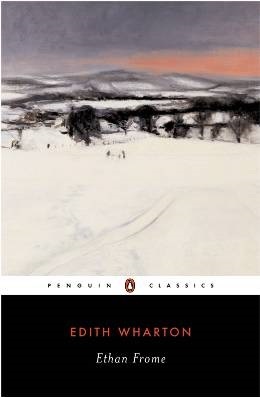
  • forename or names  Ethan Frome by Edith Wharton  a beautifully told tale €“ a tragedy, signalled right from the beginning of the book, when the unnamed narrator first saw Ethan Frome and was told he had been disfigured and crippled in a €˜smash up’, twenty four years earlier. Ethan Frome
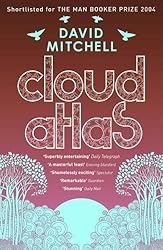
  • type or element of weather – Cloud Atlas by David Mitchell covers a time period from the 19th century to a post apocalyptic future. It’s not a book to read quickly; it requires patience, but on the whole I enjoyed it. I liked the change in style, suited to each time period, moving between straight narrative and letters and journal entries, encompassing historical fiction, thriller and sci-fi.
  • A book with a school subject in the title €“ The Brief History of the Dead by Kevin Brockmeier  fantasy fiction set some time in the future, about a place between heaven and earth, and the people who end up there after they’ve died and what happens to them. 

My favourite of these books is Ethan Frome by Edith Wharton.

Thanks to Charlie for an interesting challenge that helped me reduce my to-be-read piles.
Read Scotland 2014 Challenge: two books

I’ve got a bit behind with writing reviews, so here are some notes on two books I’ve recently read, both of which fit into the Read Scotland 2014 Challenge.

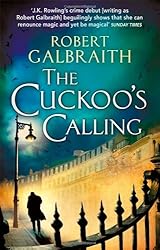
It’s common knowledge now that Robert Galbraith is J K Rowling’s pseudonym. I wish I’d read The Cuckoo’s Calling without knowing that, as although I have no problem with authors writing under pseudonyms, I found myself thinking how like the Harry Potter books it is in some ways and I doubt I’d have thought that if I’d read it ‘blind’.

Anyway, I liked The Cuckoo’s Calling. It is crime fiction, set in the world of Cormoran Strike (a Harry Potterish name, I thought), an ex-army private detective, who is struggling to get clients and pay his bills, sleeping on a camp bed in his office. Along comes Robin Ellacott, from the Temporary Solutions Agency to help out (think, Hermione Granger). She’s intelligent, efficient, remarkably resourceful, and she soon has Strike organised, which is essential as he is asked by John Bristow, a lawyer and the brother of a childhood friend to investigate the death of his sister, Lula Landry. The police are satisfied that Lula, a model, had committed suicide, but Bristow is certain that she didn’t.
What follows is at times a leisurely narrative and the plot is quite complex, but not too difficult to work out. The characters are convincing, Robin in particular soon became my favourite. She has an enquiring mind, ‘fascinated by the interior workings of other people’s minds‘ and despite her fiancé’s opposition to her job, she carries on, motivated by her fascination with investigating, and her secret ambition to be a private detective. In fact without Robin, Strike would have really struggled to get to the truth.

I’ve counted this book towards the Read Scotland 2014 Challenge because J K Rowling, although she was born in England has lived in Scotland for twenty-one years and plans to spend the rest of her life in Scotland. Whereas the author of the next book, Muriel Spark is an author who was born and grew up in Edinburgh, but who later lived in London. To qualify for this challenge books have to be by Scottish authors, either by birth or immigration, or about or set in Scotland – quite a wide brief!

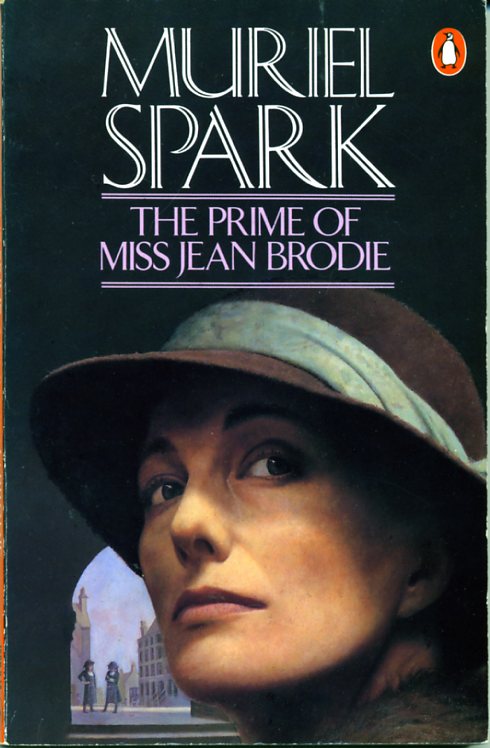
brodie001The Prime of Miss Jean Brodie is perhaps Muriel Spark’s most famous novel. I’ve read it before and seen the film, with Maggie Smith in the title role. Each time I’ve read it I’ve really enjoyed it – it’s one of those books that isn’t spoilt by knowing what happens, because part of the pleasure of reading it is the fact that I do know who betrayed Miss Brodie. Despite her declaration: ‘Give me a girl at an impressionable age and she will be mine for life‘, it is one of the ‘Brodie set’ who causes her downfall, that and her pride and self-absorption.

But what really impresses me about this book is the writing, so compact, so perceptive and so in control of the shifts in time backwards and forwards. It’s a joy to read. I’ve written more about it in this post.

It's Spin Time!

The Classics Club Spin, that is. I don’t mind which book comes up in the Spin as they are all books I’d like to read. I quite fancy reading one of Dickens’ books this summer and can’t decide which one! And that is why I’ve included five of his books in the list.

Here are the rules:

* List any twenty books you have left to read from your Classics Club list.The Classics Club
* Number them from 1 to 20.
* Next Monday (August 11th) the Classics Club will announce a number.
* This is the book you need to read by October 6th.

Here’s my list:

  1. Lady Susan/The Watsons/Sanditon by Jane Austen – her first full-length novel
  2. Lorna Doone: A Romance of Exmoor by R D Blackmore
  3. Out of Africa by Karen Blixen – I’ve been meaning to read this ever since I saw the film, which is only loosely based on the book.
  4. No Name by Wilkie Collins – because I liked The Moonstone and The Woman in White
  5. Little Dorrit by Charles Dickens
  6. Martin Chuzzlewit by Charles Dickens
  7. Nicholas Nickleby by Charles Dickens
  8. Oliver Twist by Charles Dickens
  9. Pickwick Papers by Charles Dickens
  10. Parade’s End by Ford Maddox Ford – I liked the TV series with Benedict Cumberbatch so much, I hope I like the book!
  11. Where Angels Fear to Tread by E M Forster
  12. The Man Who Would Be King by Rudyard Kipling
  13. The Call of the Wild by Jack London
  14. One Hundred Years of Solitude by Gabriel Garcia Marquez
  15. Of Human Bondage by W. Somerset Maugham
  16. Travels with a Donkey in the Cevennes by Robert Louis Stevenson
  17. Gulliver’s Travels by Jonathan Swift
  18. Barchester Towers (Barsetshire Chronicles, #2) by Anthony Trollope
  19. The Age of Innocence by Edith Wharton
  20. The Voyage Out by Virginia Woolf – her first novel

Mansfield Park by Jane Austen

For years I’ve thought I’d read all of Jane Austen’s books, apart from Lady Susan/The Watsons/Sanditon, but then last year I wondered about Mansfield Park, and I realised I couldn’t remember much about it. At first I thought it was one of those books I must have read years ago and forgotten the detail. So, I thought I’d have a look at it again to refresh my memory, but when I looked for my copy I couldn’t find it and slowly I began to think I hadn’t read it at all and bought one. And, lo and behold it was totally new to me – I hadn’t even watched the TV version!

On the surface Mansfield Park is a simple story about a family and their relationships. Fanny Price, as a child of 10 goes to live with her wealthy aunt and uncle, Sir Thomas and Lady Bertram at Mansfield Park, where as the poor relation she is not treated badly, but not as cared for or as kindly as her cousins, but more as an unpaid servant dependent on the family for her welfare – a sort of Cinderella story.

But through the story, Jane Austen reveals the complicated interaction of society, shows the development of Fanny’s character and the depiction of a heroine who is good and gentle who matures throughout the novel. Fanny is an unassuming character who at first appears to be too self-effacing and timed, but who grows in strength of character. I think it’s a very clever portrayal because the reader sees things through Fanny’s eyes. Whilst at first I wanted to give her a shake and say pull yourself together, you’re being a doormat, I realised that Jane Austen was drawing a realistic portrait and waited to see how she would develop.

Like the other novels, Mansfield Park is full of detail of everyday life, its boredom as well as its entertainments and pleasures, the  balls and dinners. There is much in it about the houses and gardens, not only of the wealthy but also of the lower classes, such as Fanny’s parents home in Portsmouth – but they have servants themselves, so it is only comparative poverty. Seen mainly through Fanny’s eyes, it’s a study of morals, the damage caused by being unwanted and unloved.

There is, of course, so much more to say about this book – Mrs Norris’s snobbery, her obsession with  penny-pinching and her nasty, spiteful behaviour; the opinion of clergymen, seen through Mary Crawford’s mercenary eyes as she thinks about Edmund Bertram’s position; the flirty behaviour of the ‘charming’ Henry Crawford; the apparent coldness of Sir Thomas and his family’s distance from him; Lady Bertram’s languid life from her sofa; the disruption caused by the play and so on. There is also a gentle strain of humour and satirical observations about contemporary values, and even, with Mary Crawford’s pun on ‘Rears and Vices‘, a bawdy note.

Yes, I definitely like Mansfield Park and pleased it came up for me in the Classics Club Spin, which gave me the necessary push to read it in June.

Classics Club: the May Question


This month the Classics Club question is about which classics we might be avoiding:

Which classic work has caused you to become a master in avoidance? It’s not necessarily because you’re intimidated but maybe there are works out there that just cause you to have the Dracula reaction: cape-covered arm up in front of face with a step back reaction?

To answer this question I’m only considering the books on my Classics Club list. They are all books I own and at one time thought that I’d like to read them but I suppose I am avoiding some of them as they never figure when I’m wondering which book to read next. Why am I avoiding them? I’m not really sure. They are usually long books such as:

Don Quixote by Miguel de Cervantes Saavedra – I’ve started to read this a few times and have given up because the printed copy I have is old in a very small font and I think I’d do better with a different (more modern?) translation. But there are so many to choose from – anyone got any recommendations?

Books by Elizabeth GaskellMary Barton, North and South and Wives and Daughters. I really do want to read these, but each time I think about them my mind glazes over and I pick something else. Again they are long books.

Then there is Three Men in a Boat by Jerome K Jerome – this is shorter, but it’s another book I’ve started a couple of times and put down. People say it’s very funny, but I haven’t found it even amusing so far – I should read on, I suppose.

Sometimes it’s just down to the fact that it’s just not the right time for me to read a book.

Classics Club Spin: Result

The Classics ClubYesterday the Classics Club announced the result of the latest spin – list 20 books from your Classics Club list and the number picked in the spin is the book you read by 7 July 2014. The number came out as number 1.

And for me that is Mansfield Park by Jane Austen.

I’d included this book in my list as a re-read. I thought I’d read this book before many years ago, but I couldn’t remember much (if anything about it) and I haven’t watched any of the TV adaptations. I thought I had a copy, but when I looked for it I couldn’t find one, so I downloaded a copy on Kindle and now I look at it I’m sure I haven’t read it before!! So I’m really looking forward to reading it.

If you’re taking part in the spin this time, which book did you get?