First Chapter First Paragraph: The Tea Planter’s Wife by Dinah Jefferies

Every Tuesday First Chapter, First Paragraph/Intros is hosted by Vicky of I’d Rather Be at the Beach sharing the first paragraph or two of a book she’s reading or plans to read soon.

This week I’m featuring The Tea Planter’s Wife by Dinah Jefferies, one of the library  books I wrote about in this post last week.
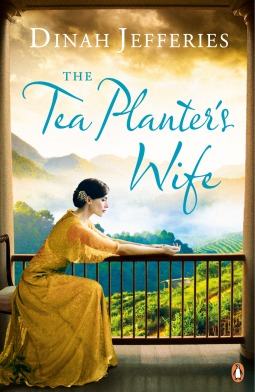
The Tea Planter's Wife

Prologue


Ceylon, 1913

The woman held a slim white envelope to her lips. She hesitated for a moment longer, pausing to listen to the achingly sweet notes of a distant Sinhalese flute. She considered her resolve, turning it over as she would a pebble in her palm, then sealed the envelope and propped it against a vase of wilting red roses.

Chapter I

Twelve Years Later, Ceylon 1925

With her straw hat in one hand, Gwen leant against the salty railings and glanced down again. She’d been watching the shifting colour of the sea for an hour, tracing the shreds of paper, the curls of orange peel and the leaves drifting by. Now that the water had changed from deepest turquoise to dingy grey, she knew it wouldn’t be long. She leant a little further over the rail to watch a piece of silver fabric float out of sight.

Blurb (Amazon)

Nineteen-year-old Gwendolyn Hooper steps off a steamer in Ceylon full of optimism, eager to join her new husband. But the man who greets her at the tea plantation is not the same one she fell in love with in London.

Distant and brooding, Laurence spends long days wrapped up in his work, leaving his young bride to explore the plantation alone. It’s a place filled with clues to the past – locked doors, a yellowed wedding dress in a dusty trunk, an overgrown grave hidden in the grounds, far too small for an adult…

Gwen soon falls pregnant and her husband is overjoyed, but she has little time to celebrate. In the delivery room the new mother is faced with a terrible choice, one she knows no one in her upper class set will understand – least of all Laurence. Forced to bury a secret at the heart of her marriage, Gwen is more isolated than ever. When the time comes, how will her husband ever understand what she has done?

~~~

I think I’m going to enjoy this book – I really hope I will.

What do you think? Would you keep reading?
My Friday Post: Cold Earth by Ann Cleeves

Book Beginnings Button

Every Friday Book Beginnings on Friday is hosted by Gillion at Rose City Reader where you can share the first sentence (or so) of the book you are reading, along with your initial thoughts about the sentence, impressions of the book, or anything else the opener inspires.

My book today is Cold Earth by Ann Cleeves, one of my TBR books, that I’ve just begun to read.

Cold Earth (Shetland Island, #7)

It begins:

The land slipped while Jimmy Perez was standing beside the grave. The dead man’s family had come from Foula originally and they’d carried the body on two oars, the way bodies were always brought for burial on that island.

Also every Friday there is The Friday 56, hosted by Freda at Freda’s Voice.

30879-friday2b56These are the rules:

  1. Grab a book, any book.
  2. Turn to page 56, or 56% on your eReader. If you have to improvise, that is okay.
  3. Find any sentence (or a few, just don’t spoil it) that grabs you.
  4. Post it.
  5. Add the URL to your post in the link on Freda’s most recent Friday 56 post.

Page 56:

Outside the rain had stopped and a faint, milky sunlight filtered through the gloom. Instead of looking back towards Lerwick, Sandy headed towards Sullom Voe and stopped at the new hotel that had been built just outside the village of Brae. Its accommodation was used solely for oil, gas and construction workers and had been full since it had been slotted together like a giant bit of Lego several years before. Sandy had been inside once for the Sunday-lunch carvery. It felt a bit like going abroad and wandering into another world.

~~~

Blurb

In the dark days of a Shetland winter, torrential rain triggers a landslide that crosses the main Lerwick-Sumburgh road and sweeps down to the sea.

At the burial of his old friend Magnus Tait, Jimmy Perez watches the flood of mud and peaty water smash through a croft house in its path. Everyone thinks the croft is uninhabited, but in the wreckage he finds the body of a dark-haired woman wearing a red silk dress. In his mind, she shares his Mediterranean ancestry and soon he becomes obsessed with tracing her identity.

Then it emerges that she was already dead before the landslide hit the house. Perez knows he must find out who she was, and how she died.

~~~

I have read all the preceding Shetland books and watched the TV adaptations of Ann Cleeves’ novels, both the Shetland and Vera series. The books and the TV versions are separate things – the TV versions are based on Ann Cleeves’ characters but plotlines and the characters can differ. For example Cassie, Fran’s daughter, in the TV version is a teenager and goes to university, whereas in the books she is a child. I prefer the books, although I really appreciate seeing the beautiful setting and the scenery of both Shetland and Northumberland in the TV versions.

What about you? Does it tempt you or would you stop reading? 

What’s In a Name? Update

WhatsinaName14

When I decided to do this year’s What’s In a Name?Challenge I didn’t have any books in the category of a book with a meal in the title. So I decided to see what my local library had to offer and came up with three books and reserved all three – of course they all turned up quickly almost all at once and I now have them here waiting to be read. And I can’t decide which one to read first – should it be breakfast, tea, or a feast?

The shortest is Breakfast at Tiffany’s by Truman Capote – Holly Golightly in 1940s New York, pursued by gangsters and playboy millionaires. There are also three short stories in this book, House of Flowers, A Diamond Guitar and A Christmas Memory.

Or should I read A Moveable Feast by Ernest Hemingway first? According to the back cover this book ‘brilliantly evokes the exuberant mood of Paris after the First World War, and the unbridled creativity and unquenchable enthusiasm that Hemingway himself epitomised.’

I am actually drawn more to reading the longest book first – The Tea Planter’s Wife by Dinah Jefferies – historical fiction set in Ceylon (now called Sri Lanka) in the 1920s and 30s. Nineteen year old Gwendolyn Hooper arrived from  England eager to join her husband, Laurence, but he was away working, leaving her alone to explore the vast tea plantation. She wanders into forbidden places and finds clues to a hidden unspeakable past.

What do you think? Have you read any of them? Which one would you read first?

My Friday Post: Bitter Lemons of Cyprus by Lawrence Durrell

Book Beginnings Button

Every Friday Book Beginnings on Friday is hosted by Gillion at Rose City Reader where you can share the first sentence (or so) of the book you are reading, along with your initial thoughts about the sentence, impressions of the book, or anything else the opener inspires.

My book today is Bitter Lemons of Cyprus by Lawrence Durrell, one of the books I’m currently reading.

Bitter Lemons of Cyprus

It begins:

Journeys, like artists, are born and not made. A thousand differing circumstances contribute to them, few of them willed or determined by the will – whatever we may think. They flower spontaneously out of the demands of our natures – and the best of them lead us not only outwards in space, but inwards as well. Travel can be one of the most rewarding forms of introspection …

Also every Friday there is The Friday 56, hosted by Freda at Freda’s Voice.

30879-friday2b56These are the rules:

  1. Grab a book, any book.
  2. Turn to page 56, or 56% on your eReader. If you have to improvise, that is okay.
  3. Find any sentence (or a few, just don’t spoil it) that grabs you.
  4. Post it.
  5. Add the URL to your post in the link on Freda’s most recent Friday 56 post.

Page 56: Durrell is buying a house in the Greek village of Bellapaix and the owners have gathered their family in the village cafe to agree upon the price.

They sat on a semicircle of chairs, sipping coffee and arguing in low voices; a number of beards waggled, a number of heads nodded. They looked like a rugger scrum in an American film receiving last-minute instructions from their captain. Soon they would fall upon us like a ton of bricks and gouge us. I began to feel rather alarmed.

~~~

I’ve visited Cyprus several times, but not the area Durrell wrote about in this book – Kyrenia in Northern Cyprus. His description of it and Bellapaix makes me wish I could have seen it then in the 1950s.

Blurb

Bitter Lemons of Cyprus is Lawrence Durrell’s unique account of his time in Cyprus, during the 1950s Enosis movement for freedom of the island from British colonial rule. Winner of the Duff Cooper Memorial Prize, it is a document at once personal, poetic and subtly political – a masterly combination of travelogue, memoir and treatise.

‘He writes as an artist, as well as a poet; he remembers colour and landscape and the nuances of peasant conversation . . . Eschewing politics, it says more about them than all our leading articles . . . In describing a political tragedy it often has great poetic beauty.’ Kingsley Martin, New Statesman

‘Durrell possesses exceptional qualifications. He speaks Greek fluently; he has a wide knowledge of modern Greek history, politics and literature; he has lived in continental Greece and has spent many years in other Greek islands . . . His account of this calamity is revelatory, moving and restrained. It is written in the sensitive and muscular prose of which he is so consummate a master.’ Harold Nicolson, Observer

~~~

What about you? Does it tempt you or would you stop reading? 

Top Ten Tuesday: New-to-Me Authors I Read In 2018

Top Ten Tuesday new

Top Ten Tuesday is a weekly meme created by The Broke and the Bookish and now hosted by Jana at That Artsy Reader Girl.

The rules are simple:

  • Each Tuesday, Jana assigns a new topic. Create your own Top Ten list that fits that topic – putting your unique spin on it if you want.
  • Everyone is welcome to join but please link back to The Artsy Reader Girl in your own Top Ten Tuesday post.
  • Add your name to the Linky widget on that day’s post so that everyone can check out other bloggers’ lists.
  • Or if you don’t have a blog, just post your answers as a comment.

This week’s topic is New-to-Me Authors I Read In 2018. I read books by 40 new-to-me authors, so I have plenty to choose from. 

Here are my top ten, in a-z author order:

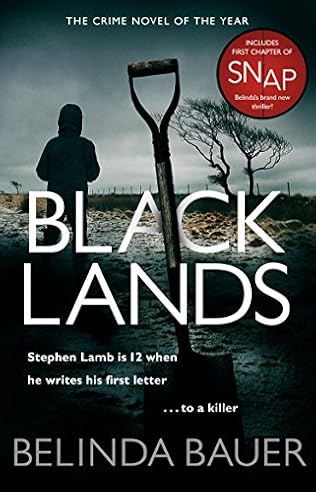
Belinda Bauer – I read Blacklandsher debut novel about a battle of wits between a child serial killer and a twelve year old boy. Since reading this book I’ve also read Snap and Rubbernecker.

Belinda Bauer's picture

book cover of Blacklands

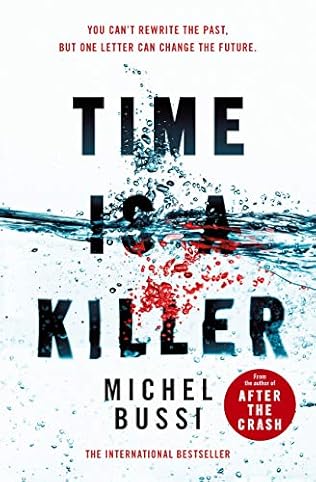
Michel Bussi –  Time is a Killera psychological thriller, translated from the French; this shifts from the past to the present, set on the island of Corsica.

Michel Bussi's picture

book cover of Time Is a Killer

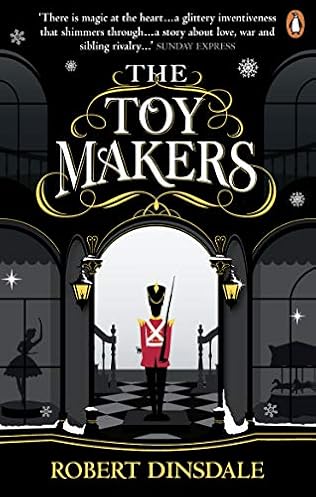
Robert Dinsdale: The Toymakers – a magical and wonderful book set mainly in 1917 whilst the First World War was taking its toll of humanity, leaving despair and tragedy in its wake. It’s a blend of historical fiction and magic realism.

Robert Dinsdale's picture

book cover of The Toymakers

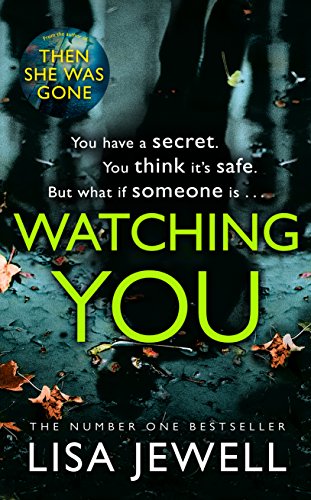
Lisa Jewell -Her first book, Ralph’s Party, came out in 1998 and since then she has written many books. Watching You is her latest book,  crime fiction that keeps you guessing about everything right from the first page – someone was murdered, but who was it and why, and just who was the killer? 

Lisa Jewell's picture

book cover of Watching You

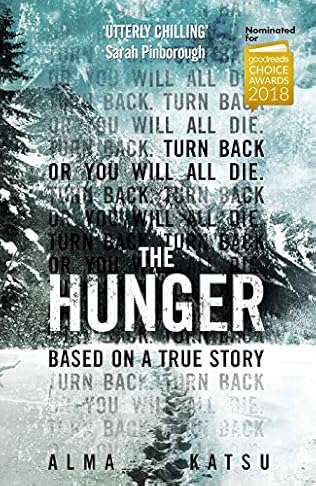
Alma Katsu: The Hunger, historical fiction, weaving facts with hints of the supernatural and Indian myths, about the Donner Party, pioneers as they made their way west to California in 1846.

Alma Katsu's picture

book cover of The Hunger

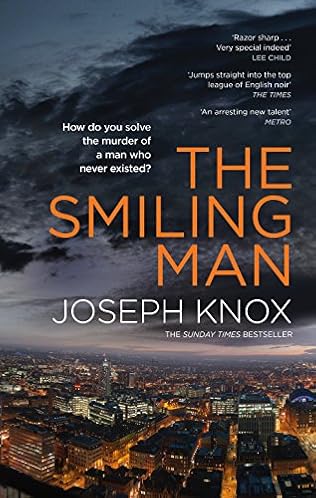
Joseph Knox: The Smiling Man the second Aidan Waits book. Waits is a Detective Constable who plays very close to the edge and has little regard for his own safety in this fascinating and complex murder mystery.

Joseph Knox's picture

book cover of The Smiling Man

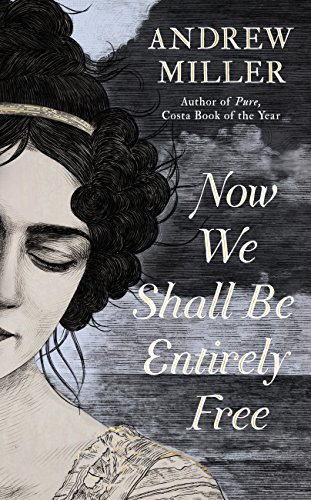
Andrew Miller: Now We Shall Be Entirely Free historical fiction, set in 1809 during the Peninsular Wars. Captain John Lacroix has returned to England, injured and close to death. as he regains his physical health  it is clear that he is on the edge of a breakdown, mentally and emotionally.

Andrew Miller's picture

book cover of Now We Shall Be Entirely Free

Rhiannon Navin: Only Child, her debut novel. It’s one of the most powerful books I’ve read for ages. It’s emotional, moving and absolutely compelling reading.  

Rhiannon Navin's picture

Only Child

Barney Norris: Turning for Home set on the day of Robert’s 80th birthday celebration. Still grieving after his wife’s recent death, he is finding it a sad, rather than a joyful occasion as the family gather together. A moving book with emotional depth.

Barney Norris's picture

Turning for Home

Jo Spain: The Confession her fifth book this is set in Ireland. It begins as Harry McNamara, a banker, recently cleared of multiple accounts of fraud, is brutally attacked in his own home in front of his wife, Julie.

Jo Spain's picture

The Confession

Since reading The Confession I’ve also read The Darkest Place and Dirty Little Secrets.

Dirty Little Secrets by Jo Spain

Quercus Books|7 February 2019 |416 pages|e-book |Review copy|4.5*

I first came across Jo Spain’s books last year when I read The Confession, a standalone novel and then The Darkest Place, her 4th Inspector Tom Reynolds Mystery book, both very good books. So I was keen to read her latest book, a psychological thriller, Dirty Little Secrets, another standalone book. I really enjoyed this very readable page-turner, keen to discover all the secrets.

It’s set in Withered Vale, a small, gated community of just seven houses, outside the small village of Marwood in Wicklow in Ireland. On the surface it is a perfect place where the wealthy live their  privileged lives and keep themselves to themselves – until a cloud of bluebottles stream out of the chimney of number 4 and Olive Collins’ dead and disintegrating body is discovered inside. She had been dead for three months and none of the neighbours had bothered to find out why she hadn’t been seen all that time. But someone must have known what had happened to her – the question being who?

When DI Frank Brazil, near to his retirement, and his partner young Emma Child arrive it’s not clear whether Olive’s death was accidental death or suicide. But they quickly establish that the boiler had been pumping out carbon monoxide and the vents and the letter box had been taped up.  It was then obvious that her death was either suicide or murder. There is plenty of DNA in the house, as it turns out that all the neighbours had visited Olive. She had tried to interfere in each of their lives and each one of them had something to hide, from past crimes, past relationships, addictions, and blackmail. They’re all suspects as each one had a motive for killing Olive.

I liked the way Jo Spain has structured her book – each character is introduced and gradually more and more facts about their lives and personalities are revealed. And Olive’s dead voice is interspersed among these people, revealing her personality, thoughts and relationships with the others, and showing just went on behind all the closed doors. I was fascinated and went from one person to the next wondering who was guilty, changing my mind as the book progressed. The characters are convincing and so it was easy to work out who was who and how they all interacted. The ending surprised me as although I had suspected what had taken place I hadn’t foreseen the whole picture.

I was hooked from the beginning to the end. Withered Vale went from being a place where the neighbours lived their lives in isolation to a much more united community as together they faced the enormity of what had happened.

My thanks to the publishers, Quercus, for my review copy via NetGalley.

Note: this book is one of my TBRs, so qualifying for Bev’s Mount TBR challenge and as it will be published in February it also qualifies for Bev’s Calendar of Crime challenge in the category of a February publication.