My Week in Books: 16 March 2016

This Week in Books is a weekly round-up hosted by Lypsyy Lost & Found, about what I’ve been reading Now, Then & Next.
IMG_1384-0

A similar meme,  WWW Wednesday is run by Taking on a World of Words.

Now: I’m currently reading, and loving so far, The Legacy of Elizabeth Pringle by Kirsty Wark, a book I bought a couple of years ago. My copy is the hardback version, which is a joy to hold and read.
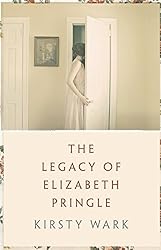
Blurb:

Born just before the First World War, Elizabeth Pringle has been a familiar yet solitary figure on the Scottish island of Arran. A dutiful daughter, an inspirational teacher, a gardener. But did anyone really know her? When Elizabeth dies, her will contains a surprise. She has left her home and her belongings to someone who is all but a stranger, a young mother she watched pushing a pram down the road more than thirty years ago.
Now it falls to Martha, the baby in that pram, to find out how her mother inherited the house in such strange circumstances, and in doing so, perhaps leave her own past behind. But first she has to find the answer to the question: who was Elizabeth Pringle?
A captivating and haunting story of the richness beneath so-called ordinary lives and the secrets and threads that hold women together.

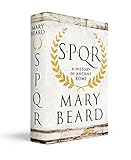
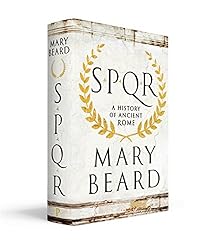
I’m still reading SPQR by Mary Beard, a fascinating history of Ancient Rome – see last week’s post for a synopsis. I’m reading the ebook and am currently at 46%. My Kindle estimates it will take me 8 hours and 1 minute to read to the end.
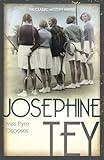
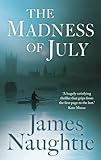
Then: Last week I was undecided about what to read next and had started reading three books, but suddenly it all became clear and I carried on reading Miss Pym Disposes by Josephine Tey, followed up by The Madness of July by James Naughtie. (See last week’s post for the synopses). Two very different books and I enjoyed both of them. I wrote about Tey’s book in this post. I have yet to write one about Naughtie’s book.

Next: As always I’m unsure which book I’ll pick up next. At the moment I’m leaning towards Edwin: High King of Britain: the Northumbrian Thrones 1 by Edoardo Albert, a present from my son for Mother’s Day.
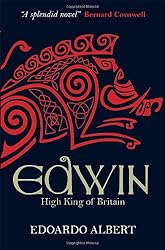
Blurb:

Edwin, the deposed king of Northumbria, seeks refuge at the court of King Raedwald of East Anglia. But Raedwald is urged to kill his guest by Aethelfrith, Edwin’s usurper. As Edwin walks by the shore, alone and at bay, he is confronted by a mysterious figure ‘“ the missionary Paulinus ‘“ who prophesies that he will become High King of Britain.

It is a turning point. Through battles and astute political alliances Edwin rises to great power, in the process marrying the Kentish princess Aethelburh. As part of the marriage contract the princess is allowed to retain her Christian faith. But, in these times, to be a king is not a recipe for a long life . . . This turbulent and tormented period in British history sees the conversion of the Anglo-Saxon settlers who have forced their way on to British shores over previous centuries, arriving first to pillage, then to farm and trade ‘“ and to come to terms with the world view of the Celtic tribes they have driven out.

What are you reading this week ‘“ and have you read any of these books? Do let me know.
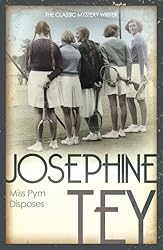
Miss Pym Disposes by Josephine Tey

Josephine Tey was a pseudonym for Elizabeth Mackintosh(1896 ‘“ 1952). She was a Scottish author who wrote mainly mystery novels (see the list at the end of this post). I read The Daughter of Time some years ago and thought it was an excellent book, a mix of historical research and detective work. Inspector Alan Grant is in hospital and to keep his mind occupied he decides to discover whether Richard III really did murder his nephews ‘“ the Princes in the Tower. I’ve also read The Franchise Affair, which I thought was also an excellent book.

I bought Miss Pym Disposes at the local village hall when I went to vote  in the European Election in June 2014. There was a table full of books for sale ‘“ nothing to do with the election, but a bonus for me! Based on the other two books I’d read by Tey I thought it would be a good buy. And it was. It is set in the 1940s and was first published in 1946.

I knew from the synopsis that Miss Pym was pleased and flattered to be invited to Leys Physical Training College to give a lecture on psychology. But then there was a’nasty accident‘.

So I was wondering about that ‘nasty accident’ as I began reading the book – who has the accident and is it really an accident, and if so who was responsible for the accident? It all seemed to be plain sailing until something happened that nobody expected and it was that that triggered the ‘accident’. It was intriguing and very cleverly written.

There is a long build up to the accident.  Miss Pym had been a French teacher at a girls’ High School until she inherited some money, left teaching and wrote a best-selling psychology book. She was invited to Leys by her old school friend, Henrietta Hodge, the college Principal and stayed on there for a few days, that extended into two weeks as she got to know and like the students and the staff. However, she realises that all is not as perfect at the college as she had thought, alerted to that fact that when one of the students, Teresa Desterro, tells her that everyone is just a little bit insane in this last week of term – ‘It is not a normal life they lead. You cannot expect them to be normal.‘ Miss Pym observes how strenuous their studies are and the stress and anxiety the senior students go through in their final exams and learn where Henrietta has found jobs for them, or if she has found jobs for them.

This is not a conventional crime fiction novel. It’s a psychological study focussing on the characters, their motivation and analysis of facial characteristics. It looks at the consequences of what people do and say and, as Miss Pym discovers who she thinks is responsible, it also looks at how much a person should intervene, or as one of the characters tells her, ‘Do the obvious right thing, and let God dispose.’ Miss Pym agonises over her decision, was she really going to condemn someone to death?

I thoroughly enjoyed this book, such a delight to read, a book that is beautifully written. I thought the slow build up to the ‘accident’ was perfect and I kept changing my mind about who would be involved – and it has such a good twist at the end.

It is the ideal book for these challenges: Bev’s Mount TBR Reading Challenge, her Vintage Mystery Cover Scavenger Hunt in the category ‘More Than Two people’, and Peggy Ann’s Read Scotland Challenge.

Josephine Tey’s books:

Alan Grant
The Man in the Queue (1929) aka Killer in the Crowd
A Shilling for Candles (1936) (the basis of Hitchcock’s 1937 movie Young and Innocent)
The Franchise Affair (1948) (my review)
To Love and Be Wise (1950)
The Daughter of Time (1951)
The Singing Sands (1952)

Novels
Kif: an Unvarnished History (1929) (writing as Gordon Daviot)
The Expensive Halo (1931)
Miss Pym Disposes (1946)
Brat Farrar (1949) aka Come and Kill Me
The Privateer (1952)
Non-Fiction

Claverhouse (1937) (writing as Gordon Daviot) A biography of John Graham of Claverhouse, 1st Viscount Dundee (1648 – 1689), known as “Bonnie Dundee” after leading the Jacobites to victory at the Battle of Killiecrankie in 1689, in which he lost his life.

My Week in Books: 9 March 2016

This Week in Books is a weekly round-up hosted by Lypsyy Lost & Found, about what I’ve been reading Now, Then & Next.

IMG_1384-0

A similar meme,  WWW Wednesday is run by Taking on a World of Words.

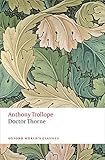
Then – I’m  beginning this post with the book I’ve recently finished reading – Doctor Thorne (see this post for my review). Julian Fellowes’ adaptation of this book is currently on ITV and I was in two minds about watching it, but I thought I’d at least watch the first episode. However, as I expected, there are too many changes from the book for me to enjoy watching it. It is so condensed, and too much is revealed too early, so I have decided not to watch the next two parts.

Now and Next – After finishing Doctor Thorne I couldn’t decide what to read next and began reading three books. This happens to me sometimes and I expect I’ll soon concentrate on just one of these books and go back to the others later.

Blurb: Leys Physical Training College was famous for its excellent discipline and Miss Lucy Pym was pleased and flattered to be invited to give a psychology lecture there. But she had to admit that the health and vibrant beauty of the students made her feel just a little inadequate.

Then there was a nasty accident – and suddenly Miss Pym was forced to apply her agile intellect to the unpleasant fact that among all those impressively healthy bodies someone had a very sick mind…

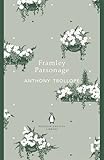
Blurb: ‘He was sickened also with all these lies. His very soul was dismayed by the dirt through which he was forced to wade. He had become unconsciously connected with the lowest dregs of mankind, and would have to see his name mingled with theirs in the daily newspapers’

Mark Robarts is a clergyman with ambitions beyond his small country parish of Framley. In a naive attempt to mix in influential circles, he agrees to guarantee a bill for a large sum of money for the disreputable local Member of Parliament, while being helped in his career in the Church by the same hand. But the unscrupulous politician reneges on his financial obligations, and Mark must face the consequences this debt may bring to his family.

Blurb: From Radio 4’s James Naughtie, a sophisticated thriller about loyalty, survival and family rivalry deep in the Cold War, drawing on decades of experience as a political insider in Westminster and Washington.

It is a sweltering July in the mid-1970s, and for Will Flemyng, foreign office minister, the temperature is rising with each passing hour. A mysterious death has exposed secret passions in government, bringing on a political crisis that will draw him back into a familiar world of danger and deceit.

For Flemyng has a past. He was trained as a spy for a life behind enemy lines and now he’s compelled to go back. In the course of one long weekend he must question all his loyalties: to his friends, his enemies, and to his own two brothers. Only then can he expose the truth in London and Washington. When he has walked through the fire.

And I’m still slowly making progress with SPQR by Mary Beard, the Kindle edition (I read some of this every day).

Blurb: Its history of empire, conquest, cruelty and excess is something against which we still judge ourselves. Its myths and stories – from Romulus and Remus to the Rape of Lucretia – still strike a chord with us. And its debates about citizenship, security and the rights of the individual still influence our own debates on civil liberty today.

SPQR is a new look at Roman history from one of the world’s foremost classicists. It explores not only how Rome grew from an insignificant village in central Italy to a power that controlled territory from Spain to Syria, but also how the Romans thought about themselves and their achievements, and why they are still important to us.

What are you reading this week – and have you read any of these books? Do let me know.
Classics Club Spin: Result

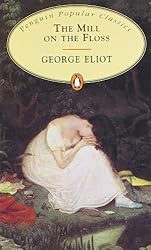
The Spin number is 8, which for me is The Mill on the Floss by George Eliot ‘“ to be read by 2 May 2016.

I’ve had this book for years, keen to read it after I’d enjoyed Middlemarch, and it has sat unread ever since. I was hoping for Framley Parsonage and have started to read it, so I probably won’t finish The Mill on the Floss by 2 May especially as it is quite long (535 pages in a small font – I think I’ll get a copy to read on my Kindle).

Doctor Thorne by Anthony Trollope

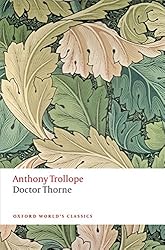
I’ve recently read Anthony Trollope’s Doctor Thorne, which I’d meant to read about a year ago after I finished Barchester Towers! I enjoyed it, although I think it’s a bit too drawn out – I could see where the plot was going very early in the book. The conclusion is predictable.

But that didn’t matter as it’s a book about mid nineteenth-century prosperous country life and the traditional attitudes towards the accepted codes of conduct, of the importance of birth, of wealth and above all about money, class and power. It’s about human relationships and the strength of the novel is in the portraits of its characters and their responses to matters of principle in the face of upper class idiocy and snobbishness. Trollope uses gentle satire in this novel, emphasising the absurdities of the class divisions in society and poking fun at the professions, with the names of doctors, such as Dr Fillgrave, whose name wouldn’t inspire me with confidence, parliamentary agents such as Mr Nearthewind and Mr Closerstil and lawyers called Messrs Slow and Bideawhile.

Doctor Thorne is the third in Trollope’s Barchester Towers books – the first one not set in Barchester, but in Greshambury in East Barsetshire, where the Gresham family and Doctor Thorne and his niece Mary live. As the novel opens nothing is going well for the Gresham family, they are in financial difficulties, the estate is mortgaged and they are heavily in debt. It is imperative that Frank, the son and heir to Greshambury Park and its estate, should marry money – indeed, his mother, Lady Arabella, the sister of the Earl de Courcy insists ‘He must marry money‘, a refrain that is repeated throughout the novel. But Frank has fallen in love with Mary, who has neither money or rank, and is illegitimate and as the story proceeds she is increasingly ostracised by the Gresham family, egged on by their rich relations the De Courcys.

Although the book is called Doctor Thorne, the main character to my mind is Mary Thorne, who shows great strength of character throughout. Mary had been adopted by Doctor Thorne, after her father, his brother had been murdered by her mother’s brother. Her mother had left England for America, where she had married and had a family. The brother, meanwhile had done well for himself after he left prison and made a fortune. Mary knows nothing of her background.

I particularly liked Miss Dunstable, the daughter of ‘the ointment of Lebanon man‘, who had inherited £200,000 when he had died recently. The Gresham family, or rather Lady Arabella, instruct Frank that he is to ask her to marry him – her wealth over-riding the fact that her father was a tradesman.

My only criticism of this book is that the discussions about whether Frank and Mary should or should not be allowed to marry are too drawn out and slowed down the plot too much for my liking. Apart from that I thought it was good, Trollope’s authorial comments were interesting, the dialogue was realistic and lively and the main characters came over as real people. An entertaining novel and now I’m keen to read the next Barchester Towers book, Framley Parsonage; Doctor Thorne also appears in this book!

In his Autobiography Trollope wrote that he had been trying to think up a new plot and he asked his brother to sketch one for him, which he did! He thought it was a good plot and the book was, he believed, the most popular book he had written. He was surprised by its success.

After I finished reading Doctor Thorne I realised that it was a perfect choice for the What’s in a Name? Challenge in the category of a book with a profession in the title. It’s a book I’ve had since before 1 January 2016 and fits into the Mount TRB Reading Challenge too and it’s also a book I identified for the Classics Club Challenge.

I wanted to read Doctor Thorne before the three-part adaptation of the book that starts tonight on ITV at 9 pm, so that my reaction to it wouldn’t be influenced. Now that I have read it I’m not at all sure I’ll watch the adaptation. If there are too many changes I know it will irritate me.

Classics Club Spin

The Classics ClubIt’s time for another Classics Club Spin.

The Spin rules:

  •  List any twenty books you have left to read from your Classics Club list.
  • Number them from 1 to 20.
  • On Monday the Classics Club will announce a number.
  • This is the book to read by 2nd May 2016.

My List

  1. Lorna Doone: A Romance of Exmoor by R D Blackmore
  2. Nicholas Nickleby by Charles Dickens
  3. Little Dorrit by Charles Dickens
  4. Martin Chuzzlewit by Charles Dickens
  5. Oliver Twist by Charles Dickens
  6. The Adventures of Sherlock Holmes by Arthur Conan Doyle
  7. The Count of Monte Cristo by Alexandre Dumas
  8. The Mill on the Floss by George Eliot
  9. Romola by George Eliot
  10. Parade’s End by Ford Maddox Ford
  11. The Forsyte Saga (1) by John Galsworthy
  12. Mary Barton by Elizabeth Gaskell
  13. North and South by Elizabeth Gaskell
  14. Wives and Daughters by Elizabeth Gaskell
  15. Far from the Madding Crowd by Thomas Hardy
  16. The Man Who Would Be King by Rudyard Kipling
  17. Love in the Time of Cholera by Gabriel Garcia Marquez
  18. One Hundred Years of Solitude by Gabriel Garcia Marquez
  19. Framley Parsonage by Anthony Trollope
  20. The Voyage Out by Virginia Woolf

I’d like no.19 to come out as the spin number, as I’ve recently finished reading Anthony Trollope’s Doctor Thorne, or no. 20 as that would fit in with Heavenali’s Virginia Woolf read-along, or maybe no. 15 as it’s been ages since I read anything by Thomas Hardy. But actually I’m happy to read any of these books.