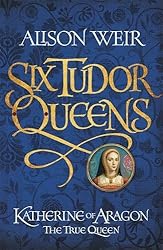
Six Tudor Queens: Katherine of Aragon, the True Queen by Alison Weir

I received a proof copy of Six Tudor Queens: Katherine of Aragon, the True Queen as a member of the reader review panel for Lovereading.co.uk. It’s the first book in a series of novels about Henry VIII’s Queens and is due to be published in May 2016.

This is fictional biography at its most straight forward, written in an uncomplicated style. Told from Katherine’s point of view it follows her life from the time she arrived in England at the age of sixteen to marry Prince Arthur, the elder of Henry VII’s two sons, to her death in 1536.

I knew the brief facts about Katherine, the daughter of Isabella and Ferdinand of Spain, married first to Prince Arthur and then to his brother Henry after a papal dispensation allowing the marriage after Arthur’s death; her subsequent failure to produce a living male heir, suffering a series of miscarriages; the only baby to survive was a daughter, Mary; and her divorce in 1533 from Henry VIII, who was by then besotted with Anne Boleyn.

This novel fills in the facts in great detail including the question of whether her first marriage was consummated. Katherine maintained it wasn’t and based on research Weir takes her word as the truth. In her Author’s Note she refers to recent research by Giles Tremlett and Patrick Williams that shows ‘we can be fairly certain that Katherine’s marriage to Prince Arthur was not consummated and that he died of tuberculosis.’  She cites the basis of her account of Arthur’s illnesss on Dr. Alcaraz’s testimony, given on 1531 at Zaragoza. She portrays Katherine as a determined woman who never ceased loving Henry and above all who did everything she could to protect the legitimacy of her daughter.

Katherine is portrayed as a woman of her time – obedient to her parents and her husband, conscientious about doing her duty  and active in maintaining an alliance between England and Spain. But even so, she resisted Henry in his demands for an annulment of their marriage. She was heart-broken both at her failure to produce a living male heir and to keep Henry’s love – because they were in love at the beginning – and maintained that she was the true queen right up to her death. I tend to forget the length of their marriage, glibly remembering the mnemonic ‘Divorced, beheaded, died, divorced, beheaded, survived‘. Katherine and Henry were married for over 20 years. I did get tired of the account of their endless wrangling, going over and over the same arguments, never getting anywhere – but then I suppose that was how it was for them both.

Overall I enjoyed this book. It’s a long and comprehensive study, which has increased my knowledge and understanding of Katherine of Aragon and the early 1500s. It is obviously based on extensive research and written with great attention to historical accuracy, but in places this made it tedious and too drawn out.

  • Hardcover: 624 pages – also available as a Kindle edition
  • Publisher: Headline Review (5 May 2016)
  • Language: English
  • ISBN-10: 1472227476
  • ISBN-13: 978-1472227478
  • Product Dimensions: 15.3 x 5.6 x 23.4 cm
  • Source: Review copy

My Friday Post: Book Beginnings & The Friday 56

Friday is book excerpts day on two blogs:

Book Beginnings ButtonBook Beginnings on Fridays hosted by Rose City Reader, where bloggers share the first sentence or more of a current read, as well as initial thoughts about the sentence(s), impressions of the book, or anything else that the opening inspires.  Friday 56

The Friday 56 hosted by Freda’s Voice, where you grab a book and turn to page 56 (or 56% of an ebook), find one or more sentences (no spoilers), and post them.

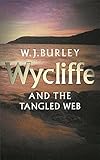
I’ve just started to read Wycliffe and the Tangled Web by W. J.  Burley. It begins:

The fair girl looked out of place in a doctor’s waiting room: she seemed to glow with health.

From page 56:

‘Alice has just come down from the village; she says the police are questioning Ralph Martin again; they’ve got him in their van on the quay.

After reading a few long books I fancied something shorter – this book has just 191 pages. It’s set in Cornwall where Chief Superintendent Wycliffe is investigating the case of a schoolgirl who went missing on the day that she told her boyfriend and sister she was pregnant. As he digs deeper Wycliffe finds a web of hatred and resentment – a web he will have to untangle.

It promises to be both easy reading and a satisfying mystery. I’ve read a few of Burley’s Wycliffe books and enjoyed them.

The Legacy of Elizabeth Pringle by Kirsty Wark

I quoted an extract from the opening paragraph of The Legacy of Elizabeth Pringle by Kirsty Wark in an earlier post, whilst I was in the middle of the book. I finished reading it a few days ago and have been wondering what to write about it ever since. It’s one of those books that has received a mixed reception with some reviewers thinking it’s a well written book whereas others think it isn’t. I enjoyed it very much.

It’s a story centred on the lives of two women – Elizabeth Pringle and Martha Morrison. Elizabeth has lived all her life on the Isle of Arran and knowing that she is dying and has no living relatives, leaves her house, Holmlea in Lamlash, to Anna Morrison, a woman she had seen years before, pushing her daughter’s pram down the road outside. Anna Morrison, had fallen in love with the house and written to Elizabeth asking her to get in touch if she ever thought of selling it. But Anna is now suffering from dementia and it is her daughter, Martha who goes to Arran to see the house on her mother’s behalf.

What follows is a dual narrative moving between Elizabeth’s account in her own words of her life up to the present day and Martha’s current situation, told in the third person, as she meets the people Elizabeth knew, in particular, Saul, a Buddhist, Niall, a young man who is passionate about gardening, and Catriona his sister who runs a hotel on the island. It’s a deceptive book in that it appears that not much happens and it is gentle and leisurely paced, but it is actually packed with events, some of them dramatic and devastating in their effect on the characters’ lives. And it has a vivid sense of place and of Arran’s history, which I loved.

I much preferred Elizabeth’s story beginning when she was just four and her father went off to fight in the First World War; her relationship with her mother; her life as a teacher and her love life. I found the ending of her life very moving. Martha’s story seems rather pat, everything falls into place a bit too easily – especially her relationship with her mother and sister and the instant friendships she makes on the island.

It’s a book about family, relationships, especially mother/daughter/sister relationships, about happiness, love and heartbreak, old age, memories and the contrast between life in the early part of the twentieth century and the present. It’s strong on description, which is important to me as I like to visualise the locations – and I had no difficulty at all with that in this book.

All in all, I was captivated by this story.

Kirsty Wark is a journalist, broadcaster and writer who hosts a variety of BBC programmes. Her home has always been Scotland and her family’s connection to Arran goes back over many years.

————-

Reading Challenges: Mount TBR Reading Challenge – a book I’ve had for two years, and Read Scotland 2016 – a book by a Scottish author and set in Scotland.

Weekend Cooking: Easy Baking

weekend cookingBeth Fish Reads’ Weekend Cooking is open to anyone who has any kind of food-related post to share: Book reviews (novel, nonfiction), cookbook reviews, movie reviews, recipes, random thoughts, gadgets, quotations, photographs, restaurant reviews, travel information, or fun food facts.

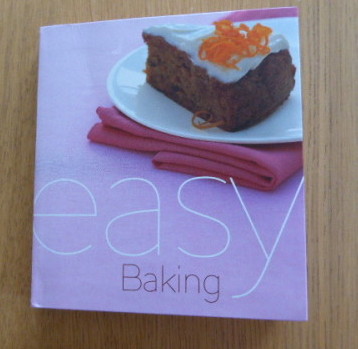
Easy Baking is a Marks & Spencer book of recipes for Cakes, Slices & Bars, Cookies and Small Bakes, and Desserts.

P1010876

I thought this little book looked too tempting to resist and one afternoon decided to make the Sticky Toffee Cake, one of my favourite cakes – and I had all the ingredients to hand. It really is an easy recipe. You need:

  • 75g sultanas
  • 150g stoned dates, chopped
  • 1 tsp bicarbonate of soda
  • 25g butter
  • 200g soft dark brown sugar
  • 2 eggs
  • 200g self-raising flour, sifted

Method:

Cover sultanas, dates and bicarb with boiling water and leave to soak. Preheat oven to 180°C/350°F and grease a 7 inch/18cm square cake tin. Mix butter and sugar together, beat in the eggs and fold in the flour, drain the soaked fruits, add to the bowl and mix. Spoon mixture into the cake tin and then bake for 35 to 40 minutes or until a skewer inserted into the centre comes out clean.

The recipe also includes a sticky toffee sauce, but I didn’t have the ingredients for that – it was still delicious, sweet and moist, without it. I’ll make it next time.

There are lots more recipes I’ll try making – including Jewel-topped Madeira Cake, which is topped with sliced glacé fruits glazed with honey, Chocolate Chip and Walnut Slices, Viennese Chocolate Fingers and Manhatton Cheesecake, which looks amazing with a digestive biscuit base and topped with a blueberry sauce.

My Friday Post: Book Beginnings & The Friday 56

Friday is book excerpts day on two blogs:

Book Beginnings ButtonBook Beginnings on Fridays hosted by Rose City Reader, where bloggers share the first sentence or more of a current read, as well as initial thoughts about the sentence(s), impressions of the book, or anything else that the opening inspires.  Friday 56

The Friday 56 hosted by Freda’s Voice, where you grab a book and turn to page 56 (or 56% of an ebook), find one or more sentences (no spoilers), and post them.

I’m currently reading The Legacy of Elizabeth Pringle by Kirsty Wark. (See this post for the synopsis)

It begins with a letter dated 1 January 2006:

Holmlea, 20 Shore Road, Lamlash, Isle of Arran

Dear Mrs Morrison,

A long time ago, almost thirty-four years past, you wrote to me requesting that I contact you should I ever wish to leave my home. I knew then that I would never live anywhere else, and so there was no point in my replying to you. I have lived in this house since I was eight years old but I am what people these days describe as ‘ancient’ and somewhat frail, and although I have managed perfectly well on my own until now, I know I am not long for this world. I have told my doctor I will move to a small nursing home as I realise it will be less trouble for him, and I have finally locked up the house.

My family such as it was, is long dead. There is no one alive but me.

I am instructing my solicitor to write to you at the address on your letter. Holmlea is yours if you still wish it.

Page 54 (pages 55 and 56 are blank pages)

It was Mary who raced to Benkiln that fateful September of 1918 clutching a newspaper from France. I have read the cutting so often I know it by heart. ‘Arran gunner in brave attack on the Hun. Sergeant James Allan Pringle showed conspicuous gallantry and devotion to duty during an attack north of Bray-sur-Somme on 22 August. 

My thoughts

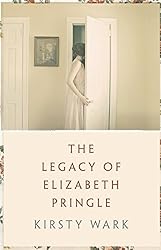
There were several things that caught my attention when I saw this book on display in the bookshop – first of all the cover, with its delicate colours, of a young woman entering a door, then the title with its hint of a past to be revealed, and thirdly the opening letter with its offer of a house on the Isle of Arran if Mrs Morrison still wished it. It’s a poignant letter, which saddened me a little with that sentence – There is no one alive but me. 

I’ve now read just over half of the book, which tells Elizabeth’s story along with that of Martha, Mrs Morrison’s daughter. I’ve never been to Arran, an island off the north-west coast of Scotland, but Kirsty Wark’s description is making me eager to see it for myself. The book has a quiet, gentle atmosphere, which is also very compelling reading, packed with the events of both Elizabeth’s and Martha’s lives.

The Madness of July by James Naughtie

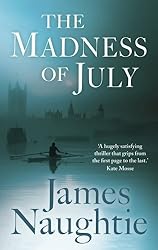
When I began reading The Madness of July I was immediately drawn into the story. I used many markers as I read it because it has such a complicated plot. It’s a political thriller set in London in the mid 1970s one sweltering July as Will Flemyng the foreign office minister and former spy finds himself drawn back into the world of espionage, a world of deception, manipulation and diplomacy. It’s the Cold War period and Will discovers politics can be just as dangerous as espionage.

I really wasn’t sure what was going on at first, not sure what was relevant for me to remember and understand, not even sure who was who as the narrative switched between London, New York, Washington and the Highlands of Scotland. So there were times when I had to backtrack when I came across a character or an event, that turned out to be important to the story, which I hadn’t realised earlier on. The characters know what has gone before, know each other, know what they are talking about – but we don’t.

In a different book this would be a major drawback – in this book it is necessary. It’s as though we’re peering through the fog, until gradually the fog lifts and things become clearer. Or it’s like beginning a cryptic crossword where you have all the clues and no idea about the answers. Anyway, I loved it. If the content isn’t too clear at first the writing is, Naughtie uses beautiful imagery and the characters are vividly drawn, in particular the part set in Scotland at Altnabuie, the Flemyngs Highland estate:

At Altnabuie, they woke to a trembling dawn. Flemyng had raised his bedroom window before turning in, and when he opened his eyes, very early, he could smell the highlands. There was a edge to the warmth and the damp, and the tang of tree and field lured him on. He looked towards the loch and saw swirls of mist rising up in thin pillars, like the guilty secrets of hidden smokers, leaving a thin topping of white cotton on the water that crept over the surface and was beginning to disperse here and there with the coming of a soft breeze. It would be gone within the hour. The herons were on their favourite stone, prim and still like a pair of disapproving clerks. The crows cawed in the woods beyond, and behind him, on the eastern side of the house where the sun was already giving life to the place, he could hear the cockerel at work. Everything was crisp and clean, the stifling urban fog a world away. (page 173)

The events that July take place over just 6 days. An American, Joe Manson dies, apparently of an overdose and is found in a store cupboard (it was a large one full of boxes and all sorts of spare objects) in the House of Commons – except that as the House is technically a royal palace deaths are not allowed and bodies have to be discreetly removed and ‘expire’ elsewhere. And thus begins a political crisis – who was Manson, how did he die, what did he know, what had he said – and to whom? And there is a letter on House of Commons notepaper that Will found on the photocopier – an anonymous letter that is puzzling him, a letter from someone who is desperate and who feels he/she is being driven insane.

A secondary plot, but to my mind just as interesting, maybe even more so, concerns Will and his family. He has two brothers, an older on, Mungo who lives at Altnabuie, and a younger one, Abel, who goes by the name of Grauber, their mother’s maiden name, and lives in New York. Mungo has been researching their family history and has discovered a secret about their mother that he finds disconcerting, even frightening.

And the madness? At one point Flemyng, talking about politics says that the rules of the game mean that you have to behave irrationally. A point is reached where you invited destruction, he’d said, as if it were inevitable. ‘Maybe madness isn’t an aberration, but the natural end to our game.’ Everyone aspired to it in politics, even if they didn’t recognise it for what it was. (page 110)

Madness has been haunting Flemyng: Because in these corridors – balance and rational though we believe ourselves to be – there’s madness on the loose. (page 326)

If you like a quick easy read, then The Madness of July is not the book for you. It, however, like me, you like a book that makes you think, that keeps you on your toes as you read, that both puzzles and entertains you, then you’ll probably enjoy it as much as I did.

James Naughtie (pronounced Nochtee, or ‘“ /ˈnɔːxti/ as it is given in Wikipedia, which doesn’t mean anything to me) is a British radio and news presenter for the BBC. From 1994 until 2015 he was one of the main presenters of Radio 4’s Today programme. He is now a ‘Special Correspondent’ with ‘responsibility for charting the course of the constitutional changes at the heart of the UK political debate’, as well as the BBC News’s Books Editor, contributing a book review to the Saturday morning editions of Today. The Madness of July is his first novel. He has also written books on politics and music. He was born in Aberdeenshire and lives in Edinburgh and London.

His second novel, Paris Spring, also featuring Will Flemyng, is due to be published in April this year.

…………………….

Reading Challenge: Read Scotland 2016 and What’s in  Name? 2016 – in the category of a book with a month of the year in the title.