Once Upon a Time X

Once Upon a Time 2016
(Art by Melissa Nucera)

I’m a bit late in joining in with Carl’s Once Upon a Time challenge this year! But as it doesn’t end until 21 June it’s not too late.

The Once Upon a Time X Challenge has a few rules:

  • Rule #1: Have fun.
  • Rule #2: HAVE FUN.
  • Rule #3: Don’t keep the fun to yourself, share it with us, please!
  • Rule #4: Do not be put off by the word ‘challenge’.

While this event retains the word ‘challenge’from its earliest days, the entire goal is to read good books, watch engaging television shows and films, play immersive games and most importantly, visit old friends and make new ones. There are several ways to participate – see Carl’s sign-up post.

I’ll be doing:
out10tshortstory

which involves the reading of one or more short stories that fit within at least one of these four genres:  Fairy Tale, Folklore, Fantasy and Mythology, including the seemingly countless sub-genres and blending of genres that fall within this spectrum.

P1010936

I’m planning to read/re-read some of Hans Christian Andersen’s Fairy Tales from this old book, sadly now falling apart. It belonged to my mother when she was a child.  I read some, but by no means all, of these stories when I was little and I’m looking forward to re-living the experience.

First Chapter, First Paragraph: The Silver Pigs

Every Tuesday Diane at Bibliophile by the Sea hosts First Chapter First Paragraph Tuesday Intros, where you can share the first paragraph, or a few, of a book you are reading or thinking about reading soon.

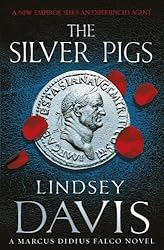
This week I’m featuring The Silver Pigs by Lindsay Davis, a book that I started reading last night. Whilst this is a new-to-me series, The Silver Pigs was first published in 1989 and there are now 20 books in the series. Lindsey Davis also writes the Favia Alba Mystery series. She has won many literary awards, and was honorary president of the Classical Association from 1997 to 1998.

It begins:

When the girl came rushing up the steps, I decided she was wearing far too many clothes.

It was late summer. Rome frizzled like a pancake on a griddleplate. People unlaced their shoes but had to keep them on; not even an elephant could cross the street unshod. People flopped on stools in shadowed doorways, bare knees apart, naked to the waist – and in the backstreets of Aventine Sector where I lived, that was just the women.

This is historical crime fiction, the first of the Marcus Didius Falco novels. Set in Rome in 70AD, Vespasian is the new Roman emperor and Falco is a private informer, or private eye. In this first book he and his partner Helena Justina rescue a young girl in trouble. He is then catapulted into a dangerous game involving stolen imperial ingots, a dark political plot and, most hazardous of all, a senator’s daughter connected to the traitors Falco has sworn to expose.

My copy has an introduction by Lindsey Davis in which she tells of how she began to write historical fiction, setting a typical private eye figure in Rome two thousand years ago. It has maps and a Dramatis Personae.

And I do like the cover.


The Mill on the Floss by George Eliot

I was pleased when the Classics Club Spin number came up as 8, because for me that was The Mill on the Floss, a book I’ve had for years, so it was time I read it. I think one of the reasons I hadn’t read it is the size of the font – it’s small. But then I realised that there is a free e-book, so I read it on my Kindle as I could increase the font size.
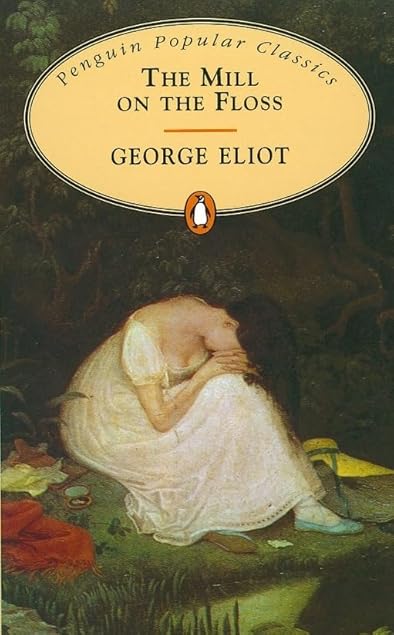
Description (from my paperback copy of the Penguin Popular Classics 1994 edition, shown above):

George Eliot drew on her own anguished childhood when she depicted the stormy relationship between Maggie and Tom Tulliver. Maggie’s often tormented battle to do her duty and belong on the one hand, and to be  herself, wild and natural, on the other, propels her from one crisis to another. As the Tulliver fortunes decline and fall, the rift between Maggie and her family becomes almost irreconcilable. But Maggie’s biggest mistake of all is to fall in love with Stephen Guest who is engaged to another woman.

Both a sharp and observant picture of English rural life and a profoundly convincing analysis of a woman’s psychology, The Mill on the Floss is a novel that tackles the complexities of morality versus desire.

My thoughts:

The Mill on the Floss was first published in 1860. The story begins in the late 1820s, when Maggie, who is ‘big for her age, gone nine‘ and her brother, Tom aged about twelve are living at Dorlcote Mill on the banks of the river Floss near the town of St Oggs. Their father is anxious that Tom should have a good education so that he can go into business – he does not want him to be a miller. But it is Maggie who is the keen reader, enjoying books like The History of the Devil by Daniel Defoe, Aesop’s Fables and the Pilgrim’s Progress.

I enjoyed parts of the book more than other parts. The first part of this book, covering Maggie and Tom’s childhood for example is fascinating and a study of early 19th century rural life and education. Tom goes away from home to study under a tutor, Mr Stelling and meets Philip Wakem, whose father is a lawyer, Mr Tulliver’s opponent in a lawsuit. Maggie and Tom’s relationship is difficult, although she professes she ‘loves him better than anyone else in the world’, even when he rebukes her. Meanwhile Maggie becomes more friendly with Philip than Tom and her family like.

There are some lovely scenes, for example Maggie’s escapade when she leaves home to live with the gypsies. And I liked all the scenes with Mrs Tulliver’s sisters, who look down on her for marrying a miller and criticise Maggie’s appearance and behaviour, for Maggie is full of high spirits and energy. The sisters also provide comic relief, at times being miserly and self-centred, with a strong sense of their own importance. But things go from bad to worse for the Tullivers, when Mr Tulliver loses the lawsuit and eventually loses the mill.

In other places, between scenes there are long, rambling passages, that I found too wordy and philosophical and I waited impatiently to get back to the story. But overall I liked the book, more than I liked Adam Bede, but not as much as I remember liking Middlemarch, which I read long before I began this blog.

The Mill on the Floss is an epic novel encompassing various themes such as love, marriage, family loyalty, the social conventions of the times, and the struggle to survive. Feminism, education, and the role of women in society are to the fore, as Maggie is torn between two men who love her and is judged harshly for her behaviour.

It is a character driven plot; the river Floss plays a major part in the story, running through a wide plain, hurrying on to the sea, laden with ships. It’s a noisy place with Dorlcote Mill is on its banks near a stone bridge and the rush of the water is deafening, along with the ‘thunder of the huge covered wagon coming home with sacks of grain‘.

And it is the Floss that provides the huge climax which took me by surprise. It’s a dramatic ending and yet I found it rather unsatisfactory, not sure that I could believe what I had read, and shocked by such a sad ending. Looking back after I finished the book I realised that it had been foreshadowed almost from the start and I had missed it.

Reading Challenges: Mount TBR 2016 and The Classics Club.

Books Read in April 2016

I can hardly believe it’s the first day of May – we’ve had such mixed weather recently, including snow. On Thursday evening our road looked very Christmassy but by the morning the snow had nearly all gone.

I read a mixed selection of books in April, eight books in total, five of them books from my TBR shelves including one non-fiction book.

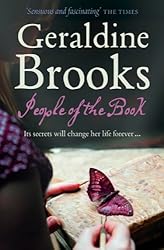
People of the Book by Geraldine Brooks (TBR) – a book I’ve owned for nearly eight years! It’s a novel inspired by the true story of the Hebrew codex known as the Sarajevo Haggadah, but most of the plot and all of the characters are imaginary.  I loved it.

The Price of Love by Peter Robinson – a collection of short stories, including an original DCI Banks novella that I read on my Kindle. Very enjoyable.

Blurb: When DCI Alan Banks arrived in Eastvale his life was every bit as much of a mess as it is now.But he is holding an envelope that could change everything he understood about the events that sent him north twenty years ago. Walking again the narrow alleys and backstreets of his mind, he remembers the seedy Soho nights of his last case – dubious businessmen in dodgy clubs, young girls on the game. And a killer on the loose.
In addition to the brand-new novella that fills in the gaps in Banks’s life before Yorkshire, Peter Robinson gives us ten more brilliant and eclectic stories that have never before been published in the UK. The Eastvale Ladies’ Poker Circle finds that murder may be just another game of risk. Is a suitcase of cash worth a man’s head on a plate? And tragedy leads a young boy to learn the price of love . . .

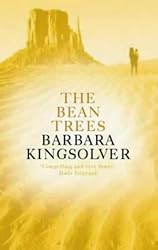
The Bean Trees by Barbara Kingsolver – the story of Taylor Greer and what happens when she leaves her home in Kentucky and becomes the guardian of an abandoned baby girl she calls Turtle.

Bones and Silence by Reginald Hill (TBR) –  a Dalziel and Pascoe crime fiction novel, the 11th in the series. I liked all the complications of plot and sub-plots in this book and the interplay of the characters. It’s full of interesting characters and humour, but it is the plot that takes precedence. It is so tricky, with numerous red herrings and plot twists.

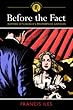
Before the Fact by Francis Iles (TBR) –  a cleverly written, Golden Age crime fiction novel that is a psychological character study of its two main characters, Lina and Johnnie Aysgarth. It was nearly eight years before Lina realized that she was married to a murderer.

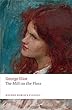
The Mill on the Floss by George Eliot (TBR) –  George Eliot’s most autobiographical novel, first published in 1860. It’s a book I have been meaning to read for years, so I was pleased when the Classic’s Club Spin gave me the nudge to read it! My review is to follow.

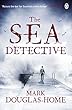
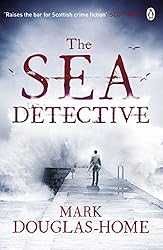
The Sea Detective by Mark Douglas-Home (RB) – a book I thoroughly enjoyed, it grabbed my attention right from the start. It’s a complicated story of unsolved mysteries both from the present day and from the Second World War, and of two Indian girls, sold into the sex trafficking trade. It’s set mainly in Scotland with a strong sense of place throughout.

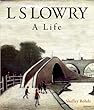
L S Lowry: A Life by Shelley Rohde (NF, TBR) – Lowry is one of my favourite artists, well known for his urban paintings of industrial towns but his work covers a wide range of themes and subjects, from landscapes and seascapes to portraits. My review is to follow.
And my favourite? With such a variety of genres it’s impossible to single out one book, but three books stand out:

People of the Book by Geraldine James, because I was so engrossed in the book I didn’t want to put it down.

And The Sea Detective by Mark Douglas-Home, because it’s crime fiction with a difference and I loved all the different strands.
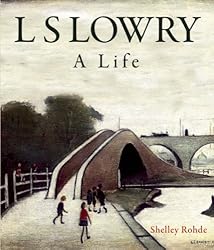
And finally, L S Lowry: A Life by Shelley Rohde, because I learnt so much about the man and his paintings.

The Bean Trees by Barbara Kingsolver

If I don’t write about a book as soon as I’ve finished it the details begin to fade. I finished reading  Barbara Kingsolver’s first novel, The Bean Trees a few weeks ago. So this is a short post on the book, which doesn’t really do justice to it!

My thoughts:

I loved this book. Barbara Kingsolver writes in such a way that I can easily visualise the scenes, beginning with the opening paragraph in which she describes a tractor tire blowing up, flinging a man up in the air and throwing him over the top of a Standard Oil sign. Taylor (originally called Marietta/Missy) grew up in rural Kentucky. She left home when she had saved enough to buy a car, an old VW. She changed her name to Taylor after the first place where she ran out of petrol, which just happened to be Taylorville. She drove on until the car broke down in the middle of nowhere, on land owned by the Cherokee tribe. And it was there at a garage that an Indian woman abandoned a baby girl in Taylor’s car – she called the baby, Turtle.

They travel on to Tucson, where she settled for a while, living with Lou Ann, a mother whose husband, Angel Ruiz left before their son was born, and working for Mattie at ‘Jesus Is Lord Used Tires’. Mattie, however, is also involved in an underground railway moving illegal Guatemalan and Salvadoran immigrants to safe houses. She talks of the obligation under the United Nations ‘something or other’ ‘to take in people whose lives are in danger’. And Taylor becomes involved in helping her.

There are several themes running throughout this short, but well written book – both political and social including family relationships, particularly mother/child, sexual and physical abuse of small children, the integration of cultures, as well as the always current issue of refugees and illegal immigrants. I thought it was all thought-provoking as well as fascinating reading.

I have read some of Barbara Kingsolver’s later books, including The Poisonwood Bible, a longer and much more complex book, which I’ve read twice and loved. There is a sequel to The Bean Trees that I really want to read now – Pigs In Heaven.

Reading Challenges: What’s In a Name? in the category of a book with the word ‘tree’ in the title.

The Sea Detective by Mark Douglas-Home

Lovereading.co.uk  sent me a copy of  The Sea Detective by Mark Douglas-Home for review in advance of the publication of the third title in the series The Malice of Waves on 19 May and I’m glad to say that I thoroughly enjoyed it.

It’s one of those books that grabbed my attention right from the start when two young teenage girls from India are sold into the sex trafficking trade, completely unaware of the dangers and terror that awaits them. Then, Edinburgh-based oceanographer, Cal McGill is caught on camera planting a rare wild flower in the garden of the Scottish Environment Minister in a campaign to make politicians aware of the dangers of climate change. Detective Inspector Ryan wants to charge him with vandalism but the minister’s wife wants to keep the plant!

From then on the story gets complicated. It’s more of an investigative story than crime fiction, with several strands to the story, but it’s so well told that I had no difficulty in following all of them: a story of unsolved mysteries both from the present day and from the Second World War, and of two Indian girls, sold into the sex trafficking trade. It’s set mainly in Scotland with a strong sense of place throughout.

The main characters are all fully rounded and complex – Cal McGill works for environmental organisations tracking oil spills using wind speeds and data on ocean currents; DI David Ryan and DC Helen Jamieson are investigating the appearance of severed feet in trainers that had been washed on shore on islands miles apart – tests had revealed that they belonged to the same body; and Basanti, one of the Indian girls, whose resourcefulness saved her life. I especially liked Helen Jamieson, the overweight policewoman, whose boss, Ryan mistakenly thinks is stupid, and the way she deals with him.

The strand that interested me most concerns Cal’s grandfather, from the (fictional) island of Eilean Iasgaich. He had died during the Second World War, washed overboard during a storm, whilst their trawler was patrolling the sea around Norway, one of seven men who had died ‘“ and yet his name had not been included in the island’s war memorial. Cal eventually discovers the truth about what actually happened and how his grandfather met his death.

It’s a gripping and emotional story. I loved it.

The Sea Detective is Mark Douglas-Home’s first book. Before writing books he was the editor of Scotland’s leading daily newspaper, The Herald, and The Sunday Times Scotland. He is the nephew of the late Sir Alec Douglas-Home who was Prime Minister of the UK from October 1963 to October 1964. He lives in Edinburgh.

I’m looking forward to reading his second book, The Woman who Walked into the Sea as well as his third, The Malice of Waves.

Reading Challenges: Read Scotland 2016 – by a Scottish author and set in Scotland.