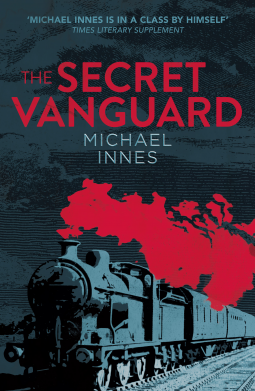
The Secret Vanguard by Michael Innes

A Golden Age Mystery

Ipso Books| 3 Oct. 2017|228 p|Review copy|4*

Nobody, she said to herself, is necessarily what he appears to be; nobody.

I enjoyed The Secret Vanguard very much. It’s the fifth in Michael Innes’ Inspector Appleby series and is very different from the first one Death at the President’s Lodging, which I read several years ago, a book that had little action, much description and a lot of analysis.  Set in 1939 on the edge of war, The Secret Adversary is full of action, a story of spies, kidnapping and a race through the Scottish Highlands to save a scientist. It reminded me in the Highlands section of John Buchan’s The Thirty-Nine Steps.

It begins with the murder of poet, Philip Ploss at his home in the Chilterns and Appleby is mystified wondering why anyone would have wanted to kill him. He had been shot in the middle of his forehead whilst in a gazebo with a magnificent view of the surrounding countryside.

It then moves to Sheila Grant, travelling by train to Scotland when she overhears a conversation about poetry as one of the passengers quotes from a poem by Swinburne. She thinks it is odd that he had added in four lines of his own and realises that the words were a sort of code that he was passing on. And, indeed this discovery leads her into danger but before she can alert anyone else she is captured and held prisoner, eventually escaping in a desperate search for assistance.

I liked all the twists and turns in this somewhat improbable story as Sheila, with much courage and luck scrapes through several dangerous escapades until Appleby comes to the rescue. I enjoyed the descriptions both of London and the Highlands as I raced through this book. I also really like Innes’ writing style, detailed, formal and scattered with frequent literary allusions and quotations. He has packed a lot into The Secret Vanguard.

My thanks to Ipso Books for a review copy via NetGalley.

Amazon UK link
Amazon US link

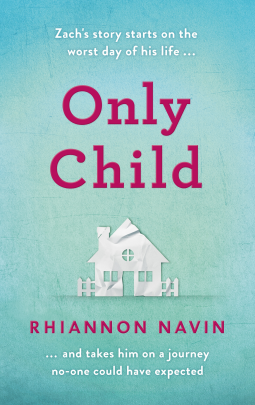
Only Child by Rhiannon Navin

Publication date 8 February 2018, Mantle

Review copy from the publishers, via NetGalley

My rating:  5 stars 

Blurb:

My thoughts:

This must be one of the most powerful books I’ve read for ages. In fact I don’t remember reading anything quite like it. It’s emotional, moving and absolutely compelling – I loved it. One of the things I loved most about it is the narrative voice – that of seven-year old Zach. Everything is shown through his perspective, as he sees and hears what happens – so, for example the shooting, the sounds ‘pop’, ‘pop’, ‘pop’ are described as Zach hears the gunshots. There are no gory or violent scenes.

But that is just the start of the book. The main part shows how he deals with what happens next, with the death of his ten-year old brother, Andy, and how he tries to make sense of his parents’ reactions and his own. I think Rhiannon Navin portrays him well. He comes across as a child who observes the adults around him  and tries to understand his own feelings. The scenes in his secret hideout are beautiful as he records his feelings as colours to help him separate them and deal with them. He also reads the Magic Treehouse books about finding the secrets of happiness.

Zach’s mother falls to pieces, wanting the gunman’s parents to take responsibility and looking for justice/revenge, his father becomes increasingly distant and although both Zach’s grandmothers and aunty are around for support he retreats into himself and then becomes angry, which bewilders and frightens him. He tries to explain to his parents how he is feeling and although his father listens and tries to helps him, his mother is totally absorbed in her own feelings. When his father decides to leave the family Zach is devastated. It is a heart-wrenching book, that brought tears to my eyes. All of which makes me admire Rhiannon Navin’s portrayal of the characters in this, her debut novel.

It is such a sad book, but ultimately it is uplifting.

Many thanks to the publishers for a review copy via NetGalley.

Amazon UK link
Amazon US link

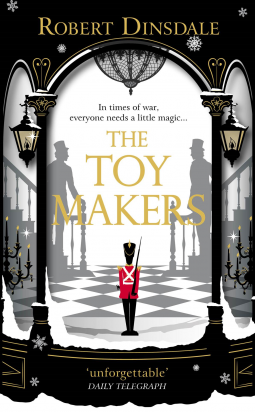
The Toymakers by Robert Dinsdale

Do you remember when you believed in magic?

Publication date 8 February 2018, Penguin Random House UK, Ebury Publishing

Review copy from the publishers, via NetGalley

My rating:  5 stars 

Blurb:

It is 1917, and while war wages across Europe, in the heart of London, there is a place of hope and enchantment.

The Emporium sells toys that capture the imagination of children and adults alike: patchwork dogs that seem alive, toy boxes that are bigger on the inside, soldiers that can fight battles of their own. Into this family business comes young Cathy Wray, running away from a shameful past. The Emporium takes her in, makes her one of its own.

But Cathy is about to discover that the Emporium has secrets of its own…

My thoughts:

I loved this book. As a child I loved stories about magic, stories that transported me to another world, but The Toymakers is not a children’s story. It is an extraordinary, magical and wonderful book that captivated me, a book set mainly in 1917 whilst the First World War was taking its toll of humanity, leaving despair and tragedy in its wake. It’s a blend of historical fiction and magic realism.This is a story of love, and family relationships, as well as of the devastating effects of rivalry and war.

Papa Jack’s Emporium in London is a toyshop extraordinaire. It opens with the first frost of winter each year and closes when the first snowdrop blooms. And the toys it sells aren’t ordinary toys – they seem alive, from patchwork dogs, to flying pegasi, Russian dolls that climb out of one another, runnerless rocking horses, whales that devour ships, fire-breathing dragons and many others to the toy soldiers that wage war on each other.

The story begins in 1906 and ends in 1953, following the lives of Papa Jack Godman, his sons, Kaspar and Emil and Cathy Wray, who aged 15 and pregnant had run away from home. Cathy finds sanctuary at the Emporium, and Papa Jack tells her how he came to live in London and founded the Emporium, how he had found in making toys a kind of magic, a way of reaching a man’s soul.

At first Cathy lived in the Wendy House, which like the Tardis is larger on the inside than the outside, with Sirius the patchwork dog. It was where her daughter, Martha was born. Kasper and Emil are caught up in a battle for control of the Emporium, and they both fall in love with Cathy, but it is Kasper that she marries. The years pass, the First World War breaks out, Kasper joins up, but Emil’s application is refused, so he stays at home, developing his toy soldiers. I was struck by the irony and pathos of a world at war mirrored in the battles fought by Emil’s toys soldiers. And things come a head when Kasper returns a damaged man and retreats into his mind. What happens next changes their lives for ever.

The Toymakers is a wonderful book, one that will stay with me, not just about the horrors of war and rivalry, but above all about the power of love, the magic of childhood and the effect of toys – when you are young you play with toys to feel grown up, imagining what it will be like to be an adult. But when you are an adult what you want from toys is to feel that you are young again. They remind you that the world was once as filled with magic as your imagination will allow.

Many thanks to the publishers for a review copy via NetGalley.

Amazon UK link
Amazon US link

First Chapter First Paragraph: Only Child by Rhiannon Navin

Every Tuesday First Chapter, First Paragraph/Intros is hosted by Vicky of I’d Rather Be at the Beach sharing the first paragraph or two of a book she’s reading or plans to read soon.

My first paragraph this week is from Only Child by Rhiannon Navin, which will be published on 8 February 2018.

It begins:

The Day the Gunman Came

The thing I later remembered the most about the day the gunman came was my teacher Miss Russell’s breath. It was hot and smelled like coffee. The closet was dark except for a little light that was coming in through the crack of the door that Miss Russell was holding shut from inside. There was no door handle on the inside, only a loose metal piece, and she pulled in with her thumb and pointer finger.

“Be completely still, Zach,” she whispered.

“Don’t move.”

Blurb

“We went to school that Tuesday like normal. Not all of us came home . . .” Huddled in a cloakroom with his classmates and teacher, six-year-old Zach can hear shots ringing through the corridors of his school. A gunman has entered the building and, in a matter of minutes, will have taken nineteen lives. In the aftermath of the shooting, the close knit community and its families are devastated.

Everyone deals with the tragedy differently. Zach’s father absents himself; his mother pursues a quest for justice — while Zach retreats into his super-secret hideout and loses  himself in a world of books and drawing. Ultimately though, it is Zach who will show the adults in his life the way forward — as, sometimes, only a child can.

∼ ∼ ∼

I was just going to look at this, not start reading it but before I knew it I was hooked and well into the story. What do you think – would you read on?

January’s Books 2018

I read seven books in January, six of them are fiction and one non-fiction, all of them good – some indeed are excellent. So far I’ve only reviewed three of them:

Turning for Home by Barney Norris, a beautifully and lyrically written novel. I loved this. It’s set on the day of Robert’s 80th birthday celebration and the narrative alternates between Robert’s and his granddaughter Kate’s stories, reflecting on their lives.

The Wicked Cometh by Laura Carlin, historical fiction set in England in 1831 – a tale of wickedness and evil. Although this begins well, it drags in the middle and ends with a final twist I didn’t find convincing.

The Confession by Jo Spain, a standalone book, set in Ireland.  Banker, Harry McNamara, recently cleared of multiple accounts of fraud, is brutally attacked in his home in front of his wife, Julie. I was gripped by this story and I had to read it quickly to find out what really happened.

I didn’t get round  to writing reviews for the other books, so here are a few notes on two of them, both books that I enjoyed. Both are written achronologically which took a bit of getting used to, but it worked well. This meant that with both books you have to be on your toes, so to speak, to keep track of where you are and who is who. And I really should have made notes as I read – and written about them not long after I finished them!

Notes From An Exhibition by Patrick Gale. It’s been a month since I finished reading this and unfortunately the details are rather vague in my mind now. Artist Rachel Kelly, a manic-depressive, subject to highs and lows is found dead in her Penzance studio, leaving her family with lots of unanswered questions. It becomes clear that her Quaker husband knew nothing about her early life. The narrative moves backwards and forwards from the past to the present and is told from different characters’ perspectives. It reminded me a bit of Sylvia Plath’s The Bell Jar in parts. I enjoyed the sections on Quakerism and working out the puzzle of Rachel’s life and her relationships. But I wasn’t sure about the ending – I should probably re-read the book.

After You’d Gone by Maggie O’Farrell – her debut novel. The main character, Alice is in a coma after being in road accident, which may or may not have been a suicide attempt. She has been grieving the death of her husband, John.

It’s quite a complicated story, following the life stories not only of Alice, but also those of her mother, Ann (who I didn’t like much),  her grandmother, Elspeth (who I did like very much), her two sisters and of John. What was it that Alice saw at Edinburgh station that shocked her so much? You don’t find out until the end of the book, although I did have an idea before that what it meant to her and why it was so upsetting. I’ve already started to re-read it as I’m sure there’s a lot I missed on my first reading, especially as some of it is written in the present tense. And I may write a more detailed post at some point.

And my reviews of these books will follow later:

Six Degrees from Lincoln in the Bardo to Iris

I love doing Six Degrees of Separation, a monthly link-up hosted by Kate at Books Are My Favourite and Best. Each month a book is chosen as a starting point and linked to six other books to form a chain. A book doesn’t need to be connected to all the other books on the list, only to the one next to it in the chain.

This month the chain begins with Lincoln in the Bardo by George Saunders, a book I haven’t read.

Lincoln in the Bardo

It’s about Abraham Lincoln and the death of his eleven year old son, Willie, at the dawn of the Civil War. Willie finds himself trapped in a transitional realm – called, in Tibetan tradition, the bardo – and as ghosts mingle, squabble, gripe and commiserate, and stony tendrils creep towards the boy, a monumental struggle erupts over young Willie’s soul.

Moving from a fictional and highly original book by the looks of it my chain goes next to a biographical account of Lincoln:

Team of Rivals: The Political Genius of Abraham Lincoln

Team of Rivals: the Political Genius of Abraham Lincoln, a biography of Abraham Lincoln and others, by  Doris Kearns Goodwin, a book I bought after watching the film, Lincoln, which is loosely based on this book covering the final four months of Lincoln’s life. Goodwin examines his relationships with three men he selected for his cabinet, all of whom were opponents for the Republican nomination in 1860: William H. Seward, Salmon P. Chase, and Edward Bates.

Body Parts: Essays on Life-Writing

Writing biography is the subject of Body Parts: Essays on Life Writing by Hermione Lee, a collection of essays on Shelley,  T S Eliot, J M Coetzee, Jane Austen, Eudora Welty  and Virginia Woolf, to name but a few. Lee explores the relation of biography to fiction and history and of the connection of writers’ lives to their works.

So my next link is a collection of essays by Virginia Woolf –

The Death of the Moth and Other Essays

The Death of the Moth and Other Essays, originally published in 1942 by Leonard Woolf. Virginia had been getting together essays, which she proposed to publish in the autumn of 1941, or the spring of 1942. She had left behind her many essays, sketches and short stories, some of which had been previously published in newspapers, which he decided were worth republishing and in this book he also included some of those previously unpublished.

The title essay is a meditation on the nature of life and death seen through the perspective of a moth. It flies by day, fluttering from side to side of a window pane. As the day progresses the moth tires and falls on his back. He struggles vainly to raise himself. Woolf watches, realising that it is useless to try to do anything to help and ponders the power of death over life.

Moths provide the next link  – to a novel, The Behaviour of Moths by Poppy Adams.

Behavior Of Moths

This is the story of two sisters, Ginny and Vivi. Vivi, the younger sister left the family mansion 47 years earlier and returns unexpectedly one weekend. Ginny, a reclusive moth expert has rarely left the house in all that time.  What happens when they meet again is shocking to both of them. It’s a story full of mystery and suspense as it is revealed that the two have very different memories of their childhood and the events of the past. Two events in particular affected their lives. One was when Vivi, aged 8, fell from the bell tower and nearly died. The story alternates between the past and the present as Ginny recalls their lives.

‘Bell‘ is the next link in my chain – to Iris Murdoch’s novel The Bell, a book with an impending sense of evil and menace. It looks at the angst and self-denial of the relationship between religion and sex.

The Bell

A lay community lives next to an enclosed order of nuns, a new bell is being installed and then the old bell, a legendary symbol of religion and magic  is retrieved from the bottom of the lake. The legend of the bell is that it fell into the lake after a 14th century Bishop had cursed the Abbey when a nun was discovered to have a lover and had drowned herself.

And my final link is to a book about the author of The Bell, Iris Murdoch – Iris: A Memoir by John Bayley.

Iris: A Memoir of Iris Murdoch

I first read this in 2003. It’s a very loving and touching account. Iris died in February 1999 after suffering from Alzheimer’s Disease. Bayley explained how he had coped emotionally and practically with the illness that beset the woman he loved and cherished.

Writing this post as disrupted my reading because I got Bayley’s book off the shelves and began reading it again. He writes in such a warm and affectionate way that I’ve decided to read it right away.

For once there is no crime fiction in my chain! It contains books pondering the nature of life and death, beginning with a meditation on the death of Willie Lincoln and ending with a memoir of the life of Iris Murdoch.

Next month (March 3, 2018), the chain begins with a controversial book that Kate reports had everyone talking in the nineties – The Beauty Myth by Naomi Wolf. Everyone that is, apart from me – I don’t know anything (yet) about this book.