I love doing Six Degrees of Separation, a monthly link-up hosted by Kate at Books Are My Favourite and Best. Each month a book is chosen as a starting point and linked to six other books to form a chain. A book doesn’t need to be connected to all the other books on the list, only to the one next to it in the chain.
This month the chain begins with with The Outsiders by S E Hinton.

Kate describes it as a teen classic, but it’s a book I haven’t come across before. According to Amazon it is ‘an outstanding story of teenage rebellion, written when the author was only 17 years old.’

I immediately thought my first link had to be to The Outsider (L’Etranger) by Albert Camus. Set in Algiers this is a book about Mersault, an individual who refused to conform to society, a reserved man without any sense of God, and who doesn’t show emotion but faces the world with indifference.
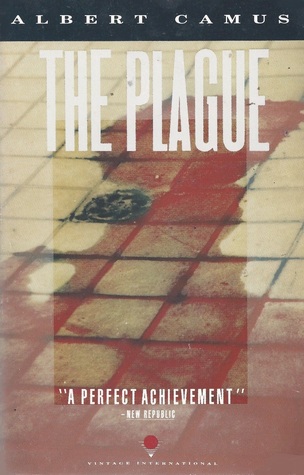
My second link followed on naturally to another book by Albert Camus – The Plague a book that can be read on two levels – either as a straightforward narrative about a plague in Oran in the 1940s or centred on the idea of plague as a symbol – the symbol being that of the German occupation of France (Camus was in the Resistance during the Occupation) during the Second World War.

Thinking about plague takes me to my next link – A Journal of the Plague Year by Daniel Defoe, about the Great Plague of 1664-5. Written in 1772 this is an account of the epidemic of bubonic plague, known as the Black Death, that ravaged England in 1664–1665.

Still on the subject of plague my mind jumped to The Plague Charmer by Karen Maitland, a fascinating medieval tale full of atmosphere and superstition set in 1361, at Porlock Weir in Somerset where a village is isolated when the Black Death spread across England.

Another book about an isolated village is The Western Wind by Samantha Harvey. In this book the village is Oakham also in Somerset that was cut off in the 15th century from the surrounding villages when the river flooded. It’s also a book full of superstitions.

And finally, the last link – The Mill on the Floss by George Eliot, in which the river plays a major role. Set in the early 19th century, Dorlcote Mill stands on the banks of the River Floss near a stone bridge – a noisy place as the deafening rush of water speeds on its way to the sea.
All my links apart from the first one are to historical fiction, moving from America through Algiers to England and travelling through the 14th, 15th, 17th and 19th centuries (not in that order though). The plague and natural disasters feature strongly.

 These are the rules:



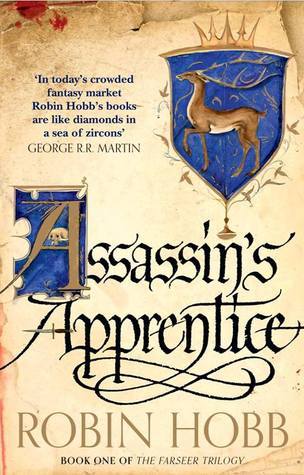



 Dead Woman Walking by Sharon Bolton 5* –


 The Gaslight Stalker by David Field 2* – historical crime fiction set in London in 1888. This was a disappointing book, that provides a new solution to the Jack the Ripper murders. There are two elements to the plot and I don’t think they mixed well. I liked the historical facts based on the evidence in the Jack the Ripper case and thought they were well written, if a little repetitive. But the romance between Esther, a young seamstress and Jacob Enright, a young police officer, felt out of place and is too simplistically narrated.

