Top Ten Tuesday is a weekly meme created by The Broke and the Bookish and now hosted by Jana at That Artsy Reader Girl. For the rules see her blog.
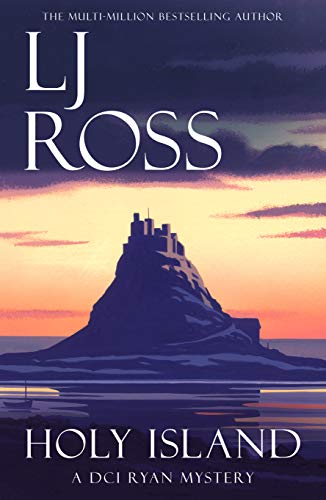
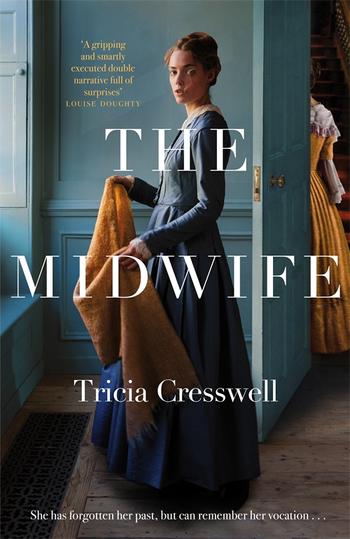
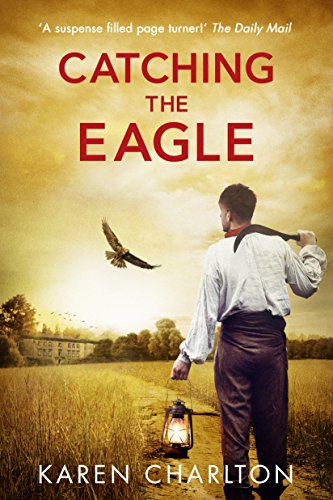
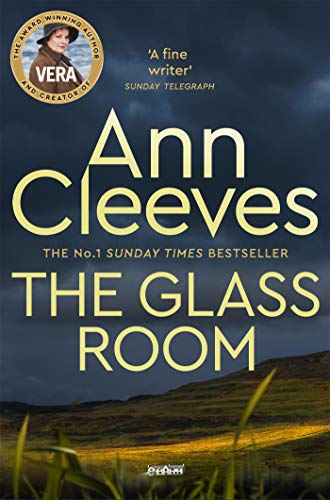
The topic this week is Authors (or books by authors) Who Live In My State/Country. I live in the UK. I’ve chosen authors who live/have lived in two Counties of the UK – Northumberland, where I now live and Buckinghamshire, where I used to live. The titles marked with * are linked to my reviews and the rest to Goodreads.
It’s time again for Six Degrees of Separation, a monthly link-up hosted by Kate atBooks Are My Favourite and Best. Each month a book is chosen as a starting point and linked to six other books to form a chain. A book doesn’t need to be connected to all the other books on the list, only to the one next to it in the chain.
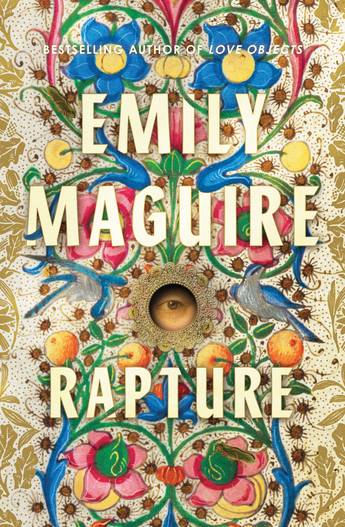
This month we start with Rapture by Emily Maguire. The motherless child of an English priest living in ninth-century Mainz, Agnes is a wild and brilliant girl with a deep, visceral love of God. At eighteen, to avoid a future as a wife or nun, Agnes enlists the help of a lovesick Benedictine monk to disguise herself as a man and secure a place at the revered Fulda monastery.
I haven’t read it and hadn’t heard of the author. According to a review in The Guardian she writes fiction and nonfiction and was shortlisted for the Stella prize, the Miles Franklin and book of the year at the Australian Book Industry awards for An Isolated Incident her 2016 novel. ‘In Rapture, her seventh novel, she turns her hand to historical fiction. Drawing inspiration from the life of Pope Joan, the woman who (according to legend) disguised herself as a man and served as pope for two years during the middle ages, Maguire examines questions of faith using the language of the body.’
I’ve had several false starts with this month’s chain, none of which I could complete. In the end I decided to start with another book about a pope, especially as the Roman Catholic Cardinals will start the procedure to elect a new pope on May 7.
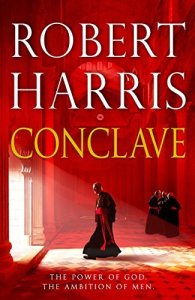
It’s Conclave by Robert Harris. I always learn a lot from reading Harris’s books. In this one he describes the procedure to elect a new pope. Cardinal Lomeli, the Dean of the College of Cardinals leads the 118 Cardinals through the voting stages. I felt as though I was a fly on the wall watching it throughout as the Cardinals are locked inside the Sistine Chapel, isolated from contact with the outside world. Harris has thoroughly researched the subject and seamlessly woven the facts into the novel. He visited the locations used during a Conclave that are permanently closed to the public and interviewed a number of prominent Catholics including a cardinal who had taken part in a Conclave, as well as consulting many reports and books.
The next book is another one by Robert Harris The Fear Index , a fast-paced story set in the world of high finance and computer technology, which is way out of my comfort zone. It’s about scientist Dr Alex Hoffman, who together with his partner Hugo Quarry, an investment banker, runs a hedge fund based in Geneva, that makes billions. Alex has developed a revolutionary form of artificial intelligence that tracks human emotions, enabling it to predict movements in the financial markets. It’s built around the standard measure of market volatility: the VIX or ‘Fear Index’. But I learnt a bit about hedge funds and how they operate, although I got lost in the computer technology details.
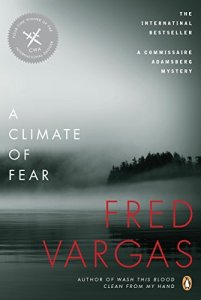
My third link is A Climate of Fear by Fred Vargas, 9th Commissaire Adamsberg book. I like Adamsberg; he’s original, a thinker, who doesn’t like to express his feelings, but mulls things over. He’s an expert at untangling mysteries, an invaluable skill in this, one of the most complicated and intricate mysteries I’ve read, involving a woman found bleeding to death in her bath, having apparently committed suicide, a strange symbol that appears at subsequent death scenes, and a secretive society studying and re-enacting scenes from the French Revolution.
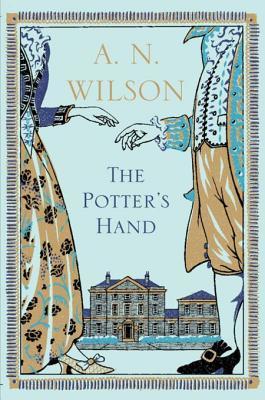
My fourth link is The Potter’s Hand by A N Wilson. it begins in 1768 and roughly follows the fortunes of the Wedgwood family until 1805, 10 years after the death of Josiah Wedgwood, an English potter and the founder of the Wedgwood company. For me it really did convey what it must have been like to live in that period – whilst the American War of Independence, and the French Revolution, were taking place. It’s full of ideas about colonialism, the abolition of slavery, working conditions, and women’s rights. There are many characters who come in and out of the narrative along the way, both fictional and historical, including Voltaire, George Stubbs (who painted the Wedgwood family portrait) and Samuel Taylor Coleridge.
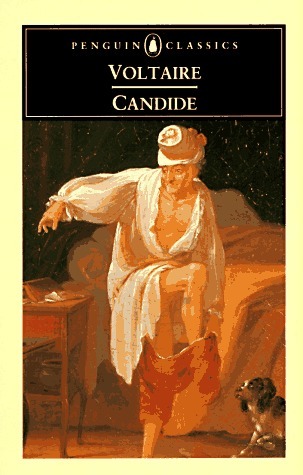
My fifth link is Voltaire’s Candide or Optimism, a small book I read many years ago. Candide was the most brilliant challenge to the idea endemic in Voltaire’s day, that ‘all is for the best in thebest possible worlds‘.In Candide he whisks his young hero and friends through a ludicrious variety of tortures, tragedies and reversals of fortune, in the company of Pangloss, a ‘matapysico-theologo-cosmolo-nigologist’ of unflinching optimism. The result is one of the glories of the eighteenth-century satire. (Taken from the description on the back cover.)
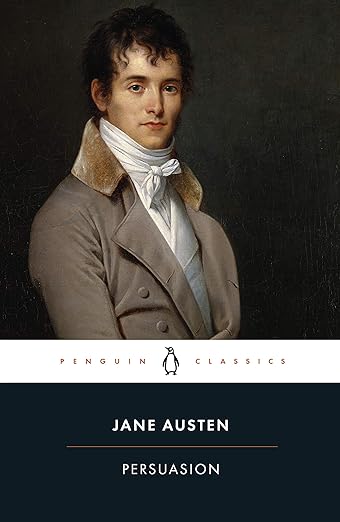
And my final link is Persuasion by Jane Austen. I read this first at school, when I was 17 for A Level GCE. It’s her last novel of missed opportunities and second chances centred on Anne Elliot, no longer young and with few romantic prospects. Eight years earlier, she was persuaded by others to break off her engagement to poor, handsome naval Captain Frederick Wentworth. ‘Set in the fashionable societies of Lyme Regis and Bath, Persuasion is a brilliant satire of vanity and pretension, and a mature, tender love story tinged with heartache.’ (Amazon) I’ll be re-reading it later in the year taking part with Brona at This Reading Life in her Austen 2025 project to reread her books, along with the Classics Club’s Sync Read (or readalong).
I certainly never thought I’d end my chain with Persuasion – but here it is! From Rapture to Persuasion in six moves. The links are the pope, books by Robert Harris, fear, the French Revolution, Voltaire and satire.
What is in your chain, I wonder?
Next month (June 7, 2025), we’ll start with Kate’s pick the 2025 Women’s Prize for FictionAll Foursby Miranda July.
Every Friday Book Beginnings on Friday is hosted by Gillion at Rose City Readerwhere you can share the first sentence (or so) of the book you are reading. You can also share from a book you want to highlight just because it caught your fancy.
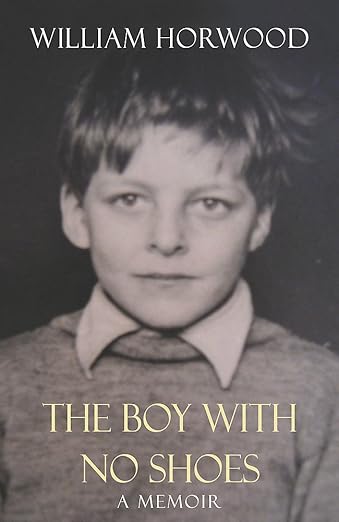
I’m featuring The Boy With No Shoes by William Horwood, a memoir I started to read today. William Horwood is an English novelist. His first novel, Duncton Wood, an allegorical tale about a community of moles, was published in 1980. It was followed by two sequels, forming The Duncton Chronicles, and also a second trilogy, The Book of Silence. William Horwood has also written two stand-alone novels intertwining the lives of humans and of eagles, The Stonor Eagles and Callanish, and The Wolves of Time duology. Skallagrigg, his 1987 novel about disability, love, and trust, was made into a BBC film in 1994. In addition, he has written a number of sequels to The Wind in the Willowsby Kenneth Grahame.
In 2007, he collaborated with historian Helen Rappaport to produce Dark Hearts of Chicago, a historical mystery and thriller set in nineteenth-century Chicago. It was republished in 2008 as City of Dark Heartswith some significant revisions and cuts under the pen name James Conan.
The book begins with the Author’s Note:
When I was thirty-four and had been iller than I knew for two long years, my recovery began in the strangest and most magical of ways. I woke one day from dreaming and saw myself when very young, as clearly as in a black -and-white Kodak photograph. I saw how desperately the little boy I once was had needed someone to talk to in a world where no one wanted to listen.
From the Prologue:
My name is Jimmy and there was a man in my time long ago, before the Boy and the Girl, before my Darktime, before Granny came to help me; and the man held my hand and took me out of our cold house into the sun and then along a street to a great big place with a sign outside
From Chapter 1 Running:
The park keeper in his uniform and hat shouted at me and grabbed one of my ears and pulled me towards him.
‘KEEP OFF THE GRASS!’ he yelled, so close it made my eardrums ache.
Also every Friday there is The Friday 56, hosted by Freda at Freda’s Voice, but she is taking a break and Anne at My Head is Full of Books has taken on hosting duties in her absence. You grab a book and turn to page 56 (or 56% of an eBook), find one or more interesting sentences (no spoilers), and post them.
On page 56 the characters are talking about the day that Edmund Hillary from New Zealand and Sherpa Tensing from Tibet had climbed the highest mountain in the world. No one in the whole history of the world had stood on top of it before.
Uncle Max said, ‘This is a great day for England and the monarchy.’
Granny said, ‘It seems to me that it is a great day for New Zealand and for Tibet, and a bad day for Mount Everest. It is nothing to do with England at all, let alone the Queen.
Description from Goodreads:
Five-year-old Jimmy Rova is the unwanted child of a mother who rejects him, and whose other children bully him. The one thing he can call his own is a pair of shoes, a present from the only person he feels has ever loved him. When they are cruelly taken away, Jimmy spirals down into a state of loneliness and terrible loss from which there seems no recovery. This triumphant story of a boy’s struggle with early trauma and his remarkable journey into adulthood is based on William Horwood’s own remarkable childhood in south-east England after the Second World War. Using all the skills that went into the creation of his modern classics, Horwood has written an inspiring story of a journey from a past too painful to imagine to the future every child deserves.
Top Ten Tuesday is a weekly meme created by The Broke and the Bookish and now hosted by Jana at That Artsy Reader Girl. For the rules see her blog.
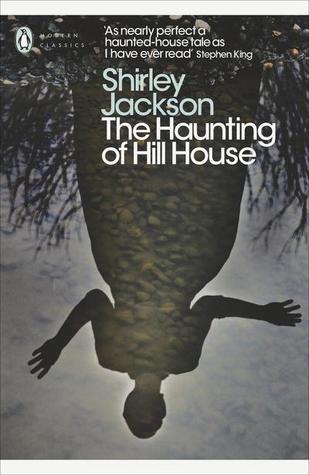
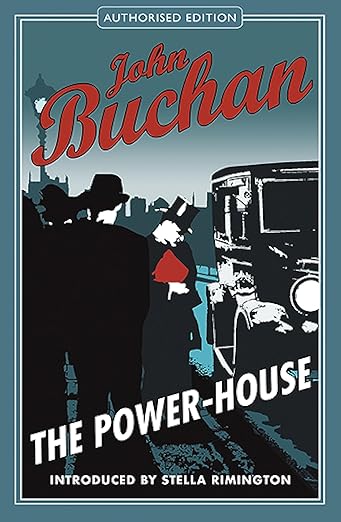
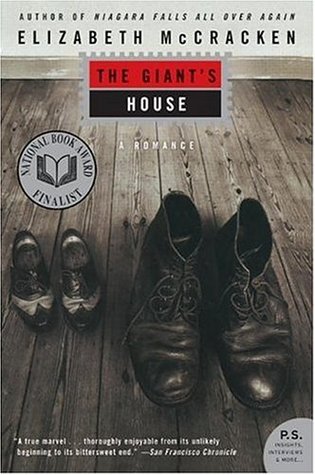
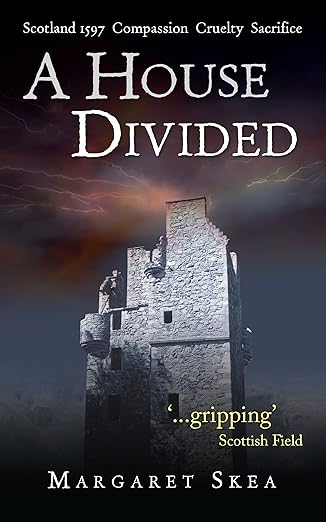
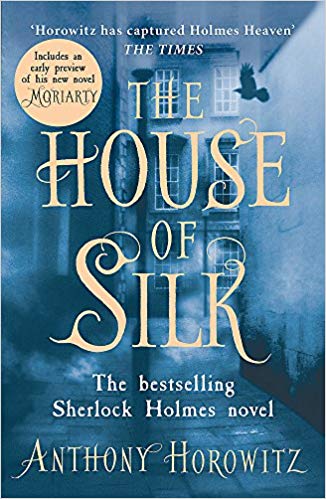
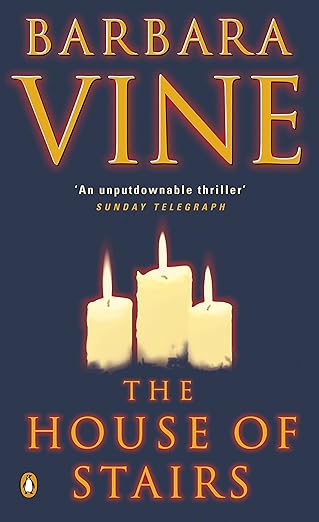
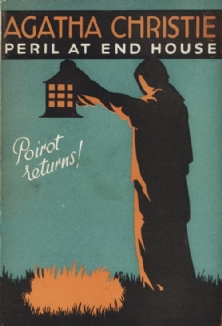
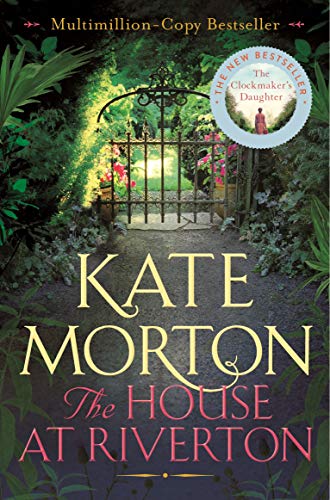
The topic this week is Books with the Word “[Insert Word Here]” in the Title. I decided to choose books with the word HOUSE in the title. These ten books are all books I’ve read.
The 1952 Club hosted this week by Karen at Kaggsy’s Bookish Ramblings and Simon from Stuck in a Book blogs ends today. The idea is simply to read and review books published in 1952.
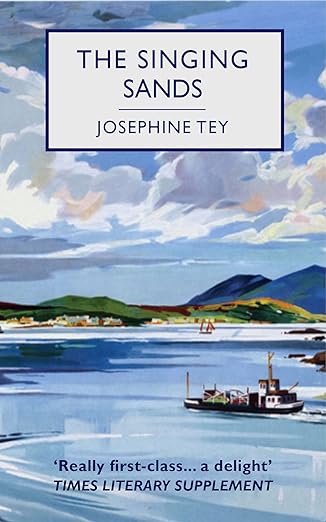
The Singing Sands: An Inspector Alan Grant Mystery by Scottish author Josephine Tey is the second book I’ve read for this event. It was the last book she wrote whilst she was terminally ill and was found among her papers when she died. It was published posthumously a few months after her death in 1952. Josephine Tey was a pseudonym of Elizabeth Mackintosh. Josephine was her mother’s first name and Tey the surname of an English Grandmother.
My copy is an e-book, published in 2023 by Evergreen Publishers.
This is the 6th and last Alan Grant Mystery. It’s a book you have to read slowly to fully take in all the details. Although the mystery is interesting and puzzling, what I enjoyed the most about this book is Tey’s descriptive writing, her observations, and her characterisation, particularly that of Alan Grant and the analysis of his mind. Her characters are believable, well developed and unforgettable.
It begins as Grant is travelling on an overnight train to the Scottish Highlands on sick leave from Scotland Yard. He planned to spend his time fishing whilst staying with his cousin, Laura who is married to his old school friend Tommy. He is suffering from claustrophobia and it seems as though he has had some sort of mental breakdown. His journey was fraught with anxiety:
Alan Grant, watching the lights of the yard float past beyond the steamed-up window and listening to the gentle sound of the wheels clicking over the points, was glad because the end of the journey was the end of a night’s suffering. Grant has spent the night trying not to open the door into the corridor. Wide awake, he had lain on his expensive pallet and sweated by the hour. He had sweated not because the compartment was too hot – the air-conditioning worked to a marvel – but because (O Misery! O Shame! O Mortification!) the compartment represented A Small Enclosed Space. … But to the initiate, the sad and haunted initiate, it was A Small Enclosed Space.
Overwork, the doctor called it. (pages 1 – 2)
As he left the train at the terminus he passed compartment B7 and saw the sleeping car attendant shaking the passenger trying to rouse him, assuming he was drunk. Although the compartment reeked of whisky, Grant realised he was dead and left the attendant to deal with it, thinking he’d had enough of dead men – they were not his responsibility. But automatically, he had picked up a newspaper and added it to the other papers he had under his arm. And later on he realised it had belonged to the dead man, on which he had scribbled a cryptic poem:
The beasts that talk, The streams that stand, The stones that walk, The singing sand, That guard the way To Paradise.
From then on Grant’s state of mind was in turmoil and he was intrigued by this poem and wondered what it meant. Surely he thought there were actually some singing sands somewhere. It totally occupied his mind and a large part of the book is about his thoughts as he became obsessed with finding out who the man was, why he was travelling to Scotland, what was his state of mind that he had ended up drunk on the train. He had a curious feeling of identification with the man in B7 in the sense of having an identity of interests. He wondered if B7 was also ‘wrestling with demons.’
The inquest concluded that the man’s death was an accidental death. He hadn’t been drunk just tipsy. He had a skull injury that was consistent with a backwards fall against the wash basin. But Grant still wanted to know more and continued to investigate.
He visited various places trying to find the singing sands and advertised in newspapers asking anyone who recognised the words of the verse to contact him. He visited Cladda (a fictional place) after Wee Archie, told him there were singing sands there. The singing sands do actually exist – they’re in the Isle of Eigg. I found this description and a photograph on the Walkhighlands website: In dry weather the grains of quartzite make a rasping or singing sound as you walk on them or when the wind scuffs them.
It’s definitely a book of its time and Tey has used a lot of slang and idioms that aren’t so recognisable today. One of her observations I found interesting was the subject of Scottish nationalism and the relationship between Scotland and England and I wondered if maybe she was expressing her own thoughts on the subject, but bearing in mind that this book is fiction, I can’t be sure. Referring to the 1707 Act of Union between England and Scotland Grant says: Scotland stepped thankfully on to England’s band-wagon and fell heir to all its benefits. Colonies, Shakespeare, soap, solvency and so forth.
Wee Archie, was supposedly a Scottish nationalist but was in fact an Englishman who called himself Gilleasbuig Mac- a’-Bruithainn and wielded a shepherd’s crook two feet taller than himself that ‘no shepherd would be found dead with’, and wore a kilt that ‘no Highlander would dream of being found alive in‘. Talking to Grant Archie spoke of ‘England’s iniquities to a captive and helpless Scotland. Anything less captive or helpless than the Scotland he (ie Grant) had known would be difficult to imagine.) Laura told Grant Archie didn’t have ‘a drop of Scottish blood in him. his father came from Liverpool and his mother was an O’Hanrahan.’ Grant remarked ‘Odd how all the most bigoted patriots are Auslanders,’ adding ‘I don’t think he’ll get far with those xenophobes, the Gaels.’ (page 23)
The Singing Sands is not a typical Agatha Christie puzzle type of crime fiction, but more an analysis of the characters’ emotional and psychological obsessions to be found in novels such as those of Ruth Rendell and Patricia Highsmith. I really enjoyed it.
I now want to know more about her and her life and I’ve found this biography that I’d like to read – Josephine Tey: A Life by Jennifer Morag Henderson.
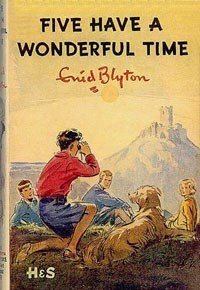
The Famous Five are having a brilliant time – on holiday in horse-drawn caravans – and they’ve discovered a ruined castle nearby! The castle looked deserted from a distance – but is that a face at the window? Or is it a trick of the light? The Famous Five just have to find out! Just who is hiding in the castle?
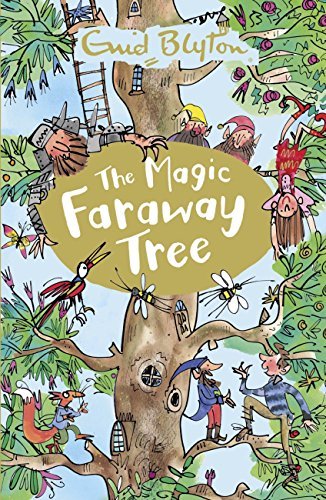
I had a wonderful time as a child reading Enid Blyton’s books. Her books gave me so much pleasure as a child going right back to her Noddy and the Magic Faraway Tree books. Her Malory Towers books were my favourites, but I also enjoyed the Favourite Five, The Secret Seven and the Adventure and Mystery series too.
The Five are Julian, Dick and Anne, their cousin, George (real name Georgina, but not call her that), and Timmy, George’s dog. Their ages aren’t mentioned in this book but according to Enid Blyton.net, Julian was twelve in Five on a Treasure Island, the first in the series, Dick and George were eleven, and Anne was ten. In the next book, Five Run Away Together, they were all a year older since their last adventure on Kirrin Island, a year before. After that in the later books, it seems that their ages were frozen in time (like Agatha Christie’s Poirot) — otherwise they would have been well into their twenties before the end of the series.
It’s the summer holidays and George is waiting impatiently at home recovering from a cold, whilst the rest of the Five are staying in a couple of old-fashioned gypsy caravans in a field near the village of Faynights, opposite the ruins of Faynights Castle. There’s news that two famous scientists have disappeared, with plans to go abroad and sell their secrets to another country. Julian is worried one of them might be his Uncle Quentin, George’s father. He isn’t and knows the two men, and insists that Derek Terry-Kane, in particular, would never be a traitor.
When George arrives they all go to the village shop to buy ice creams and the shop woman tells them some ‘fair folk’ are coming who usually camp in the field where the children are staying. She says it’s not a fair nor a circus, but a sort of mixed-up show with a fire-eater, a man with snakes, an India-Rubber man, and a man who can get himself free, no matter how tightly he’s tied up with ropes. When they arrive they insist the children have to leave the field, saying ‘No kids are allowed in our field’ and make life very unpleasant for them. Then their caravans disappeared whilst the children were out – the fair people had towed them into the next field. This is only resolved when Jo, a gypsy girl turns up, whose uncle is the fire-eater. She insists that they are her best friends and makes them bring the caravans back.
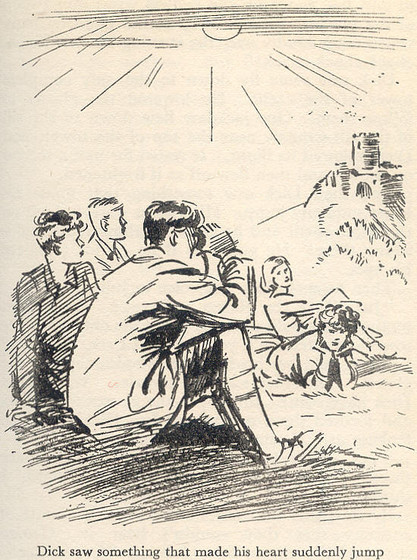
Julian though, isn’t happy and wants them to leave. But he changes his mind when Dick spots a face in a window-slot at the top of the only complete tower at the top of the castle. He thinks it’s a man’s face with bushy eyebrows. George remembers that Terry-Kane has thick black eyebrows. They decide they can’t leave without exploring the castle and find an explanation for the face – is Terry-Kane in the castle? So the next day they do just that and find themselves in the middle of a very dangerous mystery. It’s only with Jo’s help and the fairground entertainers with their amazing skills that it all ends well.
This really is a book that reflects the lives and attitudes of the 1950s. The children go exploring on their own much more so than they are allowed to do today, playing outdoors, exploring where they lived in the woods and fields, riding bikes with friends, and going swimming. And as a child of the 1950s that’s what my childhood was like, but not to the same extent as the Famous Five! Boys were encouraged to be strong and independent, whilst girls tended to be domesticated. Anne, for example, does the shopping, tidies the caravans and does the cooking, whereas the boys get the water and collect wood for the camp fire. George, a tomboy is the exception – she has short hair, scorns skirts and dresses in shorts and wants to do what the boys do.
Yesterday’s Britain, published by the Reader’s Digest describes the period 1950 – 1959 as a ‘golden age for some people‘, with ‘Britons better off as material prosperity swept away the last vestiges of austerity. “Most of our people have never had it so good,” declared Harold Macmillan.
Public figures were automatically respected, authority was deferred to inside as well as outside the home, and children grew up with an unquestioning sense of security.
It’s a pity that we can’t say the same for today!
About Enid Blyton
She wrote around 760 books during her fifty-year writing career! The 1950s was her most productive period, often publishing more than fifty books a year. However, her books have been criticised over the years, saying they are mediocre material, formulaic books with fantastical plots, xenophobic and ‘reflected negative stereotypes regarding gender, race, and class.’ Her books are very much of their time – she was born in 1897 and died in 1968. She began writing in the 1920s, with most of her series dating from the 1940s, when lives and attitudes were very different from those of today. I think they are books that provided comfort reading during and after the Second World War. Some of Blyton’s books have been ‘updated’ over recent years to remove or alter potentially offensive language and imagery, in an attempt to make them appeal more to modern children.
I thoroughly enjoyed them, finding them fun to read and completely unaware at the time that there was so much criticism when I read her books. She wrote about children whose lives were very different from mine and that was one reason I liked them. I loved the fact that her books took me to magical places, places of adventure where children could solve mysteries, thwart criminals, be independent of adults and have great fun, a world of mysterious castles and islands, exploring secret passages and hidden chambers and finding buried treasure.




 BooksPlease