Spell the Month in Books – September 2026

Spell the Month in Books is a linkup hosted by Jana on Reviews From the Stacks on the first Saturday of each month. The goal is to spell the current month with the first letter of book titles, excluding articles such as ‘the’ and ‘a’ as needed. That’s all there is to it! Some months have additional themes, but feel free to participate however you’d like!
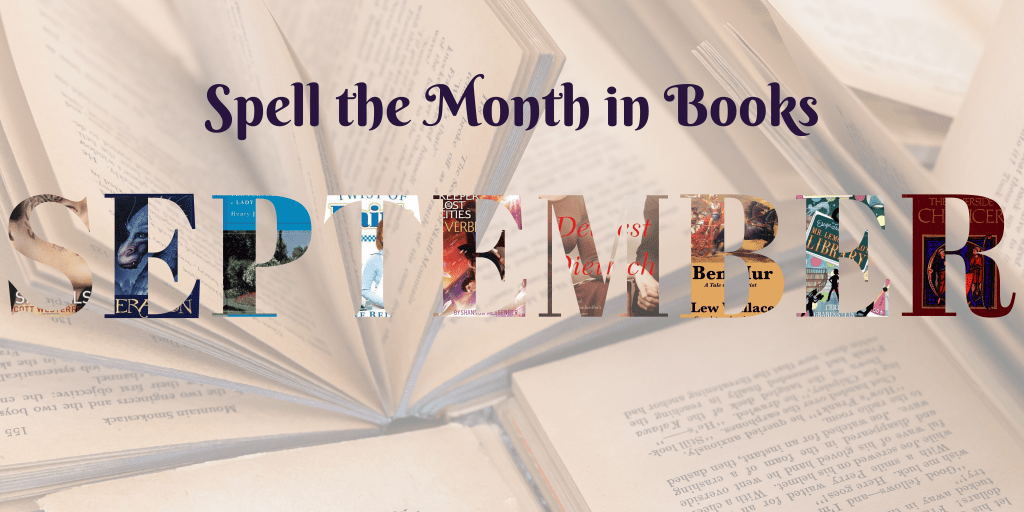
Currently Jana is not assigning themes, so for September I’ve chosen to feature some of the Classic books that I have read. The links in the titles of each book go to my posts, where they exist.

The more Spell the Month books I do, the harder it becomes to use book titles beginning with the letter E as I prefer to use ones I haven’t already used in earlier posts – but I have managed it this time. I think the last three months of the year will be challenging!
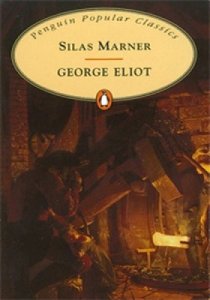
S is for Silas Marner by George Eliot, set in the early years of the 19th century (Eliot was writing the book in 1861) 

The story revolves around Silas Marner, a weaver living in Raveloe, a village on the brink of industrialisation. He was wrongly accused of theft and left his home town to live a lonely and embittered life in Raveloe where he became a miser, hoarding his gold and counting it each night. Until one night his life is changed by the theft of his money and a little girl who came to live with him, having been abandoned in the snow.

It took me a while to settle into George Eliot’s style of writing, with her long, long sentences – some so long I had forgotten how they had started, before I got to the end. But once my mind had adjusted to the rhythm of her writing I enjoyed this short book 

E is for Ethan Frome by Edith Wharton, first published in 1911 this is in contrast to some of her other books about the New York society of the 1870s to 1920s. It’s a rural tragedy of inevitable suffering and sadness that reminded me of Thomas Hardy’s books.

It’s a beautifully told tale – a tragedy, signalled right from the beginning of the book, when the unnamed narrator first saw Ethan Frome and was told he had been disfigured and crippled in a ‘smash up’, twenty four years earlier. Life had not been good to him.

I enjoyed it very much.  As well as striking and memorable characters the setting is  beautifully described – a ‘mute and melancholy landscape, an incarceration of frozen woe‘, in the isolated village of Starkfield (a fictional New England village). Even though Ethan Frome is a tragedy there is light to contrast the darkness, and there is love and hope set against repression and misery. I hoped the ending would be a happy one, although I knew it couldn’t be. 
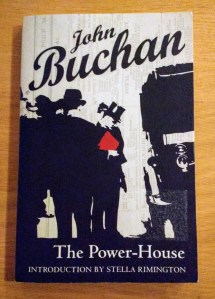

P is for The Power-House by John Buchan, written in 1913 when it was serialised in Blackwood’s Magazine and then published in book form in 1916.

Buchan tells a good story, even if I had little idea what the Power-House really was. It’s an international anarchist network, but who they were, what they were actually after, or how they hoped to achieve their ends was never clear to me. But I really enjoyed this book. As Stella Rimington says it has an ‘intoxicating blend of madness with scents of home and countryside.’ 

It has some interesting thoughts on the nature of civilisation, and of power and comments on the ‘the business of Government. When all is said, we are ruled by amateurs and the second-rate. The methods of our departments would bring any private firm to bankruptcy. The methods of Parliament – pardon me – would disgrace any board of directors.’
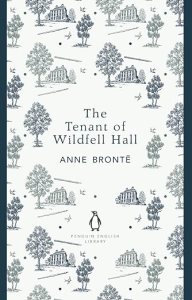
T is for The Tenant of Wildfell Hall by Anne Bronte, first published in 1848 under the pseudonym Acton Bell.

I read this years ago before I began blogging, so I have no record of what I thought of it, other than that I loved it.

In this sensational, hard-hitting and passionate tale of marital cruelty, The Tenant of Wildfell Hall sees a mysterious tenant, Helen Graham, unmasked not as a ‘wicked woman’ as the local gossips would have it, but as the estranged wife of a brutal alcoholic bully, desperate to protect her son. Using her own experiences with her brother Branwell to depict the cruelty and debauchery from which Helen flees, Anne Brontë wrote her masterpiece to reflect the fragile position of women in society and her belief in universal redemption, but scandalized readers of the time.
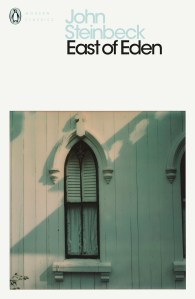
E is for East of Eden by John Steinbeck, first published in 1952.

This is the story of two family, the Trasks and the Hamiltons, whose generations helplessly re-enact the fall of Adam and Eve and the poisonous rivalry of Cain and Abel. I enjoyed this beautifully written book, which begins slowly, but not as much as The Grapes of Wrath, which I thought was amazing. It’s long – too long really – and to my mind it reads like a morality tale of good versus evil. There are many parallels to the Bible stories, with surely one of the most evil characters ever in Cathy. I liked the way Steinbeck set out the moral dilemmas and gave the characters personal choice using the Hebrew word ‘timshel‘, meaning ‘thou mayest’.
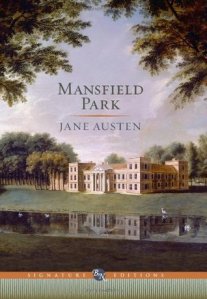
M is for Mansfield Park by Jane Austen

On the surface this is a simple story about a family and their relationships. Fanny Price, as a child of 10 goes to live with her wealthy aunt and uncle, Sir Thomas and Lady Bertram at Mansfield Park, where as the poor relation she is not treated badly, but not as cared for or as kindly as her cousins, but more as an unpaid servant dependent on the family for her welfare – a sort of Cinderella story. But through the story, Jane Austen reveals the complicated interaction of society, shows the development of Fanny’s character and the depiction of a heroine who is good and gentle who matures throughout the novel. 

It’s full of detail of everyday life, its boredom as well as its entertainments and pleasures, the  balls and dinners. There is much in it about the houses and gardens, not only of the wealthy but also of the lower classes, such as Fanny’s parents home in Portsmouth – but they have servants themselves, so it is only comparative poverty. Seen mainly through Fanny’s eyes, it’s a study of morals, the damage caused by being unwanted and unloved. There is also a gentle strain of humour and satirical observations about contemporary values, and even, with Mary Crawford’s pun on ‘Rears and Vices‘, a bawdy note.

B is for Barnaby Rudge by Charles Dickens, first published in 1841, a murder mystery as well as a historical novel, mainly concerning the events surrounding the Gordon Riots of 1780. It’s almost a book of two parts and the dramatic second half, to my mind, more than makes up for the slow beginning which I had to read slowly and carefully.
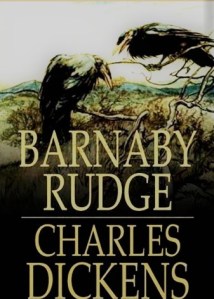
It begins in 1775, five years before the riots as a group of customers in the Maypole Inn in the village of Chigwell, on the borders of Epping Forest and about 112 miles from London, recollect the murder of Reuben Haredale, the owner of The Warren, 22 years earlier to the day. His steward, a Mr Rudge was found months later, stabbed to death.The murderer had never been discovered. Reuben’s brother Geoffrey had lived at The Warren with his niece, Emma ever since.

From then on the book becomes much more complicated with many characters and sub-plots. There are a number of themes running through the novel – the relationship between fathers and sons, the position of authority, justice and the question of punishment for crime, and religious conflict. Dickens paints a picture of London, the dirt and poverty, the terrible condition of the roads, the perils of footpads and highwaymen which is in contrast to the countryside that still at that period surrounded London making it a cleaner, purer place to live in.

E is for Excellent Women by Barbara Pym, first published in 1952. It’s not laugh-out-loud funny, but it is most entertaining, subtly and gently comic.  laugh-out-loud funny, but it is most entertaining, subtly and gently comic.

It’s set just after the end of the Second World War, about the everyday life of Mildred Lathbury, an unmarried woman – in other words a spinster – in her early 30s. The daughter of a clergyman she is one of those ‘excellent women’ who could be relied upon to help out at Church jumble sales, garden fêtes, to make tea when required or to make up numbers at social gatherings. She finds herself involved in the quarrel between her new neighbours, Helena and Rockingham (Rocky) Napier, a married couple who live in the flat below her, as well as in the difficult relationship between Julian Mallory, the local vicar and his unmarried sister, when he finds himself trapped by Allegra Grey, a vivacious widow when she moves into their spare room. It’s a slow-paced book but all the better because of that.
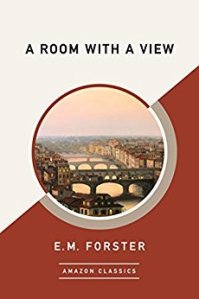
R is for A Room with a View by E M Forster. First published in 1908, this is a novella of 161 pages, a comedy of manners, satirising the manners and social conventions of Victorian/Edwardian society. It is about a young woman, Lucy Honeychurch, and her journey to self-discovery as she breaks out of the restrained culture of Edwardian England. It’s also a romance.

It begins in Florence where Lucy is staying at the Pensione Bertolini, with her older cousin and chaperone Charlotte Bartlett. They meet two other guests, a Mr Emerson and his son George who are not bound by the conventions of the day and Charlotte considers they are ill-bred. But Lucy is attracted by the Emersons’ free thinking ideas. They spend time in Florence visiting various locations including the Santa Croce church, the Piazza Della Signoria and the San Miniato church, with its beautiful facade, and take a trip into the hills.

The second half of the book takes place in England at Lucy’s home at Windy Corner where we meet the rest of her family and Lucy has to decide between the insufferable Cecil and the unconventional George. 

Six Degrees of Separation from  The Safekeep by Yael Van Der Wouden to Cat Among the Pigeons

It’s time again for Six Degrees of Separation, a monthly link-up hosted by Kate at Books Are My Favourite and Best. Each month a book is chosen as a starting point and linked to six other books to form a chain. A book doesn’t need to be connected to all the other books on the list, only to the one next to it in the chain.

This month we start with  The Safekeep by Yael Van Der Wouden, the Women’s Prize Winner for Fiction 2025. This is Amazon’s description:

It is fifteen years after the Second World War, and Isabel has built herself a solitary life of discipline and strict routine in her late mother’s country home, with not a fork or a word out of place. But all is upended when her brother Louis delivers his graceless new girlfriend, Eva, at Isabel’s doorstep – as a guest, there to stay for the season…

In the sweltering heat of summer, Isabel’s desperate need for control reaches boiling point. What happens between the two women leads to a revelation which threatens to unravel all she has ever known.

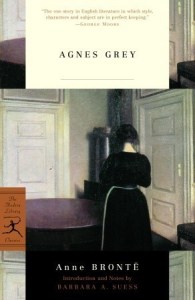
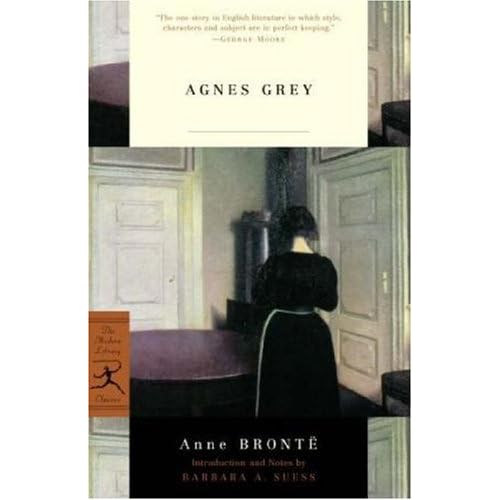
First link: I really didn’t know how to start this chain, until I remembered that the cover of Agnes Grey by Anne Bronte also has doors, although they are closed doors as opposed to the open doors on The Safekeep. This is a novel about a young woman, a governess and her experiences working for two families in Victorian England. Agnes is the younger daughter of an impoverished clergyman. Her parents had married against her mother’s family’s wishes and when their fortune was wrecked Agnes determines to help out by working as a governess. It gives a very clear picture of the life of a governess, with all its loneliness, frustrations, insecurities and depressions.

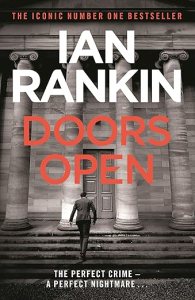
I am staying with doors for the second link, although they are not shown not on the cover, but in the title, with Doors Open by Ian Rankin. This was the first Rankin book wrote after he retired John Rebus in Exit Music. It’s about an art heist – planned by Mike Mackenzie, a self-made man, rich and bored with life, Robert Gissing, the head of Edinburgh’s College of Art and Allan Crickshank a banker with a passion for art that he cannot afford to buy on his salary. Between them they devise a plan to steal some of the most valuable paintings from the National Gallery of Scotland on the day that buildings normally closed to the public throw open their doors and invite them in.

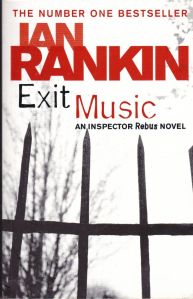
My Third link is Exit Music by Ian Rankin, the 17th Inspector Rebus novel.  The Crime Thriller Award for  Author of the Year 2008 was awarded to Ian Rankin for this book. It marked the end of an era as Rebus came to the end of his career. At the beginning of this book Rebus is 10 days from his retirement and is anxious to tie up all the loose ends in his current cases, trying to get DS Siobhan Clarke interested in them. So when the body of the dissident Russian poet Alexander Todorov is found dead this is Rebus’s last case. He throws himself into the investigation, desperate to take his mind off the end of his career.

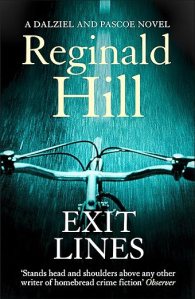
Which brings me rather obviously to my fourth link Exit Lines by Reginald Hill, a Dalziel and Pascoe murder mystery. In this one there are three elderly victims who all died violently one cold and storm-racked November night. A drunken Dalziel is a suspect in one as it seems he was driving the car that hit an elderly cyclist. The plot is intricate, with each separate case being linked together. I thought it was an excellent crime fiction novel which kept me guessing until the end.

My Fifth link is also about a murder that took place during a stormy night. It’s The Redemption of Alexander Seaton by Shona MacLean. Alexander Seaton is a schoolteacher in Banff. It’s set in 17th century Scotland, mainly in the town of Banff, where on a stormy night Patrick Davidson, the local apothecary’s assistant collapses in the street. The next morning he is found dead in the school house of Alexander Seaton, a failed minister, now a schoolteacher

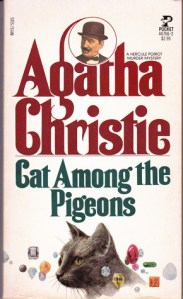
My sixth link is about another schoolteacher, this time a headmistress, Miss Bulstrode in Agatha Christie’s novel Cat Among the Pigeons. She is the head of an exclusive and expensive girls’ school, Meadowbank, in England, said to be based on her daughter Rosalind’s school. Like Miss Brodie, Miss Bulstrode has built a reputation for excellence. But disaster strikes when two of the teachers, Miss Springer, the new Games Mistress and the History and German teacher, Miss Vansittart are murdered. Rather late in the day Hercules Poirot is called in to investigate their deaths.

My chain is mostly made up of two of my favourite genres, historical fiction and crime fiction. It went from a governess to a headmistress with murder mysteries in between. What is in your chain?

Next month (September 6, 2025), we’ll start with the winner of the 2025 Miles Franklin Literary AwardGhost Cities by Siang Lu.

Agnes Grey by Anne Bronte: a Book Review

Agnes Grey by Anne Bronte, published in 1847, is a deeply moral novel about a young woman, a governess and her experiences working for two families in Victorian England. Agnes is the younger daughter of an impoverished clergyman. Her parents had married against her mother’s family’s wishes and when their fortune was wrecked Agnes determines to help out by working as a governess.

The first family she works for are the Bloomfields. Mrs Bloomfield tells Agnes her children are clever and very apt to learn. In fact they are terrible children, utterly spoilt and cruel. I found their brutality shocking, the more so since Anne was writing from her own experiences. One of the most vivid scenes is where Agnes kills a brood of nestlings to prevent Tom Bloomfield from torturing them.

Agnes is treated like a servant, rather than as a governess. She has no authority over the children and is not allowed to discipline them much as she would like to. Her attempts to improve their wild behaviour by quoting Bible texts and moral instruction have no effect on the children’s behaviour. As Agnes’s mother has told her that people do not like to be told of their children’s faults she kept silent about them and despite her best efforts she failed to make any impression on them:

But either the children were so incorrigible, the parents so unreasonable, or myself so mistaken in my views, or so unable to carry them out, that my best intentions and most strenuous efforts seemed productive of no better result than sport to the children, dissatisfaction to their parents, and torment to myself.

Her second post with the Murrays is little better – her charges are two teenage girls, who are just as spoilt as the younger children, wilful and determined to have their own way and two younger boys who are rough and unruly. Fortunately the boys are soon packed off to school and she only has to cope with sisters.

Both families are portrayed as wealthy, snobbish and totally lacking in any regard for Agnes. The only glimmer of hope comes through her friendship with Edward Weston, but even then Rosalie, the older daughter, is determined to make him fall in love with her. But surely Edward will not be deceived by Rosalie’s scheming ways? Agnes is gentle and self-effacing, never making her feelings known and it seems as though she is destined for a miserable life. Although she loves Edward she is totally unable to give any indication of her feelings towards him. Things seem to get even worse after her father’s death and she has to leave the Murrays – and Edward. However, Snap the dog plays his part in bringing some joy into Agnes’s life.

Agnes Grey vividly portrays the class distinctions of Victorian society, the position of women in that society from both the working and the middle classes through the first-person narrative. Above all it gives a very clear picture of the life of a governess, with all its loneliness, frustrations, insecurities and depressions. The characters, for the most part are well drawn, (the minor characters are one-dimensional) and I liked Agnes’s unspoken thoughts, eg. when told to go to the schoolroom immediately because the young ladies were waiting for her  she thinks, ‘Climax of horror! actually waiting for their governess.!!!’

Reading Agnes Grey has made me keen to re-read Charlotte Bronte’s Jane Eyre, for one thing to compare the two governesses. It’s been years since I read Jane Eyre, and my memory is that it is a much more dramatic novel (certainly it is much longer).

  • Format: Kindle Edition
  • File Size: 449 KB
  • Print Length: 155 pages
  • Page Numbers Source ISBN: 0812967135
  • Publisher: Modern Library (18 Dec 2007)
  • Sold by: Amazon Media EU S.à r.l.
  • Source: My own copy
  • My Rating: 3/5

Classics Challenge – April Prompt: the Book Cover

Katherine at November’s Autumn hosts the Classics Challenge. This month’s focus is the Book Cover. The old and worn adage of never judging a book by its cover is partly true but a book cover tells the reader a lot about what’s inside you can usually tell what genre it is or what time period it takes place in.

What are your first impressions as you look at the cover? Does the book cover have an aspect that reflects the character, setting, or plot of the novel?  If you could have designed the book cover what would you have chosen?

Currently I’m reading Agnes Grey by Anne Bronte on my Kindle. I knew nothing about it before I began reading. There is no information on the Kindle e-book about the cover illustration and I don’t think it gives many clues about the book.

 My first impression on looking at the cover was that the character of Agnes Grey may have been a lady’s maid in a large household. However, I soon discovered that she is the impoverished daughter of a clergyman and she is employed as a governess to the unruly and spoilt children of wealthy families.

The cover does reflect the setting of the novel in Victorian times, although not the position Agnes has in the household – she is not a servant.  But it does reflect Agnes’s character as she is demure, gentle and rather timid. I’ve not finished the book yet, but so far Agnes has been totally unable to control the awful children in her charge and is not given any authority to reprimand them from their parents. The lone figure on the cover reflects the position in which Agnes finds herself – alone and unsupported by her employers.

If I could have designed the book cover I think I would have chosen a similar scene, but would have chosen one showing a governess and the children.