Spell the Month in Books is a linkup hosted by Jana on Reviews From the Stacks on the first Saturday of each month. The goal is to spell the current month with the first letter of book titles, excluding articles such as ‘the’ and ‘a’ as needed. That’s all there is to it! Some months have additional themes, but feel free to participate however you’d like!

Currently Jana is not assigning themes, so for September I’ve chosen to feature some of the Classic books that I have read. The links in the titles of each book go to my posts, where they exist.
The more Spell the Month books I do, the harder it becomes to use book titles beginning with the letter E as I prefer to use ones I haven’t already used in earlier posts – but I have managed it this time. I think the last three months of the year will be challenging!
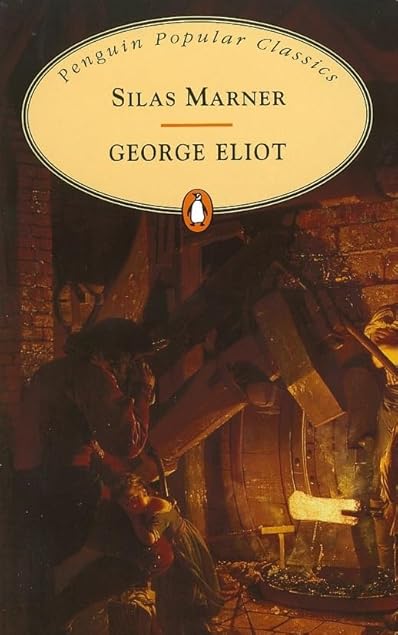
S is for Silas Marner by George Eliot, set in the early years of the 19th century (Eliot was writing the book in 1861)
The story revolves around Silas Marner, a weaver living in Raveloe, a village on the brink of industrialisation. He was wrongly accused of theft and left his home town to live a lonely and embittered life in Raveloe where he became a miser, hoarding his gold and counting it each night. Until one night his life is changed by the theft of his money and a little girl who came to live with him, having been abandoned in the snow.
It took me a while to settle into George Eliot’s style of writing, with her long, long sentences – some so long I had forgotten how they had started, before I got to the end. But once my mind had adjusted to the rhythm of her writing I enjoyed this short book

E is for Ethan Frome by Edith Wharton, first published in 1911 this is in contrast to some of her other books about the New York society of the 1870s to 1920s. It’s a rural tragedy of inevitable suffering and sadness that reminded me of Thomas Hardy’s books.
It’s a beautifully told tale – a tragedy, signalled right from the beginning of the book, when the unnamed narrator first saw Ethan Frome and was told he had been disfigured and crippled in a ‘smash up’, twenty four years earlier. Life had not been good to him.
I enjoyed it very much. As well as striking and memorable characters the setting is beautifully described – a ‘mute and melancholy landscape, an incarceration of frozen woe‘, in the isolated village of Starkfield (a fictional New England village). Even though Ethan Frome is a tragedy there is light to contrast the darkness, and there is love and hope set against repression and misery. I hoped the ending would be a happy one, although I knew it couldn’t be.
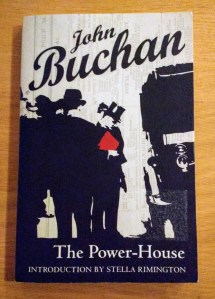
P is for The Power-House by John Buchan, written in 1913 when it was serialised in Blackwood’s Magazine and then published in book form in 1916.
Buchan tells a good story, even if I had little idea what the Power-House really was. It’s an international anarchist network, but who they were, what they were actually after, or how they hoped to achieve their ends was never clear to me. But I really enjoyed this book. As Stella Rimington says it has an ‘intoxicating blend of madness with scents of home and countryside.’
It has some interesting thoughts on the nature of civilisation, and of power and comments on the ‘the business of Government. When all is said, we are ruled by amateurs and the second-rate. The methods of our departments would bring any private firm to bankruptcy. The methods of Parliament – pardon me – would disgrace any board of directors.’
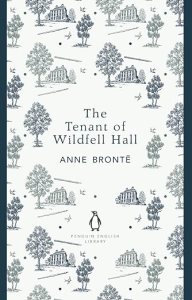
T is for The Tenant of Wildfell Hall by Anne Bronte, first published in 1848 under the pseudonym Acton Bell.
I read this years ago before I began blogging, so I have no record of what I thought of it, other than that I loved it.
In this sensational, hard-hitting and passionate tale of marital cruelty, The Tenant of Wildfell Hall sees a mysterious tenant, Helen Graham, unmasked not as a ‘wicked woman’ as the local gossips would have it, but as the estranged wife of a brutal alcoholic bully, desperate to protect her son. Using her own experiences with her brother Branwell to depict the cruelty and debauchery from which Helen flees, Anne Brontë wrote her masterpiece to reflect the fragile position of women in society and her belief in universal redemption, but scandalized readers of the time.
E is for East of Eden by John Steinbeck, first published in 1952.
This is the story of two family, the Trasks and the Hamiltons, whose generations helplessly re-enact the fall of Adam and Eve and the poisonous rivalry of Cain and Abel. I enjoyed this beautifully written book, which begins slowly, but not as much as The Grapes of Wrath, which I thought was amazing. It’s long – too long really – and to my mind it reads like a morality tale of good versus evil. There are many parallels to the Bible stories, with surely one of the most evil characters ever in Cathy. I liked the way Steinbeck set out the moral dilemmas and gave the characters personal choice using the Hebrew word ‘timshel‘, meaning ‘thou mayest’.
M is for Mansfield Park by Jane Austen
On the surface this is a simple story about a family and their relationships. Fanny Price, as a child of 10 goes to live with her wealthy aunt and uncle, Sir Thomas and Lady Bertram at Mansfield Park, where as the poor relation she is not treated badly, but not as cared for or as kindly as her cousins, but more as an unpaid servant dependent on the family for her welfare – a sort of Cinderella story. But through the story, Jane Austen reveals the complicated interaction of society, shows the development of Fanny’s character and the depiction of a heroine who is good and gentle who matures throughout the novel.
It’s full of detail of everyday life, its boredom as well as its entertainments and pleasures, the balls and dinners. There is much in it about the houses and gardens, not only of the wealthy but also of the lower classes, such as Fanny’s parents home in Portsmouth – but they have servants themselves, so it is only comparative poverty. Seen mainly through Fanny’s eyes, it’s a study of morals, the damage caused by being unwanted and unloved. There is also a gentle strain of humour and satirical observations about contemporary values, and even, with Mary Crawford’s pun on ‘Rears and Vices‘, a bawdy note.
B is for Barnaby Rudge by Charles Dickens, first published in 1841, a murder mystery as well as a historical novel, mainly concerning the events surrounding the Gordon Riots of 1780. It’s almost a book of two parts and the dramatic second half, to my mind, more than makes up for the slow beginning which I had to read slowly and carefully.
It begins in 1775, five years before the riots as a group of customers in the Maypole Inn in the village of Chigwell, on the borders of Epping Forest and about 112 miles from London, recollect the murder of Reuben Haredale, the owner of The Warren, 22 years earlier to the day. His steward, a Mr Rudge was found months later, stabbed to death.The murderer had never been discovered. Reuben’s brother Geoffrey had lived at The Warren with his niece, Emma ever since.
From then on the book becomes much more complicated with many characters and sub-plots. There are a number of themes running through the novel – the relationship between fathers and sons, the position of authority, justice and the question of punishment for crime, and religious conflict. Dickens paints a picture of London, the dirt and poverty, the terrible condition of the roads, the perils of footpads and highwaymen which is in contrast to the countryside that still at that period surrounded London making it a cleaner, purer place to live in.

E is for Excellent Women by Barbara Pym, first published in 1952. It’s not laugh-out-loud funny, but it is most entertaining, subtly and gently comic. laugh-out-loud funny, but it is most entertaining, subtly and gently comic.
It’s set just after the end of the Second World War, about the everyday life of Mildred Lathbury, an unmarried woman – in other words a spinster – in her early 30s. The daughter of a clergyman she is one of those ‘excellent women’ who could be relied upon to help out at Church jumble sales, garden fêtes, to make tea when required or to make up numbers at social gatherings. She finds herself involved in the quarrel between her new neighbours, Helena and Rockingham (Rocky) Napier, a married couple who live in the flat below her, as well as in the difficult relationship between Julian Mallory, the local vicar and his unmarried sister, when he finds himself trapped by Allegra Grey, a vivacious widow when she moves into their spare room. It’s a slow-paced book but all the better because of that.
R is for A Room with a View by E M Forster. First published in 1908, this is a novella of 161 pages, a comedy of manners, satirising the manners and social conventions of Victorian/Edwardian society. It is about a young woman, Lucy Honeychurch, and her journey to self-discovery as she breaks out of the restrained culture of Edwardian England. It’s also a romance.
It begins in Florence where Lucy is staying at the Pensione Bertolini, with her older cousin and chaperone Charlotte Bartlett. They meet two other guests, a Mr Emerson and his son George who are not bound by the conventions of the day and Charlotte considers they are ill-bred. But Lucy is attracted by the Emersons’ free thinking ideas. They spend time in Florence visiting various locations including the Santa Croce church, the Piazza Della Signoria and the San Miniato church, with its beautiful facade, and take a trip into the hills.
The second half of the book takes place in England at Lucy’s home at Windy Corner where we meet the rest of her family and Lucy has to decide between the insufferable Cecil and the unconventional George.