Spell the Month in Books – September 2026

Spell the Month in Books is a linkup hosted by Jana on Reviews From the Stacks on the first Saturday of each month. The goal is to spell the current month with the first letter of book titles, excluding articles such as ‘the’ and ‘a’ as needed. That’s all there is to it! Some months have additional themes, but feel free to participate however you’d like!

Currently Jana is not assigning themes, so for September I’ve chosen to feature some of the Classic books that I have read. The links in the titles of each book go to my posts, where they exist.

The more Spell the Month books I do, the harder it becomes to use book titles beginning with the letter E as I prefer to use ones I haven’t already used in earlier posts – but I have managed it this time. I think the last three months of the year will be challenging!
S is for Silas Marner by George Eliot, set in the early years of the 19th century (Eliot was writing the book in 1861) 

The story revolves around Silas Marner, a weaver living in Raveloe, a village on the brink of industrialisation. He was wrongly accused of theft and left his home town to live a lonely and embittered life in Raveloe where he became a miser, hoarding his gold and counting it each night. Until one night his life is changed by the theft of his money and a little girl who came to live with him, having been abandoned in the snow.

It took me a while to settle into George Eliot’s style of writing, with her long, long sentences – some so long I had forgotten how they had started, before I got to the end. But once my mind had adjusted to the rhythm of her writing I enjoyed this short book 

E is for Ethan Frome by Edith Wharton, first published in 1911 this is in contrast to some of her other books about the New York society of the 1870s to 1920s. It’s a rural tragedy of inevitable suffering and sadness that reminded me of Thomas Hardy’s books.

It’s a beautifully told tale – a tragedy, signalled right from the beginning of the book, when the unnamed narrator first saw Ethan Frome and was told he had been disfigured and crippled in a ‘smash up’, twenty four years earlier. Life had not been good to him.

I enjoyed it very much.  As well as striking and memorable characters the setting is  beautifully described – a ‘mute and melancholy landscape, an incarceration of frozen woe‘, in the isolated village of Starkfield (a fictional New England village). Even though Ethan Frome is a tragedy there is light to contrast the darkness, and there is love and hope set against repression and misery. I hoped the ending would be a happy one, although I knew it couldn’t be. 

P is for The Power-House by John Buchan, written in 1913 when it was serialised in Blackwood’s Magazine and then published in book form in 1916.

Buchan tells a good story, even if I had little idea what the Power-House really was. It’s an international anarchist network, but who they were, what they were actually after, or how they hoped to achieve their ends was never clear to me. But I really enjoyed this book. As Stella Rimington says it has an ‘intoxicating blend of madness with scents of home and countryside.’ 

It has some interesting thoughts on the nature of civilisation, and of power and comments on the ‘the business of Government. When all is said, we are ruled by amateurs and the second-rate. The methods of our departments would bring any private firm to bankruptcy. The methods of Parliament – pardon me – would disgrace any board of directors.’
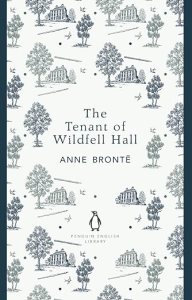
T is for The Tenant of Wildfell Hall by Anne Bronte, first published in 1848 under the pseudonym Acton Bell.

I read this years ago before I began blogging, so I have no record of what I thought of it, other than that I loved it.

In this sensational, hard-hitting and passionate tale of marital cruelty, The Tenant of Wildfell Hall sees a mysterious tenant, Helen Graham, unmasked not as a ‘wicked woman’ as the local gossips would have it, but as the estranged wife of a brutal alcoholic bully, desperate to protect her son. Using her own experiences with her brother Branwell to depict the cruelty and debauchery from which Helen flees, Anne Brontë wrote her masterpiece to reflect the fragile position of women in society and her belief in universal redemption, but scandalized readers of the time.
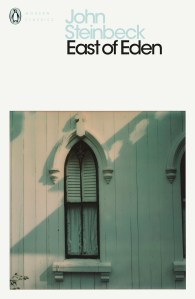
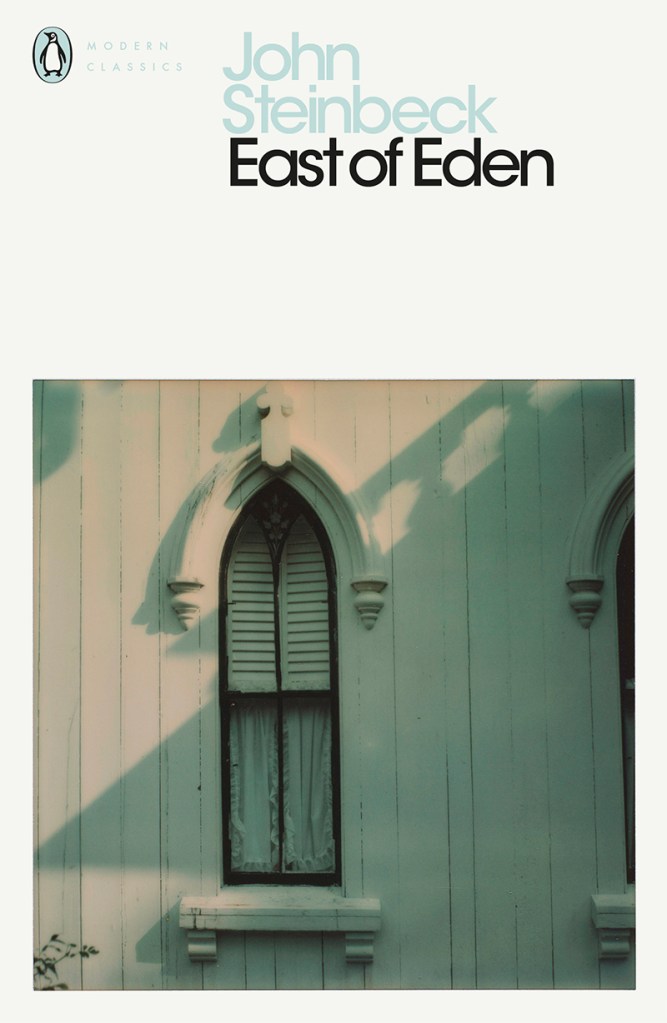
E is for East of Eden by John Steinbeck, first published in 1952.

This is the story of two family, the Trasks and the Hamiltons, whose generations helplessly re-enact the fall of Adam and Eve and the poisonous rivalry of Cain and Abel. I enjoyed this beautifully written book, which begins slowly, but not as much as The Grapes of Wrath, which I thought was amazing. It’s long – too long really – and to my mind it reads like a morality tale of good versus evil. There are many parallels to the Bible stories, with surely one of the most evil characters ever in Cathy. I liked the way Steinbeck set out the moral dilemmas and gave the characters personal choice using the Hebrew word ‘timshel‘, meaning ‘thou mayest’.
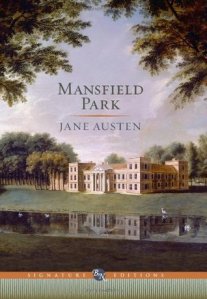
M is for Mansfield Park by Jane Austen

On the surface this is a simple story about a family and their relationships. Fanny Price, as a child of 10 goes to live with her wealthy aunt and uncle, Sir Thomas and Lady Bertram at Mansfield Park, where as the poor relation she is not treated badly, but not as cared for or as kindly as her cousins, but more as an unpaid servant dependent on the family for her welfare – a sort of Cinderella story. But through the story, Jane Austen reveals the complicated interaction of society, shows the development of Fanny’s character and the depiction of a heroine who is good and gentle who matures throughout the novel. 

It’s full of detail of everyday life, its boredom as well as its entertainments and pleasures, the  balls and dinners. There is much in it about the houses and gardens, not only of the wealthy but also of the lower classes, such as Fanny’s parents home in Portsmouth – but they have servants themselves, so it is only comparative poverty. Seen mainly through Fanny’s eyes, it’s a study of morals, the damage caused by being unwanted and unloved. There is also a gentle strain of humour and satirical observations about contemporary values, and even, with Mary Crawford’s pun on ‘Rears and Vices‘, a bawdy note.

B is for Barnaby Rudge by Charles Dickens, first published in 1841, a murder mystery as well as a historical novel, mainly concerning the events surrounding the Gordon Riots of 1780. It’s almost a book of two parts and the dramatic second half, to my mind, more than makes up for the slow beginning which I had to read slowly and carefully.
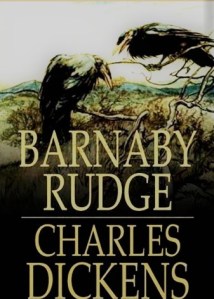
It begins in 1775, five years before the riots as a group of customers in the Maypole Inn in the village of Chigwell, on the borders of Epping Forest and about 112 miles from London, recollect the murder of Reuben Haredale, the owner of The Warren, 22 years earlier to the day. His steward, a Mr Rudge was found months later, stabbed to death.The murderer had never been discovered. Reuben’s brother Geoffrey had lived at The Warren with his niece, Emma ever since.

From then on the book becomes much more complicated with many characters and sub-plots. There are a number of themes running through the novel – the relationship between fathers and sons, the position of authority, justice and the question of punishment for crime, and religious conflict. Dickens paints a picture of London, the dirt and poverty, the terrible condition of the roads, the perils of footpads and highwaymen which is in contrast to the countryside that still at that period surrounded London making it a cleaner, purer place to live in.

E is for Excellent Women by Barbara Pym, first published in 1952. It’s not laugh-out-loud funny, but it is most entertaining, subtly and gently comic.  laugh-out-loud funny, but it is most entertaining, subtly and gently comic.

It’s set just after the end of the Second World War, about the everyday life of Mildred Lathbury, an unmarried woman – in other words a spinster – in her early 30s. The daughter of a clergyman she is one of those ‘excellent women’ who could be relied upon to help out at Church jumble sales, garden fêtes, to make tea when required or to make up numbers at social gatherings. She finds herself involved in the quarrel between her new neighbours, Helena and Rockingham (Rocky) Napier, a married couple who live in the flat below her, as well as in the difficult relationship between Julian Mallory, the local vicar and his unmarried sister, when he finds himself trapped by Allegra Grey, a vivacious widow when she moves into their spare room. It’s a slow-paced book but all the better because of that.
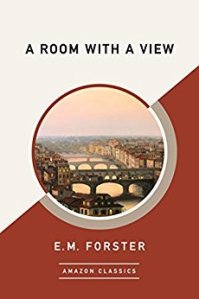
R is for A Room with a View by E M Forster. First published in 1908, this is a novella of 161 pages, a comedy of manners, satirising the manners and social conventions of Victorian/Edwardian society. It is about a young woman, Lucy Honeychurch, and her journey to self-discovery as she breaks out of the restrained culture of Edwardian England. It’s also a romance.

It begins in Florence where Lucy is staying at the Pensione Bertolini, with her older cousin and chaperone Charlotte Bartlett. They meet two other guests, a Mr Emerson and his son George who are not bound by the conventions of the day and Charlotte considers they are ill-bred. But Lucy is attracted by the Emersons’ free thinking ideas. They spend time in Florence visiting various locations including the Santa Croce church, the Piazza Della Signoria and the San Miniato church, with its beautiful facade, and take a trip into the hills.

The second half of the book takes place in England at Lucy’s home at Windy Corner where we meet the rest of her family and Lucy has to decide between the insufferable Cecil and the unconventional George. 
Top Five Tuesday: Books with a Direction in the Title

Top 5 Tuesday was created by Shanah at Bionic Book Worm, and it is now being hosted by Meeghan at Meeghan Reads. You can see the Top 5 Tuesday topics for the whole of 2025 here

Today the topic is Books with a Direction in the Title. I’ve chosen books with north, south, east, up and down in their titles:

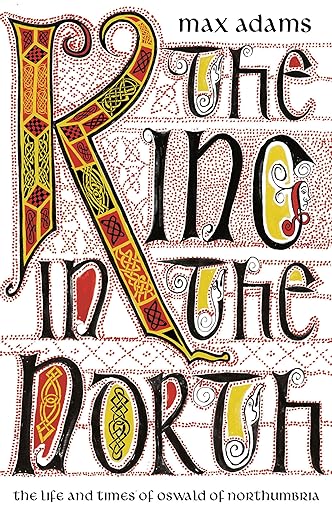
  1. The King in the North by Max Adams – Oswald of Northumbria was the first great English monarch, yet today this legendary figure is all but forgotten. In this panoramic portrait of Dark Age Britain, archaeologist and biographer Max Adams returns the king in the North to his rightful place in history.
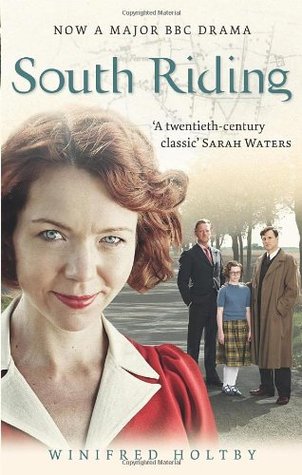
  2. South Riding by Winifred Holtby – portraying life in the 1930s, one of the main characters is Sarah Burton, the new headmistress of Kiplington High School for Girls, a fiercely passionate and dedicated teacher.
  3. East of Eden by John Steinbeck – the story of two families—the Trasks and the Hamiltons—whose generations helplessly re-enact the fall of Adam and Eve and the poisonous rivalry of Cain and Abel.
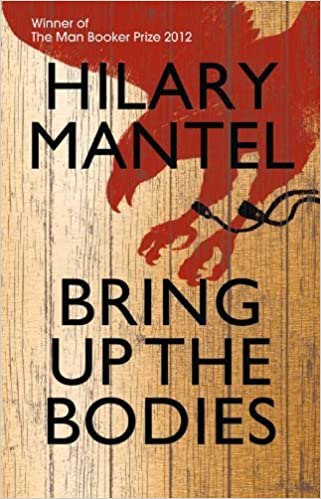
  4. Bring Up the Bodies by Hilary Mantel – the sequel to Wolf Hall. It’s 1535, Thomas Cromwell is Chief Minister to Henry VIII, Anne Boleyn is the king’s new wife. But she has failed to give the king an heir and Henry falls for plain Jane Seymour. Cromwell must find a solution that will satisfy Henry, safeguard the nation and secure his own career. But neither minister nor king will emerge unscathed from the bloody theatre of Anne’s final days.
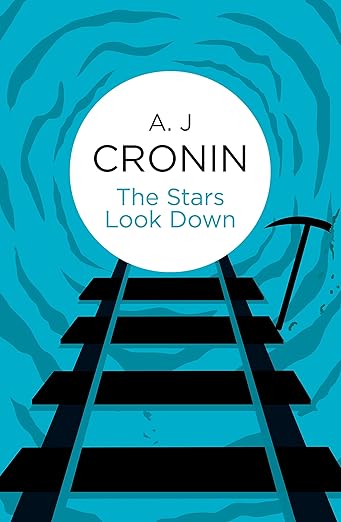
  5. The Stars Look Down by A J Cronin – a family saga chronicling the lives of a number of interconnected families over a period of thirty years.The story starts in 1903 in a North Country mining town, Sleescale, as its inhabitants experienced social and political upheaval. It ends in 1933. It highlights the terrible conditions in the coal mines, the lack of workers’ rights and the need for change in the relationship between the coal miners and the mine owners.

Top Five Tuesday:Top 5 books with an emotion in the title

Top 5 Tuesday was created by Shanah at Bionic Book Worm, and it is now being hosted by Meeghan at Meeghan Reads. For details of all of the latest prompts for January to March, see Meeghan’s post here.

Today the topic is Top 5 books with an emotion in the title. Whether it’s happy or sad, anger or excitement, any emotion is fine!

These are all books I’ve read with links to my reviews.

All Passion Spent by Vita Sackville-West. Lady Slane is an ageing British aristocrat. Her husband has recently died at the age of 94, leaving his family with the problem of ‘What was to be done about Mother?’ The family are four sons and two daughters. Lady Slane at 88 is still a beautiful woman and quickly but quietly asserts her independence. She ignores her children and decides to live, with her maid Genoux, in a house in Hampstead that she had first seen thirty years previously. This is a novel of contrasts, beautifully written, and expressing so many emotions in a quiet unassuming manner.

A Climate of Fear by Fred Vargas, a Commissaire Adamsberg murder mystery. I like Adamsberg; he’s original, a thinker, who doesn’t like to express his feelings, but mulls things over. He’s an expert at untangling mysteries, an invaluable skill in this, one of the most complicated and intricate mysteries I’ve read. He’d compared the investigation right from the start to a huge tangled knot of seaweed. A woman is found bleeding to death in her bath, having apparently committed suicide, there’s a secretive society studying and re-enacting scenes from the French Revolution, and two deaths ten years earlier on an isolated island off the coast of Iceland, where the afturganga, the demon who owns the island summons people to their death.

The Grapes of Wrath by John Steinbeck. Steinbeck’s writing conjures up such vivid pictures and together with his use of dialect I really felt I was there in America in the 1930s travelling with the Joad family on their epic journey from Oklahoma to California. What a long, hard journey with such high hopes of a better life and what a tragedy when they arrived to find their dreams were shattered, their illusions destroyed and their hopes denied. Throughout the book, Steinbeck shows the inhumanity of man to man and also the dignity and compassion, the essential goodness and perseverance of individuals against such appalling conditions and inhumane treatment. 

Stone Cold Heart by Caz Frear, a police procedural written in the first person present tense narrated by DC Cat Kinsella who is part of the Murder Investigation Team 4. Naomi Lockhart, a young Australian woman was murdered and at first it looked as though her flatmate had killed her. It’s a most convoluted and tangled tale, filled with secrets and lies, most of which are complete red herrings.  Alongside the murder mystery, the book follows the story of DC Cat Kinsella’s family and the mystery surrounding Maryanne Doyle that was told in Sweet Little Lies – you really do need to read that book first to understand what is going on in her family life in this book. Cat is a conflicted character to say the least and although other readers have found her a warm and likeable character I found her one of the most irritating fictional detectives in crime fiction.

Cruel Acts by Jane Casey. A year ago, Leo Stone was convicted of murdering two women and sentenced to life in prison. Now he’s been freed on a technicality, and he’s protesting his innocence. DS Maeve Kerrigan and DI Josh Derwent are determined to put Stone back behind bars where he belongs, but the more Maeve digs, the less convinced she is that he did it. Then another woman disappears in similar circumstances. Is there a copycat killer, or have they been wrong about Stone from the start?

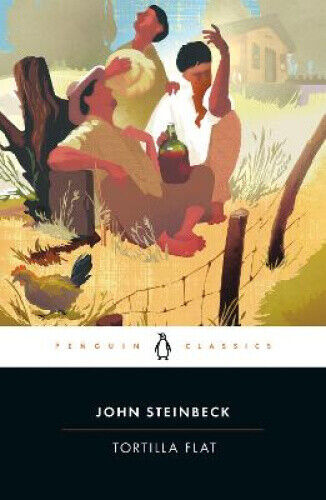
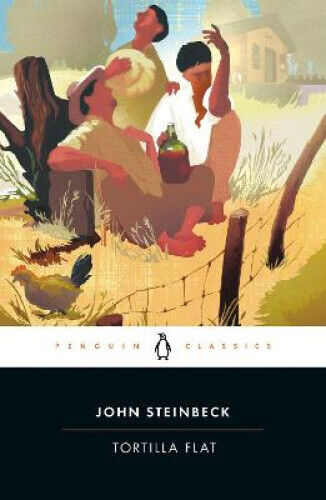
Tortilla Flat by John Steinbeck

Tortilla Flat was my Classics Club Spin book to read by 30th April. It was John Steinbeck’s fourth novel, first published in 1935. Tortilla Flat is on the hill high above Monterey, an old city on the coast of California. Monterey is also the setting for Cannery Row (the first of John Steinbeck’s novels that I read) and Sweet Thursday, both of which I enjoyed, so I was expecting this book to be just as good. And after a somewhat slow start I soon settled into the book and thoroughly enjoyed it.

As Steinbeck explained in his Preface this is the story of Danny and of Danny’s friends, Pilon, Pablo, Jesus Maria, and Big Joe. Tortilla Flat is a collection of stories about their escapades, and their thoughts and endeavours. They are paisanos, being a mix of Spanish, Indian, Mexican and assorted Caucasian bloods, living in old wooden houses in the midst of pine trees. The stories have almost a mythical feel and indeed, Steinbeck compares Danny and his friends to the Knights of the Round Table.

It begins just after the end of the First World War, when they return to find that Danny has inherited two houses from his grandfather. He lives in one house and ‘rents’ the other to his friends, but they are all poor, do not work and never pay him, except in wine. They spend their days partying, drinking, sleeping, thieving or in jail. After a while Pirate joins them along with his five dogs who follow him everywhere. He’s the only paisano who works, making 25 cents a day selling kindling, but he doesn’t spend it, saving it and hiding it. But they don’t really care about money, they trade what they have or what they find for wine and then share it before sleeping it off.

Some of the stories are humorous, and some are tragic. I enjoyed them all. They stress the importance of home, friendship, and survival, giving an insight into their life in Tortilla Flat. And I loved the descriptions of the landscape:

In the morning when the sun was up clear of the pine trees, when the blue bay rippled and sparkled below them, they arose slowly and thoughtfully from their beds.

It is a time of quiet joy, the sunny morning. when the glittery dew is on the mallow leaves, each leaf holds a jewel which is beautiful if not valuable. This is no time for hurry or for bustle. Thoughts are slow and deep and golden in the morning. (page 25)

And this passage:

They walked side by side along the dark beach toward Monterey, where the lights hung, necklace above necklace against the hill. The sand dunes crouched along the back of the beach like tired hounds, resting; and the waves gently practiced at striking, and hissed a little. (page 87)

The Classics Club Spin Result

The spin number in The Classics Club Spin is number …

18

which for me is Tortilla Flat by John Steinbeck. The rules of the Spin are that this is the book for me to read by 30 April 2023.

Synopsis from Amazon

Steinbeck’s first major critical and commercial success, TORTILLA FLAT is also his funniest novel. Danny is a paisano, descended from the original Spanish settlers who arrived in Monterey, California, centuries before. He values friendship above money and possessions, so that when he suddenly inherits two houses, Danny is quick to offer shelter to his fellow gentlemen of the road. Their love of freedom and scorn for material things draw them into daring and often hilarious adventures. Until Danny, tiring of his new responsibilities, suddenly disappears…

I’m pleased about this result as I’ve enjoyed reading other books by John Steinbeck – my favourite is Cannery Row. So I’m expecting this to be good – and hope I won’t be disappointed.

Did you take part in the Classics Spin? What will you be reading?

What’s In a Name? Challenge Completed

WhatsinaName14

I’ve completed this year’s What’s In a Name? Challenge hosted by Andrea at The Carolina Book Nook. The challenge was to read a book in any format (hard copy, ebook, audio) with a title that fits in each category.

Here are the categories and the books I’ve read:

  • A precious stone/metal: Who Killed Ruby? by Camilla Way – a tense and emotional mystery.
  • A temperature:  Cold Earth by Ann Cleeves – the 7th Shetland murder mystery – the body of a dark-haired woman wearing a red silk dress is found in the debris of a flood.
  • A month or day of the week: Sweet Thursday by John Steinbeck – with eccentric and funny characters, wit, humour, irony and a touch of farce and surrealism.
  • A meal: The Tea Planter’s Wife by Dinah Jefferies – historical fiction set in Ceylon in the 1920s.
  • Contains the word “girl” or “woman”:  The Glass Woman by Caroline Lea – historical fiction set in set in Iceland in 1686, a story of suspicion, love and violence.
  • Contains both the words “of” AND “and”: Hotel on the Corner of Bitter and Sweet by Jamie Ford – historical fiction set in Seattle, a bitter sweet story of commitment and enduring hope.

I enjoyed reading all of them and it is so hard to choose a favourite! So, it has to be a tie between Sweet Thursday and  Hotel on the Corner of Bitter and Sweet.