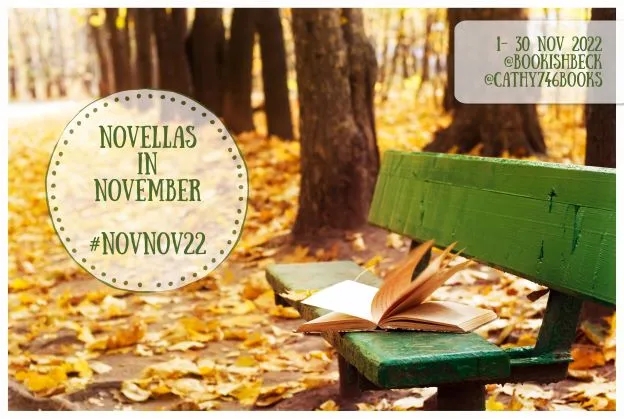
Novellas in November 2022

Novellas in November is being hosted once more by Cathy of 746 Books and Rebecca of Bookish Beck, running from 1-30 November 2022. They suggest 150–200 pages as the upper limit for a novella.

Here’s the schedule:

1–7 November: Short classics (pre 1980) (Rebecca)

8–14 November: Novellas in translation (Cathy)

15–21 November: Short nonfiction (Rebecca)

22–28 November: Contemporary novellas (post 1980) (Cathy)

29–30 November: You might like to post a “New to my TBR” or “My NovNov Month” roundup.

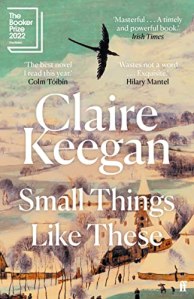
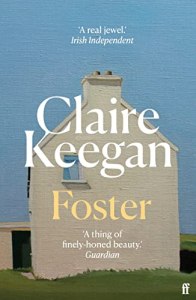
There is also one overall buddy read. Claire Keegan has experienced a resurgence of attention thanks to the Booker Prize shortlisting of Small Things Like These (which I have read – review to follow). Foster is a modern Irish classic that comes in at under 90 pages, and, in its original version, is free to read on the New Yorker website. You can find that here. (Or whet your appetite with Cathy’s review.)

Keegan describes Foster as a “long short story” rather than a novella, but it was published as a standalone volume by Faber in 2010. A new edition will be released by Grove Press in the USA on November 1st, and the book is widely available for Kindle. It is also the source material for the recent record-breaking Irish-language film The Quiet Girl, so there are several ways for you to encounter this story.

I’m aiming to read Foster during November.

I won’t be taking part every week, as there are other books I want to read. But I’m going to pick a few novellas from this pile. They are a mix of fiction and nonfiction.

And I’ll choose one or more from this selection of novellas on my Kindle:

Lord of the Flies by William Golding
Signal Moon by Kate Quinn
North to Paradise by Ousman Umar
Bill Bailey’s Remarkable Guide to Happiness
The Ardent Swarm by Yamen Manai
Silent Kill by Jane Casey

Mrs March by Virginia Feito

4th Estate| May 2022| 305 pages| Review Copy| 3*

I was invited to read Mrs March by the publishers 4th Estate publishers via NetGalley on the publication of the paperback edition in May 2022. It was first published in August 2021.

Publishers’ summary:

George March’s latest novel is a smash hit. None could be prouder than Mrs. March, his dutiful wife, who revels in his accolades and relishes the lifestyle and status his success brings.

A creature of routine and decorum, Mrs. March lives an exquisitely controlled existence on the Upper East Side. Every morning begins the same way, with a visit to her favourite patisserie to buy a loaf of
olive bread, but her latest trip proves to be her last when she suffers an indignity from which she may never recover: an assumption by the shopkeeper that the protagonist in George March’s new book –
a pathetic sex worker, more a figure of derision than desire – is based on Mrs. March.

One casual remark robs Mrs. March not only of her beloved olive bread but of the belief that she knew everything about her husband – and herself – sending her on an increasingly paranoid journey, one
that starts within the pages of a book but may very well uncover both a killer and the long-buried secrets of Mrs. March’s past.

A razor-sharp exploration of the fragility of identity and the smothering weight of expectations, Mrs. March heralds the arrival of a wicked and wonderful new voice.

My thoughts:

I liked the synopsis which is why I read Mrs March. I thought it sounded like a book I would enjoy. But I am in two minds about this book, because although I can see why it has received such a lot of praise and 5 star reviews I really did not enjoy reading it. It is a remarkable character study, taking the reader right inside Mrs March’s head as she descends into paranoia and madness. The whole book is seen solely from her perspective, which makes it the most uncomfortable experience – but that is down to the brilliance of Feito’s writing.

It begins well and I was immediately reminded of Mrs Dalloway and also of the unnamed wife in Rebecca and I wondered if her real name would be revealed. Throughout the book she is called ‘Mrs March’ even when referring to her as a child. It’s as if she is only a person identified by her marital status. Her life seems to have no meaning other than being married to Mr March. There really is very little evidence for Mrs March’s belief that her husband has based the character of a prostitute in his book on her. But her conviction that this is how he sees her is devastating to her. It’s as though her whole existence is threatened.

It’s been a while since I finished reading it as I’ve been wondering what to write about it. There is so much in it to take in and whilst my reading is mostly for enjoyment I don’t think I can dismiss a book simply because I didn’t ‘enjoy’ it. But neither can I ignore that fact. How can you ‘like’ the portrayal of the breakdown of a personality, or a person? It’s beautifully written, but so tragic. I couldn’t like any of the characters, but they got under my skin as I read and I wanted it to end differently – of course, it couldn’t.

My thanks to the publishers for a review copy via NetGalley.

Top Ten Tuesday: Weird and Wonderful Words

Top Ten Tuesday is a weekly meme created by The Broke and the Bookish and now hosted by Jana at That Artsy Reader Girl. For the rules see her blog.

The topic this week is: Favorite Words (This isn’t so much bookish, but I thought it would be fun to share words we love! These could be words that are fun to say, sound funny, mean something great, or make you smile when you read/hear them.)

I’m using Through the Looking Glass by Lewis Carroll as my source of fun words – more than ten. The illustrations are all from my old paperback copy of the book.

I think his poem Jabberwocky in Through the Looking Glass is just perfect for my TTT post this week, full of weird and wonderful words.

illustration by John Tenniel

This was a great favourite of mine as a child and I still love the poem, Jabberwocky which begins:

Twas brillig and the slithy toves
Did gyre and gimble in the wabe;
All mimsy were the borogroves,
And the mome raths outgrabe.
Beware the Jabberwock, my son!
The jaws that bite, the claws that catch!
Beware the Jujub bird, and shun
The frumious Bandersnatch.

I had no idea what the words meant but I loved the sound of them and learned them off by heart. Humpty Dumpty explains to Alice that ‘brillig’ means ‘4 o’clock’, ‘slithy’ means ‘lithe and slimy’ and ‘toves’ are something like badgers  and lizards and corkscrews, to ‘gyre and gimble’ means to go round and round like a gyroscope and make holes like a gimlet and the ‘wabe’ is a grass-plot around a sundial – as shown in this illustration also  by John Tenniel:

In The Hunting of the Snark the Jujub bird is described in much greater depth than in Jabberwocky. It is found in a narrow, dark, depressing and isolated valley. Its voice when heard is described as a scream, shrill and high, like a pencil squeaking on a slate, and significantly it scares those who hear it. Frumious Carroll claimed, means a combination of fuming and furious and a bandersnatch is also described in Carroll’s The Hunting of the Snark, as a creature with a long neck and snapping jaws, and both works describe it as ferocious and extraordinarily fast. 

Book Beginnings & The Friday 56: Whispers Under Ground by Ben Aaronovitch

Every Friday Book Beginnings on Friday is hosted by Gillion at Rose City Reader where you can share the first sentence (or so) of the book you are reading. You can also share from a book you want to highlight just because it caught your fancy.

Today I’m featuring one of the books I’m currently reading, Whispers Under Ground by Ben Aaronovitch, the third book in his Rivers of London series, police procedurals of a very different kind – urban fantasy, set in the real world of London, a mix of reality and the supernatural.

My Book Beginning

Back in the summer I’d made the mistake of telling my mother what I did for a living. Not the police bit, which of course she already knew about having been at my graduation from Hendon, but the stuff about me working for the branch of the Met that dealt with the supernatural.

Also every Friday there is The Friday 56, hosted by Freda at Freda’s Voice, where you grab a book and turn to page 56 (or 56% of an eBook), find one or more interesting sentences (no spoilers), and post them.

Page 56:

I was carrying my magic bowl with both hands and stepping carefully on the frost-slippery cobbles.

Ben Aaronovitch is an English author and screenwriter. He is the author of the Rivers of London series of novels. He worked as a scriptwriter for Doctor Who and Casualty before the inspiration for his own series of books struck him whilst working as a bookseller in Waterstones Covent Garden. His unique novels are the culmination of his experience of writing about the emergency services and the supernatural. 

The series is to be adapted for television, bringing together all nine of the novels, plus the accompanying short stories, novellas and graphic novels, for the screen. The TV adaptation will be co-produced by Pure Fiction Television, See-Saw Films and Aaronovitch’s own production company Unnecessary Logo.

Synopsis:

Peter Grant is learning magic fast. And it’s just as well – he’s already had run-ins with the deadly supernatural children of the Thames and a terrifying killer in Soho. Progression in the Police Force is less easy. Especially when you work in a department of two. A department that doesn’t even officially exist. A department that if you did describe it to most people would get you laughed at. And then there’s his love life. The last person he fell for ended up seriously dead. It wasn’t his fault, but still.

Now something horrible is happening in the labyrinth of tunnels that make up the tube system that honeycombs the ancient foundations of London. And delays on the Northern line is the very least of it. Time to call in the Met’s Economic and Specialist Crime Unit 9, aka ‘The Folly’. Time to call in PC Peter Grant, Britain’s Last Wizard.

What do you think? Would you read it?

Top Ten Tuesday: Books I Read On Vacation

Top Ten Tuesday is a weekly meme created by The Broke and the Bookish and now hosted by Jana at That Artsy Reader Girl. For the rules see her blog. The topic this week is: Books I Read On Vacation.

Ammonites and Leaping Fish: a Life in Time by Penelope Lively –

Looking back I remember buying three books in Gatwick airport bookshops before boarding planes to go on holiday:

The Poisonwood Bible by Barbara Kingsolver – I bought this just before boarding a plane to go on holiday to Cyprus, so I read it on the plane and by the swimming pool.

Fortune’s Rocks by Anita Shreve – another book I read on holiday in Cyprus.

Happenstance by Carol Shields – I read this one in Tunisia. I began reading it in the departure lounge, then on the plane and round the hotel pool.

The next four in a holiday cottage near Painswick in the Cotswolds.

The Secret History by Donna Tartt

The Subtle Knife by Philip Pullman

Arlington Park by Rachel Cusk

I read the next three in Caldbeck in the Lake District.

The Sunrise by Victoria Hislop

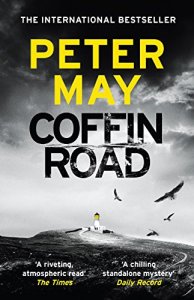
Entry Island by Peter May

Testament of a Witch by Douglas Watt

And I read the last one in an isolated converted barn on the North Yorks Moors.

Rivers of London by Ben Aaronvitch

Never Greater Slaughter by Michael Livingston

Osprey Publishing| May 2021| 241 pages| e-book Review Copy| 3.5*

I had heard of the Battle of Brunanburh before I read Never Greater Slaughter by Michael Livingston, but my knowledge was limited to the fact that this had taken place in 937 between Æthelstan, King of England, King Alfred’s grandson, and an alliance led by Anlaf, a Viking chieftain, other chieftains and Constantine King of the Scots, in which Æthelstan was victorious. So I was very keen to find out more.

Synopsis from Amazon:

Late in AD 937, four armies met in a place called Brunanburh. On one side stood the shield-wall of the expanding kingdom of the Anglo-Saxons. On the other side stood a remarkable alliance of rival kings – at least two from across the sea – who’d come together to destroy them once and for all. The stakes were no less than the survival of the dream that would become England. The armies were massive. The violence, when it began, was enough to shock a violent age. Brunanburh may not today have the fame of Hastings, Crécy or Agincourt, but those later battles, fought for England, would not exist were it not for the blood spilled this day. Generations later it was still called, quite simply, the ‘great battle’. But for centuries, its location has been lost.

The title is taken from the poem in the Anglo-Saxon Chronicle describing the battle thus:

Never greater slaughter Was there on this island, never as many Folk felled before this By the Swords edges.

The location of the battle has been lost. Historians, archaeologists, linguists and other researchers have studied the little evidence that remains about the battle and put forward ideas about that location. In this book Livingston concludes that the only ‘certain pieces of information about the field at Brunanburgh – the place-names by which it was known in the immediate years afterwards – unquestionably point us to blood being shed in the mid-Wirral.’ (location 76%)

It seems to me that this is a very thorough and detailed book describing the battle and the various theories about its location. But not only that Livingston sets out his definition of history and its limitations. For example he says that whilst some facts will be known, a great many through the passage of time are lost, and some are facts that people have chosen to record to suit their own needs – their own bias in other words – or are simply not true.

Then Livingston describes what is known about the period leading up to the battle, describes the battle itself, and, having stated his objections to other possible locations, explains the reasons he concludes the location is in the Wirral, which seems convincing to me.

I found this a well researched and fascinating book that gave me a much better understanding of the period.

My thanks to the publishers for a review copy via NetGalley.