Top Ten Tuesday is a weekly meme created by The Broke and the Bookish and now hosted by Jana at That Artsy Reader Girl. For the rules see her blog.
This week’s topic is Books on My Fall 2024 To-Read List. These are all books from my TBR list, some I have owned for years and some are new acquisitions.The first five are e-books and the last five are paperbacks. The descriptions are from Amazon UK.
I would love to say I will be reading all of them this year, but knowing how bad I am at sticking to reading lists, I very much doubt I will.
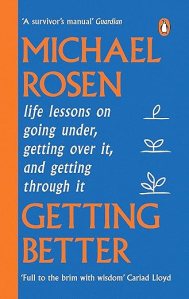
Getting Better by Michael Rosen, nonfiction. In some ways, this is a quirky and intimate memoir. But Rosen has become that curious thing, a national treasure, and this book perhaps reflects the national mood – and the national need, even – better than a grander account of Covid might ― The Times
In our lives, terrible things may happen. Michael Rosen has grieved the loss of a child, lived with debilitating chronic illness, and faced death itself when seriously unwell in hospital. In spite of this he has survived, and has even learned to find joy in life in the aftermath of tragedy.
In Getting Better, he shares his story and the lessons he has learned along the way. Exploring the roles that trauma and grief have played in his own life, Michael investigates the road to recovery, asking how we can find it within ourselves to live well again after – or even during – the darkest times of our lives. Moving and insightful, Getting Better is an essential companion for anyone who has loved and lost, or struggled and survived.
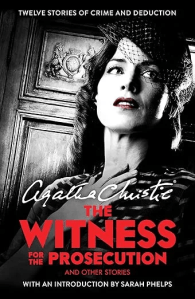
The Witness for the Prosecution: And Other Stories by Agatha Christie, crime fiction.
1920s London. A murder, brutal and bloodthirsty, has stained the plush carpets of a handsome London townhouse. The victim is the glamorous and enormously rich Emily French. All the evidence points to Leonard Vole, a young chancer to whom the heiress left her vast fortune and who ruthlessly took her life. At least, this is the story that Emily’s dedicated housekeeper Janet Mackenzie stands by in court. Leonard however, is adamant that his partner, the enigmatic chorus girl Romaine, can prove his innocence.
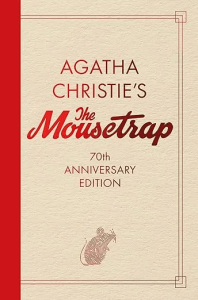
The Mousetrap by Agatha Christie, the 70th anniversary edition, including the official play script and a host of exclusive material from the show’s archives.
As news spreads of a murder in London, a group of seven strangers find themselves in a remote countryside guesthouse. When a police sergeant arrives, the guests discover – to their horror – that a killer is in their midst. One by one, the suspicious characters reveal their sordid pasts. Which one is the murderer? Who will be their next victim? And can you solve this world-famous mystery for yourself?
An Instance of the Fingerpost by Iain Pears, an historical thriller set in Oxford in the 1660s.
Four witnesses describe the events surrounding his death: Marco da Cola, a Venetian Catholic intent on claiming credit for the invention of blood transfusion; Jack Prescott, the son of a supposed traitor to the Royalist cause, determined to vindicate his father; John Wallis, chief cryptographer to both Cromwell and Charles II, a mathematician, theologian and master spy; and Anthony Wood, the famous Oxford antiquary.
Each one tells their version of what happened but only one reveals the extraordinary truth. Brilliantly written and utterly convincing, An Instance of the Fingerpost is gripping from the first page to the last.
Blackwater Lake by Maggie Lake, a psychological suspense novella.
When Matthew Stanyer’s parents go missing, he fears for their safety. His father has been struggling to cope with Matthew’s mother, who suffers from dementia. The nightmare worsens when Joseph and Evie’s bodies are found at Blackwater Lake, a local beauty spot. An inquest rules the deaths as a murder-suicide, based on the note Joseph left for his son.
Grief-stricken, Matthew begins to clear his parents’ house of decades of compulsive hoarding, only to discover the dark enigmas hidden within its walls. Ones that lead Matthew to ask: why did his father choose Blackwater Lake to end his life? And what other secrets do its waters conceal?
Trace Elements by Donna Leon, the 29th Commissario Brunetti Mystery. I’ve been reading this series totally out of order.
‘They killed him. It was bad money.‘ A dying hospice patient gasps these cryptic words about her recently-deceased husband, who lost his life in a motorcycle accident. But what appears to be a private family tragedy turns into a bigger enigma when Brunetti discovers the victim’s tied to Venice’s water supply. With the help of a Questura secretery, Elettra Sorzi, Brunetti will unveil the secret that lies behind the dying woman’s accusation – one that threatens the health of the entire region.
The Critic by Peter May, a cold case murder mystery, the second book in the Enzo Files series. I enjoyed the first book several years ago.
Gil Petty, America’s most celebrated wine critic, is found strung up in a vineyard, dressed in the ceremonial robes of the Order of the Divine Bottle and pickled in wine. For forensic expert Enzo Macleod, the key to this unsolved murder lies in decoding Petty’s mysterious reviews – which could make or break a vineyard’s reputation.Enzo finds that beneath the tranquil façade of French viticulture lurks a back-stabbing community riddled with rivalry – and someone who is ready to stop him even if they have to kill again.
The Enchanter’s Forest:(A Hawkenlye Mystery Book 10) by Alys Clare – historical mystery.
Set in Midsummer 1195. A ruthlessly ambitious man has fallen deeply into debt, his desperate situation made even more difficult by the contribution he has had to pay towards King Richard’s ransom. To make matters worse the beautiful wife he tricked into marriage has tired of him and her mother hates his guts. But then he makes an extraordinary discovery that dramatically changes his fortunes . . . until his lifeless body is found hidden in the undergrowth. Which of his many enemies loathed him enough to resort to murder? Josse d’Acquin, driven by his love for the Abbess Helewise and for the other mysterious woman whom he holds in his heart, knows that he has no choice but to investigate. But the personal cost will be high . . .
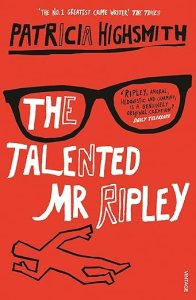
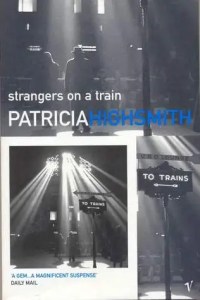
The Talented Mr Ripley by Patricia Highsmith – after reading Strangers on a Train I thought I’d try this, first book in Patricia Highsmith’s five-book Ripley series.
Tom Ripley is struggling to stay one step ahead of his creditors and the law, when an unexpected acquaintance offers him a free trip to Europe and a chance to start over. Ripley wants money, success and the good life and he’s willing to kill for it. When his new-found happiness is threatened, his response is as swift as it is shocking.
The Girl Next Door by Ruth Rendell, a psychological murder mystery.
Beneath the green meadows of Loughton Essex, a dark network of tunnels has been dug. A group of children discover them. They play there. It becomes their place. Seventy years on, the world has changed. Developers have altered the rural landscape. Friends from a half-remembered world have married, died, grown sick, moved – or disappeared. Work on a new house called Warlock uncovers a long buried grisly secret: the bones of two severed hands are discovered in a box, and an investigation into a long-buried crime of passion begins. The friends, who played together as children, begin to question their past. And a weary detective, more concerned with current crimes, must investigate a case of murder.










 BooksPlease