The Brief History of the Dead by Kevin Brockmeier

The Brief History of the Dead by Kevin Brockmeier, has been sitting on my bookshelves for 7 years (and moved house with me). It’s one of those books that I kept taking down off the shelf, flicking through it and putting it back.

As we’re in the middle of the R.I.P. IX Challenge it seemed this could be a good book to read as it’s fantasy fiction set some time in the future, about a place between heaven and earth, and the people who end up there after they’ve died and what happens to them. Amazingly they eat, sleep, fall in love and go to work in a city that looks like any on Earth with trees, houses, roads, businesses, shops, cafés and so on. It seems they are kept there as long as there is someone alive who remembers them. Parallel with this is the story of Laura, trapped in the Antarctic.  She is one of an expedition exploring methods of converting polar ice to use in manufacturing soft drinks. When their communication system fails two of the team go for help leaving Laura on her own. Eventually she too ventures out across the snow towards the Ross Sea, where there is a station studying emperor penguins.

I’m glad I read this book even if it didn’t quite live up to my expectations. The idea is good, and the two stories are dealt with in alternate chapters. It’s soon obvious that there has been some sort of worldwide disaster or epidemic and at first I was caught up with both stories, but the link between them is so obvious that the element of surprise or suspense just frittered away very quickly.

There is plenty of description; rather too much though and I got tired of reading about Laura’s struggle to cross the Antarctic, and the numerous descriptions of her battles to get in and out of her frozen sleeping bag, and hauling the sledge across the snow. There are plenty of flashbacks and digressions that promised to be interesting but were left undeveloped. It’s as though Brockmeier compiled the book from a series of short stories and scenic descriptions. By the end I really didn’t care what happened to any of the characters as they all waited for whatever came next. It’s a shame because I thought the idea had so much promise – what does happen when we die?

Reading Challenges

September's Books & Pick of the Month

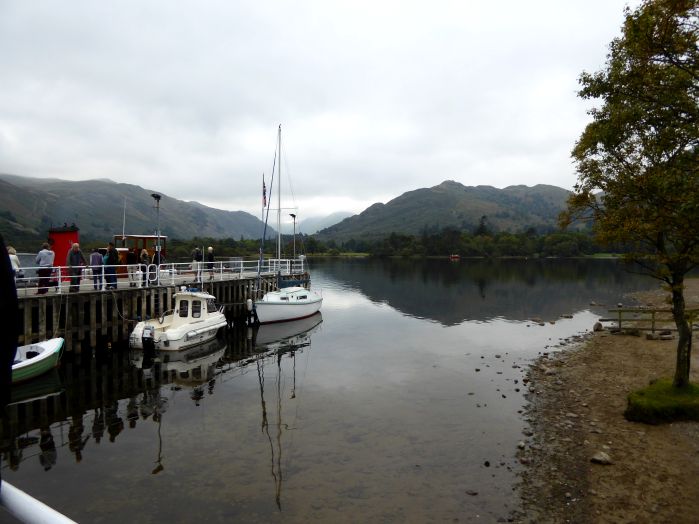
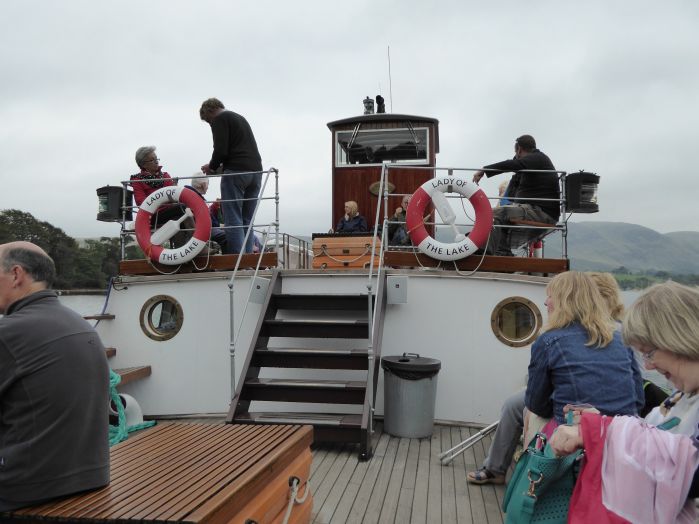
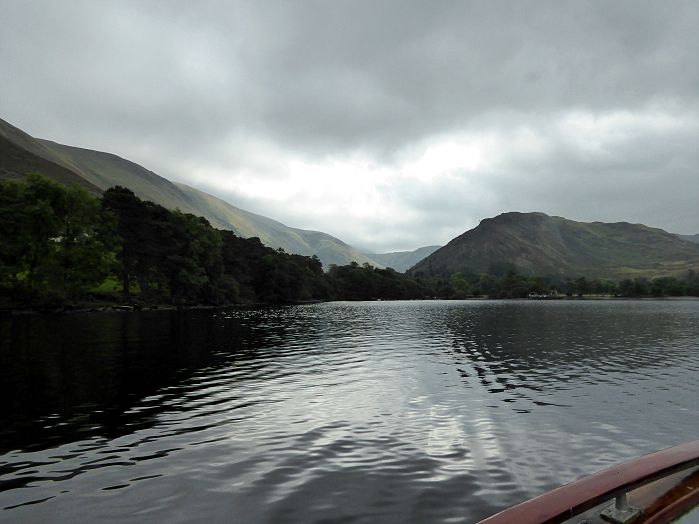
September was a good month – we had a holiday in the Lake District, the sun shone and it’s been a dry September, according to the Met Office it was the driest September since records began in 1911!

And I read a fair number of books (the links are to my posts on the books), which brings my total for the year so far to 83. Four of the books are TBRs (to-be-reads) and six are crime fiction (marked with *):

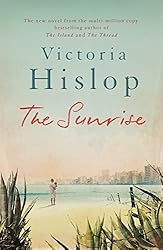
  1. The Sunrise by Victoria Hislop – my review will be on the next issue of Shiny New Books (I think!) Set 40+ years ago in Cyprus, I liked this very much – a story of human tragedy in the face of war.
  2. The Goldfinch by Donna Tartt – review to follow.
  3. Wycliffe and the House of Fear* by W J Burley – Wycliffe investigates the disappearance of Roger Kemp’s second wife.  A complex story with sinister undercurrents.
  4. Testament of a Witchby Douglas Watt –MacKenzie investigates the death of Grissell Hay, Lady Lammersheugh accused of witchcraft in a village overwhelmed by superstition, resentment and puritanical religion.
  5. The Moving Finger* by Agatha Christie – anonymous poison-pen letters, an apparent suicide and a murder in a peaceful country backwater in this Miss Marple mystery.
  6. The Yellow Wallpaper by Charlotte Perkins Gilmore – a suspense story of a young woman slowly but surely losing her mind – or is it a case of a woman suffering from post-natal depression. 
  7. Entry Island* by Peter May- set in present day Magdalen Islands, part of the province of Quebec, in the Gulf of St Lawrence, and in the nineteenth century on the Isle of Lewis at the time of the Highland Clearances.  It mixes together two stories and two genres, crime fiction and historical fiction.
  8. The Brimstone Weddingby Barbara Vine €“ one of the best of Barbara Vine’s books that I’ve read. Stella gradually confides in Jenny, telling her things she has never said to her son and daughter €“ things about her life she doesn’t want them to know. Barbara Vine, writes beautifully and powerfully yet in a controlled manner, and the subtle horror of what I was reading gripped me. 
  9. The Shroud Maker* by Kate Ellis €“ a complex, historical mystery intertwined with a modern day murder mystery for D I Wesley Peterson to solve with plenty of characters, red-herrings, twists and turns, and sub-plots.

Pick of the monthI enjoyed all of them. It was a good month for reading crime fiction and my Book of the Month is also my Crime Fiction Pick of the Month. It’s …

Brimstone wedding

The Brimstone Wedding by Barbara Vine.

For more Crime Fiction Pick of the Month books see Kerrie’s Crime Fiction Pick of the Month over at Mysteries in Paradise.

Mount TBR: Checkpoint #3

It’s time for the third quarterly checkpoint in the Mount TBR Reading Challenge 2014
Bev asks 2 questions:
 
1. Tell us how many miles you’ve made it up your mountain (# of books read).  

I have read 40 books. The full list is on my TBR Challenge page. In terms of how many mountains I’ve scaled this means that I have just 8 books left to read to reach my target of Mt Ararat (48 books) by the end of the year. Looking at the photo from Wikipedia I think I’m probably at the top of the Lesser Ararat. I should reach Greater Ararat by the end of the year if not earlier. 

2. Pair up two of your reads using whatever connection you want to make. Written by the same author? Same genre? Same color cover? Both have a main character named Clarissa? Tell us the books and what makes them a pair.

It was obvious when I looked at my list which two books make a pair:

Shakespeare’s Restless World by Neil MacGregor and Shakespeare: a Biography by Peter Ackroyd. Both books are non-fiction and obviously about Shakespeare and they complement each other very well.

Shakespeare’s Restless World is a beautiful book recreating Shakespeare’s world through examining twenty objects. It reveals so much about the people who lived then, who went to see Shakespeare’s plays in the 1590s and 1600s, and about their ideas and living conditions.

And Shakespeare: a Biography is structured mainly around the plays.  But above all, Ackroyd Shakespeareit places Shakespeare within his own time and place, whether it is Stratford or London or travelling around the countryside with the touring companies of players. Shakespeare spans the reigns of two monarchs, which saw great changes and Ackroyd conjures up vividly the social, religious and cultural scene. It’s a very readable book, full of detail. 

The Shroud Maker by Kate Ellis

When I saw The Shroud Maker by Kate Ellis in the mobile library I thought I’d seen reviews of her books on other blogs, so I borrowed it. It is the eighteenth Wesley Peterson Mystery, but I think it reads well without knowing the background to the main characters. Although I suppose if I went back in the series I’d find that I know things that maybe I shouldn’t.

Summary:

It’s the Palkin Festival in Tradmouth, a town in Devon, when the body of a strangled women is discovered floating out to sea in a dinghy. A year earlier Jenny Bercival had disappeared from the festival and her mother returns to look for her bringing with her anonymous letters claiming she is still alive. DI Wesley Peterson and his boss DCI Gerry Heffernan are investigating the two cases. Are they connected and is there a link to a fantasy website called ‘Shipworld’ which features the 14th century mayor and privateer of Tradmouth, Palkin as a supernatural hero with a sinister, faceless nemesis called the ‘Shroud Maker’?

 When Wesley’s friend, archaeologist Neil Watson finds a skeleton on the site of Palkin’s warehouse, the question is whether an ancient crime has been uncovered, or is it Jenny’s body?

My view:

I liked the way the historical mystery intertwines with the modern one, through the archaelogical evidence, and the extracts from a 19th century biography of John Palkin written by his descendant, Josiah Palkin-Wright and letters from Josiah’s wife to her sister, worried about her marriage and that her sister does not reply. Kate Ellis’s style of writing is deceptively simple, so much so that the locations and characters came to life in my mind, whether it was Tradmouth in the past or the present.

There is plenty of mystery in this novel. I really had to concentrate to keep all the characters, red-herrings, twists and turns, and sub-plots in my mind. I thought I’d followed it as I read it, but now I’m not sure that I can give a clear account of what happened and why. However, as I do like complex mysteries I think I’ll have to look out for the first books in the Wesley Peterson series.

A note on the title:

From the title I thought that the ‘Shroud Maker’ would be a person who makes shrouds ie cloths used to wrap a body for burial, but that is not so in this book. Instead the name of ‘Shroud Maker’ is taken from a rope maker, shrouds being the ropes that support a ship’s masts. He or she is a mysterious figure, who in the Shipworld website appears as a faceless monster, wearing what looks like a white ski mask, a malevolent dark force.

The Author’s Note:

It didn’t take me long reading this book to realise that ‘Tradmouth’ is an inversion of the name of Dartmouth in Devon and Kate Ellis’s note at the end of the book clarifies that. She refers to Geoffrey Chaucer, the author of The Canterbury Tales which features a character called the Shipman, a seaman from ‘Dertemouth’, who like her own invented character, was little better than a pirate. She writes that during the 19th century people were fascinated with the medieval period, perhaps as a reaction against industrialisation and her fictional writings of Josiah Palkin-Wright reflected that interest. And coming up to the present day she reflects that fantasy fiction is as popular today as it ever was, with the influence of J R R Tolkien’s works and fantasy fiction websites.

Reading Challenges: R.I.P. Challenge, the My Kind of Mystery Challenge, and the Historical Fiction Reading Challenge.

Sunday Selection

I’m currently reading The Brief History of the Dead by Kevin Brockmeier and Almost Invincible: a biographical novel of Mary Shelley.  But I like to think about the books I’ve got waiting to be read. They are:

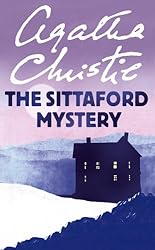
  • The Sittaford Mystery by Agatha Christie – set in a remote house in the middle of Dartmoor, a group of six people gather round a table for a séance. The spirits spell out a chilling message of murder. This is an early Agatha Christie book, first published in 1931 and is one I’ve been looking for, for ages.
  • A Short Book about Drawing by Andrew Marr. This is a library book and I have already flipped through it and read little bits. It has colour photos of his paintings along with his ideas about the differences between fine art and drawing, the mechanics of drawing and how drawing and painting can help us to think and see the world differently and so on. It looks fascinating and I’ll read this very soon I think.
  • Assassin’s Apprentice by Robin Hobb – this is free on Kindle at the moment. I know that other book bloggers like Robin Hobbs’ books and I’ve been thinking of trying one myself. This one is the first in the Farseer Trilogy. I’m not sure what to expectIf you’ve read it what do you think?
  • The Vanishing Witch by Karen Maitland. Another library book I’ve borrowed – this one from the mobile library. I loved Company of Liars and The Owl Killers, so I’m expecting great things from this book – I hope I won’t be disappointed. It’s set in the reign of Richard II, the time of the Peasants Revolt, a time of murder and mayhem and when suspicions of witchcraft were high as people started to die unnatural deaths.

The thing is that I want to read them all right now!

Castlerigg Stone Circle

Stone circles are amongst the most tangible and durable connections to the past. They have fascinated me ever since I was a young teenager and saw Stonehenge. We were on our way to Girl Guide camp in the New Forest, travelling overnight by coach from Cheshire and reached Stonehenge just before dawn. I was just about awake as we scrambled down from the coach and made our way over the field to be at Stonehenge as the sun came up. It was magical.

We were the only people there and in those days Stonehenge was fully accessible. I’ve been there since, and seen it on TV but I am so glad I had that experience before full access to Stonehenge was available, before there was a carpark and a visitor centre, shop and cafe. Now you can only view the stones from a short distance away along a tarmac pathway – after you’ve planned your visit in advance, parked your car and been driven 10 minutes by a shuttle bus, because entry to Stonehenge is by timed tickets. (Access is free at the solstices.)  I understand the need for all this but it still makes me shudder.

When I discovered that there is a stone circle near Keswick I was keen to go there whilst we were staying in the Lake District last week. Although there were more people at Castlerigg Stone Circle than I would have liked I really did appreciate the informality of the site.  There are no restrictions and you can wander around the stones as much you like. I suppose you’d have to get there at dawn or at least a lot earlier than we did to be there on your own.

Castlerigg is set on a plateau near Keswick, surrounded by hills, including Skiddaw and Blencathra. There is no carpark, visitor centre or shop – and I hope it stays that way. You can park in a little lane, where there was an ice-cream van selling delicious home-made ice-cream on the day we were there.

This was our first sight of the stones:

Approaching Castlerigg Stone Circle (1)  P1010056

Stone circles are ancient monuments. There are over 50 stone circles in the Lake District, made with locally available stones. Nobody knows what their function was, although there is much debate about whether they had a ritual and religious use, an astronomical significance or an economic function.

Castlerigg dates from around 5,200 BC which makes it older than the pyramids! Here is part of the circle. It is about 30 metres in diameter, which makes it quite difficult to take photos of the whole circle:

Castlerigg view 2

As you can see that the stones vary in size. The tallest stone is 2.3 metres and the largest weighs about 16 tonnes.

Castlerigg P1010061

And here are two photos of parts of the interpretation boards:

Int Bd Castlerigg P1010051

Int Bd Castlerigg P1010052

Castlerigg Stone Circle is described A Guide to the Stone Circles of the Lake District by David Watson, published in 2009 with colour photographs, maps and directions to the sites. The cover photo shows Castlerigg Stone Circle.

For more Saturday Snapshots see Melinda’s blog West Metro Mommy Reads.