Dry Bones That Dream by Peter Robinson: Book Notes

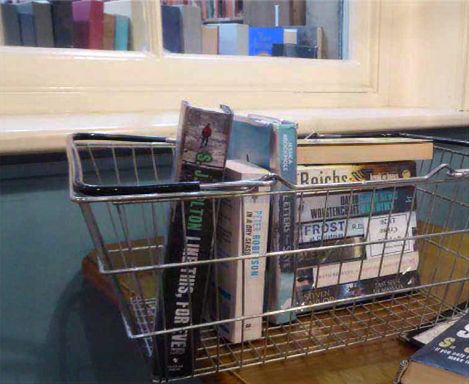
I read Peter Robinson’s DCI Banks books set in the Yorkshire Dales, every now and then, so I’m reading them totally out of order. It doesn’t seem to matter. Dry Bones That Dream is the 7th book in the series and the cover of my copy shows  Stephen Tompkinson as Banks. I don’t remember seeing this one on ITV, but I probably did as I see from the list of episodes in Wikipedia that it was broadcast in 2012.

Dry Bones That Dream was first published in the UK in 1995 and in the US later in as Final Account.

Summary from Peter Robinson’s website:

One May evening, two masked gunmen tie up Alison Rothwell and her mother, take Keith Rothwell, a local accountant, to the garage of his isolated Yorkshire Dales farmhouse, and blow his head off with a shotgun. Why? This is the question Detective Chief Inspector Alan Banks has to ask as he sifts through Rothwell’s life. Rothwell was generally known in the area as a mild-mannered, dull sort of person, but even a cursory investigation raises more questions than answers. When Banks’s old sparring partner, DS Richard ‘Dirty Dick’Burgess, turns up from the Yard, the case takes yet another unexpected twist, and Banks finds himself racing against time as the killers seem to be dogging his footsteps. Only after he pits his job against his sense of justice does he discover the truth. And the truth leads him to one of the most difficult decisions of his career.

My Thoughts:

I read this quite quickly, even though it’s just over 350 pages, in between mammoth gardening sessions (more about that later maybe). It really centres around identity and unearthing the secrets the characters have kept hidden from their family and friends. There’s also money-laundering and international and political shenanigans involved.

Much of the book revolves around Banks and his relationships, with family, colleagues and the people he interviews in connection with Keith Rothwell. Banks seems to be at a pivotal moment in his personal life. As usual with the DCI Banks books  we are told what music Banks listens to which got a bit monotonous for me and the descriptions of what each character looked like and the clothes they were wearing didn’t add anything to the plot. I did have an inkling about the truth about Rothwell’s murder but thought I was being too fanciful and that it was an unlikely scenario – it wasn’t. But I did enjoy reading it anyway even with these drawbacks.

Reading TBRs & The TBR Pile Challenge: May Checkpoint

In the context of this challenge and also the Mount TBR Challenge TBRs are books that have a publication date before 1/1/2014 (ie any book published in the year 2013 or earlier qualifies, as long as it has been on your TBR pile). It does not include all the books you’ve acquired since 1/1/204 even though they are, of course To Be Read books too!

official tbr challengeIt’s time for the MAY Check-in for the  2015 TBR Pile Challenge, hosted by Adam at Roof Beam Reader! We’re now almost half-way into the challenge, which is to identify and to read 12 books during 2015!

Question of the Month: If you could go back and edit your list to make ONE change, what do you think you would have done differently? A book or author that you wish you had included? A book that you wish you hadn’t bothered with?

First of all  this is my answer to Adam’s question – I wish I hadn’t included The Needle in the Blood by Sarah Bower, which I have put back one of the books on my shelves, at least for the time being, as I found it so confusing and I don’t like the fact that  it’s written in the third person present tense, which I find awkward. I bought this book 7 years ago and like to think that I am more careful now in choosing books and would avoid books written in that tense.

My Progress: 2 of 12 Completed – I am way behind! I’ve read The Burning by Jane Casey and The Interpretation of Murder by Jed Rubenfeld. The books for this challenge are shown in the sidebar to the right.

So, why am I behind when the books on the list are ones I’ve identified as ones I have owned for a while and want to read? One of the reasons is that I’m a great believer that there is a right time to read a book and often these books are not the right books this time. But there are other reasons too:

  • I start reading one of the books from the TBR Pile and find it difficult to read because it’s in a small font, or it’s very heavy/bulky to hold, so I read something else.
  • Or it’s very long and I fancy reading something shorter.
  • I keep reading about interesting books on other book blogs and want to read those now, so I either borrow them from the library, which means I have to read those first in case I can’t renew them, or I buy them and start reading them straight away.
  • Then there are books I read for my local book group which I have to fit in each month.

I’ll have to overcome these reasons if I’m ever going to read those books!

Book Beginnings: Firmin

Book Beginnings ButtonEvery Friday Book Beginnings on Friday is hosted by Gillion at Rose City Reader where you can share the first sentence (or so) of the book you are reading, along with your initial thoughts about the sentence, impressions of the book, or anything else the opener inspires.

I’ve been meaning to read this book for ages and I’ve listed it as one of the books to read for Once Upon A Time IX this year, so now is the time to read it. It is Firmin: Adventures of a Metropolitan Lowlife by Sam Savage ‘“ the tale of a rat living in the basement of a bookstore who develops the ability to read.

It begins:

I had always imagined that my life story, if and when I wrote it, would have a great first line: ‘Lolita. light of my life, fire of my loins’; or, if I could not do lyric, then something sweeping like Tolstoy’s ‘All happy families are alike, but every happy family is unhappy in it’s own way.’ People remember those words, even when they have forgotten everything else about the books. When it comes to openers, though, the best in my view has to be Ford Madox Ford’s The Good Soldier: ‘This is the saddest story I have ever read.’ I’ve read that one dozens of times and it still knocks my socks off. Ford Madox Ford was a Big One.

Not just one book beginning, but four!

From the back cover:

Firmin is a debonair soul, trapped in a rat’s body. He lives in the basement of a ramshackle old bookstore run by Norman Shine, where as the runt of his litter, he chews the books around him in order to survive. Thanks to his unusual diet Firmin develops the ability to read … and a very unratlike sense of the world and his place in it.

This week I’m joining in with The Friday 56, hosted by Freda at Freda’s Voice.

These are the rules:

  1. Grab a book, any book.
  2. Turn to page 56, or 56% on your eReader.
  3. Find any sentence (or a few, just don’t spoil it) that grabs you.
  4. Post it.
  5. Add the URL to your post in the link on Freda’s most recent Friday 56 post.

Page 56:

My intellect grew sharper than my teeth. Soon I could do a four-hundred-page novel in an hour, knock off Spinoza in a day.

Nothing To Be Frightened Of by Julian Barnes

I read Nothing To be Frightened Of over several weeks, reading short sections at a time. This book is described on the back cover by Penelope Lively as:

A maverick form of family memoir that is mainly an extended reflection on the fear of death and on that great consolation, religious belief … it is entertaining, intriguing, absorbing … an inventive and invigorating slant on what is nowadays called “life writing”.

It is a collection of thoughts centred around Barnes’s fear of death and so inevitably he considers the question of religion and especially God – in fact he begins his book with this statement: I don’t believe in God, but I miss him.

Later, he writes, Missing God is rather like Being English, a feeling aroused mainly by attack. When my country is abused, a dormant, if not to say narcoleptic, patriotism stirs. And when it comes to God, I find myself more provoked by atheistic absolutism than by, say, the often bland, tentative hopefulness of the Church of England. (page 77)

His agnosticism doesn’t help him with his fear of dying, but then, again, he thinks that faith does not necessarily remove the fear of death anyway – there are those who fear death among those who have faith as well as among the irreligious.

But this is more than a book about dying because interwoven with his thoughts about his agnosticism and death are anecdotes about his family and himself, thoughts on literature (particularly French literature) and it’s relationship to life. I found it all fascinating,  but it’s his autobiographical passages that I found the most interesting, sharing details about his family’s beliefs and the deaths of his parents and grandparents, of the rivalry between him and his brother, his mother’s solipsism and manipulative behaviour, his father’s seemingly passive approach to life and the difficulties of really knowing a person.

He states that it is easier with fiction than with life – fictional characters are easier to see, whereas in real life ‘the better you know someone , the less well often you see them. … They may be so close as to be out of focus … Often when we talk about someone very familiar, we are referring back to the time when we first properly saw them, when they were held in the most useful -and flattering light – light at the correct focal distance.’ (page 157)

He and his brother have different memories of their parents and grandparents and of their own early relationship, which shows how unreliable memory can be. I suppose I agree more with his brother, the philosopher Jonathan Barnes, who thinks that memories are often false and not to be trusted without external support, rather than Julian, who says he is more trusting, or self deluding, so shall continue as all my memories are true.

This is by no means a gloomy, pessimistic book.  It’s written in an informal tone, almost as though he is talking to the reader, and not being divided into chapters adds to that sense of being involved in a conversation. But is far from being a simple read – there is an awful lot packed into this book, an intensely personal book that reflects the complexity of our views of life and death. It gave me much to think about and even made me chuckle in parts.

And finally thinking about being remembered/forgotten after his death, Barnes considers who will be his last reader because with that reader he will finally be forgotten – and then he reflects that your last reader is, by definition, someone who didn’t recommend your books to anyone else. You bastard! Not good enough, eh? (page 226)

I think it extremely unlikely that I’ll be his last reader!

Reading Challenge: Non Fiction Reading Challenge 2015. This is only the 5th non fiction book I’ve read so far this year!

Gently North West by Alan Hunter

I first came across Inspector George Gently through the TV drama with Martin Shaw as Gently. There are 46 books in Alan Hinter’s Gently series and I’ve  read the first two , Gently Does It and Gently by the Shore and now the 14th book, Gently North West (first published in 1967). The full list of the Gently books is on Fantastic Fiction.  In the TV version Gently is based in Northumberland, whereas the books are mainly set in Norfolk.

Summary (Amazon)

There’s blood in the heather and a murderer on the loose when Gently pays a quiet visit to the Highlands of Scotland. Had Brenda Merryn not been such a strong-willed woman and had she not been so much in love with George Gently, driving all the way to Scotland for a holiday with Gently’s sister and brother-in-law might have been a bit of a challenge. Spying on a heavily armed private army of nationalists, being held at gunpoint on the hillside, being held prisoner in a filthy outhouse and becoming involved in a murder would be unthinkable. For Gently, it’s all in a day’s work and his holiday is put on hold while he stalks a murderer in the mountains, with Brenda by his side.

My view:

Gently North West is set in the fictitious village of Strathtudlem in Scotland in 1967 where Gently is on holiday with his friend, Barbara Merryn and his sister, Bridget and her husband. There is quite a lot of detailed descriptions not only of the Scottish Highlands but also of the route of Gently’s journey from London to Scotland. On their journey a man with a red beard nearly crashes into Gently’s car.

Then on their first evening in the Highlands, Gently and Brenda go for a walk and see the same man, standing high on a crag above the glen, peering at them through his binoculars.  The next morning, the body of Donnie Dunglass is found, stabbed in the back, face down on the heather near where Gently had seen the man with the red beard. He feels it is his duty to inform the local constabulary about the man he saw and so becomes involved in the search for the killer.

In this book there are several references that set the book firmly in the late 1960s with reference to the Scottish Nationalists ‘ activities during that time and even to Mary Quant. But what particularly interested me about Gently North West is not the actual murder mystery which I think is rather far-fetched, but the fact that Gently is no longer an Inspector working in Norfolk but is living in London, a Chief Superintendent with Scotland Yard. Obviously since the events in the second book Gently had been promoted several times!

Now I’m wondering if I want to read all the books to find out more about Alan Hunter’s Gently.

Alan Hunter was born in Hoveton, Norfolk in 1922. He left school at the age of fourteen to work on his father’s farm, spending his spare time sailing on the Norfolk Broads and writing nature notes for the Eastern Evening News. He also wrote poetry, some of which was published while he was in the RAF during the Second World War. By 1950, he was running his own book shop in Norwich and in 1955, the first of what would become a series of forty-six George Gently novels was published.  He died in 2005, aged eighty-two.

He dedicated Gently North West to his mother, Isabella Hunter, nee Andrews, who was from Culsalmond in Aberdeenshire. In his own words she ‘contrived to possess her son with an indelible prejudice for the land of heroes and poets. Rest her well where she lies and greetings to my unknown Scottish cousins.

Reading Challenge: this is the fifth book I’ve read that qualifies for the Read Scotland Challenge 2015.

Stacking the Shelves

STSmallStacking The Shelves is all about sharing the books you are adding to your shelves. This means you can include ‘˜real’ and ‘˜virtual’ books (ie physical and ebooks) you’ve bought, books you’ve borrowed from friends or the library, review books, and gifts.

This last week has been an excellent week for Stacking the Shelves, as I’ve added seven new/new-to-me books – two of them on Kindle.

These are the physical books – the first three all arrived on the same day – Thursday:

Stacking the Shelves 9 May 15I’ve been looking forward to reading The Golden Age of Murder by Martin Edwards and I ordered it to arrive on its publication day – which was Thursday. I have, of course, already started to read it and it’s promising to be excellent.

From the back cover:

The Golden Age of Murder tells for the first time the extraordinary story of British detective fiction between the two World Wars, and the fascinating people who wrote it. A gripping real-life detective story, this book investigates how Agatha Christie and her colleagues in the mysterious Detection Club transformed crime fiction. Their work cast new light on unsolved murders whilst hiding clues to their authors’ darkest secrets, and their complex and sometimes bizarre lives.

Civil War by Peter Ackroyd was also published in paperback on Thursday. This is volume III of Ackroyd’s series, The History of England. I’d read Jessica’s review of the book on The Bookworm Chronicles and thought I’d like to read it.

It’s the history of the 17th century, the monarchy and the Civil War which led to the execution of Charles I and the despotic reign of Oliver Cromwell. It also covers the cultural and social life of the period including Shakespeare’s later plays, the poetry of John Donne and Milton, as well as details of the lives of ordinary people against the backdrop of constant disruption and uncertainty.

The Hundred-Foot Journey by Richard C Morais is my book group’s choice for June.

This is the story of Hassan Haji, a boy from Mumbai, and his family who open a restaurant in a French village. A culinary war ensues against the cordon bleu Michelin starred restaurant opposite. Full of eccentric characters, delicious meals and hilarious cultural mishaps, according to the back cover.

I bought A Shilling for Candles by Josephine Tey from the secondhand book table at the village hall when I went to vote on Thursday.

It’s an Inspector Grant mystery.  A beautiful young film actress is found lying dead on the beach one morning. Is it suicide or murder?

The last of the physical books is a complimentary copy of William and Kate’s Britain: an Insider’s Guide to the haunts of the Duke and Duchess of Cambridge by Claudia Joseph – it contains one of my photos of the Hirsel Country Park at Coldstream.

There are many more photos in this beautiful book – photos of royal palaces, castles,  churches, hotels, pubs, towns and villages as well as country parks and much more. It’s packed with fascinating facts.

I also got an e-book of Agatha Christie’s first full length novel featuring Miss Marple – The Murder at the Vicarage. I’ve read (and re-read) many of her books, but missed this one.

Colonel Protheroe is found shot dead in the vicar’s study. There are many suspects for Miss Marple to question about the murder as he was not a popular man and everyone including the vicar seems to have a reason to want the Colonel dead.

And finally, fellow blogger Dorte Hummelshoj Jakobsen sent me an e-copy of her third standalone novel, Crystal Nights, a Scandinavian psychological mystery of the violence and evil that rips through a cosy and peaceful Danish village in the 1960s. It begins with a quotation from Hans Christian Anderson’s The Snow Queen, one of my favourite fairytales!

And what about you?  What books did you find this week?