Books Read in May 2015

I’m pleased that I’ve read 8 books in May as my reading and blogging was interrupted by gardening. The grass is now growing at a rate of knots and the weeds, especially the ground elder, are rampant, threatening to take over the borders. So I’ve spent a lot of time this month mowing, weeding and strimming.

But I’ve also read these books and written about all of them, except H is for Hawk – post to follow some time soon (I hope). Three of the books are non fiction, one is a book from Lovereading for review and six are library books – no TBR books (books acquired before 1 January 2015) this month! I must get back to reading from those books I’ve had for years very soon!

These are the books I read:

Bks May 2015

Gray Mountain by John Grisham (Library book) – this book is just as much a campaign against injustice and the misuse of power, about the good little guys against the big bad guys as his earlier books are. In this case it’s the big coal companies that come under the microscope, companies that are  ruining the environment by strip-mining in the Appalachian mountains. I liked the view of the small town community, the mountain scenery, the legal cases large and small and the tension created by the danger of opposing the big coal companies.

The Lost Garden by Katharine Swartz (Review book) – an emotionally intense novel of love, loss and grief, set in both the past and the present day, in a small village on the Cumbrian coast, a gentle story, well told and an enjoyable read. In 1919 Eleanor, the daughter of the vicar of Goswell, is struggling to adjust to the loss of her brother, Walter who died just before the Armistice was declared and in the present day half-sisters Marin and Rebecca are coming to terms with the death of their father and his wife.

Gently North West by Alan Hunter (Library book) – set in the fictitious village of Strathtudlem in Scotland in 1967 where Gently is on holiday with his friend, Barbara Merryn and his sister, Bridget and her husband. Gently gets involved in the investigations into the murder of Donnie Dunglass,  found, stabbed in the back, face down on the heather. I thought it was an enjoyable book although I thought the murder mystery was rather far-fetched.

Nothing To Be Frightened Of by Julian Barnes (Library book, Non Fiction) – a collection of thoughts centred around Barnes’s fear of death and so inevitably he considers the question of religion and especially God. Interwoven with his thoughts about his agnosticism and death are anecdotes about his family and himself, thoughts on literature (particularly French literature) and it’s relationship to life. I found it all fascinating.

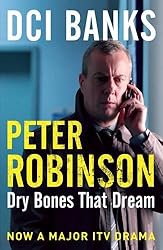
Dry Bones That Dream by Peter Robinson (Library book) – Banks investigates the murder of Keith Rothwell, an accountant, a  mild-mannered, dull sort of person it seems. But is that all there is to Rothwell? Banks unearths the secrets the characters have kept hidden from their family and friends. There’s also money-laundering and international and political shenanigans involved. Maybe not the best Banks book I’ve read.

H is for Hawk by Helen Macdonald (KindleNon Fiction) – no post yet. In some ways a difficult book to read – about training a goshawk and the author’s struggle with grief, mourning the death of her father.

Harbour Street by Ann Cleeves (Library book) This is the fifth Vera book and I loved it. It’s so good I read it twice because I watched the TV version after I finished reading the book – and it confused me as it’s different from the book! So I went back and re-read it. It is so much better than the TV adaptation, which I think suffered from being condensed into just one hour and a half length programme.

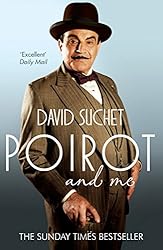
Poirot and Me by David Suchet (Library book, Non Fiction) – this consists largely of Suchet’s summaries of the stories and how he went about analysing Poirot’s character and how he played the part. This is a fascinating account of both the Poirot series and of David Suchet’s career.

I have no difficulty this month with naming my favourite book of the month. All the time I was reading it I was thoroughly absorbed and intrigued by Harbour Street by Ann Cleeves.
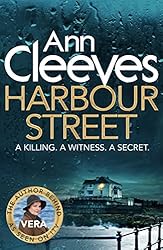
Harbour Street by Ann Cleeves

I first ‘met’ Vera Stanhope in the TV dramatisations of Ann Cleeves’ novels, which I enjoyed. But once I began reading Ann Cleeves’ books I discovered that they are even better than the TV versions! The latest one I’ve read is Harbour Street, the sixth book in the Vera series – it’s fantastic. If you’ve watched On Harbour Street, the TV adaptation broadcast last year, you’ll find that it didn’t strictly follow the book much at all – and you won’t know who the murderer is – it’s a different person in the book!

Harbour Street (Vera Stanhope, #6)


This is what I wrote last year about The Glass Room, the fifth Vera book and my thoughts about Harbour Street are just the same:

It’s going to be a contender for my best book of the year, because I loved it. It has everything I like in a crime fiction novel – setting, characters and a cleverly constructed plot. I didn’t guess who the murderer was but realised afterwards that all the clues had been there, skilfully woven into the narrative, hidden among the dead-ends and red herrings, so that I’d read on without realising their significance.

It’s ten days before Christmas, the Newcastle Metro is packed with shoppers, babies screaming, office workers merry after pre-Christmas parties, teenagers kissing. But when the  train has to stop because of the snow they all pile off the train – except for one old lady, Margaret Krukowski, who was fatally stabbed. No one saw the murder take place even though, or maybe because the train was packed with people, including Detective Joe Ashworth travelling home with his daughter, Jessie, from carol singing in Newcastle Cathedral.

Margaret had lived in a guest house on Harbour Street in Mardle, a coastal town in South Northumberland and it is here that Vera concentrates their investigation with the occupants of the guest house, the Coble, the pub opposite and the Haven, a hostel for homeless women, where Margaret had been a volunteer. It soon becomes obvious that Margaret was a woman with many secrets in her past – stemming from 1970 when her Polish husband Pawel Krukowski had left her.  Then a second murder occurs and an earlier crime comes to light – but who is the killer?

Ann Cleeves is a superb storyteller. Her descriptions get right inside my brain; she has the skill to make the scenes materialise,  in front of my eyes, and not because I’ve seen the TV adaptation which was filmed at a different time of year and in a different place from the location of Mardle in the book. Her characters are fully formed with emotions and feelings, backgrounds and complicated relationships, just as in real life, with all the sights, sounds, sensations and smells. Her dialogue is authentic, never awkward and you are never left wondering who is talking. Her books are deceptively easy to read,  moving swiftly along as the tension rises. They are layered, cleverly plotted and above all convincing. As in her other books I had several suspects in mind but hadn’t realised just how much wool had been pulled over my eyes until Margaret’s killer was revealed.

  • Paperback: 384 pages
  • Publisher: Pan; Reprints edition (31 July 2014)
  • Language: English
  • ISBN-10: 1447202090
  • ISBN-13: 978-1447202097
  • Source: my local library

Poirot and Me by David Suchet and Geoffrey Wansell

Prologue

It is a damp, chill Friday morning in November and I am feeling old, very old; so old, indeed, that I am on the brink of death. I have lost two stone in weight, my face is the colour of aged parchment, and my hands are gnarled  like human claws.

I must have watched nearly all, if not all, of David Suchet’s performances as Agatha Christie’s Hercule Poirot. For me he was the perfect Poirot, so it was a given that I would read his autobiography, Poirot and Me, written with the help of his friend Geoffrey Wansell. And it really lives up to its title, as the main subject is David Suchet’s role as Poirot. His first performance as Poirot was in 1988. Over the intervening twenty five years he played the part in every one of the seventy Poirot stories that Agatha Christie wrote, with the exception of a tiny short story called The Lemesurier Inheritance (a story in Poirot’s Early Cases and in The Under Dog).

When I started watching the TV dramas it had been years since I’d read any of Agatha Christie’s books and I wasn’t aware that the early shows were based on her short stories – actually I didn’t even know then that she had written any short stories at all. I’ve read nearly all of her full length novels, but only a few of her short stories so far.

I think Poirot and Me may not appeal to people who are not readers of Agatha Christie’s books as it consists largely of Suchet’s summaries of the stories and how he went about analysing Poirot’s character and how he played the part. He began by compiling a list of Poirot’s characteristics, then considering his voice and his appearance. He made 92 ‘character points’ and his original list is reproduced in the book, along with photos of locations, the cast and crew.

He was most concerned that his portrayal of Poirot should be faithful to the character that Agatha Christie had created. He immersed himself so completely in the character that at times he didn’t know where Poirot ended and he began! Even so, some of the dramatisations are not strictly faithful to the original stories, for various reasons; additional characters are included and some of the plots are expanded versions, especially where the original short stories were slight. Or, for example, as in the case of the collection of short stories that make up The Twelve Labours of Hercules, the stories are so diverse that the screenwriter created an almost entirely new story, though using some of the characters.

At the end of each of the Poirot series, David Suchet didn’t know if any more were in the pipeline and he continued to play other parts in film,  on TV and on the stage. I found this just as interesting as the sections on his role as Poirot and it emphasises his qualities as an actor –  he is a ‘character’ actor, a Shakespearean actor and with the exception of Poirot his roles have been pretty dark and menacing parts. I particularly remember him in Blott on the Landscape, in which he played the malevolent gardener and in The Way We Live Now as the sinister financier Melmotte.

He thinks the charm of the Poirot stories is that

… they reveal a world where manners and morals are quite different from today. There are no overt or unnecessary sex scenes, no alcoholic, haunted detectives in Poirot’s world. He lives in a simpler, some would say more human, era; a lost England, seen through the admiring eyes of this foreigner, this little Belgian detective. For me, that makes the stories all the more appealing, for although the days he lives in seem far away, they are all the more enchanting because of it. (page 64 in the hardback edition)

I think so too – and I think the same charm and appeal can be found in the Miss Marple stories.

David Suchet wrote that when Hercule Poirot died on that late November afternoon in 2012 (as he filmed Curtain) a part of him died, but for me and doubtless for many others, Poirot lives on not just in Agatha Christie’s stories but also in David Suchet’s wonderful performances as his ‘cher ami‘, Hercule Poirot.

  • Hardcover: 320 pages (also available in paperback and on Kindle)
  • Publisher: Headline; 1st edition (7 Nov. 2013)
  • Language: English
  • ISBN-10: 0755364198
  • ISBN-13: 978-0755364190
  • Source: my local library

This Week in Books: 27 May 2015

This Week in Books is a weekly round-up hosted by Lypsyy Lost & Found, about what I’ve been reading Now, Then & Next. A similar meme is run by Taking on a World of Words.

Now:

I’ve read the opening chapters of The Stranger You Know by Jane Casey and am continuing to read The Golden Age of Murder by Martin Edwards.

Now bks 27 May

Then:

I’ve recently finished reading Harbour Street and Poirot and Me by David Suchet. I’ll be writing posts about these books soon.

Then books 27 MayNext:

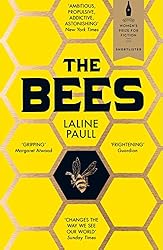
At the moment I think I’d like to read The Bees by Laline Paull next – a change from crime fiction.

Blurb (Amazon)

Enter a whole new world, in this thrilling debut novel set entirely within a beehive.

Born into the lowest class of her society, Flora 717 is a sanitation bee, only fit to clean her orchard hive. Living to accept, obey and serve, she is prepared to sacrifice everything for her beloved holy mother, the Queen.

But Flora is not like other bees. Despite her ugliness she has talents that are not typical of her kin. While mutant bees are usually instantly destroyed, Flora is removed from sanitation duty and is allowed to feed the newborns, before becoming a forager, collecting pollen on the wing. She also finds her way into the Queen’s inner sanctum, where she discovers secrets both sublime and ominous.

But enemies are everywhere, from the fearsome fertility police to the high priestesses who jealously guard the Hive Mind. And when Flora breaks the most sacred law of all her instinct to serve is overshadowed by an even deeper desire, a fierce love that will lead to the unthinkable . . .

Laline Paull’s chilling yet ultimately triumphant novel creates a luminous world both alien and uncannily familiar. Thrilling and imaginative, ‘˜The Bees’ is the story of a heroine who, in the face of an increasingly desperate struggle for survival, changes her destiny and her world.

Stacking the Shelves: 23 May 2015

STSmall

Stacking The Shelves is all about sharing the books you are adding to your shelves. This means you can include ‘˜real’ and ‘˜virtual’ books (ie physical and ebooks) you’ve bought, books you’ve borrowed from friends or the library, review books, and gifts.

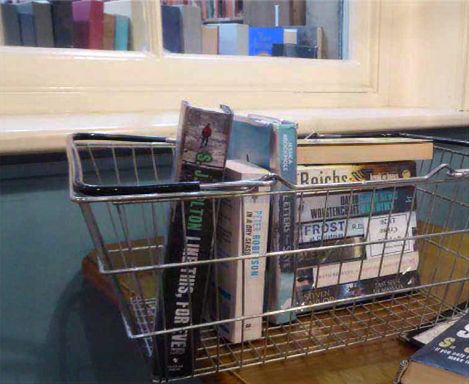
A bumper week for adding to the TBRs! I took back a pile of books to Barter Books in Alnwick and came home with these:

Bks May 2015


When I go to Barter Books I take a list of books to look for. This time I found three  – shown in the basket from left to right:

  • Like This For Ever by S J Bolton, the 3rd in the Lacey Flint series. I’ve read the first one, Now You See Me and have the second one which I haven’t read yet, so it will be a while before I get round to reading this one.
  • In a Dry Season by Peter Robinson, the 10th in the Inspector Banks series. I’m reading this series as I find the books not in the series order and I wrote about the 7th book, Dry Bones That Dream on Monday. Kay commented that she had enjoyed In a Dry Season very much so when I saw it on the shelf at Barter Books I put it in my basket.
  • Letters From Skye by Jessica Brockmole. I saw this book on Irene’s blog – she’s reading it and I thought it looked interesting so when I found it on the shelf as well I thought it was too much of a coincidence not to get it. It’s a novel told in a series of letters written spanning the years from the First World War to the Second between a poet living on Skye and a fan of hers living in Illinois.

Next I just browsed the shelves for anything that caught my eye and found these:

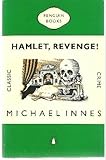
Hamlet, Revenge! by Michael Innes (shown in my photo in the basket cover face down! on top of a stack of books). This is from the Golden Age of crime fiction, first published in 1937, the second of his Inspector Appleby series. I’ve read the first book in the series, Death at the President’s Lodging, which I enjoyed immensely.

Underneath Hamlet, Revenge! is a sealed pack of 6 crime fiction books, containing:

  • Last Seen in Massilia by Stephen Saylor
  • A Sight for Sore Eyes by Ruth Rendell
  • The Soul Catcher by Alex Kava
  • Frost at Christmas by R D Wingfield
  • Good News Bad News by David Wolstencroft
  • Break No Bones by Kathy Reichs

These are books that you can’t take back to Barter Books and cost just £1.20. I bought the pack because it contains books by Ruth Rendell, R D Wingfield and Steven Saylor – I don’t know the other authors.

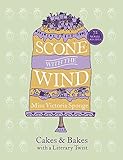
On the way home from Barter Books we stopped at Cragside for a snack lunch, but it was packed with people and there was a long queue for the cafe, so I just went in the NT shop and couldn’t resist buying Scone With The Wind: Cakes and Bakes with a Literary Twist by Miss Victoria Sponge. It contains 72 novel recipes – like Life of Pecan Pie, Don Biscotti, Much Ado About Muffins and Wuthering Bites and many more.
And finally when we went shopping yesterday there was a secondhand book sale in the Buttermarket and I bought The Riddle and the Knight: In Search of Sir John Mandeville by Giles Milton – an investigation into Mandeville’s claim in 1322 that it was possible to circumnavigate the globe. I’ve read and enjoyed Milton’s Nathaniel’s Nutmeg, so I’m hoping I’ll like this book too.

It’s no wonder I never get to the end of my TBRs – but there are so many tempting books out there, it would be a shame to miss out too many!

This Week in Books: 20 May 2015

My week in books

This Week in Books is a weekly round-up hosted by Lypsyy Lost & Found, about what I’ve been reading Now, Then & Next. A similar meme is run by Taking on a World of Words.

Now:

I’m currently  reading three books.

Golden Age etc

The Golden Age of Murder by Martin Edwards – the story of detective fiction written by the authors in the Detection Club between the two World Wars.  I’m reading this slowly, enjoying all the details about authors whose books I’ve read such as Agatha Christie and authors I’ve only heard of. I can see I’m going to have a long list of books to read by the end of this book.

Harbour Streetthe sixth Vera Stanhope murder mystery by Ann Cleeves. In Newcastle, Detective Joe Ashworth and his daughter Jessie travel home on the busy Metro. The train is stopped unexpectedly, and Jessie sees that one woman doesn’t leave with the other passengers: Margaret Krukowski has been fatally stabbed. This was adapted for television and I watched it when it was first broadcast last year but can’t remember the identity of the murderer!

Poirot and Me by David Suchet – his account of how he came to play Hercule Poirot in TV’s Agatha Christie’s Poirot in 1988 until the final episode in 2013. I think I must have watched all the episodes, some more than once and it’s interesting to get David Suchet’s perspective.

Then:

A few days ago I finished reading Dry Bones That Dream by Peter Robinson, a DCI Banks Mystery. I wrote about it earlier this week in this post.

Next:

As usual I’m not sure what I’ll read next. I’m very tempted to read one of the books I added to the TBR piles yesterday when I went to Barter Books in Alnwick. Yesterday was also the fortnightly visit of the library van and I collected three books I’d reserved- I’ll do a separate post about all these books.

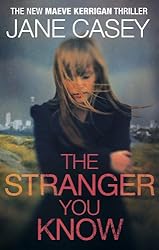
The one that is calling to me right now is The Stranger You Know by Jane Casey. This is the fourth Maeve Kerrigan book and I’ve read the first three.

Maeve is investigating the murders of three women who have been strangled in their homes by the same killer. It appears that they knew their killer and had let him in.