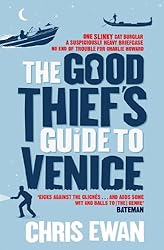
Books Read in March 2016

I finished reading seven books in March, six of them from my TBR shelves, and all except one are fiction. I enjoyed all of them. I’ve included extracts from my posts on the books:

  1. Doctor Thorne by Anthony Trollope (TBR) – a book about mid nineteenth-century prosperous country life and the traditional attitudes towards the accepted codes of conduct, of the importance of birth, of wealth and above all about money, class and power. I enjoyed this much more than the recent TV adaptation.
  2. Miss Pym Disposes by Josephine Tey (TBR) – not a conventional crime fiction novel. It’s a psychological study focussing on the characters, their motivation and analysis of facial characteristics. I thoroughly enjoyed this book, such a delight to read, a book that is beautifully written.
  3. The Madness of July by James Naughtie – a political thriller set in London in the mid 1970s one sweltering July. It’s the Cold War period, a world of espionage, of deception, manipulation and diplomacy. I loved it. Naughtie uses beautiful imagery and the characters are vividly drawn.
  4. The Legacy of Elizabeth Pringle by Kirsty Wark (TBR) – a story centred on the lives of two women ‘“ Elizabeth Pringle and Martha Morrison. I was captivated by this story about family, relationships, especially mother/daughter/sister relationships, about happiness, love and heartbreak, old age, memories and the contrast between life in the early part of the twentieth century and the present.
  5. The Secret Hangman by Peter Lovesey (TBR) – the 9th in the Peter Diamond crime fiction series. Diamond is not a brilliant detective. He is rather old-school, not above a bit of threatening behaviour (and more) to suspects, not bothered about upsetting his boss, nor is he comfortable with technology. But he is determined and thorough.
  6. SPQR: a History of Ancient Rome by Mary Beard (NF, TBR) It has taken me nearly two months to read this comprehensive – and long – book. It is full of facts and written in a readable (ie not textbook) style. My review will follow.
  7. Wycliffe and the Tangled Web by W J Burley (TBR) – the 15th theWycliffe series set in a Cornish village. It really is a tangled web that Wycliffe is faced with when schoolgirl Hilda Clemo disappears.

With so many enjoyable books to choose from, the one that stands out the most is Miss Pym Disposes by Josephine Tey,

followed closely by The Madness of July by James Naughtie.

Wycliffe and the Tangled Web by W J Burley

This is the 15th book in W J Burley’s Wycliffe series. First published in 1988, it is set in a Cornish village, which Burley identifies as Mevagissy, although with several ‘˜inaccuracies’ as he did ‘˜not want to imply that the people, the events, or the detailed locations described, have any reality outside the pages of this book. ‘¦ In particular, and fortunately, the Rules and the Clemos, whose troubles are recounted, are families existing only in my imagination.’

Wycliffe is brought in to investigate the disappearance of a schoolgirl, Hilda Clemo, when it appears that she had been raped or murdered ‘“ or both. She had just told her sister and then her boyfriend that she was pregnant and had not been seen since 5pm on that afternoon. The investigation centres on her boyfriend, Ralph Martin and her family ‘“ the Clemos and their relations, the Rules.

Hilda had planned exactly what she was going to do:

‘¦ she would first break the news to Alice [her sister]: ‘˜I’m pregnant.’ Alice would tell Esther, Esther would have the job of breaking it to her father. She, herself, would tell Ralph Martin; there would be another session with her brother-in-law, Bertie; another with ‘¦

‘¦ she had decided that she could predict their reactions, almost the very words they would use. (pages 10 & 11)

It turns out to be a complicated case, especially when Wycliffe finds a body ‘“ but not Hilda’s and wonders if this death is connected to Hilda’s disappearance. It really is a tangled web that Wycliffe is faced with ‘“ family relationships, lies, resentments and manipulation that go badly wrong. Wycliffe works on getting to know the victim first, which he believes will lead him to discovering what has prompted the killer to strike. His problem is that Hilda is not an easy person to know. As he digs deeper he finds she has contact with a wider circle of people than her family realises.

I’ve read a few of the Wycliffe books and I think this is one of the best. Although it is so complicated it is an easy book to read, well paced and well plotted, with several sub-plots that link up the present and the present to help Wycliffe untangle the web.

Reading Challenges: Mount TBR Reading Challenge – a book I’ve had for nearly two years; and the Vintage Cover Scavenger Hunt for the Silver Age (books published between 1960 and 1989 (inclusive) in the Body of Water category.

My Week in Books: 30 March 2016

This Week in Books is a weekly round-up hosted by Lypsyy Lost & Found, about what I’ve been reading Now, Then & Next.

IMG_1384-0

A similar meme,  WWW Wednesday is run by Taking on a World of Words.

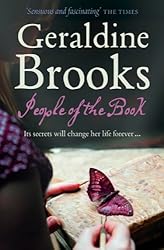
Now:  I’ve decided to concentrate on books from my to-be-read shelves and picked People of the Book by Geraldine Brooks, a book I’ve owned for nearly eight years. I can’t think why I haven’t read it before as so far I’m loving it.

Blurb:

People of the Book takes place in the aftermath of the Bosnian War, as a young book conservator arrives in Sarajevo to restore a lost treasure.

When Hannah Heath gets a call in the middle of the night in her Sydney home about a precious medieval manuscript which has been recovered from the smouldering ruins of wartorn Sarajevo, she knows she is on the brink of the experience of a lifetime. A renowned book conservator, she must now make her way to Bosnia to start work on restoring The Sarajevo Haggadah, a Jewish prayer book ‘“ to discover its secrets and piece together the story of its miraculous survival. But the trip will also set in motion a series of events that threaten to rock Hannah’s orderly life, including her encounter with Ozren Karamen, the young librarian who risked his life to save the book.

Then: I’ve recently finished Wycliffe and the Tangled Web by W J Burley, another book from my to-be-read shelves.

Blurb:

A beautiful schoolgirl goes missing from a Cornish village on the day she has told her boyfriend and sister she is pregnant. The possibility that she has been raped or murdered – or both – grows with every passing hour, and Chief Superintendent Wycliffe is brought in on the case.

The investigation reveals a complex network of family relationships and rivalries centred on the girl; and then Wycliffe finds a body – but not the one he expects. Have there been two murders? And if so, are they connected?

Wycliffe digs deeper, and soon realises that just beneath the normal, day-to-day surface of the community lies a web of hatred and resentment – a web he will have to untangle if he is to find the key to the mystery . . .

My post will follow soon.

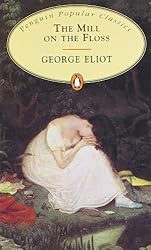
Next: I’m reluctant to say what I’ll be reading next because I usually change my mind when the time comes. But, I shall be reading The Mill on the Floss by George Eliot for the Classics Club Spin some time in April – yet another book I’ve owned for years.

Blurb:

George Eliot drew on her own anguished childhood when she depicted the stormy relationship between Maggie and Tom Tulliver. Maggie’s often tormented battle to do her duty and belong on the one hand, and to be  herself, wild and natural, on the other, propels her from one crisis to another. As the Tulliver fortunes decline and fall, the rift between Maggie and her family becomes almost irreconcilable. But Maggie’s biggest mistake of all is to fall in love with Stephen Guest who is engaged to another woman.

Both a sharp and observant picture of English rural life and a profoundly convincing analysis of a woman’s psychology, The Mill on the Floss is a novel that tackles the complexities of morality versus desire.

What about you? What are you reading this week?

The Secret Hangman by Peter Lovesey

The Secret Hangman is the first book I’ve read by Peter Lovesey and as it’s the 9th in his Peter Diamond series I was hoping it would read OK as a stand alone book – it does. Peter Diamond is a Detective Superintendent with the Bath police.

Blurb:

Peter Diamond, the Bath detective, is having woman trouble. His boss wants him to find a missing person, the daughter of one of her friends in the choir. He is not enthusiastic. Another woman, who calls herself his Secret Admirer, wants to set up a meeting in a local pub. He tries ignoring her. Then there is sexy Ingeborg Smith, the ex-journo detective constable, distracting the murder squad from their duties. No one ignores Ingeborg.

Murder becomes a possibility when a woman’s body is found hanging from a playground swing in Sydney Gardens and a suspicious second ligature mark is found around her neck. Diamond investigates the victim’s colourful past. More hangings are discovered and soon he is certain that a secret hangman is at work in the city . . .

My thoughts:

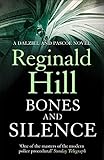
Diamond’s wife had died three years earlier – as I haven’t read the earlier books I suppose this is a spoiler, but it is important to know this from the start of this book, because he is now beginning to recover from his grief and becomes rather too involved with an attractive woman he met by chance in a carpark. The story of their relationship runs parallel to the investigations into the hangings and the series of ram raids his boss wants him to investigate.

At first there doesn’t appear that there is any connection between the victims and the motive for killing them only becomes clear quite late on in the book. The only similarities are that the victims are all couples – the wives are killed first, followed a few days later by their husbands, and all the bodies are found in public places as though the killer wanted their deaths to be discovered and publicised.

It takes a while before Diamond cottons on to the identity of the killer – and I was there some time before him, but that didn’t spoil my enjoyment of the book. Diamond is not a brilliant detective. He is rather old-school, not above a bit of threatening behaviour (and more) to suspects, not bothered about upsetting his boss, nor is he comfortable with technology. But he is determined and thorough – I liked him and want to read more from the series.

Peter Lovesey is a British writer of historical and contemporary crime novels and short stories. He has written many books, not just the Peter Diamond series, but also a series of books featuring Sergeant Cribb, a Victorian-era police detective based in London – the full list of his books is on his website – there are plenty to read!

————

Reading challenges: Mount TBR Reading Challenge – a book I’ve owned for 7 years, and one I should have read ages ago, but well worth the wait.

Six Tudor Queens: Katherine of Aragon, the True Queen by Alison Weir

I received a proof copy of Six Tudor Queens: Katherine of Aragon, the True Queen as a member of the reader review panel for Lovereading.co.uk. It’s the first book in a series of novels about Henry VIII’s Queens and is due to be published in May 2016.

This is fictional biography at its most straight forward, written in an uncomplicated style. Told from Katherine’s point of view it follows her life from the time she arrived in England at the age of sixteen to marry Prince Arthur, the elder of Henry VII’s two sons, to her death in 1536.

I knew the brief facts about Katherine, the daughter of Isabella and Ferdinand of Spain, married first to Prince Arthur and then to his brother Henry after a papal dispensation allowing the marriage after Arthur’s death; her subsequent failure to produce a living male heir, suffering a series of miscarriages; the only baby to survive was a daughter, Mary; and her divorce in 1533 from Henry VIII, who was by then besotted with Anne Boleyn.

This novel fills in the facts in great detail including the question of whether her first marriage was consummated. Katherine maintained it wasn’t and based on research Weir takes her word as the truth. In her Author’s Note she refers to recent research by Giles Tremlett and Patrick Williams that shows ‘we can be fairly certain that Katherine’s marriage to Prince Arthur was not consummated and that he died of tuberculosis.’  She cites the basis of her account of Arthur’s illnesss on Dr. Alcaraz’s testimony, given on 1531 at Zaragoza. She portrays Katherine as a determined woman who never ceased loving Henry and above all who did everything she could to protect the legitimacy of her daughter.

Katherine is portrayed as a woman of her time – obedient to her parents and her husband, conscientious about doing her duty  and active in maintaining an alliance between England and Spain. But even so, she resisted Henry in his demands for an annulment of their marriage. She was heart-broken both at her failure to produce a living male heir and to keep Henry’s love – because they were in love at the beginning – and maintained that she was the true queen right up to her death. I tend to forget the length of their marriage, glibly remembering the mnemonic ‘Divorced, beheaded, died, divorced, beheaded, survived‘. Katherine and Henry were married for over 20 years. I did get tired of the account of their endless wrangling, going over and over the same arguments, never getting anywhere – but then I suppose that was how it was for them both.

Overall I enjoyed this book. It’s a long and comprehensive study, which has increased my knowledge and understanding of Katherine of Aragon and the early 1500s. It is obviously based on extensive research and written with great attention to historical accuracy, but in places this made it tedious and too drawn out.

  • Hardcover: 624 pages – also available as a Kindle edition
  • Publisher: Headline Review (5 May 2016)
  • Language: English
  • ISBN-10: 1472227476
  • ISBN-13: 978-1472227478
  • Product Dimensions: 15.3 x 5.6 x 23.4 cm
  • Source: Review copy

My Friday Post: Book Beginnings & The Friday 56

Friday is book excerpts day on two blogs:

Book Beginnings ButtonBook Beginnings on Fridays hosted by Rose City Reader, where bloggers share the first sentence or more of a current read, as well as initial thoughts about the sentence(s), impressions of the book, or anything else that the opening inspires.  Friday 56

The Friday 56 hosted by Freda’s Voice, where you grab a book and turn to page 56 (or 56% of an ebook), find one or more sentences (no spoilers), and post them.

I’ve just started to read Wycliffe and the Tangled Web by W. J.  Burley. It begins:

The fair girl looked out of place in a doctor’s waiting room: she seemed to glow with health.

From page 56:

‘Alice has just come down from the village; she says the police are questioning Ralph Martin again; they’ve got him in their van on the quay.

After reading a few long books I fancied something shorter – this book has just 191 pages. It’s set in Cornwall where Chief Superintendent Wycliffe is investigating the case of a schoolgirl who went missing on the day that she told her boyfriend and sister she was pregnant. As he digs deeper Wycliffe finds a web of hatred and resentment – a web he will have to untangle.

It promises to be both easy reading and a satisfying mystery. I’ve read a few of Burley’s Wycliffe books and enjoyed them.