Before next Sunday,8th February, 2026 create a post that lists twenty books of your choice that remain on your Classics Club list. On that day the Classics Club will post the winning number. The challenge is to read and review whatever book falls under that number on your Spin List by 29th March, 2026.
Top Ten Tuesday is a weekly meme created by The Broke and the Bookish and now hosted by Jana at That Artsy Reader Girl.
Book Covers Featuring Cool/Pretty/Unique/etc. Typography (Typography is the art of arranging letters so they look visually appealing and more interesting than, for example, the body text of this blog post you’re reading now.
These are all covers that caught my attention one way or another.Tthey are all books I own some of which I’ve read and some waiting to be read.
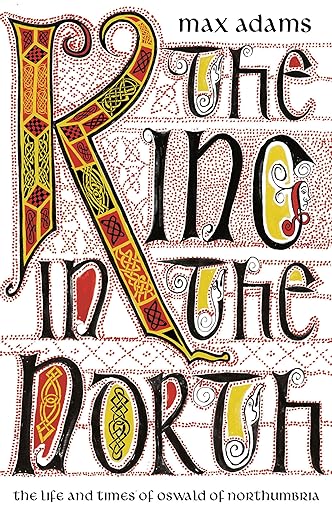
The King in the North by Max Adams – I love everything about this cover. I love the combination of the colours and the letters filled with decorative patterns just like an illustrated manuscript – think of the Lindisfarne gospels and the Book of Kells.
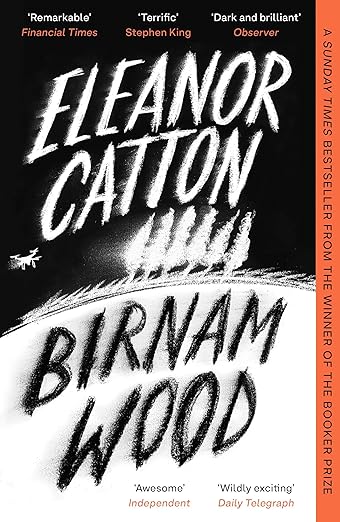
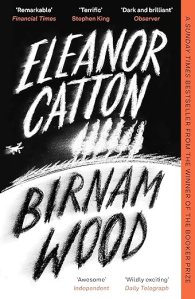
Birnam Wood by Eleanor Catton – this cover conveys a sense of speed as Catton’s name looks like it’s running uphill over the top of the line of trees bent in the wind as the little drone approaches. It tells a story before you get to the words within the book.
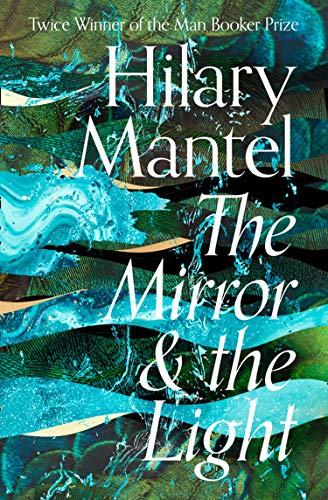
The Mirror and the Light by Hilary Mantel – such a beautiful and colourful image, contrasting the dark and the light reflections.
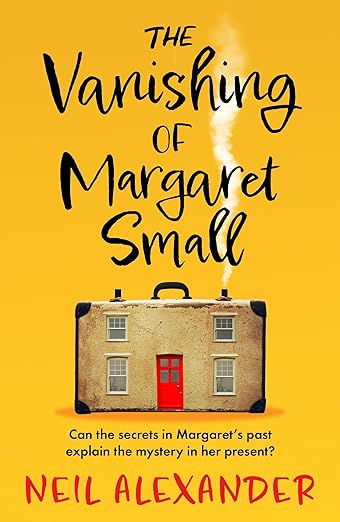
The Vanishing of Margaret Small by Neil Alexander. This caught my eye because it makes me wonder how and why Margaret Small vanished. I like the background colour, contrasting with the author’s name and the use of the lower case in the title.
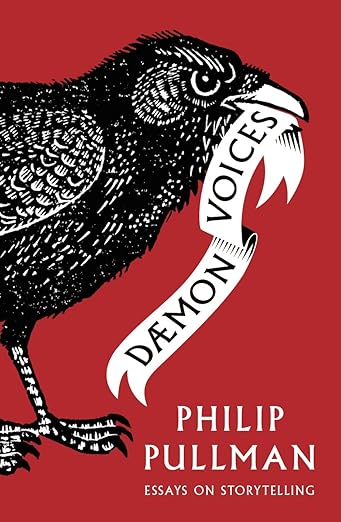
Daemon Voices by Philip Pullman – having the title written in a banner in the bird’s mouth amuses me.
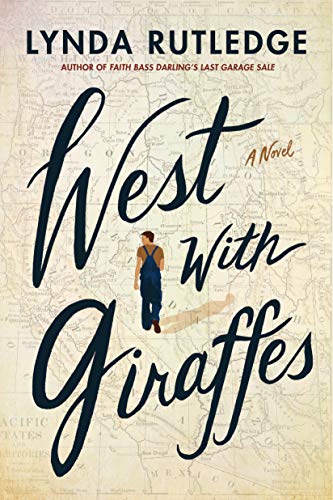
West with Giraffes by Lynda Rutledge – another striking cover that immediately made me wonder what the book could be about. I like the tall letters dwarfing the figure of man in between the words, emphasising how tall giraffes are.
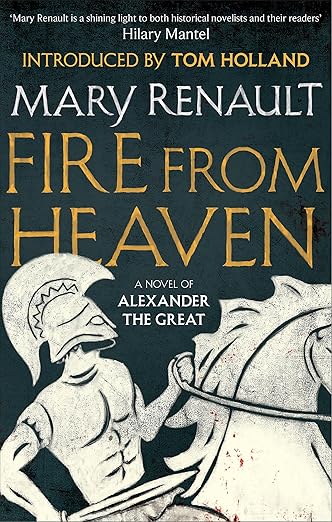
Fire from Heaven by Mary Renault – a bold title in upper case letters above the image. You just know this is about ancient warfare.
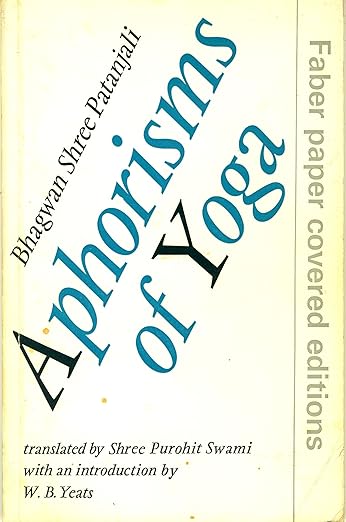
Aphorisms of Yoga by Bhagwan S. Patanjali – plain and simple with the title slanting diagonally upwards in colour against a white background. Sanskrit philosophy.
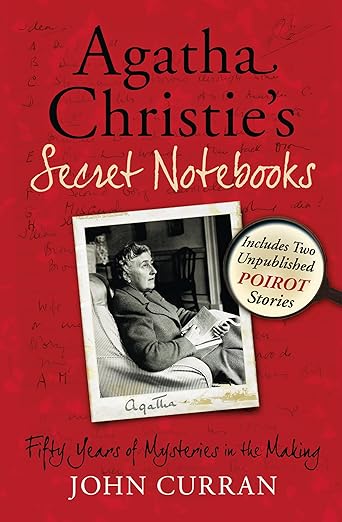
Agatha Christie’s Secret Notebooks edited by John Curran – I love the red background against the square black and white photograph and whiteness of the circle emphasising the inclusion of two unpublished Poirot stories and once more the contrasting size and upper and lower case letters in the title.
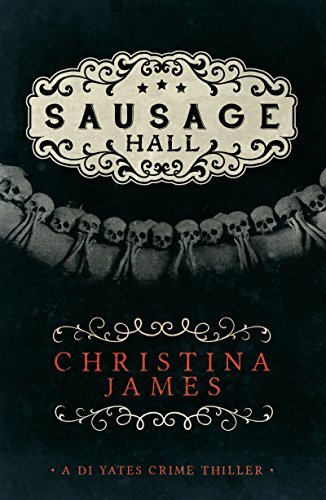
Sausage Hall by Christina James. What a whimsical title. I thought it sounded a bit gimmicky and it nearly put me off reading it, which would have been a shame – it’s such a good story. The blackness of the cover with its skull and crossbones indicates the darkness of the book. It’s a crime mystery with a sinister undercurrent exploring the murky world of illegal immigrants.
Penguin| 8 January 2026| 428 pages| e-book| Review copy| 4*
Description
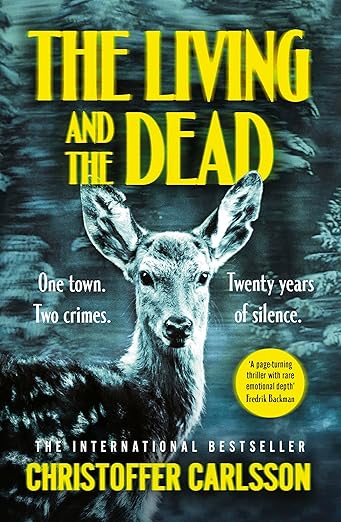
On a cold, snowy winter’s night in 1999, Sander and Killian leave a house party together, in a small town in rural Sweden. The very best of friends, they imagine they will remain so forever.
The next morning, each is a key suspect in a murder. Each has something they want to conceal from the police. And from the other.
The hunt for Mikael Söderström’s killer will take over twenty years. It will see a detective leave the force forever. And it won’t end until a second body is found, and the tight-knit community’s secrets are finally brought to light . . .
My thoughts
The Living and the Dead by Christoffer Carlsson, is translated from the Swedish by Rachel Willson Broyles.
This has a slow start. It has a tense atmosphere and a great sense of place, set in Skavböke, a small town in rural Sweden. .There are many characters and it took me quite some time to sort them out – who were related, who were friends and who were police, although the list of characters at the beginning of the book does help. The narrative is told from the different characters’ perspectives, which was also confusing until I had them sorted in my mind and I had to re-read several passages for a while. It’s not a book to read quickly!
By the time I got to the second half of the book and the action picked up pace it was much more satisfying to read. It kept me guessing what was going on and who the culprit was all the way through. I enjoyed all the twists and turns, which took me by surprise. It’s a dark, bleak thriller with plenty of suspense as secret relationships, rumours and rivalries abound in the small town. I particularly enjoyed Carlsson’s description of the Swedish landscape and characterisation.
I didn’t know until after I’d read this book that it is the third book in Carlsson’s Hallandssviten Series. I’ll certainly be looking out for more of his books.
Christoffer Carlsson was born in 1986 on the west coast of Sweden. He holds a PhD in criminology from the University of Stockholm and is one of Sweden’s leading crime experts. Carlsson is the youngest winner of the Best Swedish Crime Novel of the Year, voted by the Swedish Crime Writers’ Academy, and has won the prestigious Glass Key award for The Living and the Dead, given to the best Scandinavian crime novel of the year. He’s also won the Best Swedish Crime Novel twice.
My thanks to the publishers, Penguin and NetGalley for a review copy.
This is currently hosted by Andrea at Carolina Book Nook. I’ve been doing this challenge since January 2008 (albeit I’ve missed one or two years). It was started by Annie, who was ten or eleven at the time, on her blog Words by Annie. First Beth @ BethFish Reads and then Charlie @ The Worm Hole took over hosting before handing it over to Andrea.
So, this is a ‘must‘ challenge for me!
The challenge runs from 1st January to 31st December 2026. You can sign up at any time but can only count books you read between those dates. Read a book in any format (hard copy, ebook, audio) with a title that fits into each category.
In 2026, choose 6 books that have titles that contain: (Click on the links for more examples and info on Andrea’s blog)
Six/6 – Titles for this category need to include the word “six” or number “6” somewhere in the title, even if they are part of another word or number.
Cold weather – Your title for this category should include a word that describes cold weather such as “snow,” “ice,” blizzard,” “frozen,” etc.
Peace – Titles for this category need to include a word that describes peace: “peace,” “serenity,” “still,” “calm,” etc, even if it doesn’t directly mean “peace.”
Pathways – Titles for this category need to include a words that are types of paths: “trail,” “road,” “avenue,” “sidewalk,” etc.
Terrain* – Titles for this category need to include a word for a type of topographic terrain or the name of a particular part of terrain.
Flower – Titles for this category need to include a type of flower or the word “flower.”
I’ve looked through the books that I still have unread and have found some possibilities for this challenge:
Six/6 – Six Wicked Reasons by Jo Spain; The Mitfords; Letters between Six Sisters by Charlotte Moseley; Winds of Change: Britain in the Early Sixties by Peter Hennessy
Cold weather – A Cold Wind From Moscow by Rory Clements; Cold Granite by Stuart MacBride; In Cold Blood by Truman Capote, Fire and Ice by Diana Stabenow
Peace – The War that Ended Peace by Margaret MacMillan
Pathways – Redhead by the Side of the Road by Anne Tyler; East West Street by Philippe Sands; The Winding Road by Cynthia Harrod-Eagles
*Terrain – Light Shining in the Forest by Paul Torday; The Enchanter’s Forest by Alys Clare
Flower – Golden Poppies by Laila Ibrahim; Sea of Poppies by Amitav Ghosh
What are you currently reading? What did you recently finish reading? What do you think you’ll read next?
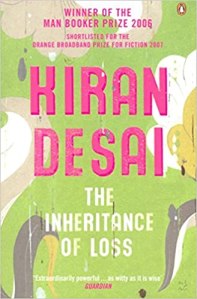
Currently I’m reading The Inheritance of loss by Kiran Desai, the winner of several prizes including the 2006 Booker Prize. It’s a book I bought in 2007 and meant to read long before now. I’m reading this slowly and so far it’s looking good.
This is set in the Himalayas where a judge and his granddaughter live in a dilapidated mansion. The judge, broken by a world too messy for justice, is haunted by his past. His orphan granddaughter has fallen in love with her handsome tutor, despite their different backgrounds and ideals. The cook’s heart is with his son, who is working in a New York restaurant, mingling with an underclass from all over the globe as he seeks somewhere to call home.
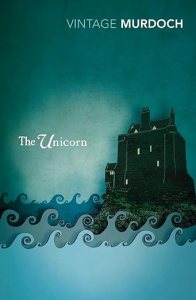
I’m also reading The Unicorn by Iris Murdoch, another book I’ve had and left on the shelves for far too long. I’ve read just a few opening chapters and think I’m going to enjoy this book. It’s set in Ireland, where a young woman goes to work as a governess in the remote Gaze Castle only to find there are no children. She is confronted with a number of weird mysteries and involved in a drama she only partly understands.
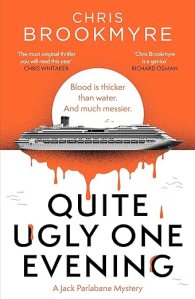
The last book I readQuite Ugly One Evening by Chris Bookmyre which will be published in May, so I’ll write about it later. It’s crime fiction set on the Atlantic.
Description from Amazon:
An Atlantic voyage. A family at war. A secret worth killing over.
Reporter Jack Parlabane thrives on chasing stories in unlikely places, and where could be less likely than a fan convention on a cruise liner celebrating a contentious Sixties TV series? But unlike the media family exploiting their show’s renewed relevance, he’s not there to stoke controversy: he’s there to solve a murder.
Already in deep water with his employer, Jack desperately needs a win, and solving this decades-old mystery could be it. Problem is, he’s in the middle of the Atlantic, and someone onboard has already killed once to keep their secret.
And that’s not even the tricky part. No, the tricky part is definitely the dead body locked in a stateroom with him, covered in his blood. Now Jack has to solve two murders, otherwise the only way he’s getting off this ship is in handcuffs – or in a body bag.recalling the unforgettable experience he cannot take to his grave.
What will I read next? It could be Birnam Wood by Eleanor Catton
Like her previous novel The Luminaries, which I loved, this book is set in a fictionalised New Zealand, primarily in and around a national park in the South Canterbury region. The title is taken from a line in Macbeth. It follows members of a guerilla gardening collective, Birnam Wood as, with the help of a charismatic tech billionaire, they undertake a new project on abandoned farmland.
But when the time comes to start another book it could be something completely different.
Top Ten Tuesday is a weekly meme created by The Broke and the Bookish and now hosted by Jana at That Artsy Reader Girl.
The rules are simple:
Each Tuesday, Jana assigns a new topic. Create your own Top Ten list that fits that topic – putting your unique spin on it if you want. Everyone is welcome to join but please link back to Jana in your own Top Ten Tuesday post. Add your name to the Linky widget on that day’s post so that everyone can check out other bloggers’ lists. Or if you don’t have a blog, just post your answers as a comment.
The topic this week is Bookish Discoveries I Made in 2025 (New-to-you authors you discovered, new genres you learned you like, new bookish resources you found, friends you made, local bookshops you found, a book club you joined, etc.)
I decided to list 10 of the 24 New-to me- authors I read last year. I’ll be looking out for more books by these authors.
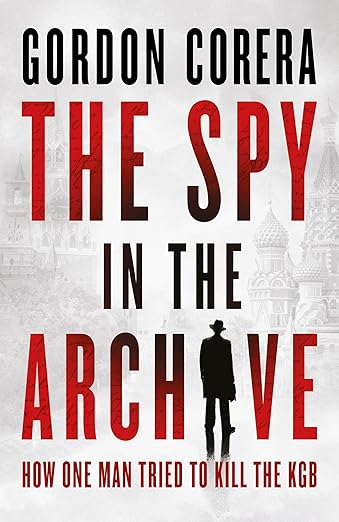
Gordon Corera – The Spy in the Archive, nonfiction about Vasili Mitrokhin, a KGB archivist who defected to Britain in 1992. Mitrokhin, a quiet, introverted and determined man, was a reluctant defector, because whilst he loved Russia he came to hate the KGB and the Soviet system.
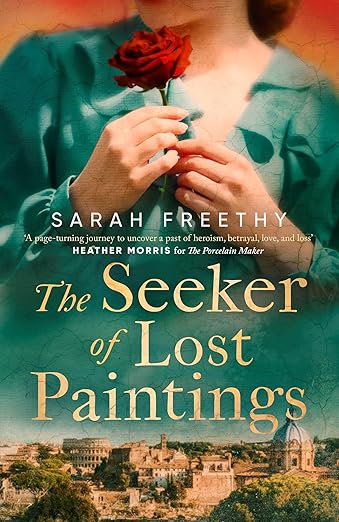
Sarah Freethy – The Seeker of Lost Paintings, historical fiction set in two timelines, one in the 1940s in Italy and the other in 1997 in London and Italy, about the mystery surrounding a lost painting by Carravagio.
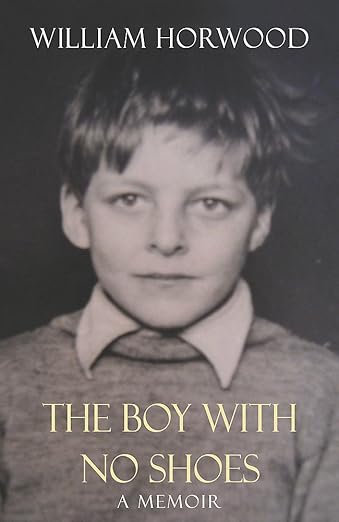
William Horwood – The Boy With No Shoes: a Memoir, (the author of the Duncton Chronicles, which I haven’t read). This is a long and detailed book. It is beautifully written and as he tells the story of his very early life there are many times when it moved me to tears. His writing is so clear that the places and people he describes spring to life as you read. I loved it, one of the best books I read last year!
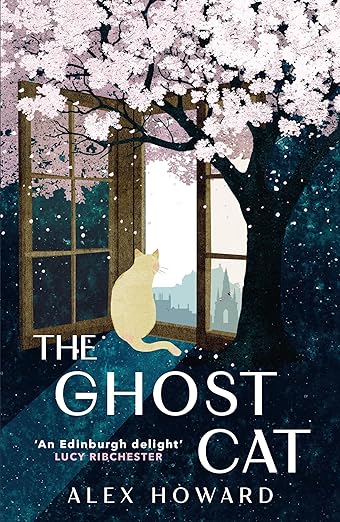
Alex Howard – The Ghost Cat, a novella and historical fantasy fiction about Grimalkin’s nine lives from 1887 to 2022. As well as the main story there are Grimalkin’s observations and notes explaining various events and technological changes that had taken place in each period.
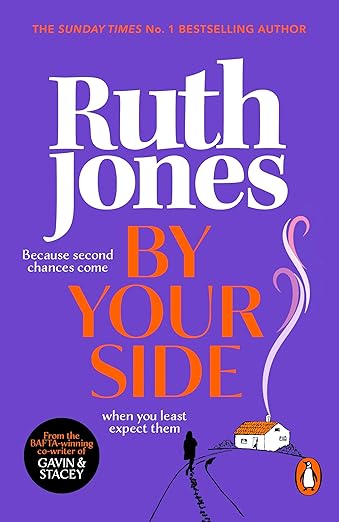
Ruth Jones – By Your Side, an emotionally charged book as Linda Standish takes on her last case for the Council’s Unclaimed Heirs Unit, tracking down Levi Norman’s next of kin.
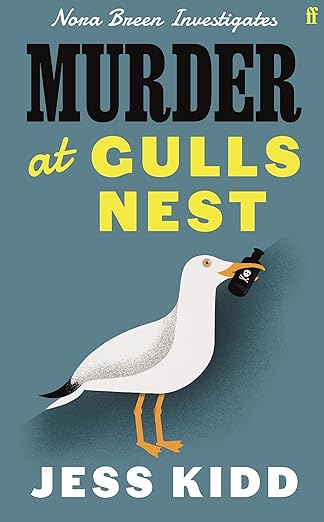
Jess Kidd – Murder at Gull’s Nest, crime fiction set in the 1950s in a seaside town. At times it feels like a cosy crime mystery, but it’s also rather dark and foreboding, whereas at other times there’s some humour and also a hint of a romance.
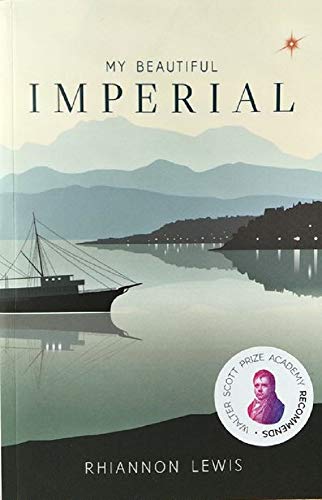
Rhiannon Lewis – My Beautiful Imperial, historical fiction set in the 19th century in both Wales and Chile. It begins in Wales in March 1865 with Davy Davies, a young teenager who is at the age when he must decide whether to work at the mill or to be a sailor like father. It’s based on the actual events of the Civil War in Chile and the experiences of the author’s ancestor, Captain David Jefferson Davies.
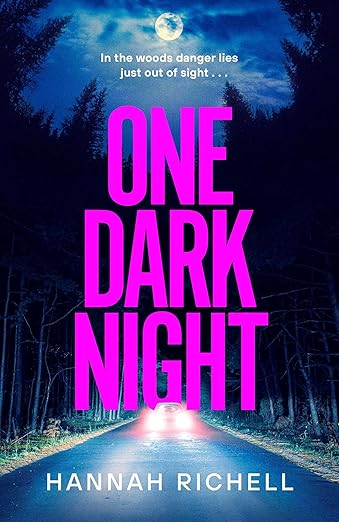
Hannah Richell – One Dark Night, crime fiction, with a spooky, tense atmosphere about the police investigation into the body of a young woman is discovered in the woods the morning after Halloween. I loved it, one of the best books I read last year.
Lynda Rutledge – West With Giraffes, historical fiction with a colourful cast of characters, about the twelve-day road trip in a custom truck to deliver Southern California’s first giraffes to the San Diego Zoo. It conjures up a vivid picture of America in 1938 during the Great Depression and the Great Hurricane of 1938, the most destructive storm to strike New England in recorded history until 2012’s Hurricane Sandy.
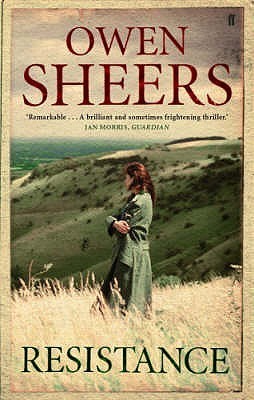
Owen Sheers – Resistance. I love historical fiction, but this is different – it is alternate history. Sheers speculates upon how the course of history might have been altered if Germany had won the Second World War and invaded and occupied Great Britain, an alarming prospect. The plot centres on the inhabitants of the isolated Olchon valley in the Black Mountains of south-east Wales close to Hereford and the border between Wales and England.




 BooksPlease