A Glimpse of my TBRs

This post was inspired by FictionFan’s Stroll Around her TBR:

The definition…

My TBR is made up of books I own, both paper and e-books, but haven’t yet read, no matter when I acquired them, whereas the books I record for Bev’s Mount TBR Reading Challenge are books that I have owned prior to January 1 2019.

The current total…

I don’t have an accurate figure of the total. I have 387 books currently listed on LibraryThing as TBRs, but that’s not counting the many e-books I have unread on my Kindle!

The target…

I like having books waiting to be read, having books to choose from, so I’m happy to have some TBRs, but just not as many as at present. The difficulty is that I’m adding books more quickly than I’m reading them – the numbers are going up rather than down.  Maybe I should go through them and decide whether to keep them – or not, always hard when I’ve bought them – but maybe those free e-books could go ….

The breakdown…

It’s a mix of mainly fiction with some non-fiction. I like to vary my reading so it’s a mix of genres too. My records aren’t detailed enough to break the numbers down into genres.

The oldest book…

There are two books listed on my LibraryThing catalogue that I’ve owned since 4 February 2007 – A Dead Language by Peter Rushforth and Thomas Hardy: The Time-torn Man by Claire Tomalin. I did start to read both of them years ago, but put them aside for a while – and that’s where they both are.

I bought the Rushforth book as I’d loved his first book, Pinkerton’s Sister, but A Dead Language doesn’t have the same appeal, although I can’t bring myself to the point of actually abandoning it. Whereas I really want to read the Hardy biography …

The newest book…

The Good Daughter by Karen Slaughter

Good Daughter

I haven’t read any of Karin Slaughter’s books, but have wondered if I would like them. After reading Jules’ review of her latest novel, The Last Widow on her blog onemoreword  I decided to try one of her standalone books and bought The Good Daughter. 

The review copies…

Currently standing at 18. The oldest review copy is Blood on the Tracks by Martin Edwards which I acquired from NetGalley on 10 April 2018. It’s a collection of short stories subtitled Railway Mysteries. I’ll be reading it soon as I have included it in my 20 Books of Summer list.
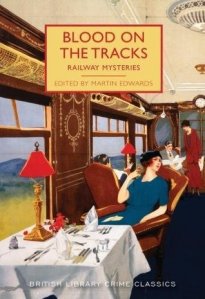
Blood on the tracks

The newest review copy, also from NetGalley, is The House by the Loch by Kristy Wark, due to be published 13 June. It’s a family drama set in Scotland on remote Loch Doon.
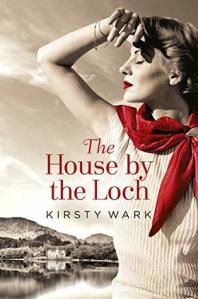
House by the loch

The 200th book on the list…

According to LibraryThing that is The Idiot by Fyodor Dostoevsky, a book I thought I’d like to read after reading The Brothers Karamazov years ago. I don’t know when I’ll get round to reading it though as it’s nearly 600 pages of small font – an e-book might be more manageable.
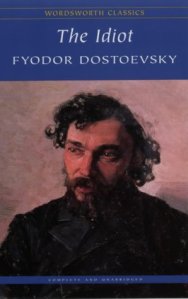
The Idiot Wordsworth Classic

Blurb from the back cover:

Prince Myshkin returns to Russia from an asylum in Switzerland. As he becomes embroiled in the frantic amatory and financial intrigues which centre around a cast of brilliantly realised characters and which ultimately lead to tragedy, he emerges as a unique combination of the Christian ideal of perfection and Dostoevsky’s own views, afflictions and manners. His serene selflessness is contrasted with the worldly qualities of every other character in the novel. Dostoevsky supplies a harsh indictment of the Russian ruling class of his day who have created a world which cannot accommodate the goodness of this idiot.

A Selection of the books I most want to read and can’t understand why I don’t just do it…

In no particular order:

(not counting the books on my 20 Books of Summer list or my NetGalley review books)


I’d love to look around your TBRs if you fancy having a go too.
 

My Friday Post: Anything You Do Say by Gillian McAllister

Book Beginnings Button

Every Friday Book Beginnings on Friday is hosted by Gillion at Rose City Reader where you can share the first sentence (or so) of the book you are reading, along with your initial thoughts about the sentence, impressions of the book, or anything else the opener inspires.

The book I’m featuring this week is Anything You Do Say by Gillian McAllister, a book I  started reading yesterday and one of the books on my 20 Books of Summer list.

Anything you do say


It starts with a selfie. He is a random; we are not even sure of his name. We are always meeting them whenever we go out. Laura says it’s because I look friendly. I think it’s because I am always daydreaming, making up lives for people as I stare at them, and they think I’m inviting them over to chat.

I’m thinking that Joanna (we learn the narrator’s name 2 pages later) should stop staring at people like she does – it’s obviously asking for trouble.

Also every Friday there is The Friday 56, hosted by Freda at Freda’s Voice.

30879-friday2b56These are the rules:

  1. Grab a book, any book.
  2. Turn to page 56, or 56% on your eReader. If you have to improvise, that is okay.
  3. Find any sentence (or a few, just don’t spoil it) that grabs you.
  4. Post it.
  5. Add the URL to your post in the link on Freda’s most recent Friday 56 post.

Page 54 and page 56:

I haven’t told him. I haven’t told him. I haven’t told him. I haven’t told him.

How could I tell him? He would stop looking at me that way. That tiny, knowing smile of his. I’m one of the only people he likes. And so how can I tell him, before anyone else?

Well, I said she should stop staring at people – something bad has happened.

What do you think? Would you keep reading?

WWW Wednesday: 5 June 2019

IMG_1384-0

WWW Wednesday is run by Taking on a World of Words.

The Three Ws are:

What are you currently reading?
What did you recently finish reading?
What do you think you’ll read next?


Currently reading: I’m still making slow progress with reading  D H Lawrence: the Life of an Outsider by John Worthen,  but I’ve almost finished Sweet Thursday by John Steinbeck. So, I’ve started to read Those Who Are Loved by Victoria Hislop, one of the books on my 20 Books of Summer list.

Those Who Are Loved is historical fiction, set against the backdrop of the German occupation of Greece, the subsequent civil war and a military dictatorship, all of which left deep scars. I know very little about Greece during the Second World War so I’m finding it very interesting, but it is very slow going. It begins as Themis remembers her life and the conflicts within her family as well as their experience of the war.

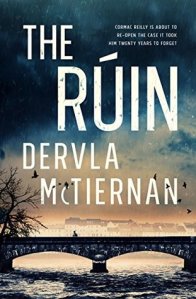
I’ve recently finished The Ruin by Dervla Mactiernan and will be writing more about it in a later post.

Ruin

Blurb:

It’s been twenty years since Cormac Reilly discovered the body of Hilaria Blake in her crumbling Georgian home. But he’s never forgotten the two children she left behind…

When Aisling Conroy’s boyfriend Jack is found in the freezing black waters of the river Corrib, the police tell her it was suicide. A surgical resident, she throws herself into study and work, trying to forget – until Jack’s sister Maude shows up. Maude suspects foul play, and she is determined to prove it.

DI Cormac Reilly is the detective assigned with the re-investigation of an ‘accidental’ overdose twenty years ago – of Jack and Maude’s drug- and alcohol-addled mother. Cormac is under increasing pressure to charge Maude for murder when his colleague Danny uncovers a piece of evidence that will change everything…

My next book could be:

I think, but I could always change my mind, it’ll be Anything You Do Say by Gillian Mcallister, another book that is on my 20 Books of Summer list.

Anything you do say

Blurb:

Joanna is an avoider. So far she has spent her adult life hiding bank statements and changing career aspirations weekly.

But then one night Joanna hears footsteps on the way home. Is she being followed? She is sure it’s him; the man from the bar who wouldn’t leave her alone. Hearing the steps speed up Joanna turns and pushes with all of her might, sending her pursuer tumbling down the steps and lying motionless on the floor.

Now Joanna has to do the thing she hates most – make a decision. Fight or flight? Truth or lie? Right or wrong?

Have you read any of these books?  Do any of them tempt you? 

Top Ten Tuesday: Books From My Favourite Genre

top-ten-tuesday-new

Top Ten Tuesday is a weekly meme created by The Broke and the Bookish and now hosted by Jana at That Artsy Reader Girl. For the rules see her blog.

This week’s topic: Books From My Favourite Genre.

The first thing is to decide which genre is my favourite! Jana says: Feel free to put a unique spin on the topic to make it work for you! So that’s what I’m going to do.

This has been a very difficult post to write and I could have spent days trying to decide which genres and books to choose. But I’ve come up with these ten books (although I could easily have picked a different ten on another day) – a combination of crime fiction, historical crime fiction and two autobiographies.

I’m starting with the easy and for me the obvious choice – Agatha Christie: An Autobiography. It took her fifteen years to write it. She stopped writing it in 1965 when she was 75 because she thought that it was the ‘right moment to stop’. As well as being a record of her life as she remembered it and wanted to relate it, it’s also full of  her thoughts on life and writing.

Her archaeological memoir, Come Tell Me How You Live is also a fascinating book writing about her life with her husband, Max Mallowan, excavating the ancient sites at Chagar Bazar, Tell Brak and other sites in the Habur and Jaghjagha region in what was then north western Syria. Sadly the places she loved are no longer the same!

Next three of my favourite crime fiction novels:

The Falls by Ian Rankin – this is the 12th Rebus book and is one of my favourites in the series.  A university student Philippa Balfour, has disappeared.  DI Rebus and his colleagues have just two leads to go on – a carved wooden doll found in a tiny coffin at The Falls, Flip’s home village, and an Internet game involving solving cryptic clues.

I’m cheating a bit with my next choice – Andrew Taylor’s trilogy, Fallen Angel (The Roth Trilogy, made up of The Four Last Things,  The Judgement of Strangers  and The Office of the Dead. It’s a chilling murder mystery about the linked histories of the Appleyards and the Byfields. The books work backwards in time, with the first book being the last chronologically, set in the 1990s, and each book works as a stand-alone, self-contained story. 

A Judgement in Stone by Ruth Rendell – a murder mystery in which you know from the start who the murderer is from the opening sentence, Eunice Parchman killed the Coverdale family because she could not read or write. And as the reasons for killing them become clear, the tension builds relentlessly.

Finally historical fiction – two of them historical crime fiction:

The Name of the Rose by Umberto Eco. William of Baskerville is a Franciscan monk in a monastery in Italy in the 14th century, where a number of his fellow monks are murdered. Not everyone likes this book but I love the way it combines so many genres – historical fiction, mystery, and theology and philosophy.

Winter in Madrid by C J Sansom. I love Sansom’s 16th century crime thrillers, but Winter in Madrid is brilliant – an action packed thrilling war/spy story and also a moving love story and historical drama all rolled into this tense and gripping novel. It’s set in 1940 when Harry Brett, traumatised by his injuries at Dunkirk is sent to Spain to spy for the British Secret Service.

And three historical fiction novels:

The Hunger by Alma Katsu is a story about the Donner Party, comprising pioneers, people who were looking for a better life in the American West. They formed a wagon train under the leadership of George Donner and James Reed making their way west to California in 1846. With hints of the supernatural and Indian myths it becomes a thrilling, spine tingling horrific tale.

The Grapes of Wrath by John Steinbeck. His writing conjures up such vivid pictures and together with his use of dialect I really felt I was there in America in the 1930s travelling with the Joad family on their epic journey from Oklahoma to California in search of a better life. It’s a tragedy – their dreams were shattered, their illusions destroyed and their hopes denied.

A Whispered Name by William Brodrick, his third Father Anselm novel about the First World War and the effects it had on those who took part, those left at home and on future generations. Father Anselm discovers the truth about the trial of a deserter, Joseph Flanagan, at the Battle of Passchendaele in 1917 and Father Herbert’s part in it. It is one of the best books I’ve read.

Reading in May

I’ve been reading eight books in May, and have finished reading six of them, but only reviewed four of them:

  1. The Butterfly Room by Lucinda Riley 4* –  a family saga spanning generations  revealing the dark secret hidden behind the locked door of the Butterfly Room
  2. Mrs Whistler by Matthew Plampin 5* – not about his mother, but about him and his model and mistress, Maud Franklin
  3. Codename Villanelle by Luke Jennings 3* – the basis for the TV series Killing Eve 
  4. The Doll Factory by Elizabeth Macneal 5* –  the story of Iris who dreamed of being an artist and her involvement with the Pre-Raphaelites

The other two books I finished are:

Before the Fall by Noah Hawley, which I didn’t enjoy and I’m just writing a few notes here about it. It won the 2017 Edgar Award for Best Novel and was selected by The Sunday Times as one of the top page-turners of summer 2017, so I’m in the minority because I thought it was boring and tedious. The plot is simple – a plane crashes into the sea after taking off from Martha’s Vineyard, just two people survive and the mystery is why did the plane crash and who was responsible. The main part of the book is made up of the long backstories of the people on the plane. It’s not gripping or thrilling and definitely not a page-turner. 1*

However I thoroughly enjoyed The Ruin Dervla McTiernan’s debut novel and I’ll be writing more about it in the next few days. Now this is a page-turner, about a current murder linked to a cold case. It’s complex and compelling reading as DI Cormac Reilly unravels a web of secrets. 4*

I’m still reading two books:

D H Lawrence: the Life of an Outsider by John Worthen, from his childhood in Nottinghamshire to his death at the age of 44. I’m reading this slowly and it will be some time before I finish it. An ‘outsider’, he always felt he didn’t fit in or belong either with his family or his work colleagues or the literary elite of the times.

The other book I’ve been reading is Sweet Thursday by John Steinbeck, my Classics Club Spin book that I was hoping to finish by the end of May. I’ve only read half of it so far. It’s a follow up to Cannery Row, with some of the same characters and I’m enjoying its humour and view of life in Monterey in the 1950s.

And now it’s June! I’ll be concentrating on reading the books I’ve listed for the 20 Books of Summer challenge – and hoping I won’t be distracted by too many other books!

Six Degrees of Separation: from Murmur to Alan Turing: The Enigma

I love doing Six Degrees of Separation, a monthly link-up hosted by Kate at Books Are My Favourite and Best. Each month a book is chosen as a starting point and linked to six other books to form a chain. A book doesn’t need to be connected to all the other books on the list, only to the one next to it in the chain.

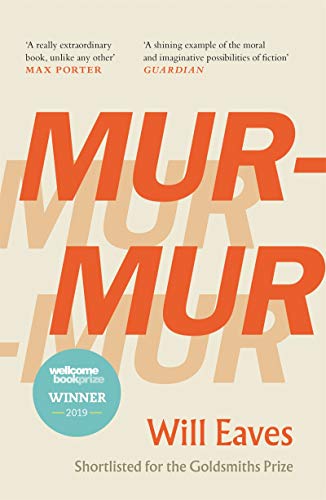
Murmur

This month the chain begins with a book I haven’t read or heard of before, Murmur by Will Eaves. This is the summary from Amazon: Taking its cue from the arrest and legally-enforced chemical castration of Turing, Eaves fictionalises the devastating period before the mathematician’s death in an extraordinary contemplation of consciousness.

Murmur has won several prizes including the 2019 Wellcome Book Prize, an annual award, open to new works of fiction or non-fiction. To be eligible for entry, a book should have a central theme that engages with some aspect of medicine, health or illness.

I checked back to see if I had read any of the earlier  Wellcome Book prize winners. I had to go back to 2010 when The Immortal Life of Henrietta Lacks by Rebecca Skloot was the winning book. I read this in April and thought it was excellent. Henrietta Lacks died of cervical cancer in 1951. The cancer cells taken from her tumour were cultured and became known as HeLa cells which have formed the basis for medical research and drug development ever since.

The Quarry by Iain Banks is a novel about Guy, a man dying from cancer. He lives in a house that is gradually falling to pieces, situated on the edge of a quarry in the Pennines..Feeling his death is imminent, Guy gathers around him his oldest friends as they reminisce about their time as film students and search through the house for a video tape they had made that could ruin all of their lives if it became public.  It’s the last book Iain Banks wrote – whilst writing it he, himself, was diagnosed with cancer.

Another house in ruins is the setting for the opening of The Ruin, Dervla McTiernan’s debut novel. DI Cormac Reilly has left his high-flying Dublin career to return to Galway, where he is confronted with a case that has haunted him for twenty years. As a young constable he was called to a decrepit country house where he found two silent, neglected children and their mother lying dead upstairs.

Another debut novel is Everything But the Truth by Gillian McAllister set in Newcastle and Oban. This is a thriller about lies, secrets and relationships; about how we get to know people and learn to trust them.

Also set partially in Newcastle is Harbour Street by Ann Cleeves. It begins ten days before Christmas, as the Newcastle Metro is packed with shoppers, babies screaming, office workers merry after pre-Christmas parties where an old lady, Margaret Krukowski, is found fatally stabbed. This book was adapted for TV adaptation, but with many changes from the original.

Another adaptation is the film The Imitation Game starring Benedict Cumberbatch and Keira Knightley about Alan Turing as he tries to crack the German Enigma code.  It’s an adaptation of the book Alan Turing: The Enigma by Andrew Hodges. In 1952 Turing’s homosexuality rendered him a criminal and he was subjected to humiliating treatment. In 1954, aged 41, Alan Turing took his own life – thus linking back to Murmur.

I’ve started and ended with books about Alan Turing, linked by books that have won the Wellcome Book Prize, books about cancer, set in ruined houses, debut novels, books set in Newcastle and books that have been adapted for TV and film.

The books are mostly crime fiction, all of which I’ve read. Although I haven’t read Andrew Hodges’ book I have seen the film – which is excellent!

Next month (July 6, 2019), the chain will begin with the children’s classic, Where the Wild Things Are by Maurice Sendak.