Death Has Deep Roots by Michael Gilbert (British Library Crime Classics)


Death has deep roots

Poisoned Pen Press| 5 November 2019| 288 pages|reprint edition| 4.5*

Death Has Deep Roots: a Second World War Mystery by Michael Gilbert was first published in 1951. This edition, published in association with the British Library, has an introduction by Martin Edwards.

I thoroughly enjoyed Death Has Deep Roots. Set in 1950 it’s a mix of courtroom drama, spy novel and an adventure thriller. Victoria Lamartine, a hotel worker, and an ex-French Resistance fighter is on trial for the murder of Major Eric Thoseby, her supposed lover, and alleged father of her dead child. The story alternates between the courtroom scenes, where QC Hargest Macrea is in charge of Vicky’s defence, and the investigations of solicitor Nap Rumbold in France, and his friend Major Angus McCann, who now keeps a pub in Shepherd Market.

Vicky is the obvious suspect – she was found standing over Thoseby’s dead body in his room at the Family Hotel in Soho, a room that was only accessed by one staircase – making this a variation on a locked room murder mystery. In evidence was also against her as Thoseby had been stabbed using the same method that the Resistance fighters had been taught. But she insists that she is not guilty.  Macrea and Nap believe her and Nap sets out to find the Englishman, Julian West, who Vicky says is the father of her dead child, whilst McCann investigates events in London.

I always like courtroom dramas and I think the courtroom scenes are impressive and persuasive as Macrea questions the prosecutions witnesses and manages to stall proceedings whilst Nap is away in France. It is, of course, much more complicated than I’ve described – there is a lot of information about the war in France and the work of the French Resistance, and the dangers that confront Nap as he digs deeper into what had happened to Wells. And I enjoyed the thrill of the chase as he travels through France with only a week to discover the truth.

I think what makes this book so good is not just the murder mystery, which I couldn’t solve, but also the setting and the characters. It was written not long after the end of the Second World War and it conveys a vivid impression of what life was like in both France and England, with memories of the war still fresh on people’s minds. Whilst Vicky is maybe a stereotypical character Nap, in particular, comes across as a more developed character – and a very likeable one too. It’s described as a book in the Inspector Hazelrigg series, but he only makes a brief appearance, with Nap, Macrea and McCann doing the main investigations.

Michael Gilbert was a British lawyer who wrote police procedurals, spy novels and many short stories, courtroom dramas, classical mysteries, adventure thrillers, and crime novels. I have another one of his to read, Smallbone Deceased and I hope to get round to it soon.

Many thanks to Poisoned Pen Press for a review copy via NetGalley.

Library Loans 24 January 2020

I regularly borrow books from the library, although I haven’t written about them for a few months. These are the ones I have on loan at the moment:

Lib loans Jan 2020

The Pure Gold Baby by Margaret Drabble. This novel was on the mobile library van shelves and caught my eye because I’ve enjoyed the other books by her that I’ve read. Anna is a child of special, unknowable qualities. She is happy, always willing to smile at the world around her, but she also presents profound challenges. For her mother Jess, still in her early 20s, her arrival will prove life-transforming.

Winter King: The Dawn of Tudor England by Thomas Penn, non-fiction about Henry VII. I reserved this after FictionFan recommended it, describing it as: ‘very detailed but well written and not too academic in tone‘. Hilary Mantel is quoted on the cover: ‘Compelling … Fascinating‘. With two such recommendations how could I resist reading it? So I was delighted to find the library has a copy.

The Last Ragged Breath by Julia Keller, the 4th book in her Bell Elkin’s mystery series set in West Virginia. I haven’t read any of her books before but I was reading about her latest book on Kay’s Reading Life and found this book on the shelves when I went to the library yesterday. Royce Dillard doesn’t remember much about the day his parents-and one hundred and twenty-three other souls-died in the 1972 Buffalo Creek disaster. But now Dillard, who lives off the grid with only a passel of dogs for company, is fighting for his life one more time: He’s on trial for murder.

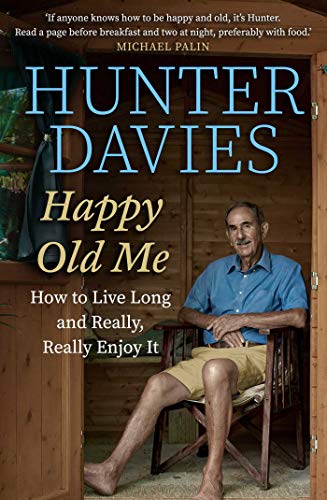
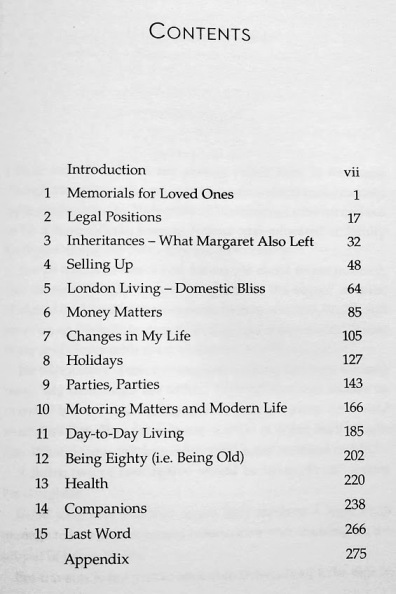
Happy Old Me:How to Live a Long Life and Really Enjoy It by Hunter Davies. This is another book I reserved. Davies is the editor of The John Lennon Letters (which I’m currently reading) and the author of Wainwright: The Biography (which my husband is currently reading and I want to read it too). This is his third autobiographical book, described on the book sleeve as ‘part memoir, part self-help … a moving, uplifting and often amusing account of one year in Hunter Davies’ life, navigating bereavement and finding hope for the future.‘ I’m currently reading it and so far (up to chapter 4) I’m loving it.

I love libraries and have used them all my life (well from the age of 3). At the moment the library service is carrying out a survey about our use of the libraries, how often we borrow books etc, etc  – and especially about our use of the mobile library service, and I fear that cutbacks may follow, so I make sure I use the libraries whilst I still can.

Hitler’s Secret by Rory Clements

Hitler's secret

Bonnier Zaffre| 23 January 2020| 339 pages| e-book| review copy via NetGalley| 4 stars

Description from the author’s website:

In late autumn 1941, Nazi Germany has conquered most of western Europe and is now laying waste to the Soviet Union with a relentless drive towards the East. But a secret from Hitler’s past life threatens to destabilise the Nazi regime – and there are men who will stop at nothing to prevent it coming out. 

My thoughts

I enjoyed Rory Clements’ first book in his Tom Wilde series, Corpus so much that I decided to look out for more of his books. But somehow I missed the next two books as Hitler’s Secret is the fourth book in the series. Luckily for me, it reads perfectly as a standalone, although at some point I would like to read the books I missed.

This is a complicated novel and I am not going to attempt to describe all the details.  Just before the USA’s entry into the Second World War, Cambridge professor Tom Wilde, an American, is smuggled into Nazi Germany at the instigation of an American intelligence officer to collect a mysterious package from Berlin. He isn’t told what is in the package, but I thought it was obvious from quite early in the book what it was.  I think that increased the tension and suspense throughout the book and at several points in the story, I just couldn’t imagine how Tom would succeed in his mission as he is pursued by numerous people including the powerful Nazi, Martin Borman and his agents. Hermann Goering and his wife Emmy also play an important role in the story as does the internal struggle for power under Hitler, whereas Hitler himself does not appear.

I enjoyed all of it – the somewhat predictable plot, the amazing coincidences, the chase across Germany and the Baltic, the doubtful characters, as well as all the twists and turns and seemingly impossible situations that they encounter. It’s fast paced, full of action, danger, violence and double-cross – a most satisfying and compelling thriller. The ending in England is also intriguing, full of heart stopping moments in scenes that had my head whirling. Needless to say really, but I was gripped by this book and I just had to find out what happened. I think the last final twist about Hitler’s secret was very well done.

Top Ten Tuesday: The Ten Most Recent Additions to My Bookshelf

Top Ten Tuesday 2020

Top Ten Tuesday is a weekly meme created by The Broke and the Bookish and now hosted by Jana at That Artsy Reader Girl. For the rules see her blog.

The topic this week is:  The Ten Most Recent Additions to My Bookshelf. No wonder I have so many TBRs, they just keep on arriving. These are all e-books, except for the one hardback and two paperback books I received at Christmas and the little hardback Wainwright book I bought from Amazon.

Review copies:

  • Coming Up For Air by Sarah Leipciger – three extraordinary lives intertwine across oceans and time. Taking inspiration from a remarkable true story, this is a novel about the transcendent power of storytelling and the immeasurable impact of every human life.
  • The Lost Lights of St Kilda by Elisabeth Gifford – a sweeping, powerful novel set on the Scottish island of St Kilda, following the last community to live there before it was evacuated in 1930.
  • The Sleepwalker by Joseph Knox –  the third book in the DC Aidan Waits series, set in Manchester, a dark thriller that begins as Waits is guarding a serial killer on his deathbed in a hospital.
  • The Mist by Ragnar Jónasson – the third book in the Hidden Iceland  trilogy about DI Hulda Hermannsdóttir, told in reverse chronological order.
  • The Last Protector (James Marwood and Cat Lovett, Book 4) by Andrew Taylor –  set in the late 17th century, under Charles II. Oliver Cromwell’s son, Richard, has abandoned his exile and slipped back into England.

Christmas presents:

  • Peterloo: the English Uprising by Robert Poole – non-fiction about the ‘Peterloo massacre’ on 18 August 1819 at St Peter’s Field, Manchester, when armed cavalry attacked a peaceful rally of some 50,000 pro-democracy reformers.
  • Oswald: Return of the King by Edoardo Albert – historical fiction, the second book in his Northumbrian Thrones series, set in the 7th century. Oswald has a rightful claim to the throne, but he is sick of bloodshed, and in his heart he longs to lay down his sword and join the monks of Iona.
  • The Watch House by Bernie McGill – historical fiction set on Rathlin, a remote Irish island, this is a story of infidelity, secrets and murder in a small Irish island community, inspired by Marconi’s experiments in wireless telegraphy in the late nineteenth century.

From Amazon:

  • The Eastern Fells: A Pictorial Guide to the Lakeland Fells by Alfred Wainwright. This is a beautiful little book, illustrated with his intricate pen and ink sketches of the landscape and the views from the summits as well as detailed maps of the footpaths. 
  • That Affair Next Door by Anna Katharine Green – a mystery first published in 1897, focusing on a murder that occurred in the house next door to the home of the curious Miss Butterworth.

Short Stories on Sunday

Over several years I’ve been reading my way through Agatha Christie’s books and short stories. I’ve read all her detective/mystery novels and some of her short story collections. In an attempt to read more of the short stories I’ve decided to read some each Sunday, beginning with the stories collected in Miss Marple and Mystery.

IMG_20180513_095855842.jpgThis collection contains 55 stories, 20 of them featuring Miss Marple. There is an Short Story Chronology in the Appendix with a table aiming to present all Agatha Christie’s short stories published between 1923 and 1971, listed in order of traced first publication date. Counting how many there are in total is a difficult task – some stories that first appeared in weekly or monthly magazines were later  re-worked and became chapters in a larger work, some in Partners in Crime were sub-divided into smaller chapters, 13 were re-worked into the episodic novel, The Big Four, and some were rewritten so substantially that they appear separately in different books!

I’ve read some of these in other short story collections but there are still many I haven’t read.

The Girl in the Train is one I haven’t read before. It was first published in Grand Magazine in February 1924 and was adapted as one of the Agatha Christie Hour drama series for by Thames Television in 1982 as part of their ten-part programme. It’s a very short story that also appears in The Listerdale Mystery collection of short stories.

George Rowland is the heir to his Uncle William’s wealth but is left without a job or a home when William throws him out on his heel. On a whim George Rowland decides to catch a train down to Rowland’s Castle, a village which happens to bear his name. A beautiful girl bursts into his compartment, frantically begging to be hidden.  She gives him a package saying it is the key to everything and he is to guard it with his life. Jumping out of the train at the first stop she tells him to follow the little man with a small dark beard getting on the train. His life changes dramatically as he follows her instructions.

It’s a bit of nonsense really, in the same vein as Christie’s Tommy and Tuppence stories. A quick easy read, but entertaining nevertheless and possibly the first of books entitled The Girl … 

Reading Challenges for 2020

I’m trying to keep things simple this year and only take part in a few reading challenges. I have already joined the Calendar of Crime Challenge 2020 and have now decided to join the 2020 Historical Fiction Reading and also the Mount TBR Reading Challenge 2020.

historical-fiction-reading-challenge-banner

The Historical Fiction Reading Challenge is hosted by Amy at Passages to the Past,

Here are the details of the challenge:

  • The challenge runs from January 1st to December 31st, 2020.
  • Each month, a new post dedicated to the HF Challenge will be created.
  • Everyone can participate! If you don’t have a blog you can post a link to your review if it’s posted on Goodreads, Facebook, or Amazon, or you can add your book title and thoughts in the comment section if you wish.
  • Add the link(s) of your review(s) including your name and book title to the Mister Linky we’ll be adding to our monthly post (please use the direct URL that will guide us directly to your review)
  • Any sub-genre of historical fiction is accepted (Historical Romance, Historical Mystery, Historical Fantasy, Young Adult, History/Non-Fiction, etc.)

Also there are the following different reading levels to choose from:

  • 20th Century Reader – 2 books
  • Victorian Reader – 5 books
  • Renaissance Reader – 10 books
  • Medieval – 15 books
  • Ancient History – 25 books
  • Prehistoric – 50+ books

I will be aiming for the Ancient History level, because last year I read 23 historical fiction novels, so I think that should be manageable.

Mount TBR The Mount TBR Reading Challenge 2020. is hosted by Bev at My Reader’s Block.

Here are the details:

Books must be owned by you prior to January 1, 2020. No library books.  Any reread may count, regardless of how long you’ve owned it prior to 2020, provided you have not counted it for a previous Mount TBR Challenge.  Audiobooks and E-books may count if they are yours and they are one of your primary sources of backlogged books. You may count “Did Not Finish” books provided they meet your own standard for such things, you do not plan to ever finish it, and you move it off your mountain [give it away, sell it, etc. OR remove it from your e-resources]

For the full rules please visit Bev’s sign-up post here.

There are a number of different levels to choose from:

Pike’s Peak: Read 12 books from your TBR pile/s
Mount Blanc: Read 24 books from your TBR pile/s
Mt. Vancouver: Read 36 books from your TBR pile/s
Mt. Ararat: Read 48 books from your TBR pile/s
Mt. Kilimanjaro: Read 60 books from your TBR pile/s
El Toro*: Read 75 books from your TBR pile/s (*aka Cerro El Toro in South America)
Mt. Everest: Read 100 books from your TBR pile/s
Mount Olympus (Mars): Read 150+ books from your TBR pile/s

and for now I’m going for Mt Vancouver, which is to read 36 books and hope to move up to the higher levels if I can.

For now, that is all, although I may be tempted by other challenges as well …