Top Ten Tuesday is a weekly meme created by The Broke and the Bookish and now hosted by Jana at That Artsy Reader Girl. For the rules see her blog.
This week’s topic is TTT Rewind (Pick a previous topic that you missed or would like to re-do/update) So, I’m updating my post Books On My Spring 2019 TBR, first posted on 19th March 2019.
I read three of them!
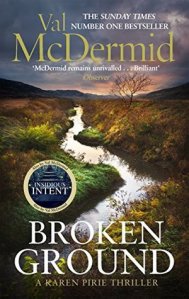
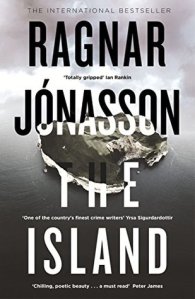
Broken Ground by Val McDermid, On the Beach by Nevil Shute, which I read only this year and have yet to write a review, and The Island by Ragnar Jónasson.
This leaves me with seven left to read:
In Cold Blood by Truman Capote – Capote reconstructs the crime and the investigation into the murders of the four members of the Clutter family on November 15, 1959, in the small town of Holcomb, Kansas.
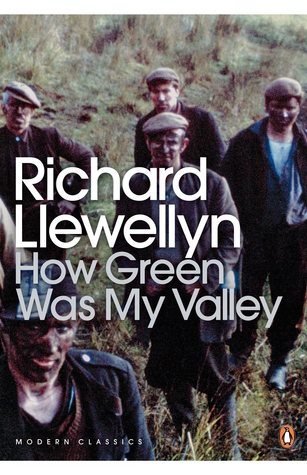
How Green Was My Valley by Richard Llewellyn – a story of life in a mining community in rural South Wales as Huw Morgan is preparing to leave the valley where he had grown up. He tells of life before the First World War.
Iris and Ruby by Rosie Thomas – the story of a teenage girl, Ruby, who runs away from home to live with her grandmother, Iris in Cairo.
Here Be Dragons by Sharon Penman – set in 13th century Wales this is the story of Llewelyn, the Prince of North Wales, and his rise to power and fame and his love for Joanna, the illegitimate daughter of King John.
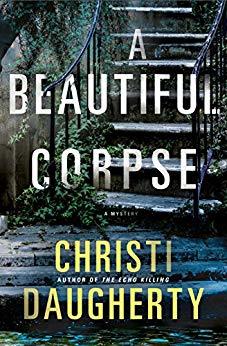
A Beautiful Corpse by Christi Daugherty – crime reporter Harper McClain unravels a tangled story of obsession and jealousy after a beautiful law student is shot in Savannah, Georgia.
A Snapshot of Murderby Frances Brody – set in Yorkshire in 1928, when amateur detective, Kate Shackleton investigates a crime in Brontë country.
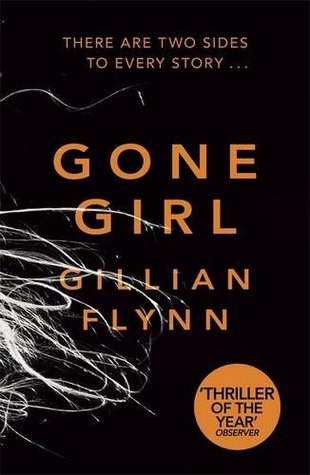
Gone Girl by Gillian Flynn – on the day of Nick and Amy’s fifth wedding anniversary, Amy suddenly disappears. The police suspect Nick. Amy’s friends reveal that she was afraid of him, that she kept secrets from him. He swears it isn’t true.
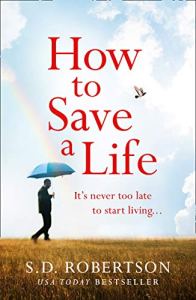
When a stranger saves Luke’s life, he knows he’s been given a second chance. He’s going to make it count – and, determined to live each day to its fullest, he starts by saying yes to everything life has to offer.
Slowly but surely, Luke learns that a little bit of blue-sky thinking can go a long way, and things start to look up.
But when Luke’s new resolve is tested, will he return to his old ways? Or can one fateful moment truly save a life.
A life-affirming story about a man who is given a second chance, perfect for fans of Mike Gayle and Imogen Clark.
How to Save a Life is one of the oldest books on my NetGalley shelf. It has sat there far too long, since 2020. It’s the second book I’ve read by S D Robertson (the first was If Ever I Fall), which is why I requested it. It’s an emotional story, character driven, narrated solely by Luke, a barber, with a pessimistic outlook on life. His parents died in a tragic accident, then just a fortnight before Christmas his wife told him she’d been having an affair and left him. He is wallowing in misery, living alone with his cat, Alfred. Until he meets Iris. They were both sheltering from a sudden storm under scaffolding when a violent gust brought the building and scaffolding down on them – Luke survived, but Iris didn’t. She had saved his life, pushing him out of the way as the scaffolding collapsed.
Iris’s death has a powerful effect on Luke, especially when he learns what a wonderful person she was – a doctor who was passionate about volunteering her services for a charity scheme in Africa. He felt guilty that he had survived and vowed to change his outlook and his life, trying to be more like Iris.
This book is not my usual choice of genre, but I think it is an interesting book that did give me food for thought. I liked the setting in Manchester’s Northern Quarter, and I could easily visualise Luke’s barber’s shop and its surroundings. However, it is repetitive as Luke analyses his feelings and actions over and over again, and it’s slow paced because of that. He has several setbacks as things don’t all turn out how he had hoped, but it is a heart-warming story, if a little predictable.
My thanks to Avon, the publishers for a review copy via NetGalley.
Every Friday Book Beginnings on Friday is hosted by Gillion at Rose City Readerwhere you can share the first sentence (or so) of the book you are reading. You can also share from a book you want to highlight just because it caught your fancy.
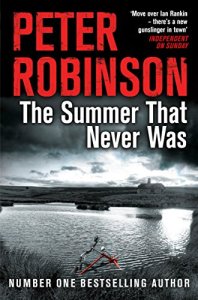
One of the books I’m currently reading is The Summer That Never Was by Peter Robinson, the 13th Inspector Banks book, following on from Aftermath. I am really enjoying it, so far, which is a relief as I really disliked Aftermath.
My Book Beginning:
Trevor Dickinson was hung over and bad-tempered when he turned up for work on Monday morning
Also every Friday there is The Friday 56, hosted by Freda at Freda’s Voice, where you grab a book and turn to page 56 (or 56% of an eBook), find one or more interesting sentences (no spoilers), and post them.
Page 56:
‘Did he have many friends?’
‘He made quite a few around here,’ Joan answered. She looked at her mother. ‘Who was there Mum?’
‘Let me remember. There was the Banks lad, of course, they were very close, and David Grenfell and Paul Major. And Steven Hill.’
Blurb
A skeleton has been unearthed. Soon the body is identified, and the horrific discovery hits the headlines.
Fourteen-year-old Graham Marshall went missing during his paper round in 1965. The police found no trace of him. His disappearance left his family shattered, and his best friend, Alan Banks, full of guilt.
That friend has now become Detective Chief Inspector Alan Banks, and he is determined to bring justice for Graham. But he soon realizes that in this case, the boundary between victim and perpetrator, between law-guardian and law-breaker, is becoming more and more blurred.
What do you think, does it appeal to you? What are you currently reading?
Pan Macmillan, Mantle| 19 January 2021 | 562 pages|e-book |Review copy|4*
Kate Mosse sets out in her Historical Note the history of the French Wars of Religion that took place between Huguenots (Protestants) and Catholics from 1562 and 1598 and explains that The City of Tears is the second book in The Burning Chambers series of novels set against the backdrop of 300 years of history from 16th century France and Amsterdam to the Cape of Good Hope in the 18th and 19th centuries. And there is a useful list of the principal characters and the historical characters at the beginning of the book, that helps in remembering who was who and how they were connected.
It’s been four years since I read The Burning Chambers, the first book in The Burning Chambers series, and time has moved on ten years since the events in that first book. You don’t have to read the first book before reading The City of Tears as with four years between the two books I didn’t find it hard to pick up the story, but I do think you need to read the Historical Note to get the background details of the French Wars of Religion first.
There is now a precarious peace in the French Wars of Religion and it looks as though that peace could be maintained as the queen mother, Catherine de Medici, has negotiated a marriage between her Catholic daughter Margot and the Huguenot Henri of Navarre. But that union is opposed by the hardline Catholic faction led by the Duke of Guise. As the novel opens Minou Joubert and Piet Reydon, now married and living in their castle in south west France, are preparing for their visit to Paris for the wedding.
This is a complicated story centred on Minou and Piet Reydon and their family. The wedding took place followed by the St Bartholomew’s Day Massacre on 24 August 1572 when thousands of Protestants were murdered by Catholic troops, in Paris and across France. I’m not going to go into any more detail about the story other than to say it’s a compelling story of chaos and fear as Minou and her family escape, though suffering dreadful losses, including the disappearance of her seven year old daughter, and almost losing their lives. There’s murder, conspiracies, stolen relics and innumerable secrets are brought to light.
It is an enjoyable book, but because of its length it does lose pace in parts. It is not a book you can or would want to read quickly. The strength of the book for me is in the characterisation and the settings. Kate Mosse has thoroughly researched the period and the locations, rooting it firmly in the time it was set. What I particularly like is that she identifies that the characters and their families, apart from the historical ones, are imagined, inspired by ‘the kind of people who might have lived: ordinary women and men , struggling to live, love and survive against a backdrop of religious war and displacement.’ Just as devastating today, as it was then.
It is also a book that is strong on developing the characters, so that you feel for them as they struggle to survive all that is thrown at them, as it is certainly a tragic story. Having said that the ending is a positive one, except for cliff hanger on the last page that hints at what is to come in the third book, The Ghost Ship, a sweeping historical epic about love in a time of war, due out in July this year.
The Dancing Bear by Frances Faviell took me by surprise by how much I enjoyed it. I wasn’t expecting it to be so good.
Frances Faviell (1905-1959) was the pen name of Olivia Faviell Lucas, painter and author. After the war, in 1946, she went with her young son, John, to Berlin where Richard Parker, her second husband, had been posted as a senior civil servant in the post-war British Administration. It was here that she befriended the Altmann family, which prompted her first book The Dancing Bear (1954), a memoir of the Occupation seen through the eyes of both occupier and occupied. She later wrote three novels, A House on the Rhine (1955), Thalia (1957), and The Fledgeling (1958). These are now all available as Furrowed Middlebrow books.
The Dancing Bear covers the years from Autumn 1946 to Autumn 1949, with an Epilogue dated Autumn 1953 and, in this edition, an Afterword by John Parker, Faviell’s son. Her memoir is mainly about her friendship with the Altmann family – Frau Maria Altmann, her husband, Oskar and her children, Ursula, who works for a group of American service men, Lilli, a ballet dancer and son, Fritz, who was a member of the Hitler Youth and is now involved in the Black Market. Their eldest son. Kurt. is missing in Russia. Berlin had been divided into four sectors by the Allies – Britain, the United States, France and the Soviet Union – and Frances is horrified by the conditions she found. There were deaths from hunger and cold as the winter approached and queues for bread, milk, cigarettes, cinemas, buses and trams.
The complete and utter devastation of Berlin had shaken me profoundly. Nothing … had prepared one for the dead horror of this city. (page 15)
…
The complete absence of shops was something the Allied and German women felt. There was scarcely a single shop left standing in Berlin. The great stores and emporiums lay in dust, as did the great blocks of flats. One could not get the simplest articles except on the Black Market, and then only in exchange for cigarettes and coffee which had taken the place of money. (page 166)
The Altmanns live on the ground floor of a large ruined house – the upper storeys had disappeared and just the twisted iron girders remained, sticking up grotesquely against the sky. The ground floor looked very shaky and the windows were covered in cardboard and the door had been repaired from odd pieces of wood. It was freezing cold, and although they had a stove they had no fuel to light it and because electricity was rationed they had to use candles. There were two bedrooms, a small kitchen, a sitting room and a bathroom. With the help of her driver, Stampie, she does what she can to help them.
The British, unlike the Americans were forbidden to be friendly with the Germans, or to allow them in their homes or any of their buildings, clubs or messes and also to give them lifts, but these rules were frequently broken. At night Berlin ‘became a whirl of revelry’:
But if Berlin was a tragic city by day; at night it became a whirl of revelry. The Allies entertained on a scale which was extraordinary in a starving town, and if one went down to the Kurfurstendamm or the Kaiserdamm at night every cafe and night club was packed with revellers. (page 63)
I have only touched the surface of this book in this short post. It’s a moving memoir and I was fascinated by it all – the people, their situations, and their morale and attitudes as well as the condition of Berlin in the aftermath of World War Two. The realities of living under occupation are clearly shown, as well as the will to survive despite all the devastation and deprivation. I now want to read more of Frances Faviell’s books.
Deadheads is the 10th Dalziel and Pascoe novel first published in 1988, set in the small mining town of Burrthorpe (a fictional town) in Yorkshire. The setting is excellent and Hill paints a compelling account of the mining community and gives a convincing insight into the period a few years after the Miners’ Strike of 1984. The majority of the book is about the miners, their families, their hatred of the bosses, and their distrust and dislike of the police.
There are two mysteries facing Dalziel and Pascoe. One is current and the other is a case that had appeared to have been resolved several years earlier, when Tracy Pedley, a young girl disappeared. Her body was never discovered and some of the residents believed that Billy Farr, who was the last person to see her alive, was responsible for her death. But then Donald Pickford committed suicide leaving a letter confessing to killing several young girls in the area and although he hadn’t mentioned Tracy by name, she was counted as a probable victim. Even so, some people still thought Billy was guilty and their suspicions were confirmed when later on it appeared that he committed suicide when he fell to his death in an abandoned mineshaft.
Matters are brought to boiling point when the local newspaper serialises the memoirs of ex-Deputy Chief Constable Neville Whatmough, who had been in charge of the Pickford case. This incenses Colin Farr, Billy’s son. And then another man is found dead in the mine …
Dalziel has just a minor role as Pascoe leads the investigation. Ellie, Pascoe’s wife, also plays a major role. Her involvement comes about when she tutors some of the miners as part of the union-sponsored day release courses and meets Colin Farr, Billy’s son. He is an angry young man and Ellie is attracted both to his intelligence and his physical masculinity, despite the strength of her feminist views. She really is an irritating character, an angry young woman and for most of the book it looked as though the Pascoes’ marriage was about to come to an end. It’s left to Dalziel to bring a touch of humour to the book and his down to earth approach to the miners gets more results than Pascoe’s middle class attempts to understand them.
I thoroughly enjoyed Underworld.
Note:
The title appears as ‘Under World‘ in some editions and as ‘Underworld‘ on others. On the front cover of the paperback I read it is ‘Under World‘ but on the title page it is one word -‘Underworld‘. The Underworld or Hades in ancient Greek and Roman Mythology was where the souls of the dead resided. Hill divides Underworld into three parts and begins each part with verses from Dante’s The Divine Comedy, thus equating the mine with hell.