Six Degrees of Separation from Romantic Comedy to The Daughter of Time

It’s time again for Six Degrees of Separation, a monthly link-up hosted by Kate at Books Are My Favourite and Best. Each month a book is chosen as a starting point and linked to six other books to form a chain. A book doesn’t need to be connected to all the other books on the list, only to the one next to it in the chain.

The starting book this month is Romantic Comedy by Curtis Sittenfield a book I haven’t read. Amazon describes it thus: A TV script writer thinks she’s over romance, until an unlikely love interest upends all her assumptions: a humorous, subversive and tender-hearted novel from the bestselling author of Rodham, American Wife and Prep.

I don’t often read romantic comedy, or romance novels so I couldn’t immediately think of where to start my chain. And then I remembered that in 2006, before I began my blog, I enjoyed reading The Undomestic Goddess by Sophie Kinsella. It’s a romantic comedy about Samantha who leaves her job as a high-powered London lawyer and, mistaken for another woman, she finds herself employed as a housekeeper without a clue how to cook or keep house.

One of the characters in The Undomestic Goddess is Nathaniel, a hunky gardener, so my second link is to another gardener in Mr MacGregor by Alan Titchmarsh, another romantic comedy. It’s about Rob MacGregor, who is hired to recapture the declining audience for a daytime gardening programme, and quickly becomes Britain’s latest heartthrob. It’s not as funny as The Undomestic Goddess.

Moving away from romantic comedy my third link is to Deadheads (my review) by Reginald Hill in which a rose garden is the setting for a murder. Life is on the up for Patrick Aldermann: his Great Aunt Florence has collapsed into her rose bed leaving him Rosemont House with its splendid gardens. Or was she murdered?

Using ‘rose’ as my fourth link takes the chain to The Sunne in Splendour (my review) by Sharon Penman historical fiction based on the War of the Roses, the conflict between the houses of York and Lancaster for the throne of England. It tells the story of Richard III from his childhood to his death at Bosworth Field in 1485. 

My fifth link is to another book about Richard III – Alison Weir’s non-fiction about The Princes in the Tower, which examined the available evidence. She concluded that Richard III was responsible for the deaths of his nephews, the young Princes.

Much has been written about Richard, from the time of his death onwards and he remains a controversial figure. My final link is to Josephine Tey’s novel The Daughter of Time, which also investigates Richard’s role in the death of his nephews and his own death at the Battle of Bosworth and concluded that Richard hadn’t murdered his nephews.

My chain includes romantic comedy, crime and historical fiction and non fiction. I’ve read all six books.

Next month (2 September 2023), we’ll start with Wifedom by by Anna Funder.
Six Degrees of Separation from Time Shelter to The Girl Who Died

It’s time again for Six Degrees of Separation, a monthly link-up hosted by Kate at Books Are My Favourite and Best. Each month a book is chosen as a starting point and linked to six other books to form a chain. A book doesn’t need to be connected to all the other books on the list, only to the one next to it in the chain.

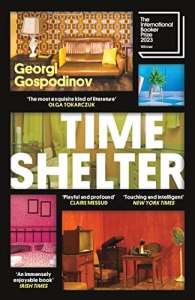
This month we begin with Time Shelter by Georgi Gospodinov and translated by Angela Rodel, the winner of the International Booker Prize 2023, in which an enigmatic flâneur named Gaustine opens a ‘clinic for the past’ that offers a promising treatment for Alzheimer’s sufferers: each floor reproduces a decade in minute detail, transporting patients back in time. But soon the past begins to invade the present.This is not a book I’ve read but I think I might like it.

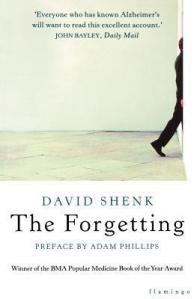
I’m beginning my chain with David Shenk’s The Forgetting: understanding Alzheimer’s: the biography of a disease. This is a remarkable book about the wasting away of the mind, inside a still vigorous body. Shenk’s history of Alzheimer’s is both poignant and scientific, grounded by the fundamental belief that memory forms the basis of our selves, our souls, and the meaning in our lives.

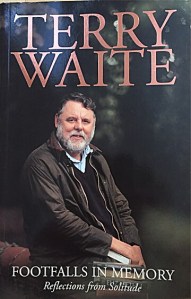
Another book about memory, but about remembering not forgetting, is my second link – Footfalls in the Memory by Terry Waite. Waite was the Assistant for Anglican Communion Affairs for the then Archbishop of Canterbury, Robert Runcie, in the 1980s. As an envoy for the Church of England, he travelled to Lebanon to try to secure the release of four hostages, including the journalist John McCarthy. He was himself kidnapped and held captive from 1987 to 1991. [Wikipedia] During his captivity he wrote his autobiography in his head, and also attempted to remember the books, poems and prayers he had read during his life.

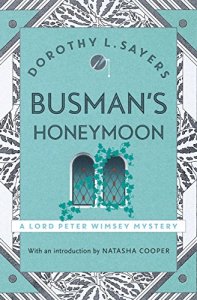
My third link is one of the books Waite described – Busman’s Honeymoon by Dorothy L Sayers. Lord Peter Wimsey and his bride, Harriet Vane are on their honeymoon. They are staying in a remote country house when they find the previous owner’s body in the cellar. It’s Dorothy L. Sayers’ last full-length detective novel. Variously described as a love story with detective interruptions and a detective story with romantic interruptions, it lives up to both descriptions with style.

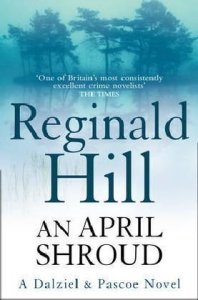
‘Honeymoon’ is the link to my fourth link as Peter Pascoe is away on his honeymoon in An April Shroud by Reginald Hill, whilst Dalziel is on holiday. He meets the Fielding family on their way back home after Conrad Fielding’s funeral. Although the police had decided that Conrad’s death had been an accident, Dalziel cannot help but ferret out what really happened to him.

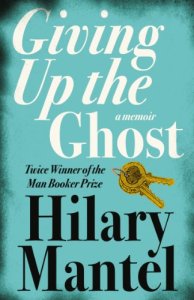
‘April’ is the link for my fifth link in my chain because I read Giving Up the Ghost by Hilary Mantel in April 2008. It’s a remarkable memoir that came across to me as being clear, honest and very moving. She’s not looking for sympathy but has written this memoir to take charge of her memories, her childhood and childlessness, feeling that it is necessary to write herself into being. As a child she believed their house was haunted and she was often very frightened. Home was a place where secrets were kept and opinions were not voiced. Her experience of ghosts at the age of 7 was horrifying as she felt as though something came inside her, ‘some formless, borderless evil’. She saw the children she never had as ghosts within her life; ghost children who never age, who never leave home. 

My final link is to a novel featuring a ghost – The Girl Who Died by Ragnar Jonasson. It is Icelandic noir, a mix of horror and psychological thriller. When Una arrived in Skálar, she had the feeling that it was like being a folk tale, an ominous supernatural tale set in a vague shifting world where nothing was solid or real, almost like a ghost town. The feeling grows stronger when she sees a little girl with long, pale hair in the window of Salka’s house – but Salka tells her that Edda was in bed. Later she discovers that the ghost of a young girl who had died fifty years earlier was said to haunt the house.

My chain begins and ends with books translated into English. In between are non fiction books about memory and crime fiction novels.

Next month (August 5, 2023), we’ll start with Romantic Comedy by Curtis Sittenfeld.

Six Degrees of Separation from Hydra to See What I Have Done

It’s time again for Six Degrees of Separation, a monthly link-up hosted by Kate at Books Are My Favourite and Best. Each month a book is chosen as a starting point and linked to six other books to form a chain. A book doesn’t need to be connected to all the other books on the list, only to the one next to it in the chain.

The starting book this month is Hydra by Adriane Howell, a book on the Stella Prize 2023 shortlist and a book I haven’t read. This review in the Guardian describes it as an elegant debut, sinuous and strange – a slow-burn gothic thriller spiked with antiques and Freud, and partly set on the Mornington Peninsula. Adriane Howell is a Melbourne-based writer and arts worker and Hydra is her debut novel.

Here’s my chain:

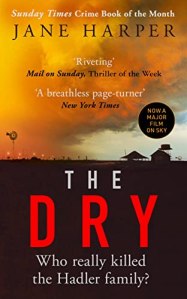
beginning with my first link which is to another Australian author’s debut novel The Dry by Jane Harper, a thriller set in a fictional town five hours west of Melbourne. A Federal Agent, Aaron Falk, returns to his old hometown to attend the funeral of his childhood best friend, Luke. Falk teams up with a local detective and tries to uncover the truth behind Luke’s sudden mysterious death, only to find more questions than answers. I loved this tense thriller.

My Second Link is another book with ‘dry‘ in the title – Dry Bones That Dream by Peter Robinson, the 7th book in the Inspector Banks series. Two masked gunmen tie up Alison Rothwell and her mother, take Keith Rothwell, a local accountant, to the garage of his isolated Yorkshire Dales farmhouse, and blow his head off with a shotgun. Why? This is the question Detective Chief Inspector Alan Banks has to ask as he sifts through Rothwell’s life.

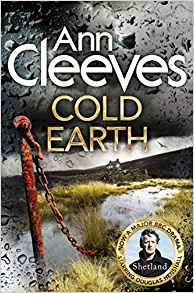
The 7th book in Ann Cleeves’ Shetland series is my Third Link. It is Cold Earth featuring DI Jimmy Perez. The body of a dark-haired woman wearing a red silk dress is found in a croft house after a landslide had smashed through the house.

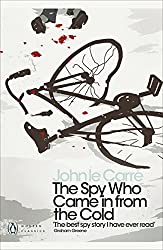
My Fourth Link is via the title of another book with the word ‘cold‘ in the title – The Spy Who Came in from the Cold by John Le Carre, first published in 1963. It’s the tale of a British agent who longs to end his career but undertakes one final, bone-chilling assignment. George Smiley appears as a supporting character.

My Fifth Link, The Clocks by Agatha Christie, was also published in 1963. A dead man is found in a room where there are five clocks, all of which, except for the cuckoo clock which announced the time as 3 o’clock, had stopped at 4.13. Poirot runs through what amounts to a potted history of crime fiction and the art of detection. He refers to real crimes, including that of Lizzie Borden and then to examples of fictional crime.

Lizzie Borden is my Sixth LinkSee What I Have Done by Sarah Schmidt, a Melbourne librarian. It was her debut novel. Lizzie Borden was charged with the murders of her parents and was acquitted in June 1893. Speculation about the murders and whether Lizzie was guilty or not continues to the present day. It is based on true events using various resources.

My chain begins and ends with debut novels by Australian authors. In between are crime fiction novels and a spy thriller.

Next month (3 June 2023), we’ll start with Elizabeth Day’s exploration of friendship, Friendaholic.

Six Degrees of Separation from Born to Run to The Dead Secret

It’s time again for Six Degrees of Separation, a monthly link-up hosted by Kate at Books Are My Favourite and Best. Each month a book is chosen as a starting point and linked to six other books to form a chain. A book doesn’t need to be connected to all the other books on the list, only to the one next to it in the chain.

I completely forgot about this meme until today, busy at the weekend, so here it is nearly a week late.

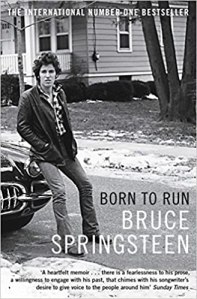
The starting book this month is Born to Run by Bruce Springsteen, a book I haven’t read, but it is described on Amazon:

Born to Run will be revelatory for anyone who has ever enjoyed Bruce Springsteen, but this book is much more than a legendary rock star’s memoir. This is a book for workers and dreamers, parents and children, lovers and loners, artists, freaks, or anyone who has ever wanted to be baptized in the holy river of rock and roll.

Here’s my chain:

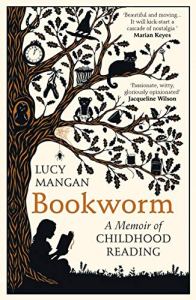
For my First link I’m going to another memoir: Bookworm: A Memoir of Childhood Reading by Lucy Mangan, which is more than an account of what Lucy read, it’s also a history of children’s books, details of their authors and a memoir of Lucy’s childhood.

My Second Link is one of the books Lucy mentioned. I was delighted to find that she too loved Teddy Robinson by Joan L Robinson. Teddy visits a toy-shop, keeps house while Deborah and her mother are out, does some conjuring tricks, meets a china gnome, and lots more.

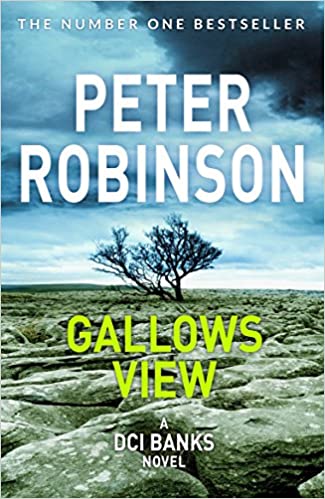
The author’s second name takes me to my Third Link – the author Peter Robinson who writes the Inspector Banks books. The first book in the series is Gallows View.

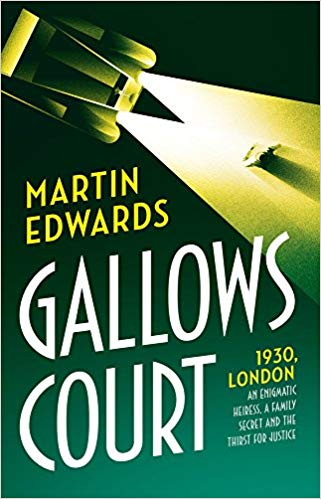
My Fourth Link is via the title of another book with the word Gallows in the title – Gallows Court by Martin Edwards, also the first in a series, the Rachel Savernake series. It’s set in 1930s London.

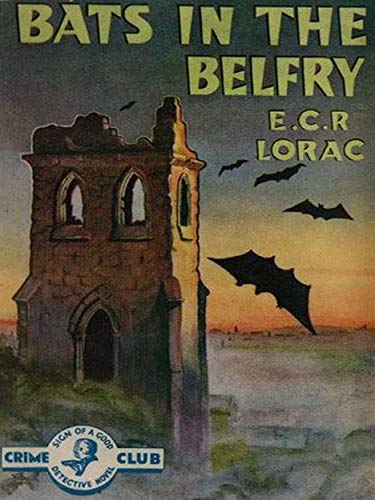
As is my Fifth Link, Bats in the Belfry by E C R Lorac, which incidentally has an introduction by Martin Edwards. A corpse is discovered, ‘headless and handless‘ in a spooky Gothic tower.

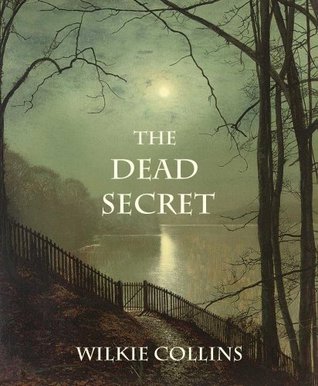
My Sixth Link is to another novel with a Gothic tower is The Dead Secret by Wilkie Collins – Porthgenna Tower in Cornwall in the 1820s. A dying woman, Mrs Treverton leaves her husband a letter confessing to a great secret.

My chain has worked its way from a memoir mainly through crime fiction to a 19th century ‘sensation’ novel. Not where I expected it to end.

Next month (6 May 2023), we’ll start with a book on the Stella Prize 2023 shortlist – Hydra by Adriane Howell.

Six Degrees of Separation from Passages to The Private Patient

It’s time again for Six Degrees of Separation, a monthly link-up hosted by Kate at Books Are My Favourite and Best. Each month a book is chosen as a starting point and linked to six other books to form a chain. A book doesn’t need to be connected to all the other books on the list, only to the one next to it in the chain.

The starting book this month is Passages: Predictable Crises of Adult Life by Gail Sheehy, a self help book that shows how to use each life crisis as an opportunity for creative change — to grow to your full potential. It’s described as ‘a brilliant road map of adult life shows the inevitable personality and sexual changes we go through in our 20s, 30s, 40s, and beyond’. I haven’t read this book.

My First link is to another self-help book, The Road Less Travelled by M Scott Peck, a book I read many years ago. Sub-titled The New Psychology of Love, Traditional Values and Spiritual Growth this book is a guide through the difficult, painful times in life by showing us how to confront our problems through the key principles of discipline, love and grace.

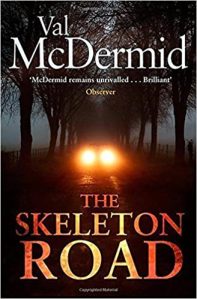
My Second Link is to The Skeleton Road by Val McDermid. Investigating the identity of the skeleton found, with a bullet hole in its skull, on the rooftop of a crumbling, gothic building in Edinburgh takes Detective Chief Inspector Karen Pirie and her Historic Cases Unit into a dark world of intrigue and betrayal during the Balkan Wars in the 1990s. Dr River Wilde a forensic anthropologist, discovers that the skeleton is a male, he’d been dead between five and ten years and his dental work shows he was originally from one of the Eastern bloc countries.

And so my Third Link is to another character with the name of Wilde in Nemesis, the third book in Rory Clements’s Tom Wilde series. It’s historical fiction set at the beginning of World War Two when Wilde, on his honeymoon in France, rescues his student Marcus Marfield. This is an intricately plotted spy thriller in which Wilde finds himself in great personal danger. For just who is Marcus Marfield? And where does his loyalty lie?

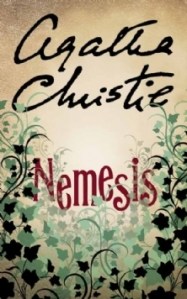
My Fourth Link is via the title of another book called Nemesis – by Agatha Christie. Mr Rafiel, who Miss Marple met in the West Indies, has left her £20,000 in his will on condition she investigates a certain crime, but doesn’t give her any details. He wrote that she had a natural flair for justice leading to a natural flair for crime and reminded her that the code word is Nemesis

Agatha Christie was in her eighties when she wrote Nemesis and it was the last book she wrote about Miss Marple.

My Fifth Link is P D James’s The Private Patient another book written by an author in her eighties. It’s set in a private nursing home for rich patients being treated by the famous plastic surgeon George Chandler-Powell. One of the patients is investigative journalist Rhoda Gradwyn. She was looking forward to a week’s peaceful convalescence and the beginning of a new life. But she was never to leave Cheverell Manor alive. Commander Adam Dalgliesh and his team are called in to investigate her murder.

Another character called Rhoda is my Sixth Link, Past Encounters by Davina Blake. This is a thought provoking book about love, loyalty, betrayal and forgiveness. Rhoda Middleton is convinced her husband, Peter, is having an affair. In essence this is a story of a marriage that has drifted, so that Rhoda and Peter no longer talk to each other about the things that matter in their lives. And they both have secrets from each other – big secrets!

My chain is made up of self help books and crime fiction novels, linked by genre, their titles, characters’ names, and two authors writing in their eighties.

Next month (1 April 2023), we’ll start with Bruce Springsteen’s autobiography, Born to Run.

Six Degrees of Separation from Trust to The Betrayal of Trust

It’s time again for Six Degrees of Separation, a monthly link-up hosted by Kate at Books Are My Favourite and Best. Each month a book is chosen as a starting point and linked to six other books to form a chain. A book doesn’t need to be connected to all the other books on the list, only to the one next to it in the chain.

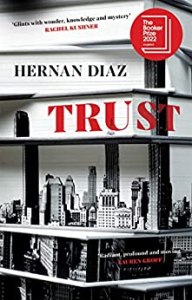
The starting book this month is Trust by Hernan Diaz, described as a sweeping, unpredictable novel about power, wealth and truth, told by four unique, interlocking voices and set against the backdrop of turbulent 1920s New York. I haven’t read this but it does appeal to me.

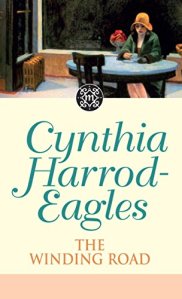
My First link is to another book set in the 1920s, The Winding Road by Cynthia Harrod-Eagles, a big hardback of 662 pages, that I bought in a library book sale. There are 35 books in the Morland Dynasty series and I haven’t read any of them. This is the 34th book in the series, so I am hoping it will read well as a standalone. The Jazz Age is in full swing in New York, the General Strike is underway in London, the shadows are gathering over Europe and the Wall Street Crash brings the decade to an end.

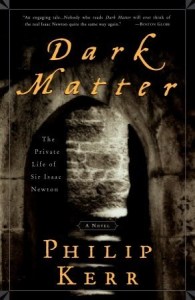
My Second Link is also a book I bought in a library book sale, Dark Matter by Philip Kerr, subtitled The Private Life of Sir Isaac Newton. This is historical crime fiction, set in 1696 when Newton was the Warden of the Royal Mint at the Tower of London hunting down counterfeiters during the period of the Recoinage of the currency, when fake gold coins were being forged. 

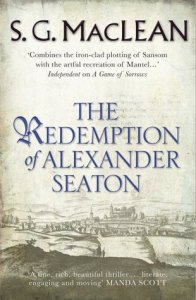
My Third Link is to The Redemption of Alezander Seaton by S G Mclean another book set in the 17th century, not in London, but in Scotland, mainly in the town of Banff. It’s a story of murder and cruelty, but also of love and the power of good over evil, as Alexander Seaton, a schoolteacher, sets out to prove the innocence of his friend Charles Thom, accused of murder.

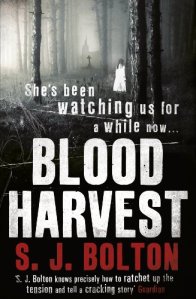
The author originally wrote under her name – Shona Maclean, but now her books are published under the truncated name, S G MacLean. Another author who has also changed her published name, but the other way round, going from a truncated name to her full first name is Sharon Bolton who formerly wrote as S J Bolton.

And so my Fourth Link is to Sharon Bolton’s Blood Harvest, which was originally published under the name S J Bolton. It’s a dark, scary book and one that I found disturbing, but thoroughly absorbing, It’s a modern Gothic tale about the Fletchers who have just moved into a new house, but someone seems to be trying to drive them away – at first with silly pranks but then with threats that become increasingly dangerous. It’s full of tension, terror and suspense and I was in several minds before the end as to what it was all about.

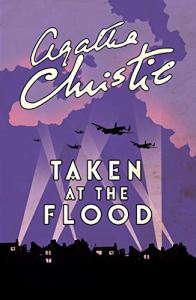
I read Blood Harvest in September 2011. My Fifth Link is another book I read that month, Taken at the Flood by Agatha Christie. It’s a baffling case for Poirot when he is asked to investigate the death of Enoch Arden, found dead in his room at the local inn. There isn’t a flood in this book – the title is from Shakespeare, as Poirot explains:  “There is a tide in the affairs of men which taken at its flood leads on to fortune …” Someone acted on that, Superintendent. To seize opportunity and turn it to one’s own ends – and that has been triumphantly accomplished…’

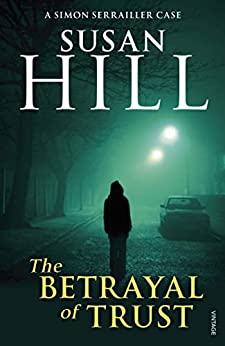
But there is a flood in my Sixth Link, The Betrayal of Trust by Susan Hill, the 6th in the Simon Serrailler series. Simon investigates a cold case, that of a teenager missing for 16 years. After flooding causes a landslip on the Moor her body comes to the surface together with that of an unknown female found in a shallow grave nearby. But the police investigations are not the main subject of this book. It focuses on the problems of ageing, hospice care, Motor Neurone Disease, assisted suicide, Parkinson’s Disease and Alzheimer’s Disease. A lot to cope with all at once and at times I found The Betrayal of Trust a deeply depressing book.

My chain is a full circle that going from Trust to The Betrayal of Trust and from the 1920s, passing through the 17th century to the 20th century, and from historical fiction to crime fiction.

Next month (4, March 2023), we’ll start with a book that was a best-selling self-help title in the seventies – Passages by Gail Sheehy. I have never heard of this book before.