Six Degrees of Separation from Sandwich by Catherine Newman to A Shilling for Candles by Josephine Tey

It’s time again for Six Degrees of Separation, a monthly link-up hosted by Kate at Books Are My Favourite and Best. Each month a book is chosen as a starting point and linked to six other books to form a chain. A book doesn’t need to be connected to all the other books on the list, only to the one next to it in the chain.
This month starts with Sandwich by Catherine Newman, a book set in Cape Cod, described as a moving, hilarious story of a family summer vacation full of secrets, lunch, and learning to let go.

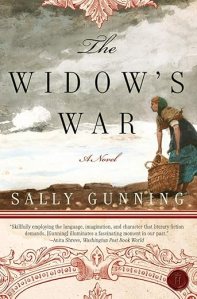
My first link is The Widow’s War by Sally Gunning. This is historical fiction set in 1761 about a whaler’s wife, Lyddie, in the Cape Cod village of Satucket in Massachusetts, living with the daily uncertainty that her husband Edward will simply not return. And when her worst fear is realised, she finds herself doubly cursed. She is overwhelmed by grief, and her property and rights are now legally in the hands of her nearest male relative: her daughter’s overbearing husband, whom Lyddie cannot abide. She decides to challenge both law and custom for control of her destiny, but she soon discovers the price of her bold “war” for personal freedom to be heartbreakingly dear.

My second link is a book about another widow, The Widow’s Tale by Mick Jackson. It’s narrated by the widow and is rather rambling as befits a woman in her sixties on the verge of a nervous breakdown. Her husband has died, she’s taken it badly, and goes to live in a rented cottage on the bleak Norfolk coast, shunning other people. She drinks to forget herself, sits in pubs alone, doing the crossword and reading a book to pass the time. She drives out to places she once knew, goes for solitary walks,  gets stuck in the saltmarshes, and is definitely quirky and obsessional.

Elly Griffith’s character, archaeologist Ruth Galloway also lives in a cottage on the Norfolk coast. So, My third link is The Janus Stone. Ruth is called in to investigate when builders, demolishing a large old house in Norwich, uncover the skeleton of a child – minus the skull – beneath a doorway. Is it some ritual sacrifice or just plain straightforward murder? The house was once a children’s home. When DCI Harry Nelson meets the Catholic priest who used to run it he tells him that two children did go missing forty years before – a boy and a girl. They were never found. When carbon dating proves that the child’s bones predate the children’s home, Ruth is drawn more deeply into the case. But as spring turns to summer it becomes clear that someone is trying very hard to put her off the scent by frightening her half to death…

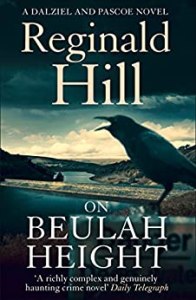
More missing children are the subject of My fourth link. It’s On Beulah Height by Reginald Hill. When a child goes missing during one long, hot dry summer it reminds Dalziel of the three little girls who had gone missing 15 years earlier from the village of Dendale in Yorkshire just before it was flooded to provide a new reservoir. No bodies were ever found. Once again during another hot summer the waters of the reservoir recede and the old village re-emerges from the depths.

This book is tightly plotted with many twists that made me change my mind so many times I gave up trying to work out who the murderer was and just read for the pleasure of reading. Hill’s descriptive writing is rich and full of imagery.

There is a bird on the cover of On Beulah Height, so My fifth link is to another book with a bird on the coverThe Crow Trap by Ann Cleeves, the first Vera book. Rachael, Anne and Grace are all staying at Baikie’s an isolated cottage on the North Pennines whilst they carry out an environmental survey. When Rachael arrives at the cottage she is confronted by the body of her friend Bella Furness, who it appears has committed suicide. Then Grace is found dead and the mystery really begins and it is down to DI Vera Stanhope, to get to the bottom of the mystery. Vera is a great character and even though I do like Brenda Blethyn’s portrayal of her in the TV series, I prefer her as she is in the books –  a woman in her fifties, who looks like a bag lady. 

My final link is A Shilling for Candles by Josephine Tey in which Inspector Alan Grant also investigates an apparent suicide. A young and beautiful film star, Christine Clay was found dead beneath the cliffs of the south coast. But he soon discovers that it was in fact murder as a coat button was found twisted in her hair and he suspects a young man, Robin Tisdall who had been staying with Christine in a remote cottage near the beach, especially when it is revealed that she has named him as a beneficiary in her will. Tisdall has lost his coat and so the search is on to find it to prove either his innocence or guilt.

The books in my chain are mainly a mix of crime and historical fiction.

What is in your chain, I wonder?

Next month (January 4, 2025), we’ll start with the 2024 Booker winner, Orbital by Samantha Harvey.

Six Degrees of Separation from  Intermezzo by Sally Rooney to White Nights

It’s time again for Six Degrees of Separation, a monthly link-up hosted by Kate at Books Are My Favourite and Best. Each month a book is chosen as a starting point and linked to six other books to form a chain. A book doesn’t need to be connected to all the other books on the list, only to the one next to it in the chain.

This month starts with Intermezzo by Sally Rooney. I haven’t read this book, so this is the description on Amazon UK:

Aside from the fact that they are brothers, Peter and Ivan Koubek seem to have little in common.

Peter is a Dublin lawyer in his thirties – successful, competent and apparently unassailable. But in the wake of their father’s death, he’s medicating himself to sleep and struggling to manage his relationships with two very different women – his enduring first love Sylvia, and Naomi, a college student for whom life is one long joke.

Ivan is a twenty-two-year-old competitive chess player. He has always seen himself as socially awkward, a loner, the antithesis of his glib elder brother. Now, in the early weeks of his bereavement, Ivan meets Margaret, an older woman emerging from her own turbulent past, and their lives become rapidly and intensely intertwined.

For two grieving brothers and the people they love, this is a new interlude – a period of desire, despair and possibility – a chance to find out how much one life might hold inside itself without breaking.

My first link is Thin Air, a novel by Michelle Paver also about two brothers. Kanchenjunga, the third highest mountain in the world, had claimed many lives and no one had reached the summit. Held to be a sacred mountain, it is one of the most dangerous mountains in the world – believed to be the haunt of demons and evil spirits. An unsuccessful attempt had been made in 1907, led by Edmund Lyell, when only two men had returned. The group in 1935, led by Major Cotterell, attempted to follow the 1907 route up the south-west face. Their story is narrated by medic, Dr. Stephen Pearce, accompanying his older brother, Kits. The brothers have always been rivals and this continues as they make their way up the mountain. Things start to go wrong almost straight away and Stephen is full of foreboding.

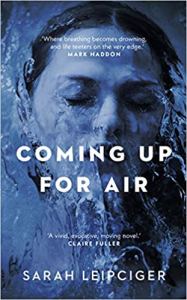
My second link is a book that also has ‘air’ in the title – Coming Up For Air, Sarah Leipciger’s second novel. It is a beautiful novel, a story of three people living in different countries and in different times. How their stories connect is gradually revealed as the novel progresses. As the author explains at the end of the novel it is a mix of fact and fiction and has its basis in truth. There is grief and loss and despair in each story, but above all, it is about love, and the desire to live. I think Sarah Leipciger is a great storyteller. It is an inspiring book, beautifully written, which emphasises the importance of the air we breathe and the desire to live. I read this book in June 2021.

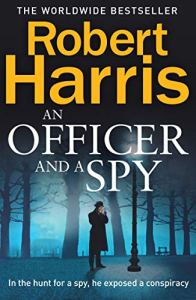
My third link is An Officer and a Spy, historical fiction by Robert Harris, another book I read in June 2021. It is a gripping book about the Dreyfus affair in 1890s France. Alfred Dreyfus, a young Jewish officer, was convicted of treason by passing secrets to the Germans in 1895 and sent to solitary confinement on Devil’s Island. It’s narrated by Colonel George Picquart, who became convinced that Dreyfus was innocent. Harris goes into meticulous detail in staying accurate to the actual events, but even so this is a gripping book and I was completely absorbed by it from start to finish.

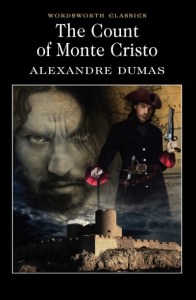
My fourth link is The Count of Monte Cristo, historical fiction by Alexandre Dumas, in which the main character is also wrongly imprisoned on an island. It begins in 1815 when Edmond Dantès, a sailor, having returned to Marseilles is wrongly accused of being a Bonapartist and imprisoned in the Chateau d’If on the Isle of Monte Cristo, for fourteen years. It’s a great story, action-packed, and full of high drama and emotion. Montecristo is a real island in the Tyrrhenian Sea, part of the Tuscan Archipelago, and administered by the municipality of Portoferraio in the province of Livorno.

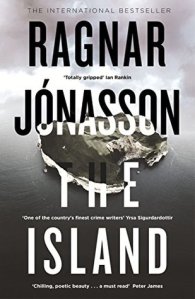
So My fifth link is also set on a real island, that of the isolated island of Elliðaey off the coast of Iceland in Ragnar Jónasson’s novel The Island, a murder mystery with elements of horror. Four friends visit the island ten years after the murder of a fifth friend, Katla, but only three of them return. One of them, Klara, fell to her death from a cliff – but did she jump or was she pushed? Detective Inspector Hulda Hermannsdóttir is sent to investigate. A suspect had been charged, but had committed suicide before the verdict was announced and the case had been closed. But are the two murders connected, even though they are ten years apart? This book is the second in Jónasson’s Hidden Iceland series.

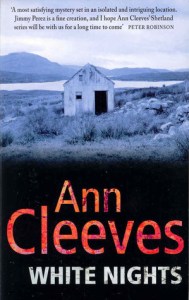
My final link is also the second book in a series, that is White Nights by Ann Cleeve, the second in her Shetland Quartet, featuring Detective Jimmy Perez. It’s set mainly in the village of Biddista, when Kenny Thomson finds a man’s body hanging in the hut where the boat owners of the village keep their lines and pots. At first it looks as though the man, his face covered by a clown’s mask, has committed suicide, but he’d been dead before he was strung up. As well as the mystery of who killed the man in the clown mask and why, there is also the disappearance 15 years earlier of Kenny’s older brother Lawrence. It was thought that he left the island after Bella had broken his heart. Kenny hadn’t heard from him since and at first thought the dead man could be him.

The books in my chain are mainly a mix of crime and historical fiction. And the chain has become a circle with the last book connecting to the starting book and the first book, all containing two brothers.

What is in your chain, I wonder?

Next month (December 7, 2024), we’ll start with a beach read – Sandwich by Catherine Newman.

Six Degrees of Separation from  Long Island by Colm Tóibín to Last Seen Wearing by Colin Dexter

It’s time again for Six Degrees of Separation, a monthly link-up hosted by Kate at Books Are My Favourite and Best. Each month a book is chosen as a starting point and linked to six other books to form a chain. A book doesn’t need to be connected to all the other books on the list, only to the one next to it in the chain.

This month starts  with ColmTóibín’s Long Island, the sequel to Brooklyn. I haven’t read this book, so this is the description on Amazon UK:

A man with an Irish accent knocks on Eilis Fiorello’s door on Long Island and in that moment everything changes. Eilis and Tony have built a secure, happy life here since leaving Brooklyn – perhaps a little stifled by the in-laws so close, but twenty years married and with two children looking towards a good future.

And yet this stranger will reveal something that will make Eilis question the life she has created. For the first time in years she suddenly feels very far from home and the revelation will see her turn towards Ireland once again. Back to her mother. Back to the town and the people she had chosen to leave behind. Did she make the wrong choice marrying Tony all those years ago? Is it too late now to take a different path?

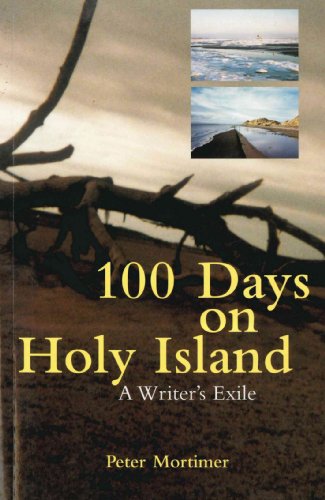
My first link is from the word ‘Island‘ in 100 Days on Holy Island by Peter Mortimer. The island is also known as Lindisfarne. This sense of being an outsider pervades the book. He always felt an ‘outsider’, not accepted by the locals. He wasn’t there as a tourist, nor had he gone to settle there, but he went with the intention of seeing how he coped with living there  for one hundred days and writing about it.

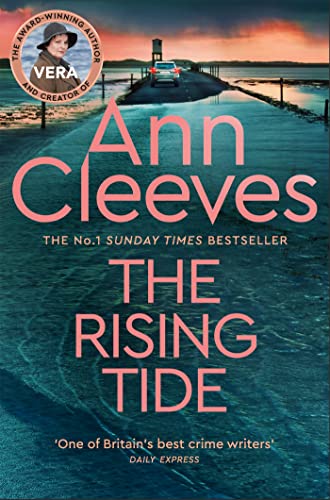
My second link is The Rising Tide by Ann Cleeves, the 10th Vera Stanhope mystery novel. It’s set on the Holy Island of Lindisfarne a tidal island just off the coast of Northumberland, only accessible across a causeway when the tide is out. DCI Vera Stanhope and her team investigate the death of Rick Kelsall who was discovered hanged from the rafters of his small bedroom on Holy Island. He is one of a group of friends who have met for a reunion each year on the island for the past fifty years

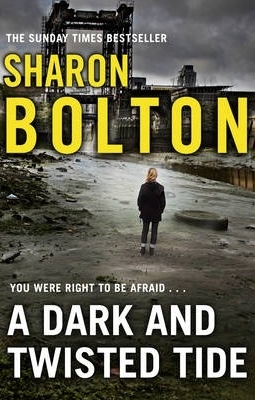
My third link is another book with the word ‘tide‘ in the title – A Dark and Twisted Tide by Sharon Bolton. This is such a terrifying novel, particularly if like me, you have a fear of drowning. Police Constable Lacey Flint thinks she’s safe. Living on the river, she’s never been happier. Until she finds a body floating on the surface, as she wild-swims in the Thames.

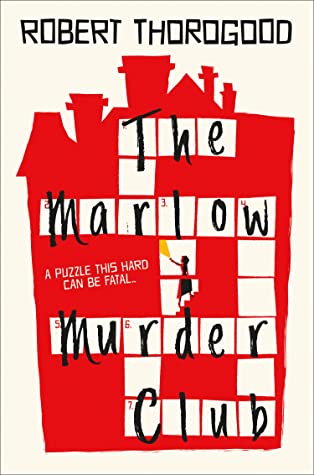
My fourth link is The Marlow Club Murder by Robert Thorogood a ‘cosy’ murder mystery. Seventy-seven year old Judith Potts is happy with her life, living in an Arts and Crafts mansion on the River Thames, although there are hints that there is something in her past she wants to forget. It’s the height of summer, in the grip of a heatwave, and Judith decides to take all her clothes off and go for swim in the Thames. She was enjoying herself when she hears a shout from her neighbour’s house on the opposite riverbank, followed by a gunshot. Later, when she goes to investigate, she finds him, dead in the river, with a bullet hole in the centre of his forehead. Judith is a crossword compiler, who writes cryptic clues.

So My fifth link is Puzzled: Secrets and Clues from a Life in Words by David Astle, a real life cryptic crossword compiler, a Melbourne-based writer of non-fiction, fiction and drama. He co-hosts Letters and Numbers (the Australian version of Countdown) as the dictionary expert, and his crosswords appear in Australian papers The Age and Sydney Morning Herald. Beginning with a Master Puzzle, he leads us through each of the clues, chapter by chapter, revealing the secrets of anagrams, double meanings, manipulations, spoonerisms and hybrid clues. More than a how-to manual and more than a memoir, Puzzled is a book for word junkies everywhere.

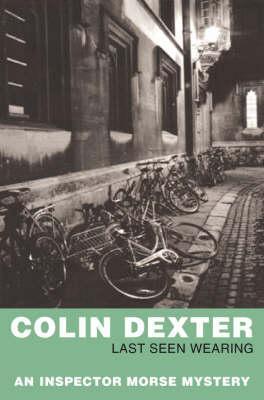
My final link is Last Seen Wearing by Colin Dexter the second book in the Inspector Morse books. Inspector Morse is perplexed when a letter of reassurance arrives from young Valerie Taylor, missing for more than two years and presumed dead, in a case that takes a bizarre turn when a mysterious body turns up. This book, like all of Dexter’s books, is a most complicated mystery, one of the ‘puzzle’ types. Dexter, himself, constructed crossword puzzles and made Morse a crossword aficionado. Morse is puzzled by this case, his brain seething in ceaseless turmoil, until he realised that if he shuffled the suspects and possibilities like the letters in an anagram the answer would come to him.

The books in my chain are a mix of crime fiction novels, and non fiction (Puzzled and 100 Days on Holy island). What is in your chain, I wonder?

Next month (November 2, 2024), we’ll start with Sally Rooney’s latest release, Intermezzo.

Six Degrees of Separation from  After Story by Larissa Behrendt to The Butterfly Room by Lucinda Riley

It’s time again for Six Degrees of Separation, a monthly link-up hosted by Kate at Books Are My Favourite and Best. Each month a book is chosen as a starting point and linked to six other books to form a chain. A book doesn’t need to be connected to all the other books on the list, only to the one next to it in the chain.

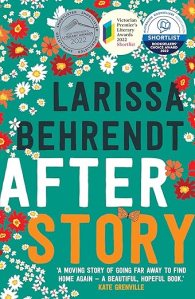
This month starts  After Story by Larissa Behrendt. This is the description on Amazon UK:

When Indigenous lawyer Jasmine decides to take her mother, Della, on a tour of England’s most revered literary sites, Jasmine hopes it will bring them closer together and help them reconcile the past. Twenty-five years earlier the disappearance of Jasmine’s older sister devastated their tight-knit community. This tragedy returns to haunt Jasmine and Della when another child mysteriously goes missing on Hampstead Heath. As Jasmine immerses herself in the world of her literary idols – including Jane Austen, the Brontë sisters and Virginia Woolf – Della is inspired to rediscover the wisdom of her own culture and storytelling. But sometimes the stories that are not told can become too great to bear. Ambitious and engrossing, After Story celebrates the extraordinary power of words and the quiet spaces between. We can be ready to listen, but are we ready to hear?

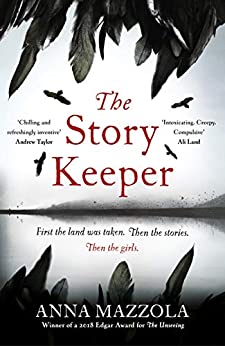
My first link is using the word Story, in the title, and it’s also a book about storytelling – The Story Keeper, set on the Isle of Skye in 1857, by Anna Mazzola. It stresses the importance of folk tales – stories that have been told to make sense of the world and reflect people’s strengths, flaws, hopes and fears. 

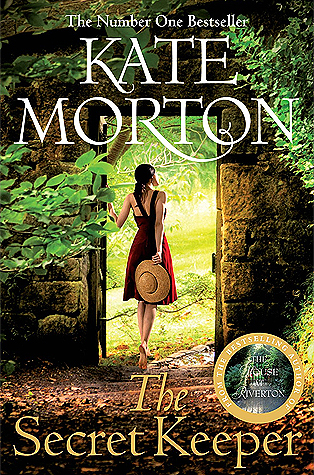
My second link is The Secret Keeper by Kate Morton, a story moving between time periods from 2011, back to the 1960s and also to the 1940s. It begins in 1961 in Suffolk when sixteen-year old Laurel is shocked when she sees her mother stabbing a stranger who had come to their farm. 

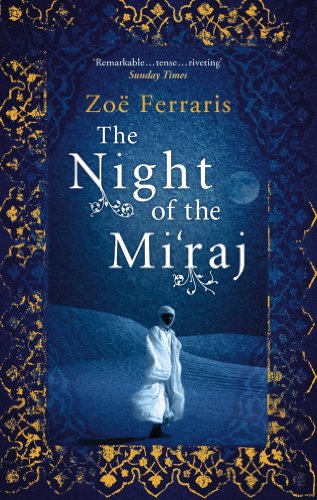
In my third link another sixteen year old girl, Nouf ash-Shrawi, disappears from her home in Jeddah, in The Night of the Mi’raj by Zoë Ferraris, just before her arranged marriage. Her body is eventually found in a desert wadi. It appears that her death was an accident and that she died by drowning in the wadi after a sudden storm.

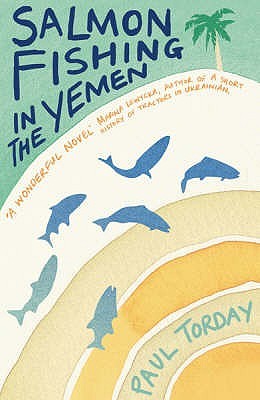
My fourth link is Salmon Fishing in the Yemen by Paul Torday about a project to introduce salmon fishing in the waters of the Wadi Aleyn in the heart of the mountains of Heraz, in Yemen.

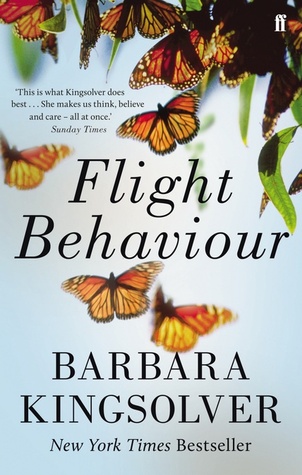
My fifth link takes the chain from the mountains of Heraz to the Appalachian Mountains in Flight Behaviour by Barbara Kingsolver in which a young mother discovers a beautiful and terrible marvel of nature: the monarch butterflies have not migrated south for the winter that year.

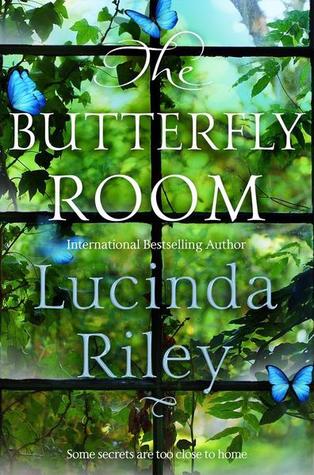
My final link is to The Butterfly Room by Lucinda Riley. The story revolves around Posy Montague and her family home, Admiral House in the Suffolk countryside. Her father encouraged her to draw plants and showed her how to catch butterflies. As a child Posy thought The Butterfly Room in the Folly in the grounds of Admiral House  looked like a fairy-tale castle with its turret made of yellow sandy brick. But the Folly was not the wonderful place she imagined – and there is a dark secret hidden behind its locked door.

The books in my chain are all fiction including historical fiction, mysteries and crime fiction. The chain travels through Australia, the UK, Saudi Arabia, Yemen and the USA,

Next month (October 5, 2024), we’ll start with Colm Tóibín’s Long Island.

Six Degrees of Separation from The Museum of Modern Love to:

It’s time again for Six Degrees of Separation, a monthly link-up hosted by Kate at Books Are My Favourite and Best. Each month a book is chosen as a starting point and linked to six other books to form a chain. A book doesn’t need to be connected to all the other books on the list, only to the one next to it in the chain.

This month starts with The Museum of Modern Love by by Heather Rose (Kate’s pick was inspired by Sue’s recent post about writers and artists). I haven’t read this, but I would like to. This is the description on Amazon UK:

Arky Levin, a film composer in New York, has promised his wife that he will not visit her in hospital, where she is suffering in the final stages of a terminal illness. She wants to spare him a burden that would curtail his creativity, but the promise is tearing him apart. One day he finds his way to MOMA and sees Mariana Abramovic in The Artist is Present. The performance continues for seventy-five days and, as it unfolds, so does Arky. As he watches and meets other people drawn to the exhibit, he slowly starts to understand what might be missing in his life and what he must do.

My first link is via a terminal illness to The Salt Path, Raynor Winn’s memoir about walking the South Coast Path when Moth her husband was diagnosed with a terminal illness. They were homeless, with no means of income except for £48 pounds a week. They had lost their home, business and livelihood, after investing in one of a friend’s companies that had failed. It is about the determination to live life, about overcoming pain and hardship, and the healing power of nature. It is about homelessness and the different reactions and attitudes of the people they met when they told them they were homeless.

My second link is How to Catch a Mole by Marc Hamer, part memoir, part a nature study of the British countryside, part poetry, and, of course, about moles. After leaving school Marc Hamer was homeless for a while. He has worked in art galleries, marketing, graphic design and taught creative writing in a prison before becoming a gardener. And before writing this book he had been a traditional molecatcher for years.

My third link is Hilary Mantel’s Giving Up the Ghost, a remarkable memoir. It came across to me as being clear, honest and very moving. She thought it was because of her that her parents were not happy and that without her they would have had a chance in life. It didn’t get any better when her father left home and she was left to live with two younger brothers, their mother and her mother’s lover. Home was a place where secrets were kept and opinions were not voiced. Her experience of ghosts at the age of 7 was horrifying as she felt as though something came inside her, ‘some formless, borderless evil’.

My fourth link is The Girl Who Died by Ragnar Jonasson, Icelandic noir, a mix of horror and psychological thriller, with a strong sense of place. Skálar is a close-knit community that doesn’t welcome newcomers, keeping its secrets well hidden. The only person who welcomes Una, to the village is Salka, the mother of Edda, one of the two girls Una is to teach. Her house is said to be haunted by the ghost of a young girl who had died fifty years earlier,

My fifth link is Asking for the Moon by Reginald Kill, a collection of four novellas. Two of them feature ghosts, Pascoe’s Ghost and Dalziel’s Ghost. But I think that the best one is the first story, The Last National Service Man which tells how Dalziel and Pascoe first met. Neither of them are impressed by the other. Dalziel thinks Pascoe is everything he dislikes – a graduate, well spoken, and a Southerner from south of Sheffield. Pascoe thinks Dalziel is an archetypical bruiser who got results by kicking down doors and beating out questions in Morse code on a suspect’s head.

My final link is to the final Inspector Morse novel, The Remorseful Day by Colin Dexter. The plot is detailed, complex and as usual, with Morse, a puzzle type murder mystery with plenty of challenging clues. Sergeant Lewis is left to investigate the murder of nurse Yvonne Harrison that had remained unsolved for a year. When Morse phones to say he is feeling unwell Lewis is most concerned – Morse seldom mentioned his health, what is wrong with him?

The main focus of the book is on Morse and how he copes with his illness and his drinking habits. It becomes obvious just how alone he is in the world and how devastating his situation is to Lewis.

The first three books in my chain are memoirs and the other three are crime fiction/psychological thriller novels. Beginning in America it travels to the UK, then to Iceland, before ending back in the UK.

Next month (September 7, 2024), we’ll start with  After Story by Larissa Behrendt.

Six Degrees of Separation from Kairos to The One I Was: July 2024

It’s time again for Six Degrees of Separation, a monthly link-up hosted by Kate at Books Are My Favourite and Best. Each month a book is chosen as a starting point and linked to six other books to form a chain. A book doesn’t need to be connected to all the other books on the list, only to the one next to it in the chain.

This month starts with Kairos by Jenny Erpenbeck. Kairos is the winner of the International Booker Prize 2024. An intimate and devastating story of the path of two lovers through the ruins of a relationship, set against the backdrop of a seismic period in European history. Translated from German by Michael Hofmann.

Berlin. 11 July 1986. They meet by chance on a bus. She is a young student, he is older and married. Theirs is an intense and sudden attraction, fuelled by a shared passion for music and art, and heightened by the secrecy they must maintain. But when she strays for a single night he cannot forgive her and a dangerous crack forms between them, opening up a space for cruelty, punishment and the exertion of power. And the world around them is changing too: as the GDR begins to crumble, so too do all the old certainties and the old loyalties, ushering in a new era whose great gains also involve profound loss.

My first link is another novel translated from German, Perfume:the story of a murderer by Patrick Süskind, translated from German by John E Woods. It is an extraordinary novel, a Gothic work in the vein of Edgar Allen Poe, or Oscar Wilde’s The Picture of Dorian Grey. It depicts the strange life of Jean-Baptiste Grenouille and is a book of smells. This is a horror story, one that made me not want to read it and yet also want to read it to the bitter end.

My second link is Tales of Mystery and Imagination by Edgar Allan Poe, which is a collection of Poe’s best stories containing all the terrifying and bewildering tales that characterise his work. As well as the Gothic horror of such famous stories as ‘The Pit and the Pendulum’, ‘The Fall of the House of Usher’, ‘The Premature Burial’ and ‘The Tell-Tale Heart’, all of Poe’s Auguste Dupin stories are included.

These are the first modern detective stories and include ‘The Murders in the Rue Morgue’, ‘The Mystery of Marie Roget’ and ‘The Purloined Letter’.

My third link stays on the theme of tales of horror with Tales of Terror by Robert Louis Stevenson, which are published in my copy of The Strange Case of Dr. Jekyll and Mr Hyde. It consists of two short stories, both written for the Christmas “crawler” tradition in 1884 and 1885. Christmas was a season traditionally associated with supernatural and creepy tales. The Body Snatcher is very much a traditional Christmas ghost story, beginning with four men gathered in an inn on a dark winter’s night telling tales round the fireside of grisly deeds. The other story is Olalla, a Gothic tale, set in an ancient Spanish castle surrounded by deep woodland, about a young man recovering from his war wounds and to “renew his blood”, who finds himself living with a strange family.

My fourth link moves away from horror stories to crime fiction, linked by the word ‘tales’ in the title. It is Telling Tales by Ann Cleeves, a book I have read but I didn’t write a review. It’s the 2nd of her Vera Stanhope series in which the residents of an East Yorkshire village are revisited with the nightmare of a murder that happened 10 years before. There was some doubt about the guilty verdict passed on Jeanie Long and now it would seem that the killer is still at large. Inspector Vera Stanhope builds up a picture of a community afraid of itself and of outsiders.

My fifth link is On Beulah Height, Reginald Hill’s 17th Dalziel and Pascoe novel. It’s also set in a Yorkshire village, Dendale. Three little girls had gone missing from the village one summer. Their bodies were never found, and the best suspect, a strange lad named Benny Lightfoot, was held for a time, then released. Fifteen years later another little girl, Lorraine, aged seven went out for a walk one morning with her dog before her parents got up and didn’t return home, reviving memories of the missing children from fifteen years earlier.

My final link is to a another book featuring a character called Benny – The One I Was by Eliza Graham – historical fiction split between the present and the past following the lives of Benny Gault and Rosamund Hunter. Benny first came to Fairfleet in 1939, having fled Nazi Germany on a Kindertransport train. As an adult he bought the house and now he is dying of cancer. Rosamund returns to Fairfleet, her childhood home, to nurse Benny. I was totally engrossed in both their life stories as the various strands of the story eventually combined.

Half of my chain consists of horror stories, not a genre I often read and the other half is made up of crime fiction novels, as usual.

Next month (August 3, 2024), we’ll start with  The Museum of Modern Love by Heather Rose (Kate’s pick was inspired by Sue’s recent post about writers and artists).