This is a monthly link-up hosted by Kate atBooks Are My Favourite and Best. On the first Saturday of every month, a book is chosen as a starting point and linked to six other books to form a chain. Readers and bloggers are invited to join in by creating their own ‘chain’ leading from the selected book.
Books can be linked in obvious ways – for example, books by the same authors, from the same era or genre, or books with similar themes or settings. Or, you may choose to link them in more personal ways: books you read on the same holiday, books given to you by a particular friend, books that remind you of a particular time in your life, or books you read for an online challenge.
A book doesn’t need to be connected to all the other books on the list, only to the ones next to them in the chain.
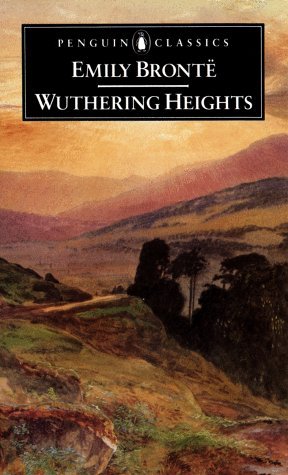
This month we are starting with Wuthering Heights by Emily Brontë. This was one of my favourite books when I was a teenager.
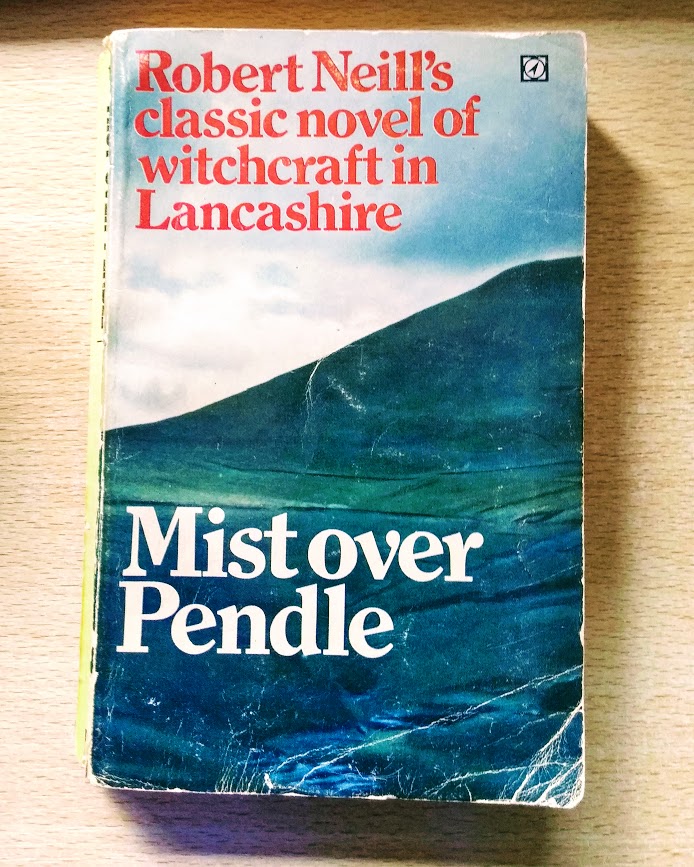
My first link was also a favourite book I read as a teenager, Mist Over Pendle by Robert Neill, historical fiction based on the real-life Lancashire witch trials.
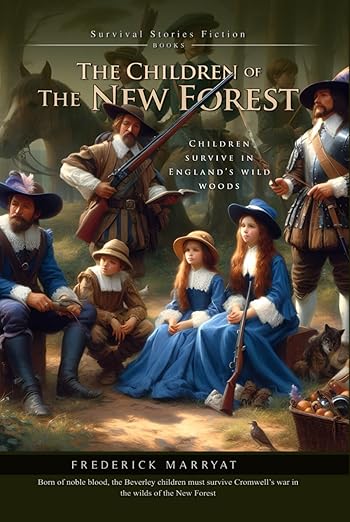
My second link is possibly the first historical fiction book I read, The Children of the New Forest by Captain Frederick Marryat, one of the first historical novels written specifically for children and published in 1847, set during the English Civil War.
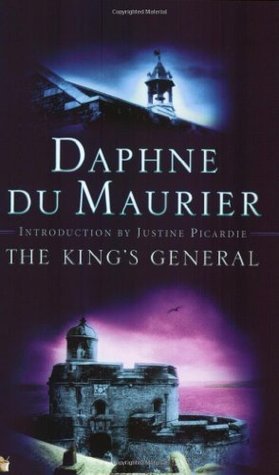
My third link is The King’s General by Daphne du Maurier, also historical fiction that I read as a teenager. It’s a blend of fact and fiction set in Cornwall also during the Civil War. It was first published in 1946.
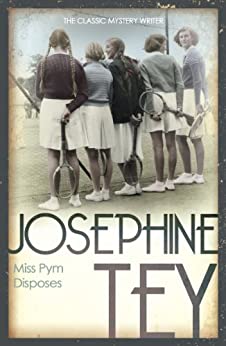
The fourth book in my chain was also first published in 1946. It’s Miss Pym Disposes by Josephine Tey, set in a Physical Training College where was a’nasty accident‘. But this is not a conventional crime fiction novel. It’s a psychological study focusing on the characters.
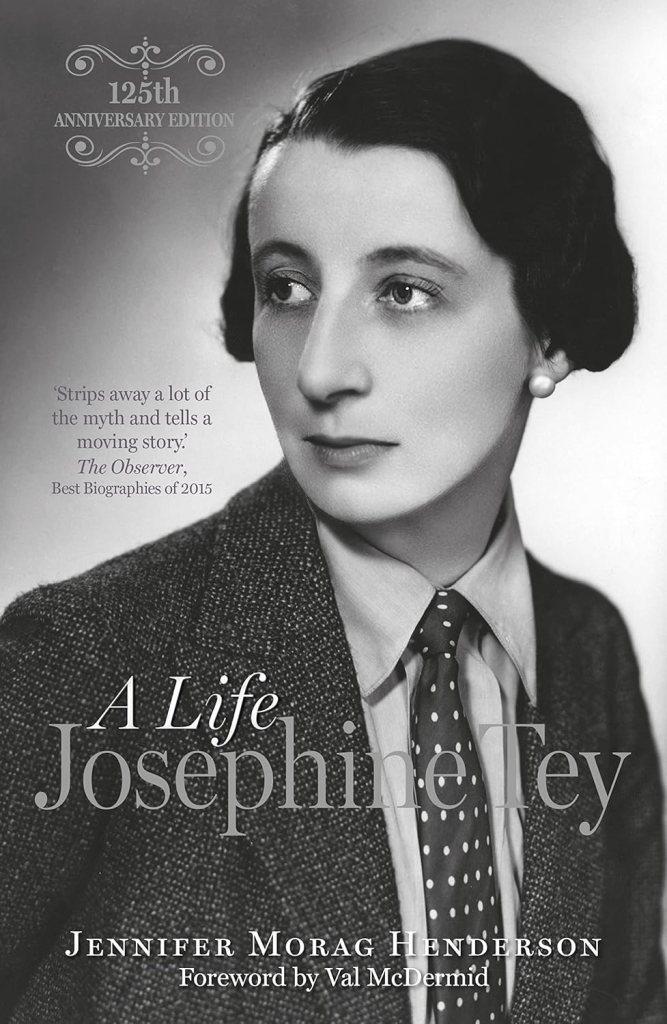
My fifth link is to a biography of Tey – JosephineTey: a Life by Jennifer Morag Henderson, a book I have yet to read. Josephine Tey was the pen-name of Elizabeth MacKintosh, who was a Golden Age Crime Fiction writer.
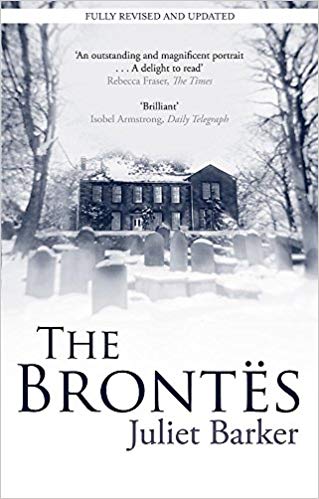
My final link is to another biography, The Brontës by Juliet Barker, based on research among all the Brontë manuscripts. This is a biography of the Brontë family – which I should have read a long time ago.
My chain is mainly made up of historical fiction and crime fiction and two biographies. The links are some of my favourite books I read as a child and then a teenager, books published in 1946 and biographies of two of the authors.
My final book links the starting book by Emily Brontë to the last, a biography about her and her family.
Next month (April 4, 2026) we’ll start with Virginia Evans’s epistolary novel, The Correspondent, a book I’ve never heard of before.
This is a monthly link-up hosted by Kate atBooks Are My Favourite and Best. On the first Saturday of every month, a book is chosen as a starting point and linked to six other books to form a chain. Readers and bloggers are invited to join in by creating their own ‘chain’ leading from the selected book.
Books can be linked in obvious ways – for example, books by the same authors, from the same era or genre, or books with similar themes or settings. Or, you may choose to link them in more personal ways: books you read on the same holiday, books given to you by a particular friend, books that remind you of a particular time in your life, or books you read for an online challenge.
A book doesn’t need to be connected to all the other books on the list, only to the ones next to them in the chain.
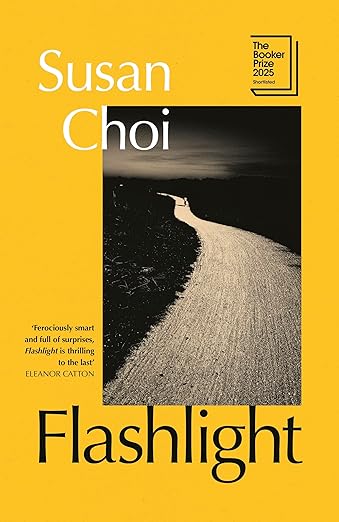
This month we are starting with Flashlight by Susan Choi, a book that topped lots of 2025 ‘best of’ lists and it was shortlisted for the Booker Prize 2025. I haven’t read, but going off the description from Amazon I think I’d like to.
One evening, ten-year-old Louisa and her father, Serk, take a walk out on the breakwater. They are spending the summer in a coastal Japanese town. Hours later, Louisa wakes on the beach, soaked to the skin. Her father is missing: presumably drowned.
This sudden event shatters their small family. As Louisa and her American mother return to the US, Serk’s disappearance reverberates across time and space, and the mystery of what really happened that night slowly unravels.
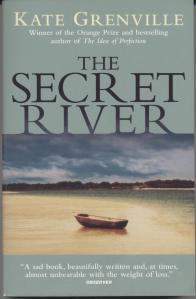
For my first link I’ve chosen another Booker Prize nomination, The Secret River by Kate Grenville shortlisted in 2006. It’s historical fiction, a fictional account of the conflict that accompanied the settlement of New South Wales, Australia by exiled British convicts in the 19th century.
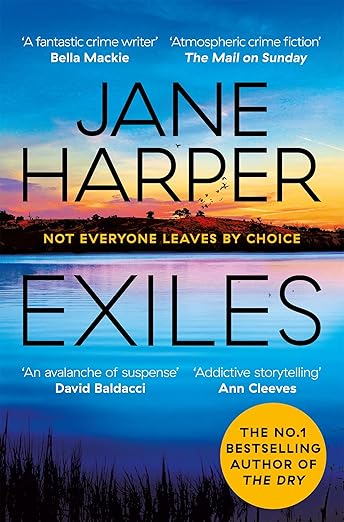
My second link is another book set in Australia, Exiles by Jane Harper, Investigator Aaron Falk finds himself drawn into a complex web of tightly held secrets in South Australia’s wine country. It’s the third and final Aaron Falk Mystery book.
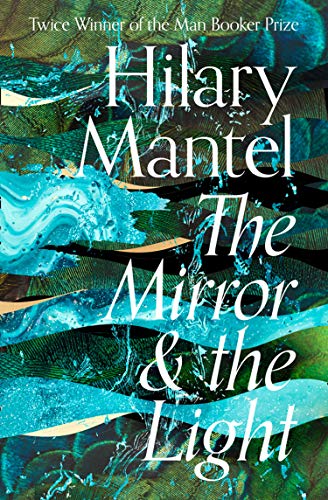
My third linkThe Mirror and the Light by Hilary Mantel is the third and final book in The Wolf Hall Trilogy. The trilogy as a whole traces the rise and fall of Thomas Cromwell in the court of Henry VIII. The books bring 16th century England to life in vivid colour. I became very fond of Cromwell, who rose from humble beginnings to become Earl of Essex and Lord Great Chamberlain in 1539. This third book is about his final years as his enemies plotted against him. He was executed on 28th July 1540.
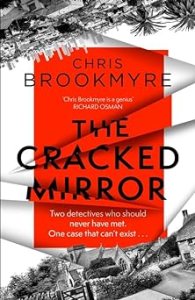
The next book in my chain is The Cracked Mirror by Chris Brookmyre, a murder mystery, a cross-genre hybrid of Agatha Christie and Michael Connelly. It’s a mash-up of British/American crime fiction/thriller, with plenty of twists and turns, complications and rollercoaster fast action chases, most of it unbelievable. It’s brutal and violent, with quite a bit of dark humour thrown in. It’s also tense and full of suspense.
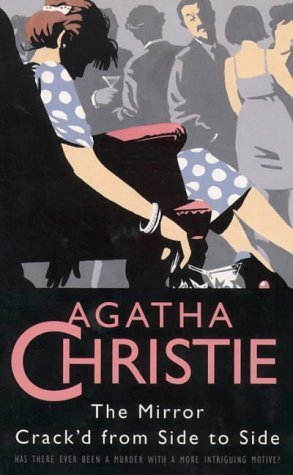
My fifth link is to another ‘cracked mirror‘ book. It’s The Mirror Crack’d from Side to Side by Agatha Christie, set in the village of St Mary Mead. Miss Marple was feeling rather down and a bit weak after an attack of bronchitis. Her doctor prescribes ” a nice juicy murder” for her to unravel and not long after the ideal opportunity arose with the death of Heather Badcock. Heather had gone to a fete at Gossington Hall held by her idol, the glamorous movie star Marina Gregg.
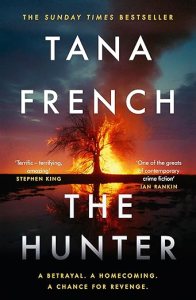
My final link is also set in a village, but in Ardnakelty, Ireland. It’s The Hunter by Tana French, the second Cal Hooper mystery. Two men arrive with a money-making scheme to fleece the villagers, claiming there is gold on their land. One of the men is Trey’s father, Johnny who has been absent from the village for four years. But Trey is suspicious of her father’s true motives and doesn’t trust him, or the rich Londoner, Cillian Rushborough, Johnny met in London.
I loved Tana French’s beautiful descriptions of the Irish rural landscape. It’s the sort of book I find so easy to read and lose myself in, able to visualise the landscape and feel as if I’m actually there with the characters, watching what is happening.
My chain is mainly made up of historical and crime fiction this month travelling from Japan through America and England and ending in Ireland. The links are Booker Prize nominations, books set in Australia, the third books in a trilogy, books with mirrors in the title and books set in villages.
I think I can say that the final book links back to the starting book as both concern books about a father and daughter.
Next month (March 7, 2026) we’ll start with a classic (and in celebration of the forthcoming film) – Wuthering Heights by Emily Brontë
This is a monthly link-up hosted by Kate atBooks Are My Favourite and Best. On the first Saturday of every month, a book is chosen as a starting point and linked to six other books to form a chain. Readers and bloggers are invited to join in by creating their own ‘chain’ leading from the selected book.
Books can be linked in obvious ways – for example, books by the same authors, from the same era or genre, or books with similar themes or settings. Or, you may choose to link them in more personal ways: books you read on the same holiday, books given to you by a particular friend, books that remind you of a particular time in your life, or books you read for an online challenge.
A book doesn’t need to be connected to all the other books on the list, only to the ones next to them in the chain.
It’s a nonfiction book telling the incredible story of the wreck of the whaleship Essex in 1820 in the South Pacific. It was repeatedly rammed and sunk by an eighty-ton bull sperm whale. I haven’t read this book yet; it’s one of my TBRs.
My chain begins anothe book with the word heart in the title. It is Heart of Darkness, a novella by Joseph Conrad, originally a three-part series in Blackwood’s Magazine in 1899. Although a gripping story, this was not an enjoyable book for me. But then, I suppose, it is not meant to be. Conrad was writing about the inhumanity of the way the native population in Africa was treated; the greed and cruelty of the Europeans to gain property, business, trade and profit, draining Africa of its natural resources. It paints an appalling picture.
I think it shows the darkest depths of human behaviour. In doing so Conrad highlights the prejudices and the cruelty and shows how it was at that time – the graphic reality of what happened. It is a powerful criticism of colonialism at its worst, and full of imagery, casting a spotlight on the barbarity of the so-called civilised Westerners. These few words, uttered by Kurtz concisely summarise the whole story: ‘The horror! The horror!’
The second book in my chain is also a book set in Africa – Thirteen Hours by Deon Meyer (translated from Afrikaans by K L Seegers), crime fiction set in South Africa, DI Benny Griessel has just 13 hours to crack open a conspiracy which threatens the whole country. Rachel, a young American girl is running for her life up the steep slope of Lion’s Head in Capetown. The body of another American girl is found outside the Lutheran church in Long Street. Her throat slit had been slit. An hour or so later Alexandra Barnard, a former singing star and an alcoholic, wakes from a drunken stupor to find the dead body of her husband, a record producer, lying on the floor opposite her and his pistol lying next to her.
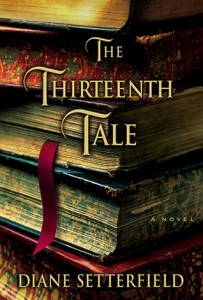
The next book in my chain is The Thirteenth Tale by Diana Setterfield. It took me some time to get into this book and I found myself being both reluctant to read it and yet unable to stop. It was only when I was reading the second part of the book that I found myself actually enjoying it. I usually give up on a book before then. Part of the problem I have with this book is that I couldn’t really like the characters, even Margaret, the narrator irritated me somewhat, even though she loves books. Another problem is the ending, which I found to be contrived.
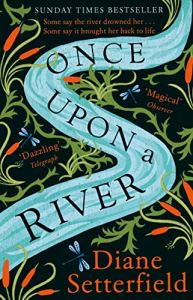
My fourth book is another book by Diana Setterfield that I enjoyed much more than The Thirteenth Tale is Once Upon a River. It is a beautifully and lyrically told story, and cleverly plotted so that I was not completely sure at times what it was that I was reading. It’s historical fiction with a touch of magic that completely beguiled me with its mysteries and fascinating characters. It’s a mystery beginning in the Swan Inn at Radcot, an ancient inn, well-known for its storytelling, on the banks of the Thames. A badly injured stranger enters carrying the drowned corpse of a little girl. It’s mystifying as hours later the dead child, miraculously it seems, takes a breath, and returns to life. The mystery is enhanced by folklore, by science that appears to be magic, and by romance and superstition.
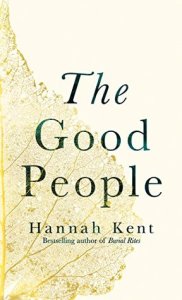
My fifth book is The Good People by Hannah Kent, another beautifully written book, and an intensely moving tale of Irish rural life in the early 19th century. I grew up reading fairy stories but The Good People gives a frighteningly realistic view of what belief in fairies meant to people dealing with sickness, disease, evil and all the things that go wrong in our lives. It’s set in 1825/6, a long gone world of people living in an isolated community, a place where superstition and a belief in fairies held sway. People talk of others being ‘fairy-swept’ or ‘away with the fairies’, and kept with the music and lights, dancing under the fairy hill. This is a beautifully written book. It is not a fairy story, but one in which their existence is terrifyingly real to the people of the valley.
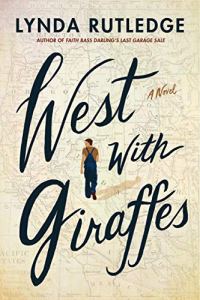
The Good People is based on true events. And my final link is also based on a true event. West with Giraffes by Lynda Rutledge is historical fiction based on fact about two giraffes who miraculously survived a hurricane while crossing the Atlantic. They then travelled across America from the east coast to the San Diego Zoo, during the Great Hurricane of 1938, the most destructive storm to strike New England in recorded history until 2012’s Hurricane Sandy. It conjures up a vivid picture of America in 1938 during the Great Depression, the Dust Bowl, hobo cards, nomadic workers taking jobs where they could, desperate Hooverville dwellers in shanty towns, sundown town racism, and circus animal cruelty. But of course, it is the giraffes that are the two main characters.
My chain is mainly made up of historical fiction this month travelling from the South Pacific through Africa, England, Ireland and America and from the nineteenth century to the twentieth.
Next month (February 3, 2026) we’ll start with a book that topped lots of 2025 ‘best of’ lists – Flashlight by Susan Choi.
This is a monthly link-up hosted by Kate atBooks Are My Favourite and Best. On the first Saturday of every month, a book is chosen as a starting point and linked to six other books to form a chain. Readers and bloggers are invited to join in by creating their own ‘chain’ leading from the selected book.
Books can be linked in obvious ways – for example, books by the same authors, from the same era or genre, or books with similar themes or settings. Or, you may choose to link them in more personal ways: books you read on the same holiday, books given to you by a particular friend, books that remind you of a particular time in your life, or books you read for an online challenge.
A book doesn’t need to be connected to all the other books on the list, only to the ones next to them in the chain.
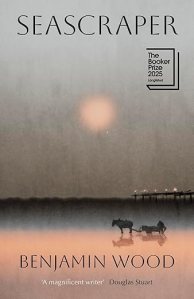
This month we are starting with a novella – Seascraper by Benjamin Wood, a book I haven’t read.
Going off the book cover of a gloomy seaside scene, with the sun barely visible through the grey mist this I think this cannot be a cheerful seaside story and the description on Amazon adds to that impression. It describes it as ‘the story of a young man hemmed in by his circumstances, striving to achieve fulfilment far beyond the world he knows.’
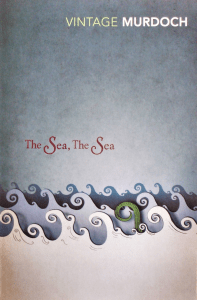
Usually I try to vary my links, but this month I decided to make this chain with all my links having the word sea in the title, beginning with The Sea, The Sea by Iris Murdoch, another book that does not have a happy picture of life by the sea. In it Charles Appleby an ageing actor, moves to a house by the sea and slowly ruins his life and of those around him. The sea is itself a character, sometimes calm and peaceful and at other times raging and storm swept, full of monsters and high drama. I read it many years ago when I had time off work with the flu and I remember being drawn feverishly into the narrative.
The next book in my chain is also a book about how dangerous the sea can be. It’s The Sea Change by Joanna Rossiter as a tsunami sweeps through Kanyakumari, in Southern India separating Alice from her new husband, James and in danger of drowning, she desperately searches for him. The story is a dual time novel told alternately by Alice and Violet, her mother. After the dramatic opening scenes it then moves immediately to Imber in 1971 as Violet returns to Imber and recalls how they were forced to leave, clinging to Imber ‘as if it were a lost soul.‘
The power of the sea is evident in The Old Man and the Sea by Ernest Hemingway. The sea in this book is deep and treacherous.This is the story of an old Cuban fisherman and his supreme ordeal: a relentless, agonizing battle with a giant marlin far out in the Gulf Stream.
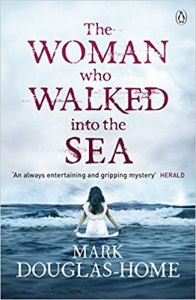
The next book in my chain is The Sea Detective by Mark Douglas-Home. Cal McGill is an oceanographer, who uses his knowledge of the tides, wind speeds and data on ocean currents to track human bodies and sea-borne objects. Megan Bates, had last been seen walking into the sea. Her body had never been found and it had been assumed after her bag and hat had drifted ashore that she had drowned herself.
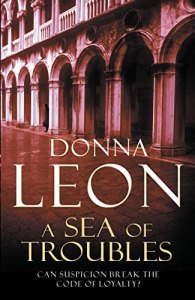
A Sea of Troubles by Donna Leon is about the deaths of two fishermen off the island of Pellestrina, south of the Lido on the Venetian lagoon, when their boat suddenly exploded. Fishing is the primary source of income on Pellestrina and alongside the inner side of the thin peninsular are scores of vongolari, the clam fishing boats. Leon also highlights the pollution and the overfishing of clams that is destroying the clam beds.
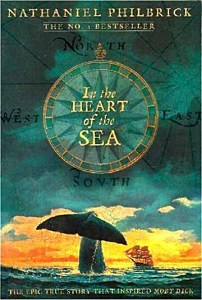
I’m completing my chain with In the Heart of the Sea The Epic True Story That Inspired Moby Dick by Nathaniel Philbrick, a nonfiction book, the incredible story of the wreck of the whaleship Essex in 1820 in the South Pacific. It was repeatedly rammed and sunk by an eighty-ton bull sperm whale. I haven’t read this book yet; it’s one of my TBRs. It’s full of detail about whales and the Nantucket whalers. It’s described as ‘lmpeccably researched and beautifully told, the book delivers the ultimate portrait of man against nature, drawing on a remarkable range of archival and modern sources, including a long-lost account by the ship’s cabin boy.’
Next month (January 3, 2026) is a wildcard to begin the year. Start with the book you finished this month’s chain with (or, if you didn’t participate in December, begin with the last book you read).
This is a monthly link-up hosted by Kate atBooks Are My Favourite and Best. On the first Saturday of every month, a book is chosen as a starting point and linked to six other books to form a chain. Readers and bloggers are invited to join in by creating their own ‘chain’ leading from the selected book.
Books can be linked in obvious ways – for example, books by the same authors, from the same era or genre, or books with similar themes or settings. Or, you may choose to link them in more personal ways: books you read on the same holiday, books given to you by a particular friend, books that remind you of a particular time in your life, or books you read for an online challenge.
A book doesn’t need to be connected to all the other books on the list, only to the ones next to them in the chain.
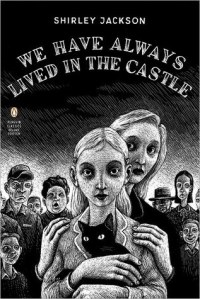
This month we are starting with We Have Always Lived in the Castle by Shirley Jackson is a fantastic book; a weirdly wonderful book about sisters, Merricat and Constance. They live in a grand house, away from the village, behind locked gates, feared and hated by the villagers. Merricat is an obsessive-compulsive, both she and Constance have rituals that they have to perform in an attempt to control their fears. Merricat is a most unreliable narrator.
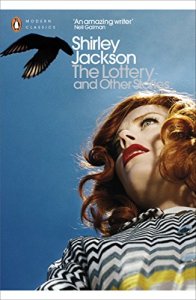
I’m starting my chain with The Lottery is a short story also written by Shirley Jackson. It was first published on June 25, 1948, in The New Yorker, (the link takes you to the story.) The lottery is an annual rite, in which a member of a small farming village is selected by chance. This is a creepy story of casual cruelty, which I first read several years ago. The shocking consequence of being selected in the lottery is revealed only at the end.
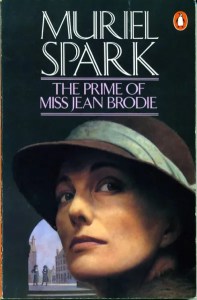
The Prime of Miss Jean Brodie by Muriel Spark, was first published in The New Yorker magazine on 14th October 1961. It is perhaps Muriel Spark’s most famous novel about the ‘Brodie set’. But which one of them causes her downfall and her loss of pride and self-absorption? What really impresses me about this book is the writing, so compact, so perceptive and so in control of the shifts in time backwards and forwards. It’s a joy to read.
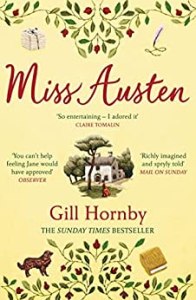
Another book that was a joy to read is Miss Austen by Gill Hornby. This is the untold story of the most important person in Jane’s life – her sister Cassandra. After Jane’s death, Cassandra lived alone and unwed, spending her days visiting friends and relations and quietly, purposefully working to preserve her sister’s reputation. Cassandra is convinced that her own and Jane’s letters to Eliza Fowle, the mother of Cassandra’s long-dead fiancé, are still somewhere in the vicarage. Eventually she finds the letters and confronts the secrets they hold, secrets not only about Jane but about Cassandra herself. Will Cassandra reveal the most private details of Jane’s life to the world, or commit her sister’s legacy to the flames?
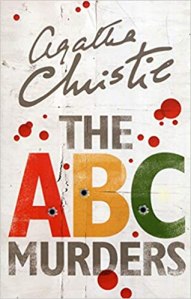
My next link is also a book in which letters play a key part. It’s The ABC Murders by Agatha Christie, a Golden Ageof DetectiveFiction novel first published in 1936. A series of murders are advertised in advance in letters to Poirot, and signed by an anonymous ‘ABC’. An ABC Railway guide is left next to each of the bodies. So the first murder is in Andover, the victim a Mrs Alice Ascher; the second in Bexhill, where Betty Barnard was murdered; and then Sir Carmichael Clarke in Churston is found dead. The police are completely puzzled and Poirot gets the victims’ relatives together to see what links if any can be found. Why did ABC commit the murders and why did he select Poirot as his adversary?
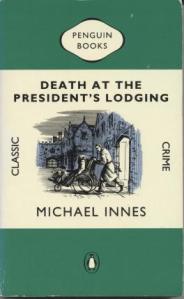
Another Golden Age murder mystery published in 1936 is Death at the President’s Lodging by Michael Innes. This is essentially a ‘locked room’ mystery. Dr Umpleby, the unpopular president of St Anthony’s College (a fictional college similar to an Oxford college) is found in his study, shot through the head. His head was swathed in a black academic gown, a human skull beside his body and surrounding it, little piles of human bones. Inspector Appleby from Scotland Yard is in charge of the investigation, helped by Inspector Dodd from the local police force.
Innes’s writing is intellectual, detailed, formal and scattered with frequent literary allusions and quotations. The plot is complex and in the nature of a puzzle. There are plenty of characters, the suspects being the dons of the college.
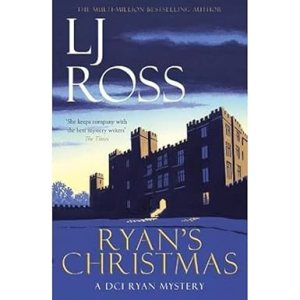
And my final link is Ryan’s Christmas by L J Ross, another ‘locked room mystery’. DCI Ryan, and DS Phillips and their wives are stranded in Chillingham Castle when a snowstorm forces their car off the main road and into the remote heart of Northumberland. Cut off from the outside world by the snow, with no transport, mobile signals or phone lines they join the guests who had booked a ‘Candlelit Ghost Hunt’. Then Carole Black, the castle’s housekeeper is found dead lying in the snow, stabbed through the neck. There’s only one set of footpaths in the snow, and those are Carole’s, so who committed the murder?
My chain includes books by the same author, books first published in the same magazine, letters, Golden Age murder mysteries, and ‘locked room’ mysteries.
‘Next month (December 6, 2025), we’ll start with a novella that you may read as part of this year’s Novellas in November – Seascraper by Benjamin Wood.
It’s time again for Six Degrees of Separation, a monthly link-up hosted by Kate atBooks Are My Favourite and Best. Each month a book is chosen as a starting point and linked to six other books to form a chain. A book doesn’t need to be connected to all the other books on the list, only to the one next to it in the chain.
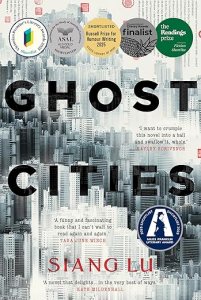
Ghost Cities – inspired by the vacant, uninhabited megacities of China – follows multiple narratives, including one in which a young man named Xiang is fired from his job as a translator at Sydney’s Chinese Consulate after it is discovered he doesn’t speak a word of Chinese and has beenrelying entirely on Google Translate for his work.
How is his relocation to one such ghost city connected to a parallel odyssey in which an ancient Emperor creates a thousand doubles of Himself? Or where a horny mountain gains sentience? Where a chess-playing automaton hides a deadly secret? Or a tale in which every book in the known Empire is destroyed – then re-created, page by page and book by book, all in the name of love and art?
Allegorical and imaginative, Ghost Cities will appeal to readers of Haruki Murakami and Italo Calvino.
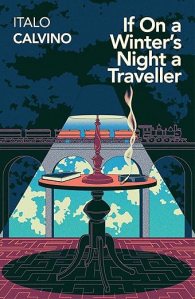
My First link is a book by Italo Calvino – If on a Winter’s Night a Traveller, which I borrowed from the library a few years ago. It’s composed of stories of menace, spies, mystery, premonition—with explorations of how and why we choose to read, make meanings, and get our bearings or fail to. It has an excellent beginning but as I read on all the stops and starts became disjointed. I renewed it a few times but eventually I decided to abandon it and returned it unfinished.
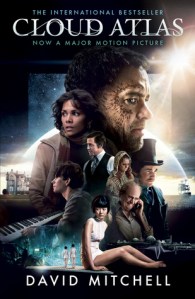
Cloud Atlas by David Mitchell is my second link because it is a book I abandoned three times before trying it again, after watching the movie, which is fantastic – a kaleidoscope of visual delights, the scenery, the settings and the costumes are blazes of colour and drama. Cloud Atlas covers a time period from the 19th century to a post apocalyptic future. It is an amazing creation (‘amazing‘ is a very overused word, but in this instance very apt), at times confusing and at times brilliant.
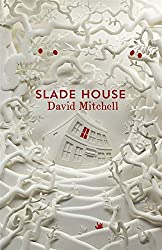
My Third link is also by David Mitchell. It’s Slade House, a book I loved as soon as I started reading it. It’s a mixture of a ghost story, science fiction and horror. Something nasty happens every nine years at the end of October at Slade House. I read it as a fantasy, something that I couldn’t believe could ever happen (or at least, I hope not). People are invited or are drawn into Slade House and find themselves in a strange and dangerous situation, and there is no way out.
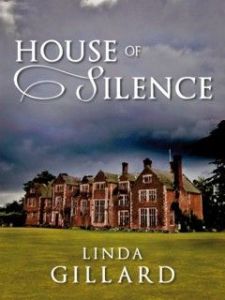
Which brings me to my fourth linkHouse of Silence by Linda Gillard, a novel about families and their secrets – in particular one family, the Donovans. When Gwen Rowland meets Alfie Donovan she becomes interested in his family and persuades him to let her spend Christmas with them at the family home, Creake Hall, an old Elizabethan manor house. It raises issues of memory and identity, mental illness, loss and love.
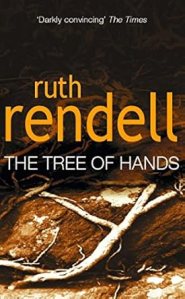
Mental illness is my Fifth link in The Tree of Hands by Ruth Rendell, one of her best standalone books. When Benet was about fourteen, she and Mopsa, her psychologically disturbed mother had been alone in a train carriage, when Mopsa, had tried to stab her with a carving knife. It’s a psychological thriller, full of suspense, with several twists and turns that made me unsure how it would end. I was delighted by the final twist!
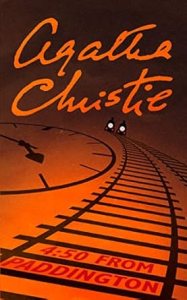
Agatha Christie wrote several books featuring trains. My sixth link is one of those books, 4.50 from Paddington. This begins when Mrs McGillicuddy was going home from Christmas shopping in London when she saw from the window of her train a murder being committed in a train travelling on a parallel line. But nobody believes her because there is no trace of a body and no one is reported missing. Nobody, that is except for her friend Miss Marple. But she is getting older and more feeble and she hasn’t got the physical strength to get about and do things as she would like. So, she enlists the help of Lucy Eyelesbarrow.
My chain is made up of books I abandoned books and books I loved. It’s taken me from a book about megacities in China to a murder mystery on a London train.
What is in your chain?
Next month (October 4, 2025), we’ll start with Dominic Amerena’s novel about authors and publishing, I Want Everything.