Six Degrees of Separation: from Phosphorescence by Julia Baird to The Burry Man’s Day

It’s time again for Six Degrees of Separation, a monthly link-up hosted by Kate at Books Are My Favourite and Best. Each month a book is chosen as a starting point and linked to six other books to form a chain. A book doesn’t need to be connected to all the other books on the list, only to the one next to it in the chain.

This month the Six Degrees chain begins with Phosphorescence by Julia Baird, who is an Australian author. The book won’t be published here in the UK until 27 May. Julia Baird reflects on her encounters with phosphorescence, a luminescent phenomenon found in the natural world, and how she was able to cultivate her own ‘inner light’ in the face of suffering and illness. I think I’d like to read it.

I didn’t know where to start my chain, so I used my Search Box to see if I had used the word phosphorescence previously on my blog – and I had, just once. It’s in a passage I quoted from D H Lawrence’s Sons and Lovers, when he described Paul Morel’s grief and sadness after his mother’s death, and yet also his hope for the future:

Turning sharply, he walked towards the city’s gold phosphorescence. His fists were shut, his mouth set fast. He would not take that direction, to the darkness, to follow her. He walked towards the faintly humming, glowing town, quickly.

I read Sons and Lovers in 2007 and another book I read then is The Moon and Sixpence by W Somerset Maugham, a novel about Charles Strickland, who was a stockbroker; a boring, man. He left his wife and family after seventeen years of marriage and fled to Paris, because he wanted to paint. It is roughly based on the life of Gauguin, which reminded me I have Gauguin By Himself, a massive book that contains copies of his paintings, drawings, ceramic, sculpture and prints together with his written words.

Gaugin’s relationship with Vincent Van Gogh described in his book leads me on to Van Gogh and A S Byatt’s book, Still Life in which Alexander Wedderburn struggles to make a play about Van Gogh. The cover painting on my copy is Van Gogh’s Still Life with Coffeepot.

Another book called Still Life is Val McDermid’s latest Karen Pirie mystery. It combines a cold case investigation into the identity of a skeleton found in a campervan and a current case into the discovery of a body in the Firth of Forth.

The Burry Man’s Day is the second in Catriona McPherson’s Dandy Gilver series. It is set in South Queensferry, on the south shore of the Firth of Forth, where there is an annual Ferry Fair and the Burry Man Parade. A local man is covered from head to ankles in burrs and walks round the town, taking a nip of whisky at every stop. When Dandy visits the Parade, the Burry Man drops down dead at the end of the Parade, apparently poisoned. The list of suspects includes all those who gave him a nip of whisky.

My chain begins with awe and wonder and ends in murder, linking together sons and lovers, artists, and detectives.

Next month (April 3, 2021), we’ll start with the 2020 Booker Prize winner, Shuggie Bain by Douglas Stuart – a book I haven’t read.

Six Degrees of Separation from Redhead by the Side of the Road to Hercule Poirot’s Christmas

It’s time again for Six Degrees of Separation, a monthly link-up hosted by Kate at Books Are My Favourite and Best. Each month a book is chosen as a starting point and linked to six other books to form a chain. A book doesn’t need to be connected to all the other books on the list, only to the one next to it in the chain.

This month the chain begins with Redhead by the Side of the Road by Anne Tyler.

I haven’t read this book, although reading the description it does appeal to me. It’s about Micah Mortimer, who lives in a basement flat in Baltimore, and runs his own tech business. His steady life is upset when his partner Cassia tells him she’s facing eviction because of a cat and a teenager arrives at his door claiming to be his son. And his eyesight isn’t too good.

The first link is to another book by Anne Tyler – Digging to America, also set in Baltimore. It’s about two contrasting families who adopted two Korean babies. They met at Baltimore airport, waiting for the babies to arrive.

The second link is to The Frank Business by Olivia Glazebrook. The link is an airport – in this book Frank dropped down dead at London Heathrow airport, having travelled from his home in France. He died of a congenital heart defect.

The third link is to Deaf Sentence by David Lodge in which a character has a different type of defect – Desmond Bates has defective hearing. He is having to come to terms with his increasing deafness and also with his retirement from the academic world. He still hankers after his position as a Professor of Linguistics. 

In The Silent World of Nicholas Quinn by Colin Dexter, Quinn was deaf. He was a member of the Oxford Examinations Syndicate and was found dead in his north Oxford home. Chief Inspector Morse tracks down the killer through the insular and bitchy world of the Oxford Colleges.

The Case of the Gilded Fly by Edmund Crispin, a locked room mystery is also set in Oxford with Gervase Fen, an Oxford Professor of English Language and Literature at the fictional St Christopher College. First published in 1944 this is one of the Golden Age mysteries.

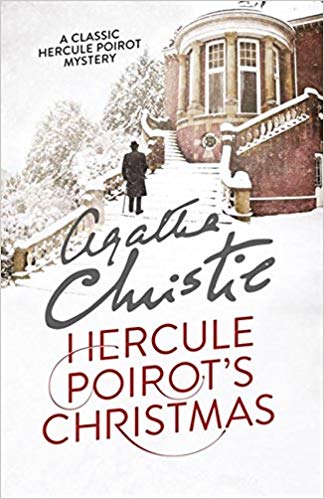
My final link is to Hercule Poirot’s Christmas by Agatha Christie, another locked room mystery. Poirot investigates the death of Simeon Lee, the head of the Lee family. None of his family like him, in fact most of them hate him and there are plenty of suspects for his murder. He is found dead with his throat cut in a locked room – locked from the inside.

Well, I ended up with crime fiction again! Where will your chain end up?

Six Degrees of Separation: From Hamnet to Macbeth

It’s time again for Six Degrees of Separation, a monthly link-up hosted by Kate at Books Are My Favourite and Best. Each month a book is chosen as a starting point and linked to six other books to form a chain. A book doesn’t need to be connected to all the other books on the list, only to the one next to it in the chain.

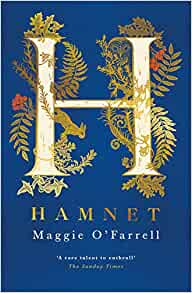
This month’s chain begins with Hamnet by Maggie O’Farrell, the winner of the 2020 Women’s Prize for Fiction. Set mainly in Stratford-on-Avon, it is historical fiction inspired by Hamnet, Shakespeare’s son. The central theme, though is the grief – the overwhelming and all consuming grief, that the whole family and in particular, Agnes, Hamnet’s mother suffered when he died at the age of eleven in 1596. It’s not my favourite book by O’Farrell but I did find it fascinating.

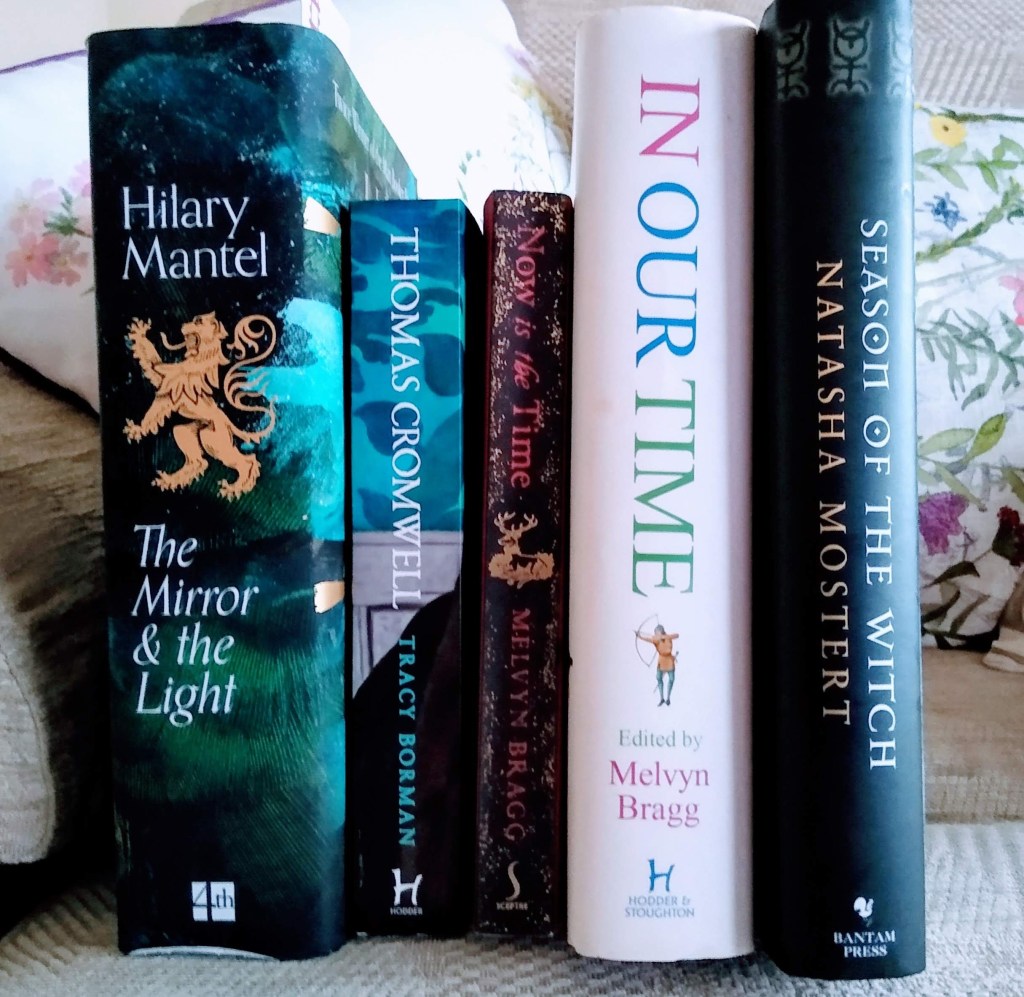
The first five books that form the links in my chain are shown in the photo below:

The first link:

Hilary Mantel’s third book in her Wolf Hall trilogy, The Mirror and the Light, which was also on the shortlist for the Women’s Prize for Fiction in 2020. I was very keen to read this book when it was first published in February, and began reading it, but for a variety of reasons I still haven’t finished it. It’s the final book in the Wolf Hall trilogy, tracing Thomas Cromwell‘s final years as he fell from power.

The second link:

A biography of Thomas Cromwell and a another book I haven’t read – Thomas Cromwell: the Untold Story of Henry VIII’s Faithful Servant by Tracy Borman. I’d like to read this and The Mirror and the Light this year, but that could easily mean another year could slip by leaving them still on the TBR piles.

The third link:

Thinking about historical figures in fiction and also books I haven’t read yet but have owned for a while (years), the next book in my chain is another of my TBRs . It is Now is the Time by Melvyn Bragg, a novel about the Peasants’ Revolt that took place during just a few weeks in May and June of 1381. The boy king Richard II was faced with a revolt led by former soldier Wat Tyler and John Ball, a preacher.

The fourth link:

is to another book by Melvyn Bragg and also with the word ‘time‘ in the title – In Our Time: a Companion to the Radio 4 series. I have read this book, which contains transcripts of 26 programmes, a selection from hundreds of programmes broadcast over eleven years, including one about the Peasant’s Revolt, and also one on witchcraft.

The fifth link:

Another book featuring witchcraft is Season of the Witch by Natasha Mostert. It’s a modern day gothic epic, mixing computer technology with witchcraft, alchemy and the power of the human mind, in the search for enlightenment.

The final link completes the chain making it into a circle by returning to the opening book – a reworking of one of Shakespeare’s plays:

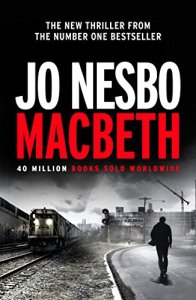
It is Macbeth by Jo Nesbo, a retelling of Shakespeare’s Macbeth. Witches in different forms appear in both the book and the play. Inspector Macbeth, an ex-drug addict is the head of the SWAT team, ruled by his passions, violent and paranoid. He is manipulated by Hecate, Shakespeare’s chief witch, here one of the drug lords, a man with a friendly smile and cold eyes.

The links in my chain are the Women’s Prize for Fiction, Thomas Cromwell, TBRs, books with the word ‘time’ in the title and witchcraft/witches.

Next month (February 6, 2021), we’ll start with Anne Tyler’s latest novel, Redhead By the Side of the Road.

Six Degrees of Separation: From Are You There God? It’s Me, Margaret to Bring Up the Bodies

It’s time again for Six Degrees of Separation, a monthly link-up hosted by Kate at Books Are My Favourite and Best. Each month a book is chosen as a starting point and linked to six other books to form a chain. A book doesn’t need to be connected to all the other books on the list, only to the one next to it in the chain.

This month it begins with a book that is celebrating its 50th birthday this year – Are You There God? It’s Me Margaret by Judy Blume. I’ve not read this book, but the title, with my name in it, intrigues me. Margaret Simon, almost twelve, likes long hair, tuna fish, the smell of rain, and things that are pink. She’s just moved from New York City to Farbook, New Jersey, and is anxious to fit in with her new friends.

There are several ways I thought of to go from this book – my name, or the author’s name, or the subject matter of a coming of age novel, or a relationship with God.

After several false starts, I chose another coming , bof age novel. The Highest Tide by Jim Lynch is about Miles O’Malley, a thirteen year old boy and about life, growing up, relationships and love. It’s narrated by an adult Miles, looking back at that summer when he found a giant squid, dying on the mudflats at Skookumchuck Bay, at the southern end of Puget Sound, near his house. That was the summer he had a crush on Angie, his ex-babysitter, and his best friend, old Florence was getting sicker each week.

Moving on to another book about ‘tides‘ to The Sea Detective by Mark Douglas-Hume set in Scotland on the fictional island of Eilean Iasgaich. Cal McGill uses his knowledge of tides, winds and currents to solve mysteries, which helps in the investigation of the appearance of severed feet in trainers that had been washed on shore on islands miles apart. It’s a story of unsolved mysteries both from the present day and from the Second World War, and of two Indian girls, sold into the sex trafficking trade.

And the next link is the word ‘sea‘ in the title in The Sea Change by Joanna Rossiter set in lost landscapes this is a novel revolving around a mother and daughter caught up in catastrophic events. The lost landscapes are the village of Imber, a Wiltshire village that was requisitioned by the army during World War Two, where Violet had grown up, and the coastal village of Kanyakumari in Southern India, where her daughter Alice was caught up in the tsunami that devastated the area in 1971.

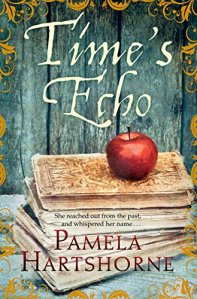
Time’s Echo by Pamela Hartshorne is a time-slip story with an element of mystery and suspense. Grace Trewe is drawn into Hawise Aske’s life, four and a half centuries earlier in York, 1577. Grace likes to travel and although she survived the Boxing Day tsunami she is suppressing her memories of what happened. As she learns how Hawise died it gets to the point where she dreads slipping out of current time into not only Hawise’s past but also into her own as she remembers what happened to her in the tsunami.

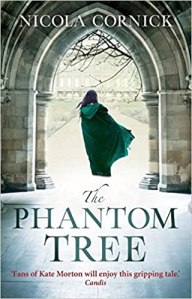
Another time-slip novel is The Phantom Tree by Nicola Cornick which alternates between the Tudor period and the present day following the life of Alison Banestre (known as Bannister in the present day) as she moves between the centuries trying to find out what happened to Mary Seymour. It’s a mystery, based on the true story of Mary Seymour, the daughter of Katherine Parr (Henry VIII’s sixth wife) and Thomas Seymour, who she married after Henry’s death.

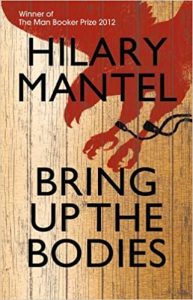
Thomas Seymour was Jane Seymour’s brother. Their family home was Wolf Hall, an early 17th-century manor house where Mary Seymour was taken in 1557 as an unwanted orphan and presumed dead after going missing as a child. This brings me to Hilary Mantel’s trilogy, Wolf Hall and specifically to the second book in the trilogy, Bring Up the Bodies, which begins at Wolf Hall, where Henry VIII is visiting the Seymours. And it is at Wolf Hall that Henry begins to fall in love with Jane.

My chain this month includes a coming of age novel, books with tides and seas in their titles, time-slip novels and books in which Wolf Hall features. It begins in America in 1970, moves forward and backwards in time and place to the 16th century in England.

Next month (January 2, 2021), we’ll start with the winner of the 2020 Women’s Prize for Fiction, Hamnet by Maggie O’Farrell.

Six Degrees of Separation – From The Dogs of Riga to The Mysterious Affair at Styles

It’s time again for Six Degrees of Separation, a monthly link-up hosted by Kate at Books Are My Favourite and Best. Each month a book is chosen as a starting point and linked to six other books to form a chain. A book doesn’t need to be connected to all the other books on the list, only to the one next to it in the chain.

The chain this month is a wild card – start with the book you’ve ended a previous chain with, and continue from there (for those playing for the first time, start with the last book you finished reading). So my chain begins with The Dogs of Riga by Henning Mankell, the book that ended my chain in May this year. It’s an Inspector Wallander book. A little raft is washed ashore on a beach in Sweden. It contains two men, shot dead. They’re identified as criminals, victims of a gangland hit. Wallander’s investigation takes him to Latvia.

The First Degree – a book I bought on the same day as The Dogs of Riga in August 2018 from Barter Books in Alnwick. It’s another murder mystery:

A Killing of Angels by Kate Rhodes – the second book in her Alice Quentin series. It’s a psychological thriller. At the height of a summer heatwave, a killer stalks the City of London.The avenging angel leaves behind a scattering of feathers with each body – but why these victims? What were their sins?

The Second Degree – another book with ‘angel in the title:

The Dark Angel by Elly Griffiths, a Dr Ruth Galloway Mystery. I like Ruth and enjoy these books, even though they are written in the present tense, which I can find irritating. This one is set in Italy. It’s the 10th Dr Ruth Galloway Mystery and the first one to be set in Italy. I like the mix of archaeology, mystery and crime fiction in Elly Griffiths’s books and also the continuing story of Ruth and the other regular characters.

The Third Degree – another Ruth Galloway mystery:

The first Ruth Galloway mystery I read is The Crossing Places. It’s an interesting mix of investigations into a cold case – the disappearance of Lucy, a five year old girl ten years earlier and a current case of another missing four year old girl. Are they connected and just how does the discovery of a child’s bones from the Iron Age fit in? It’s set in Norfolk  in winter with its immense skies and its remoteness, treacherous mud flats, marshlands and driving rain. Parts of the story involving quicksand reminded me of Wilkie Collins’s The Moonstone.

The Fourth Degree – quicksand:

In Wilkie Collins’s The Moonstone Rosanna Spearman drowns in quicksand on the marshes. It’s about the theft of a large diamond, originally stolen from a statue of an Indian God and said to be cursed. Collins uses several narrators to tell the story, one of whom is Sergeant Cluff, the detective who loves roses. He leaves the mystery unsolved, but a year later, the culprit is revealed. Years ago I watched a TV dramatisation and the images of the Indians, the jewel, the shifting sands and Sergeant Cuff have remained in my mind ever since.

The Fifth Degree – a book about a real detective who Wilkie Collins used as the model for Sergeant Cluff:

In The Suspicions of Mr Whicher Kate Summerscale describes how writers like Charles Dickens and Wilkie Collins used real life police detectives as models in their novels – for example Bleak House, The Moonstone, and The Woman in White. This is nonfiction about the brutal murder of Saville Kent, aged three, with all the suspects of a classic murder mystery – the original country house murder. 

The Sixth Degree – another country house murder mystery:

One of my favourite Agatha Christie novels The Mysterious Affair at Styles, her first novel. In it she created Hercule Poirot, the famous Belgian detective and introduced Captain Hastings and Inspector Japp. Old Mrs Inglethorp is found dying in her bedroom and although by the end of the book I guessed who had murdered her, I was completely bamboozled most of the way through the book by all the clues and false trails.

The links in my chain are all murder mysteries of one type or another, taking me from Sweden and Latvia to a country house somewhere in England.

Next month (December 5, 2020), we’ll begin with a book that is celebrating its 50th birthday this year – Are You There God? It’s Me Margaret by Judy Blume. I’ve not read this book, but the title, with my name in it, intrigues me. I may have to read it!

Six Degrees of Separation from The Turn of the Screw to A Jealous Ghost

It’s time again for Six Degrees of Separation, a monthly link-up hosted by Kate at Books Are My Favourite and Best. Each month a book is chosen as a starting point and linked to six other books to form a chain. A book doesn’t need to be connected to all the other books on the list, only to the one next to it in the chain.

The chain this month begins with a book I’ve read, The Turn of the Screw by Henry James. But is it a ghost story or a psychological study? Either way there are creepy, disturbing things going on. It’s a story within a story, told as a ghost story to a group of people as they sit gathered round a fire in an old house. It tells of two children and their governess. She has been employed by their uncle who wants nothing to do with them. Their previous governess had died under mysterious circumstances (was it in childbirth?).

There’s a very different kind of ghost in Robert Harris’s book, The Ghost – a ghostwriter, employed to finish writing the memoirs of recently retired prime minister of Great Britain, Adam Peter Benet Lang. The ghostwriter soon discovers that Lang has secrets in his past that are returning to haunt him – secrets with the power to kill.

There’s also a different kind of ghost in Mortmain Hall by Martin Edwards, which begins, ‘The ghost climbed out of a hackney carriage‘. Rachel followed the ghost as he entered a funeral train run by the London Necropolis Company for privileged first-class passengers. Set in 1930 this is a complex murder mystery with several plot lines.

There’s a ‘real’ ghost in Rivers of London by Ben Aaronovitch – Nicholas Wallpenny, who has been dead for at least a hundred and twenty years – he is a ghost. This is an urban fantasy set in the real world of London, a mix of reality and the supernatural.

There’s ghost in a stained glass window in The Glass Guardian by Linda Gillard. Ruth has inherited a dilapidated Victorian house on the Isle of Skye: Tigh na Linne, the summer home she shared as a child with her beloved Aunt Janet. As she attempts to sort through her aunt’s belongings it becomes clear that there is more about her aunt and her family history than she ever knew before. And then she realises there is someone else in the house and there is a stained glass window behind a large wardrobe, which she never knew existed. From there on Ruth is unsure whether she is in her ‘Sane Mind’ or her ‘Insane Mind’, as she hears the wardrobe being dragged from its position in the dead of night.

Next, a ghost in a cathedral in Broken Voices by Andrew Taylor, set in an East Anglian cathedral city just before the First World War when two schoolboys are left at the cathedral school during the Christmas holidays. They lodge with Mr Ratcliffe, a semi-retired schoolmaster, a bachelor now in his seventies. The two boys are entertained by the ghost stories that Mr Ratcliffe tells them. There was an ancient tragedy connected with the cathedral bells, the tower and a Canon who had been commissioned to write an anthem to mark the occasion when the bells were recast. The cathedral is full of shifting shadows, and the bell tower is haunted by fragments of melody, which one of the boys can hear.

A N Wilson’s book, The Jealous Ghost, brings us back full circle in the chain, because it’s a re-writing of The Turn of the Screw. Sallie Declan is a young American in London, obsessed with Henry James’s The Turn of the Screw, the subject of her PhD. thesis. She leaves her studies for a temporary job as a nanny in a large country house and builds a fantasy about her emotional future there. Surely she can see it is all delusion? But a progressively darker reality unfolds leading inevitably to a terrible and shocking climax. I enjoyed this book, but prefer the original.

~~~

My six degrees are full of ghosts of different types, some literal, some literary, some in a supernatural sense and some psychological. From spooky and creepy to loving and urban fantasy fun. All of them haunting tales in one sense or another.