Six Degrees of Separation: from Ethan Frome to Beneath the Surface

It’s time again for Six Degrees of Separation, a monthly link-up hosted by Kate at Books Are My Favourite and Best. Each month a book is chosen as a starting point and linked to six other books to form a chain. A book doesn’t need to be connected to all the other books on the list, only to the one next to it in the chain.
The chain this month begins with  Ethan Frome, a novella by Edith Wharton, which I have read and loved. Set in the fictitious town of Starkfield, Massachusetts, this is a tragedy about a farmer trapped in an unhappy marriage. Their lives are changed when his wife’s cousin comes to live with them to help in the house.

My first link is to another book by Edith Wharton, Xingu and other stories, one of my TBRs, There are five short stories – about jealous husbands, spinsters who have wasted away their lives, and bored ladies infatuated with money and aspirations.

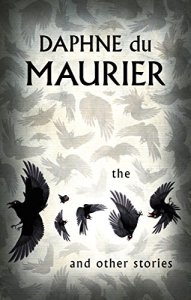
My second link is to another book of short stories, which I’m currently reading. It’s The Birds and Other Stories by Daphne du Maurier, a total of six stories. Hitchcock based his film on du Maurier’s horror story of a farmhand, his family, and his community who are attacked by flocks of birds.

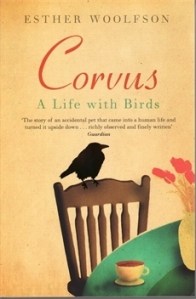
My third link is Corvus: My Life with Birds by Esther Woolfson, which is part memoir and part nature study. Corvus’ is a genus of birds including jackdaws, ravens, crows, magpies and rooks. The specific birds Esther Woolfson looked after are a rook, a young crow, a cockatiel, a magpie, two small parrots and two canaries.

My fourth link is to the word ‘raven‘ in Raven Black by Ann Cleeves, the first book in her Shetland series – Inspector Perez. It begins on New Year’s Eve as Magnus Tait is seeing the new year in on his own, until two teenage girls knock on his door to wish him a Happy New Year. A few days later one of the girls is found dead in the snow not far from Magnus’s house, strangled with her own scarf.

My fifth link is to a novel that also begins on New Year’s Eve – The Nine Tailors by D L Sayers,  as Lord Peter Wimsey is driving through a snow storm and ends up in a ditch near the village of Fenchurch St Paul in the Fens. He is taken in for the night by the vicar and helps the bell-ringers ring in the New Year. A few weeks later Wimsey is asked back to the village to help solve the mystery of the dead man found by the sexton whilst he was opening up Lady Thorpe’s grave to bury her husband.

My sixth link: is to Beneath the Surface by Fiona Neill, which is also set in the Fens, where Patrick and Grace Vermuyden and their two daughters, teenager Lilly and ten year old Mia, are living in badly built, damp and draughty house.This is an emotionally charged novel about the burden of keeping secrets and the effects that misunderstandings and lies can have. 

Beginning with a novella by Edith Wharton about a family tragedy my chain travels to another family in an ever decreasing spiral of disastrous events, thus making the chain into a circle and linking together short story collections, stories about birds, books beginning on New Year’s Eve and books set in the Fens.

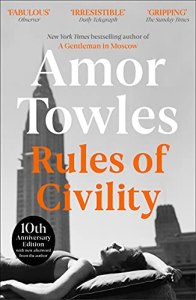
Next month (January 4, 2022), we’ll start with a story that also begins on New Year’s Eve (what a coincidence!)– Rules of Civility by Amor Towles, a book I haven’t read.

Six Degrees of Separation: from What Are You Going Through to The Man on a Donkey

It’s time again for Six Degrees of Separation, a monthly link-up hosted by Kate at Books Are My Favourite and Best. Each month a book is chosen as a starting point and linked to six other books to form a chain. A book doesn’t need to be connected to all the other books on the list, only to the one next to it in the chain.

The chain this month begins with  What Are You Going Through by Sigrid Nunez, a book I’ve not read. Described as a luminous, heartbreaking and life-affirming novel about choosing to die, it is a novel about a woman with terminal cancer. She asks a friend to accompany her on a holiday where she will, without warning one day, take a lethal pill to end her life on her own terms.

My first link: My first thought was to link my chain to books about cancer, beginning with The Spare Room by Helen Garner. Nicola, who is suffering from cancer goes to stay with her friend Helen whilst she undergoes alternative therapy. She refuses to accept that she is dying and Helen struggles to cope with the situation. It is a difficult book to read, not because of the style of writing, which is fluent, but because of the agonising descriptions of Nicola’s condition and the anguish and anger that hits Helen. But I’m glad I read it; it was nowhere nearly as bad as I imagined it would be.

So then I changed my mind and the rest of the chain just happened:

My second link is a bit tenuous and is via the author, Helen Garner, an Australian author, born in Geelong. In the 1959 film of Nevil Shute’s novel On the Beach the closing scenes were filmed near Barwon Heads, a suburb of Geelong. The novel is set after a world wide nuclear war has destroyed most of the globe, and the few remaining survivors in southern Australia await the radioactive cloud that is heading their way and bringing certain death to everyone in its path.

My third link is another novel with the word ‘beach’ in the title, On Chesil Beach by Ian McEwan. Edward and Florence married that morning are on honeymoon at a hotel on Chesil Beach, an 18-mile long shingle barrier beach on the Dorset coast. They are struggling to suppress their fears of their wedding night to come.

My fourth link: is the name ‘Florence’. In Deadheads by Reginald Hill old Mrs Florence Aldermann instructs her great nephew, eleven year old Patrick, how to deadhead roses and explains why it is necessary. When Patrick eventually inherits the splendid Rosemount House and gardens on the death of his aunt he is able to indulge his horticultural passions without restraint. But why do so many of his colleagues keep dropping dead?

My fifth link is to a novel with the word ‘rose’ in the title. It’s one of my favourite books, The Name of the Rose by Umberto Eco, historical fiction set in 1327. Benedictine monks in a wealthy Italian abbey are suspected of heresy, and Brother William of Baskerville arrives to investigate. He collects evidence, deciphers secret symbols and coded manuscripts, and digs into the eerie labyrinth of the abbey, where “the most interesting things happen at night.” When his delicate mission is suddenly overshadowed by seven bizarre deaths, Brother William turns detective.

My sixth link: is to The Man on a Donkey by H F M Prescott, historical fiction that features Benedictines but in this book it’s Benedictine nuns, not monks. It is set in 1536 and is about The Pilgrimage of Grace, a protest against Henry VIII‘s break with the Roman Catholic Church, the Dissolution of the Monasteries, and the policies of the King’s chief minister, Thomas Cromwell.

Beginning with stories about terminal cancer my chain travels to one about Henry VIII’s dissolution of the monasteries, via tales about survivors of a nuclear war, a couple’s fears of their wedding night, a man who loves roses accused of murder, and murders in an Italian abbey.

Next month (December 4, 2021), we’ll start with the classic novella, Ethan Frome by Edith Wharton. For a change the chain begins with a book I have read!

Six Degrees of Separation: from The Lottery to Fallen Angel

It’s time again for Six Degrees of Separation, a monthly link-up hosted by Kate at Books Are My Favourite and Best. Each month a book is chosen as a starting point and linked to six other books to form a chain. A book doesn’t need to be connected to all the other books on the list, only to the one next to it in the chain.

The chain this month begins with  a (frightening) short story, The Lottery by Shirley Jackson.

The Lottery is a short story written by Shirley Jackson, first published in the June 25, 1948, issue of The New Yorker, (the link takes you to the story.) The lottery is an annual rite, in which a member of a small farming village is selected by chance. This is a creepy story of casual cruelty, which I first read several years ago. The shocking consequence of being selected in the lottery is revealed only at the end.

Once again I found it difficult starting my chain, and after several attempts I finally settled on an obvious choice of another one of Shirley Jackson’s stories for the first link.

First link: The Haunting of Hill House. Dr. Montague, a doctor of philosophy with a keen interest in the supernatural and psychic manifestations had been looking for a ‘haunted’ house to investigate all his life. So, when he heard the stories about the strange goings on at Hill House he decided he would spend three months living there and see what happened, and he set about finding other people to stay there with him. The house is connected with a number of tragedies – scandal, madness and a suicide. But nothing is what it first appears to be and I felt as if I was sinking into the story in a most unpleasant way.

The Second link: is to another house, in The House by Simon Lelic. It is set in a creepy house, full of junk, with an overgrown garden and with hints of the supernatural. Jack and Syd move in and then Jack found something nasty in the attic. There’s been a murder and this is a story about despair, domestic violence, dark secrets and the effects of the past on the present.

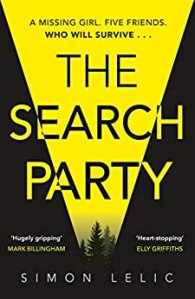
The third link: Simon Lelic also wrote The Search Party in which 16-year-old Sadie Saunders goes missing and five of her friends set out into the woods to find her. At the same time the police’s investigation, led by Detective Robin Fleet and Detective Sergeant Nicola Collins, is underway. When the friends get lost in the woods they make an incoherent phone call to the emergency services. The caller doesn’t know their location other than it is ‘somewhere in the woods‘ near an abandoned building.

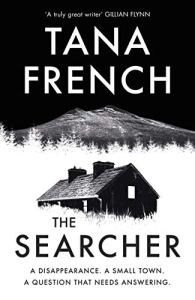
The fourth link: Cal Hooper is also searching for a teenager in The Searcher by Tana French. Cal and thirteen-year old Trey Reddy live in Ardnakelty, a remote Irish village. Cal has recently moved to the village, wanting to build a new life after his divorce. He is a loner and wants a quiet life in which nothing much happens. But he finds himself getting involved in the search for Brendan, Trey’s older brother who had gone missing from home.

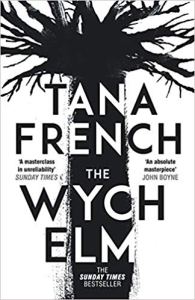
The fifth link: The Wych Elm also by Tana French Toby Hennessy, the narrator, is twenty eight. He is brutally attacked by burglars in his flat, leaving him in a terrible state, physically and psychologically damaged. He seeks refuge at the family’s ancestral home, the Ivy House. But not long after his arrival, a skull is discovered, tucked neatly inside the old wych elm in the garden. As detectives begin to close in, Toby is forced to examine everything he thought he knew about his family, his past, and himself. This is a psychological thriller, a standalone book, about a family in crisis, as dark family secrets gradually came to light.

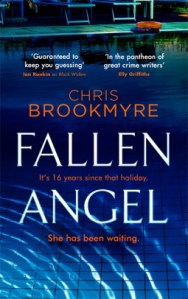
The sixth link: The Temple family in Chris Bookmyre’s Fallen Angel is another family in crisis. The family is spending the summer at its seaside villa in Portugal for a reunion after the death of the head of the family, Max Temple, who was a psychologist. The last time they were all there together was in 2002 when one of the children had disappeared from the villa, and was presumed drowned. None of the family members are very likeable and there’s plenty of tension as they don’t get on well with each other! It’s a novel about a family in crisis, about toxic relationships and about the psychology of conspiracy theories. 

From a short and scary story my chain links two novels about scary houses, or rather the occupants of scary houses, two books about searches, and two about families in crisis.

Next month (November 6, 2021), we’ll start with Sigrid Nunez’s What Are You Going Through.

Six Degrees of Separation from Second Place to Sons and Lovers

It’s time again for Six Degrees of Separation, a monthly link-up hosted by Kate at Books Are My Favourite and Best. Each month a book is chosen as a starting point and linked to six other books to form a chain. A book doesn’t need to be connected to all the other books on the list, only to the one next to it in the chain.

This month the chain begins with Second Place by Rachel Cusk, one of the books longlisted for the Booker Prize 2021. I’ve read a couple of books by Rachel Cusk, Arlington Park which I loved and The Bradshaw Variations, which I enjoyed but not as good, in my opinion, as Arlington Park. So I was interested to see what Second Place was like and have just finished reading it .

Blurb: ‘A  woman invites a famed artist to visit the remote coastal region where she lives, in the belief that his vision will penetrate the mystery of her life and landscape. Over the course of one hot summer, his provocative presence provides the frame for a study of female fate and male privilege, of the geometries of human relationships, and of the struggle to live morally between our internal and external worlds. With its examination of the possibility that art can both save and destroy us, Second Place is deeply affirming of the human soul, while grappling with its darkest demons.’

My preliminary comments – this book was inspired by a real set of circumstances. In her Acknowledgement at the end of the book Cusk refers to Mabel Dodge Luhan’s 1932 memoir of the time D H Lawrence stayed with her in Taos, New Mexico. She acknowledges that her version of that event is intended as a tribute to her spirit. I’ll write more about Second Place in a later post.

I didn’t find it easy to come up with a chain from Second Place. I started twice, but each time the chain just fizzled out quite quickly. One began with Mabel Luhan’s memoir, Lorenzo in Taos, which is written loosely in the form of letters to and from D. H. Lawrence, Frieda Lawrence, and Robinson Jeffers, the celebrated poet who had been a guest of Mabel’s in Taos, with references to Dorothy Brett and Spud Johnson among others. The second began with A Town Called Solace by Mary Lawson, which is also on the longlist for the Booker Prize 2021.

So, I decided to make it very simple!

First link – The Secret River by Kate Grenville – historical fiction following the life of William Thornhill from his childhood in the slums of London to Australia. He was a Thames waterman transported for stealing timber; his wife and child went with him and they made a new life for themselves. It’s about their struggle for survival as William is eventually pardoned and becomes a waterman on the Hawkesbury River and then a settler with his own land and servants.

Second Link – See What I Have Done by Sarah Schmidt – a novel based on true events. On the 4 August 1892 Andrew Borden and his second wife, Abby, were brutally murdered in their home at 92 Second Street in Fall River, Massachusetts and Andrew’s daughter, Lizzie, was charged with the murders. She was tried and was acquitted in June 1893 and speculation about the murders and whether Lizzie was guilty or not continues to the present day.

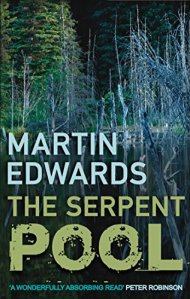
Third Link – The Serpent Pool by Martin Edwards – a Lake District murder mystery featuring DCI Hannah Scarlet, in charge of the Cumbria’s Cold Case Team, her partner Marc Amos, a rare book dealer and Daniel Kind, a historian and the son of Hannah’s former boss, Ben Kind. It begins with the death of George Saffell, one of Marc’s customers, stabbed and then burnt to death amidst his collection of rare and valuable books.

Fourth Link – The Shining by Stephen King – this tells the story of Jack Torrance and his family as they move into the Overlook Hotel in the Colorada Rockies. The Overlook is closed for the winter and Jack, a recovering alcoholic is the caretaker. Just what impels him towards murder is horrifyingly revealed as the winter weather closes in on the hotel and they are cut off from the rest of the world.

Fifth Link – Sleeping Murder by Agatha Christie is Miss Marple’s last case, published posthumously in 1976, although Agatha Christie had written it during the Second World War. Miss Marple investigates a murder that had happened 18 years ago.

Sixth Link – Sons and Lovers by D H Lawrence – a powerful, emotional novel depicting the struggle, strife, and passion of relationships and their intensity, and possessiveness. Throughout the book Lawrence’s vivid descriptions and observation of the English countryside are so beautiful that I couldn’t stop marvelling at his writing.

My chain is made up of books all with titles beginning with the letter ‘S’. The final link, Sons and Lovers makes the chain into a circle as it is also linked to Second Place, which inspired Cusk’s fictionalised version of D H Lawrence’s relationship with Mabel Dodge Luhan – called ‘L’ and ‘M’ in her book.

Next month (October 2, 2021), the chain begins with a (frightening) short story, The Lottery by Shirley Jackson.

Six Degrees of Separation: from Postcards From the Edge to Mrs Jordan’s Profession

It’s time again for Six Degrees of Separation, a monthly link-up hosted by Kate at Books Are My Favourite and Best. Each month a book is chosen as a starting point and linked to six other books to form a chain. A book doesn’t need to be connected to all the other books on the list, only to the one next to it in the chain.

This month the Six Degrees chain begins with Postcards From the Edge by Carrie Fisher. It’s a novel about an actress in rehab; Carrie Fisher’s bestselling debut novel, an uproarious commentary on Hollywood – the home of success, sex and insecurity, that has become a beloved cult classic.

I haven’t read this book but the title made me think of Susannah Clapp’s A Card from Angela Carter, in which she uses the postcards Angela had sent to her to ‘form a paper trail through her life.’ It is mainly Susannah’s recollections of Angela, full of stories of her family life, her political views and what the critics made of her work.

Moving on from a book about Angela Carter to one by her my second link is to The Bloody Chamber and Other Stories, a collection of tales inspired by traditional fairy tales and legends.

I’m staying with fairy tales for my third link, The Ladies of Grace and Adieu by Susanna Clarke, a collection of stories of mystery, magic, fantasy and faerie tales. The story I enjoyed the most was The Duke of Wellington Misplaces His Horse set in Wall, a village in the world created by Neil Gaiman and Charles Vess.

So, Neil Gaiman is my next link – The Graveyard Book, the story of the baby who escapes a murderer intent on killing his entire family, and who stumbles into the local disused graveyard where he is rescued by ghosts.

Ghosts provide my fifth link with Giving Up the Ghost by Hilary Mantel. As a child she believed their house was haunted. Her experience of ghosts at the age of 7 was horrifying as she felt as though something came inside her, ‘some formless, borderless evil’.

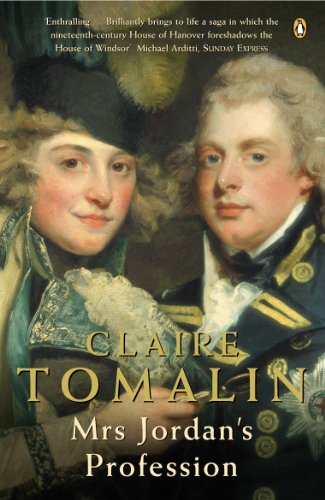
Staying with Hilary Mantel my final link is to her biography of an actress, Dora Jordan and her life with the Duke of Clarence, later King William IV. It’s Mrs Jordan’s Profession: The Story of a Great Actress and a Future King, which also links (somewhat loosely) back to the opening book written by an actress.

My chain begins with a novel about Hollywood linking together books about fantasy, fairy tales ghosts and actresses. It’s a circle which came about quite by chance as I moved from one link to the next, not knowing where it would end! I’ve read all these books, apart from The Bloody Chamber which is waiting in my Kindle to be read.

For the second month in a row, my chain does not include any crime fiction!

Have you read Postcards from the Edge. Where would your chain end up?

Next month, on the 4 September 2021, we’ll start with the 2021 Booker Prize nominee, Second Place by Rachel Cusk.

Six Degrees of Separation: from Eats Shoots and Leaves by Lynne Truss to Talk to the Hand

It’s time again for Six Degrees of Separation, a monthly link-up hosted by Kate at Books Are My Favourite and Best. Each month a book is chosen as a starting point and linked to six other books to form a chain. A book doesn’t need to be connected to all the other books on the list, only to the one next to it in the chain.

This month the Six Degrees chain begins with Eats Shoots & Leaves by Lynne Truss. I like books on grammar and punctuation! I love her examples and the wrong use of the apostrophe in “its/it’s” infuriates me, although not quite as as much as it does her:

No matter if you have a PhD and have read all of Henry James twice. If you still persist in writing, “Good food at it’s best”, you deserve to be struck by lightning, hacked up on the spot and buried in an unmarked grave.

My first link is Henry James – Washington Square. It’s all about will /won’t Catherine Sloper and Morris Townsend get married. Catherine lives at home in Washington Square with her father, the wealthy Dr Sloper. I found it rather tedious and repetitive as Catherine grew older, constantly in conflict with her father over whether she should marry Morris. Her father describes her as ‘ about as intelligent as the bundle of shawls.’

Thinking of shawls provides my next link – is The Kashmir Shawl by Rosie Thomas, a dual time-line romantic novel about a beautiful handmade shawl. It’s set in Wales in the present day and in the Himalayas and Kashmir in the 1940s . The story switches between Mair’s journey and that of Nerys Watkins, her grandmother, a missionary’s wife, living in India during the Second World War.

Kashmir is my third link, with The Ministry of Utmost Happiness by Arundhati Roy. The novel begins in Old Delhi then moves into the new metropolis and beyond, to the Valley of Kashmir and the forests of Central India. After a good beginning I struggled with this book because there is so much description, so little plot and such a large cast of characters. It’s a book about love and loss, death and survival, grief, pain and poverty. It made the 2017 Booker Prize longlist.

My fourth link is to Arundhati Roy‘s first book, The God of Small Things, which won the Booker Prize in 1997. Set in Kerala this is the story of Rahel and Estha, twins growing up among the banana vats and peppercorns of their blind grandmother’s factory, and amid scenes of political turbulence. I loved this book, but as I read it before I began my blog I haven’t reviewed it.

Small is also in the title of Susan Hill’s novella, The Small Hand, a sad and mournful ghost story about Adam Snow, a dealer in antiquarian books and manuscripts who got lost on his way home from visiting a client when he came across a derelict Edwardian house. It was there in the garden that he had a strange experience in which he felt a small hand creep into his right one.

So that brings me to the end of my chain linking back to the opening book with another book by Lynne Truss – Talk to the Hand. I haven’t reviewed this book as it’s another one I read before I began my blog. It’s about the rudeness of modern society, or as she describes it ‘unashamedly, a big long moan about modern life … including automated switchboards, customer service, mobile phone abuse, littering, and telling strangers to Eff off.‘ You can see more about why she wrote the book on her website.

My chain begins with a book about punctuation and ends with one about rudeness by the same author. It’s a circle which came about quite by chance as I moved from one link to the next, not knowing where it would end! The links are Henry James, shawls, Kashmir, books by Arundhati Roy, books with ‘small’ in the title and also ‘hand’, moving from the UK, travelling through the US, Kashmir and India and then back to the UK.

They are all books I’ve read – and, for a change, my chain does not include any crime fiction!

Next month, on the 7 August 2021 (my birthday), we’ll start with  Postcards From the Edge by Carrie Fisher.