Furious Hours by Casey Cep

The stunning story of an Alabama serial killer and the true-crime book that Harper Lee worked on obsessively in the years after To Kill a Mockingbird
Furious hours

Cornerstone|May 2019|311 pages|e-book via NetGalley|Review copy|4*

In the first half of the book Casey Cep tells the story of the Reverend Willie Maxwell, who murdered members of his own family in the 1970s and held his rural community in Alabama, in fear and dread as they believed he was practising voodoo. He was shot dead at the funeral of his step-daughter by a relative, Robert Burns. Maxwell’s lawyer, Tom Radney, who had successfully defended Maxwell for years, then defended Burns, who confessed to the shooting, on the grounds of temporary insanity.

The second half is about the author, Harper Lee, who decided to write a book about all three men. In doing so Cep has written a remarkable biography of Harper Lee, her friendship with Truman Capote, her part in writing his book, In Cold Blood and her attempts to follow up the success of her book, To Kill a Mockingbird.

My favourite part of the book is without doubt the part about Harper Lee. All I knew about her before is that she wrote To Kill a Mockingbird, thought to be her only book until Go Set a Watchman was published in 2015. Cep explains that Watchman was an early version of Mockingbird, that Lee hadn’t edited or revised, and although it appears to be a sequel it isn’t  – it is the story she wrote first.

The section on Lee’s work in helping Capote  research his ‘nonfiction novel’ set in Kansas, In Cold Blood is equally as fascinating. They had lived next door to each other in Monroeville and as Cep phrased it ‘before Nelle was out of toddlerhood, she and Truman had become partners in crime and just about everything else.‘ (‘Nelle’ is her first name, the name she was known by for the first thirty-four years of her life, pronounced Nell, not Nellie.) Once they ran out of stories to read they started writing them. Cep goes into detail about the development of crime writing, and how Capote applied the techniques of fiction to nonfiction. Not everyone was happy with this novelisation of crime, not did they believe that Capote’s book was strictly factual, accusing him of  producing a sensational novel. Harper Lee minded very much about his fabrications, although she never objected publicly and this caused a rift between them.

So, this presented her with a challenge when it came to writing her book about Maxwell and his crimes, determined it would be based strictly on facts and she spent many years researching and writing her book, provisionally called The Reverend, but never finished it.

The sheer detail of Furious Hours made it quite a difficult book to read in some parts, digressing from the bare bones of the story into details such as the history of insurance, for example. But I was impressed by that detail and by Cep’s meticulous research. The book has an extensive Acknowledgements section, Notes and Bibliography, citing numerous books, journal articles and documentary films. And it has made me keen to read Go Set a Watchman, which although I bought a copy I have not read yet fearing it would spoil my love of To Kill a Mockingbird. I also must get round to reading Capote’s In Cold Blood, which I bought earlier this year, without knowing of Harper Lee’s involvement in the book.

My thanks to Cornerstone for an e-book review copy via NetGalley
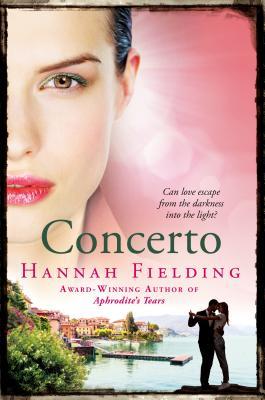
Concerto by Hannah Fielding

Concerto

London Wall Publishing|6 June 2019|560 pages|e-book via NetGalley|Review copy|2*

Ask Again, Yes by Mary Beth Keane

Ask Again Yes

Penguin Michael Joseph|3 October 2019|384 pages|e-book |Review copy|2*

A Single Thread by Tracy Chevalier

 I’ve enjoyed all of Tracy Chevalier‘s books that I’ve read so far, so it was no surprise to me. to find that I loved her latest book, A Single Thread

A single thread

This is historical fiction, a mix of fact and fiction, set mainly in Winchester in the 1930s. It is a a simple straightforward story, beautifully written, with the emphasis on everyday life. The main character is Violet Speedwell, a single woman of 38, regarded by society as a ‘surplus woman’ unlikely to marry  because her fiancé, Laurence was killed in the First World War. The 1921 census revealed that there were 1.75 million more women than men in the UK.  Surplus women were patronised and were expected to stay at home looking after their elderly relatives, but at the age of 38 in 1932 Violet decides to leave her overbearing mother and move on her own to Winchester. There is a lot of information about embroidering cushions and kneelers for the the Choir stalls and Presbytery seats in the Cathedral and about bell-ringing, both of which formed integral parts of the book.

Violet knew nobody in Winchester, but whilst looking round the Cathedral she came across a group of women, calling themselves the Winchester Cathedral Broderers, dedicated to embroidering hassocks and cushions for the seats and benches. She joins the group, led by Miss Louisa Pesel (a real person) and the stern Mrs Biggins and as well as learning to embroider, she makes new friends. One of these friends is Gilda, who introduces her to two of the bell-ringers, Arthur, a older married man and a younger, unmarried man, called Keith.

She is determined to be independent, not relying on her mother or her brother to support her. So she finds a job as a typist and takes a room in house shared with two other women and her landlady, Mrs Harvey, who discourages male visitors other than family. The difficulties of being independent are brought home to Violet as she struggles on her wages to pay for her lodgings, laundry and coal, let alone feed herself. And then her mother is admitted to hospital and she has to decide whether to return home to look after her.

The characters are drawn with fine detail and the descriptions of the settings, particularly in the Cathedral are so clear that I could easily visualise both the building and its interior. I particularly liked the details about the embroidery and the stitches used. As the Nazi Party and Hitler rise to power in Germany, the use of fylfots in the embroidery designs are mistaken for swastikas which are ancient symbols of light and life and good fortune.

The book gives an detailed look at life between the two World Wars. It has a slow gentle pace following Violet’s new life, but there is a sense of change on the horizon as her relationship with Arthur develops.  It gives a lively picture of the difficulties of life for unmarried women, including Gilda and Dorothy’s unconventional relationship that they have to keep secret to avoid the prejudice this would attract. And there is an indication of the sense of unease in society as the threat of another war loomed. 

It is obvious throughout the book that Tracy Chevalier has meticulously carried out her research and in the acknowledgements she lists a number of the many resources she has used, including details of Louisa Pesel’s embroidery work as well as the history of Winchester Cathedral, bell-ringing, 1930s women and life in Britain in the 1930s .

My thanks to the publishers and NetGalley for my copy of this book for review.

  • Format: Kindle Edition
  • File Size: 1382 KB
  • Print Length: 353 pages
  • Page Numbers Source ISBN: 0008153817
  • Publisher: The Borough Press (5 Sept. 2019)
  • Source: Review copy from the publishers via NetGalley
  • My Rating: 4*

Killing Me Gently by Hazel McHaffie

Killing me gently

VelvetEthics Press|1 July 2019|390 pages|Review copy|4*

I’ve read two of Hazel McHaffie’s books in the past – Over My Dead Body and Inside of Me. In both books I was impressed by the way she weaves facts into her fiction so seamlessly that it doesn’t detract from the story. So, I was pleased when she asked if I would like to read her latest book, Killing Me Gently, her 11th published novel set in the world of medical ethics.

The story begins with a dramatic scene – in the middle of the night, in February, in complete darkness as Anya, feeling desperate and close to breaking point, runs alongside a fast flowing river:

Mud sucked greedily at her boots, branches tangled in her hair, exposed roots snaked across her path. The vicious swirl of the river drew her like a magnet down into the thick darkness, the dank odour of slowly decomposing vegetation.

Anya had no notion of time, only all-consuming compulsion to get as far away as possible from her tormentor. Several times she skidded wildly, once finding herself at the very brink, one false move away from those unforgiving rocks.

I was immediately drawn in – what has happened to make her so desperate? Who is she running from and who is tormenting her? Will she fall in – or is she trying to kill herself? I had to know.

The blurb expands more on Anya’s situation without giving away any spoilers: 

Blurb:

Anya Morgan has it all – beauty, brains, dream home, handsome husband, and now to complete the picture, a new baby. But Gypsy Lysette doesn’t conform to Anya’s criteria for perfection. Sleep deprived and insecure, she searches for solace and reassurance.

Leon Morgan is torn between supporting his paranoid wife and the demands of his job. Increasingly stressed, he starts to make mistakes, big mistakes, threatening the future of the family firm, jeopardising their marriage.

Tiffany Corrigan to the rescue; qualified nurse, mother of three, a fount of practical wisdom. She’s a shoulder to lean on when the crises escalate … when Gypsy is admitted to hospital … when the fingers start pointing … when suspicion and jealousy widen the rift between Anya and Leon.

Then inexplicable things start to happen. Frightening things. Baby Gypsy’s life as well as Anya’s sanity are under threat. Who is responsible? And will the professionals act in time to save this family from devastating loss?

It is an intense, emotional and dramatic psychological thriller. Hazel McHaffie trained as a nurse and a midwife, gained a PhD in Social Sciences and was Deputy Director of Research in the Institute of Medical Ethics and her expertise is reflected in this book. Her writing successfully conveys the stress Anya was under and the damage to their relationship that Anya and Leon experienced as their baby became ill and was admitted to hospital. Right from the first page I was completely gripped by the mystery – what was the cause of Gypsy’s illness and was it Anya’s fault?

It is so tense and at first it was hard to decide who could be trusted. The tension rises, so much so that I was convinced of the danger of the situation and I feared the worst. And even when I thought I had worked out what was actually happening to Gypsy, my heart was in my mouth as I read on. 

Killing me Gently raises ethical and moral questions about childcare and the relationship between the medical practitioners, social workers and parents, looking at it on a personal level. It is by no means a comfortable read, because it is both emotional and disturbing. However I was completely absorbed by the drama of it all.

Hazel McHaffie’s other novels cover medical ethic issues such as Alzheimer’s and the right to die. Her non-fiction books are about life and death decisions. For more details see her website. She also writes a most interesting blog.

My thanks to Hazel McHaffie for a copy of her book for review.

Murder by Matchlight (British Library Crime Classics ) by E C R Lorac

A Golden Age Mystery

Murder by Matchlight

Poisoned Pen Press|5 March 2019|288 pages|e-book |Review copy|5*