WWW Wednesday: 17 October 2018

IMG_1384-0

WWW Wednesday is run by Taking on a World of Words.

The Three Ws are:

What are you currently reading?
What did you recently finish reading?
What do you think you’ll read next?

I’m currently reading:

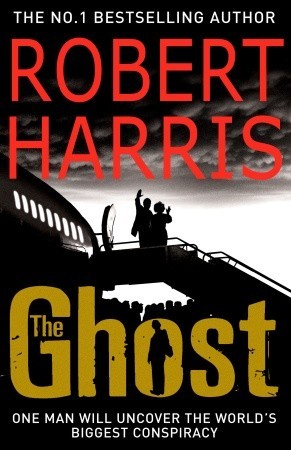
The GhostTimekeepers: How the World Became Obsessed With Time

The Ghost by Robert Harris. I quoted the opening paragraph and synopsis in yesterday’s post. It’s a political thriller with an anonymous narrator who is the ‘ghost’ or rather a ghostwriter employed to write the autobiography of Adam Peter Benet Lang, recently retired prime minister of Great Britain. And he has a month to do it, or rather complete the manuscript started by his predecessor McAra, Lang’s assistant who was found dead, drowned, after falling overboard on the ferry to Martha’s Vineyard.

The film, The Ghost (in the UK)/ The Ghost Writer (in the US) is an adaptation of this book, with Ewan McGregor playing the part of the unnamed ghostwriter.

I’m also reading Timekeepers by Simon Garfield, a book of short essays on different aspects of time. It’s full of facts, but still easy reading written in an entertaining style. But so far I’m finding it ‘interesting’ rather than ‘fascinating’.

I’ve recently finished:  

Now We Shall Be Entirely Free

Now We Shall Be Entirely Free by andrew Miller. See this post for my review – historical fiction set in 1809 Captain John Lacroix, home from Britain’s disastrous campaign against Napoleon’s forces in Spain.

My next book could be:

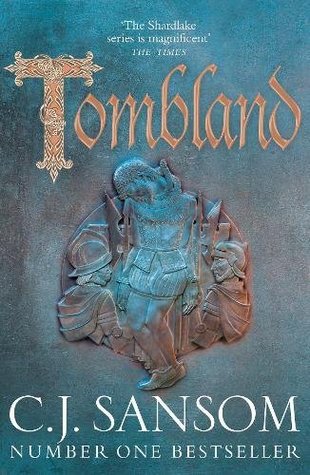
Tombland (Matthew Shardlake, #7)

Although I have several books in mind to read next, it will most probably be Tombland by C J Sansom, which is to be published tomorrow. It’s the 7th book in his Shardlake series.

Synopsis:

Spring, 1549.

Two years after the death of Henry VIII, England is sliding into chaos…

The nominal king, Edward VI, is eleven years old. His uncle Edward Seymour, Lord Hertford, rules as Protector, presiding over a collapsing economy, a draining, prolonged war with Scotland and growing discontent amongst the populace as the old religion is systematically wiped out by radical Protestants.

Matthew Shardlake, meanwhile, is a lawyer in the employ of Lady Elizabeth, the old King’s younger daughter. The gruesome murder of Elizabeth’s distant relative Edith Boleyn soon takes him and his assistant Nicholas Overton to Norwich where he is reunited with Overton’s predecessor Jack Barak. As another murder drags the trio into ever-more dangerous waters, Shardlake finds his loyalties tested as Barak throws in his lot with the exploding peasant rebellion and Overton finds himself prisoner in Norwich castle.

Simultaneously, Shardlake discovers that the murder of Boleyn may have connections reaching into both the heart of the rebel camp and of the Norfolk gentry…

Have you read any of these books?  Do any of them tempt you? 

Now We Shall Be Entirely Free by Andrew Miller

Now We Shall Be Entirely Free

4*

Hodder and Stoughton|23 August 2018|432 pages|Review copy

The opening chapters of Now Well Shall Be Entirely Free drew me in immediately as I read about Captain John Lacroix’s return to England from Spain in 1809, close to death after the battle of Corunna, during the Peninsular War. Miller’s descriptive writing, lyrical and poetic, vividly sets the scene as Lacroix is nursed back to health by Nell, his servant. But it is clear that he is on the edge of a breakdown, mentally and emotionally, saying little about the battle and indeed, unable to face the memories of the horrors he experienced. When another officer arrives ordering him to report back to duty, he decides instead to leave for the Highlands to recuperate.

This is followed by an account of the investigation of the atrocities carried out  in the village of Los Morales during the army’s retreat to Corunna.  The village was burned down, men were lynched and women raped. Two men, a vicious Englishman, Corporal Calley is ordered to track down and kill the officer responsible and a Spaniard, Lieutenant Medina, a liaison officer with the British army, is assigned to accompany him and report back that the execution has been carried out. It is soon obvious that the officer is Captain John Lacroix and so the hunt is on, as Calley and Medina follow his trail from Somerset to Bristol and Glasgow and then on to the Hebrides, leaving a trail of violence and death behind them.

The pace is brisk, until Lacroix reaches the isles, where he meets the Frend family, a brother and sisters, living as part of an isolated community. Jane is pregnant and Emily is slowly losing her sight. At this point in the novel the pace dropped partly because of the vagueness in describing the location of the island (somewhere in the Outer Hebrides beyond Mingulay) and Lacroix’s own mental and physical slowing down on the island – after being attacked and robbed in Glasgow, he began taking opium to relieve his pain. My attention began to wander until he and Emily returned to Glasgow for an operation to improve her eyesight. The pace picked up and I was fascinated by the medical details, with intriguing insights into new discoveries in medical treatment.

But then the ending came all too quickly and left me feeling uncertain about what actually happened – the ambiguity surrounding their ‘freedom’. Freedom is a theme throughout the novel – its definition and how it differs for men and women. The relentless brutality of war, of course is another theme, demonstrated through the inhumanity of Calley’s actions and its effects on Lacroix as he finally reveals what had happened in Spain.

I enjoyed the historical details, the medical techniques as well as the effects of industrialisation, and in particular the conditions in the cotton mills, where Calley laboured as a child. He had worked as a ‘piecer’ mending the cotton threads and cleaning the machines, in danger of losing a limb, deafened by the noise in the hot machine room where the air was thick with little bits of cotton filling up your nose and lungs.

But most of all I enjoyed the writing. Miller’s ability to write in such a lyrical style, to convey emotions and create such complex characters that are so believable that you can empathise, to a limited extent, even with a thug like Calley, make this book remarkable.

Thanks go to Hodder and Stoughton and NetGalley for my copy of this book for review.

New-To-Me Books

Another visit to  Barter Books in Alnwick means I’ve added 5 more books to my TBRs.

img_20181011_073308703

From top to bottom they are:

Fair Stood the Wind for France by H E Bates – a Penguin modern classic. It was first published in 1944 and is about a British pilot, John Franklin, whose plane was shot down in occupied France, and Francoise, the daughter of a French farmer who hid Franklin and his crew from the Germans. I haven’t read any other books by Bates (1905 – 1974) – he was a prolific writer.

Recalled to Life by Reginald Hill, the 13th Dalziel and Pascoe book.  Dalziel reopens the investigation into a murder that took place in 1963 – the year of the Profumo Scandal, the Great Train Robbery and the Kennedy Assassination. I should be on safe ground with this book as I’ve enjoyed all the other Dalziel and Pascoe books I’ve read.

Mystic River by Dennis Lehane. Three boys’ lives were changed for ever when one of them got into a stranger’s car and something terrible happened. Twenty five years later they have to face the nightmares of their past. I’m not sure what to expect from this book, not having read any of Lehane’s books before, but a reviewer in the Guardian described it as one of the finest novels he’d read in ages.

The Hog’s Back Mystery by Freeman Willis Crofts, first published in 1933 during the Golden Age of detective fiction between the two world wars. It’s an Inspector French murder mystery set in Surrey, where first one person then others disappear. Have they been murdered? I’ve read just one of Crofts’ books before, Mystery in the Channel, which completely baffled me – will this be just as complicated?

The Virgin Blue by Tracy Chevalier, the story of two women, born centuries apart and the ancestral legacy that binds them. This was Tracy Chevalier’s first novel. I’ve read and enjoyed some of her later books, including The Girl with a Pearl Earring and Falling Angels, so I’m looking forward to reading this book.

Please let me know if you’ve read any of these books and whether you enjoyed them – or not.

WWW Wednesday: 3 October 2018

IMG_1384-0

WWW Wednesday is run by Taking on a World of Words.

The Three Ws are:

What are you currently reading?
What did you recently finish reading?
What do you think you’ll read next?

I’m currently reading:

A Perfectly Good Man by Patrick Gale. It’s not a sequel to Notes from an Exhibition, which I loved, but is set in the same area of Cornwall. I’m well into this book now and loving how the story is developing. It’s not a straightforward narrative but moves between the characters showing them at different ages in their lives.

A Perfectly Good Man

Synopsis from Goodreads:

When 20-year-old Lenny Barnes, paralysed in a rugby accident, commits suicide in the presence of Barnaby Johnson, the much-loved priest of a West Cornwall parish, the tragedy’s reverberations open up the fault-lines between Barnaby and his nearest and dearest – the gulfs of unspoken sadness that separate them all. Across this web of relations scuttles Barnaby’s repellent nemesis – a man as wicked as his prey is virtuous. Returning us to the rugged Cornish landscape of ‘Notes from an Exhibition,, Patrick Gale lays bare the lives and the thoughts of a whole community and asks us: what does it mean to be good?

I’m also reading A Discovery of Witches by Deborah Harkness – see yesterday’s post for the opening paragraph and synopsis. And I’ve also started to read 21 Lessons for the 21st Century by Yuval Noah Harari, a collection of essays. It’s a new publication (August 2018) one of a few review copies from NetGalley, that I’m behind in reading.

I’ve recently finished:  

Down to the Woods (Helen Grace #8)

Down to the Woods, the 8th DI Helen Grace thriller by M J Arlidge, crime fiction about gruesome murders in the New Forest. See this post for my review – I did want to know the outcome, but I got rather tired of all the violence and chase scenes throughout the book and was relieved to finish it.

My next book could be:

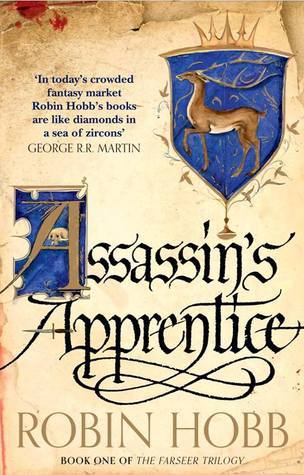
Assassin's Apprentice (Farseer Trilogy, #1)In a Dark, Dark Wood

I have all sorts of ideas about which book to read next and as usual am undecided. It could be one of my NetGalley review books such as Now We Shall Be Entirely Free by Andrew Miller, historical fiction set in 1809 in England, Scotland and Spain. It  looks very good.

Or it could be one of my TBRs that I featured in my Monday post. I’m leaning towards Assassin’s Apprentice by Robin Hobb, Book One of the Farseer Trilogy – several people commented on how much they enjoyed it.

Or one of the books I’ve borrowed from the library – In a Dark, Dark Wood by Ruth Ware. I’ve renewed this book a few times and will have to return it soon. It’s crime fiction – a weekend hen party in a remote cottage (actually a glass house) that goes from bad to worse and someone is killed.

Have you read any of these books?  Do any of them tempt you? 

Books Read in September 2018

How my reading habits have changed! It was only a few years ago that I read mostly paper books, but these days I read mostly e-books – six out of the nine books I read in September are e-books. Another major change is the amount of review copies I read. This month I read five review copies that came to me via NetGalley. I also read one library book and the other three books are all my own books – but only one of those is an actual physical book! And only one of the nine books is non-fiction.

They range from 5 star to 2 star books and are a mix of crime and historical fiction plus one biography. My ratings are based solely on my reactions to the books.

I’ve written about five of these books – click on the links to read my reviews:

  1. The Way of All Flesh by Ambrose Parry 5* – historical fiction set in Edinburgh in 1847 as Dr James Young Simpson, a professor of midwifery, discovered the anaesthetic properties of chloroform.
  2. The Dancer at the Gai-Moulin by Georges Simenon 3.5* – one of the early Maigret books, set in Belgium not France.
  3. The Clockmaker’s Daughter by Karen Morton 3* – historical fiction set over multiple time-lines and with multiple narrators. I loved parts of it and it’s richly descriptive, but found it hard to keep track of all the characters and separate strands of the story.
  4. Appleby’s End by Michael Innes 3* – an Inspector Appleby book. It’s surreal, a macabre fantasy with a  complex and completely unrealistic plot and strange characters.
  5. Down to the Woods by M J Arlidge 2.5* – crime fiction, a DI Helen Grace murder mystery, tense and dark with several twists and turns. Not my favourite book of the month!

Here are some brief notes about the remaining four books:

Dead Woman WalkingDead Woman Walking by Sharon Bolton 5* – Sharon Bolton is a brilliant storyteller and this is a brilliant book – complex, very cleverly plotted, full of suspense and completely gripping with great characters and set in Northumberland. It begins with a balloon flight that ends in disaster and only Jessica survives as the balloon crashes to the ground, but she is pursued by a man who is determined to kill her.  I loved this book.

Wedlock: How Georgian Britain's Worst Husband Met His Match

Wedlock:  How Georgian Britain’s Worst Husband Met His Match by Wendy Moore 4* – a biography of Mary Eleanor Bowes, who was one of Britain’s richest young heiresses. Her first husband was the Count of Strathmore – the Queen Mother, Elizabeth Bowes-Lyon, was a direct descendant of their marriage. Her second marriage to Andrew Robinson Stoney was an absolute disaster. He was brutally cruel and treated her with such violence, humiliation, deception and kidnap, that she lived in fear for her life. This is non-fiction and is full of detail, but even so it reads like a novel.

East of Eden

East of Eden by John Steinbeck 4* –  the story of two families—the Trasks and the Hamiltons—whose generations helplessly re-enact the fall of Adam and Eve and the poisonous rivalry of Cain and Abel. I enjoyed this beautifully written book, which begins slowly, but not as much as The Grapes of Wrath, which I thought was amazing. It’s long – too long really – and to my mind it reads like a morality tale of good versus evil. There are many parallels to the Bible stories, with surely one of the most evil characters ever in Cathy. I liked the way Steinbeck set out the moral dilemmas and gave the characters choice using the Hebrew word ‘timshel‘, meaning ‘thou mayest’.

The Gaslight Stalker (Esther & Jack Enright Mystery #1)The Gaslight Stalker by David Field 2* – historical crime fiction set in London in 1888. This was a disappointing book, that provides a new solution to the Jack the Ripper murders. There are two elements to the plot and I don’t think they mixed well. I liked the historical facts based on the evidence in the Jack the Ripper case and thought they were well written, if a little repetitive. But the romance between Esther, a young seamstress and Jacob Enright, a young police officer, felt out of place and is too simplistically narrated.

New To Me Books

This post is about the books I’ve recently added to my TBRs and about the library books I’ve recently borrowed.

Paperbacks from Barter Books in Alnwick:

img_20180923_092204072

Earth and Heaven by Sue Gee.  I’ve only read one of her books, The Hours of the Night, and that was years ago, and pre-blog, when I just noted that it was ‘good overall’ and ‘could be shorter’. But the blurb interested me – set in the aftermath of the First World War it’s ‘about life’s fragility, and the power of love and painting to disturb, renew and reveal us to ourselves.

Broadchurch by Erin Kelly, based on the story by series creator Chris Chibnall. i loved the TV series, so I’m hoping I’ll love this too. I’ve only read one other book based on a TV series and that was Tenko broadcast in the 1980s (about women in a Japanese prisoner of war camp). The book was terrible, such a let down as I had loved the TV series.

Die Trying by Lee Child, the second Jack Reacher thriller. I haven’t read the first one yet, but I’ve found it’s best to get the books from Barter Books when I see them – they might not be there next time I go. I enjoyed the only Jack Reacher book I’ve read, The Midnight Line and have decided to read the earlier books.

Library books:

img_20180923_092245704

Goodbye Piccadilly: War at Home 1914 by Cynthia Harrod-Eagles. I’ve been seeing her books in libraries and bookshops for years, but have never read any. This is the first in a series about the First World War – I decided to start with this rather than her Morland Dynasty series (now 34 books).

And the Mountains Echoed by Khaled Hosseini. I loved A Thousand Splendid Suns and I’m expecting this to be just as good! It’s described on the back cover as ‘a deeply moving epic of heartache, hope and, above all, the unbreakable bonds of love.

Dandy Gilver and the Reek of Red Herrings by Catriona McPherson – historical crime fiction. I’ve read a few of the Dandy Gilver books and enjoyed them. This one is set in 1930s Scotland – in a fishing village on the Banffshire coast where unusual items are turning up in the herring barrels.

I’m looking forward to reading these books in the coming months!