First Chapter First Paragraph: The Tea Planter’s Wife by Dinah Jefferies

Every Tuesday First Chapter, First Paragraph/Intros is hosted by Vicky of I’d Rather Be at the Beach sharing the first paragraph or two of a book she’s reading or plans to read soon.

This week I’m featuring The Tea Planter’s Wife by Dinah Jefferies, one of the library  books I wrote about in this post last week.

The Tea Planter's Wife

Prologue


Ceylon, 1913

The woman held a slim white envelope to her lips. She hesitated for a moment longer, pausing to listen to the achingly sweet notes of a distant Sinhalese flute. She considered her resolve, turning it over as she would a pebble in her palm, then sealed the envelope and propped it against a vase of wilting red roses.

Chapter I

Twelve Years Later, Ceylon 1925

With her straw hat in one hand, Gwen leant against the salty railings and glanced down again. She’d been watching the shifting colour of the sea for an hour, tracing the shreds of paper, the curls of orange peel and the leaves drifting by. Now that the water had changed from deepest turquoise to dingy grey, she knew it wouldn’t be long. She leant a little further over the rail to watch a piece of silver fabric float out of sight.

Blurb (Amazon)

Nineteen-year-old Gwendolyn Hooper steps off a steamer in Ceylon full of optimism, eager to join her new husband. But the man who greets her at the tea plantation is not the same one she fell in love with in London.

Distant and brooding, Laurence spends long days wrapped up in his work, leaving his young bride to explore the plantation alone. It’s a place filled with clues to the past – locked doors, a yellowed wedding dress in a dusty trunk, an overgrown grave hidden in the grounds, far too small for an adult…

Gwen soon falls pregnant and her husband is overjoyed, but she has little time to celebrate. In the delivery room the new mother is faced with a terrible choice, one she knows no one in her upper class set will understand – least of all Laurence. Forced to bury a secret at the heart of her marriage, Gwen is more isolated than ever. When the time comes, how will her husband ever understand what she has done?

~~~

I think I’m going to enjoy this book – I really hope I will.

What do you think? Would you keep reading?

Destroying Angel by S G MacLean

Destroying Angel (Damian Seeker #3)

Destroying Angel is S G MacLean’s third book in her Damian Seeker series, historical crime fiction set during the Interregnum under Oliver Cromwell, the Lord Protector. Damian Seeker, Captain of Cromwell’s Guard, works for Thurloe, Cromwell’s Chief Secretary and spy master, in charge of the security of the regime. I have read The Black Friar, the second book in the series, but I have still to read first one, The Seeker – I have reserved this at the library, so hope to read it soon.

This third book is set in 1655 when Seeker is sent north by Colonel Robert Lilburne to the village of Faithly, on the Yorkshire moors. The Rule of the Major-Generals has begun in which England and Wales were divided into ten regions, each governed by a major-general who answered to the Lord Protector. Seeker is to brief the local commissioner, Matthew Pullan, on the latest anti-Royalist laws and the new  measures  and taxes to be imposed on Royalists, to prepare the way for the rule of the major-generals. As the vicar, Septimus Jenkins complains:

This England that Cromwell is making is not the England of free men. … Local officers – village constables – to be encouraged to inform on magistrates, justices of the peace, even, that they don’t consider well enough affected to the new ways. No race meetings nor cockfights nor bear-baitings to be held, no gatherings of Royalists in men’s private houses nor in public places even, for fear that should  a handful of themselves in one place they will have nothing to do but plot to overthrow Cromwell. Answer for your movements, don’t gather with your friends. (page 50)

These are hard times and Faithly is a place full of resentment and fear, brought to crisis point when Caleb Turner, a Trier appointed by the government to enforce Puritan morality arrives in the village. In particular he has come to try the vicar for ‘ungodly acts’. Added to that people have been whipped up into a frenzy of superstition at the suspicion of witchcraft. And that is made much worse when Gwendolen, Matthew’s young ward, who some suspect was a witch, dies from eating poisoned mushrooms – the deadly destroying angel fungus.

Faithly Manor, on Faithly Moor, is the home of Sir Edward Faithly, the local JP, whose father Sir Anthony and younger brother, Thomas had fought for the Stuarts. Sir Anthony was killed during the Civil War and Thomas had fled the country, whilst Edward had stayed on to run their estate. There are rumours that Thomas has now returned to England and Seeker had been sent to discover his whereabouts.

As well as searching for Thomas, Seeker has to find out how Gwendolen died – was it an accident or had the poison been intended for someone else and if so who and why? A large part of the book is set in York and, helped by the street plan showing the key areas and buildings, I enjoyed following Seeker’s walks around the City. Seeker is my favourite character in the book; an enigmatic character, a man both respected and feared, and a man to trust. I felt I knew very little, though, about his background so was pleased that as the story progressed more details of his personal history are revealed with the appearance of people from his past.

One reason I like S G MacLean’s books (her earlier books were written under the name of Shona MacLean) is that she has based them on solid historical research (she has an M.A. and Ph.D. in History from the University of Aberdeen). Another reason is that her style of writing suits me perfectly, the characters are just right, credible well-rounded people, and the plot moves along swiftly, full of atmosphere and tension.

The Bear Pit, the fourth Seeker book is due out this July, taking him back to London to investigate illegal gambling dens. And so I hope to find out yet more about Damian Seeker.

  • Paperback: 416 pages
  • Publisher: Quercus (12 July 2018)
  • Language: English
  • ISBN: 978-1-78648-4178
  • Source: Library book
  • My Rating: 4*

Destroying Angel qualifies for the When Are You Reading? challenge, the Calendar of Crime challenge in the category of a book originally published in July, and as it is a library book it also qualifies for the The Virtual Mount TBR challenge.

Six Degrees of Separation: from The French Lieutenant’s Woman to The Lieutenant

I love doing Six Degrees of Separation, a monthly link-up hosted by Kate at Books Are My Favourite and Best. Each month a book is chosen as a starting point and linked to six other books to form a chain. A book doesn’t need to be connected to all the other books on the list, only to the one next to it in the chain.

This month the chain begins with The French Lieutenant’s Woman by John Fowles, a book I read and loved years ago but now I’ve forgotten most of the details – I’ve been meaning to re-read it for years.

The French Lieutenant's Woman

But what I do remember is that it is a book with an alternative ending and what I first thought of for my first link is a book with no ending – The Mystery of Edwin Drood by Charles Dickens. It begins with a scene in an opium den where Jasper lies under the influence of several pipes of opium, trembling and almost incoherent from the visions that came to him.

Drood

Drood by Dan Simmons is also full of opium induced nightmares. In this book Drood is horrific, a half-Egyptian fiend who takes laudanum by the jugful. I didn’t enjoy this book – it’s too long, too wordy and full of unlikeable characters, but it does contain some vivid descriptions – the slums of London, the train accident at Staplehurst and the fantastical “Undertown” with its miles of tunnels, catacombs, caverns and sewers.

Elizabeth Barrett Browning

Elizabeth Barrett Browning: a biography by Margaret Forster reveals that from an early age Elizabeth took a tincture of opium (laudanum) prescribed to her for various illnesses, including ‘nervous hysteria‘. Elizabeth had a beloved spaniel, Flush, who shares her sickroom.

Dumb Witness (Hercule Poirot, #16)

Agatha Christie also had a much loved dog and dedicated Dumb Witness to him. Poirot investigates the death of Miss Emily Arundell. The ‘dumb witness’ of the title is Bob, Emily’s wire-haired terrier. After Emily fell down the stairs, tripping over Bob’s ball, she was convinced her relatives were trying to kill her.

TNow We Shall Be Entirely Freehis brings me to Now We Shall Be Entirely Free by Andrew Miller in which the main character, Captain John Lacroix, also takes opium and meets an Emily – Emily Frend, who is losing her sight. Lacroix, unable to face the memories of the horrors he experienced at the battle of Corunna is being tracked by Corporal Calley and a Spaniard, Lieutenant Medina, who have been ordered to kill him for his part in the battle.

The LieutenantMy final link is to another book about a lieutenant and also linking back to the start of the chain. It’s The Lieutenant by Kate Grenville, based on real events and set in 1788, about Daniel Rooke, a lieutenant and an astronomer with the First Fleet when it lands on the shores of New South Wales. Rooke gets to know the local Aboriginal people, and forges a remarkable connection with one child, which will change his life in ways he never imagined.
I like the circularity of this chain beginning and ending with books about lieutenants and containing a third book about yet another lieutenant. The chain passes through time and place from England in the 19th century to Australia in the 18th century, connected by the endings of books, opium addicts, a love of dogs and characters called Emily. I have read all the books except for The Lieutenant, which is one of my TBR books.

Next month (February 2, 2019), the chain begins with Fight Club by Chuck Palahniuk.

My Friday Post: World Enough & Time by Christian McEwan

Book Beginnings Button

Every Friday Book Beginnings on Friday is hosted by Gillion at Rose City Reader where you can share the first sentence (or so) of the book you are reading, along with your initial thoughts about the sentence, impressions of the book, or anything else the opener inspires.

World Enough & Time: On Creativity and Slowing Down

This week I’m featuring World Enough & Time: On Creativity and Slowing Down by Christian McEwen, a book I’ve borrowed from a friend:


When the Lilliputians first saw Gulliver’s watch, ‘that wonderful kind of engine … a globe, half silver and half of some transparent metal [glass!]’, they told themselves it had to be his god. After all, ‘he very seldom did anything without consulting it; he called it his oracle, and said it pointed out the time for every action of his life.’

Also every Friday there is The Friday 56, hosted by Freda at Freda’s Voice.

30879-friday2b56These are the rules:

  1. Grab a book, any book.
  2. Turn to page 56, or 56% on your eReader. If you have to improvise, that is okay.
  3. Find any sentence (or a few, just don’t spoil it) that grabs you.
  4. Post it.
  5. Add the URL to your post in the link on Freda’s most recent Friday 56 post.

Page 56:

Consider this quotation:

and this is what we mean by friends. Even when they are absent, they are with us … even when they are weak, they are strong; and … even when they are dead, they are alive.

CICERO

~~~

About the Book (extracted from Goodreads)

Slowness can open doors to sustained creativity, claims poet and teacher Christian McEwen. Over the course of ten years training teachers to write their own poems in order to pass the craft along to students, McEwen realized that nothing comes easily when life is conducted at a high rate of speed. She draws not only on personal experience, but on readings ranging from literary anecdote and poetry to Buddhism, anthropology, current news, and social history, all supplemented by interviews with contemporary writers and artists. This is a real reader’s book, one that stands up as both sustained narrative and occasional inspiration.

~~~

This is a book to take your time over reading it – you can read straight through or dip in and out of the chapters, focusing on different themes. I don’t want to rush through it – so at times, as I’m reading it I may quote further extracts  in future posts rather than writing a review.

What about you? Does it tempt you or would you stop reading? 

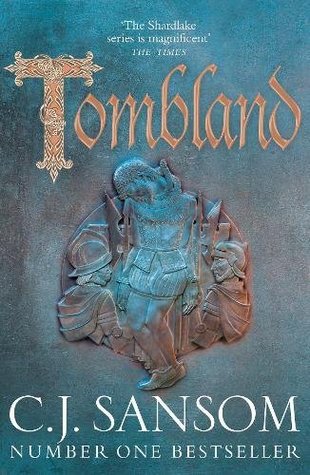
Tombland by C J Sansom

Tombland (Matthew Shardlake, #7)

5*

It’s been a few weeks now since I finished reading Tombland, the seventh novel in C. J. Sansom’s Shardlake series. I wrote a Friday post, quoting the first paragraph and a teaser from page 56 and have been wondering what to write about the book as a whole. It is very long, is based on primary and secondary sources with notes and a bibliography. ‘Tombland‘ is an area within the city of Norwich and there’s a street plan on the endpapers of my hardback edition, showing the layout of Norwich and the position of Mousehole Heath in 1549. It is a most impressive book full of detail with a large cast of characters, and whatever I write will not do justice to it.

It’s 1549, Edward VI is king, a minor and England is ruled by the Duke of Somerset as Lord Protector. Rebellion is spreading in protest against the landowners’ enclosures of the common land. Edward’s sister, the Lady Elizabeth has asked Matthew Shardlake to make discrete investigations into the murder of Edith Boleyn, the wife of John Boleyn – a distant Norfolk relation of Elizabeth’s mother, Anne Boleyn. John Boleyn has been arrested and will be on trial at the Norfolk Assizes.

The murder mystery, however, is not the main focus of Tombland. Shardlake and his assistant, Nicholas Overton leave London for Norwich, begin their investigation, but as they leave Norwich they get caught up in a rebellion as thousands of peasants led by Robert Kett march on Norwich and establish a vast camp on Mousehole Heath on the land overlooking the city.

I knew about the early enclosures of common land, but hadn’t heard of Kett’s Rebellion before. A large part of the book follows the sequence of events that made up the Rebellion (with more detail given in the Historical Essay at the end of the book). Shardlake is forced to join the rebels. He then has little control over events in the rebel camp and has to search his conscience to decide whether to help them and where his loyalties actually lie. His sympathies lie with the common people ousted from the land they had previously used and so, when Robert Kett asks for his advice at the trials held at the ancient oak, they called the ‘Oak of Reformation’ to ensure that the proper legal procedures are followed he agrees.

Meanwhile Shardlake has not forgotten about Edith’s murder and as the rebels take over the city of Norwich for a while he is allowed to visit John Boleyn, held a prisoner in Norwich Castle, and convinced of John’s innocence he is determined to discover who really had murdered her. Surprisingly, he finds the key to the mystery back at the rebel camp.

Of course, it is far more complicated than I have outlined. Sansom’s research is thorough, so much so that reading his book takes you back in time evoking the sights, smells and atmosphere of the mid 16th century. The characters become real people, with their place in society clearly defined, and the changes in their economic conditions explained as a new ‘rural’ gentry class came into existence and the enclosures deprived the common people of the land they had traditionally used. It’s not just economic changes but also religious changes as the new Book of Common Prayer has been introduced and people are upset by the changes and religious intolerance. It’s a time of great unrest:

Our misery is a laughing stock to those proud insolent men! We are like slaves, and farm our land only at the pleasure and will of the lords. For as soon as any man offends any of these gentlemen he is put out! The common pastures which have been our predecessors’ time out of mind are taken away; they are ditched and hedged in, the pastures enclosed …

We can no longer bear such great and cruel injury! We will rather take up arms than endure it! (page 394)

There is so much more to this book, skilfully written combining the historical facts and fiction. But it works well as a standalone book as enough information is given to understand the relationships of the characters from the earlier books. I was rather sad to see that Guy Malton (previously a monk and now licensed as a doctor), one of my favourite characters is now old and ill, but I was pleased to learn more about Jack Barak, Shardlake’s former assistant, and his on-off relationship with his wife Tamsin. Shardlake’s former servant, Josephine lives in Norwich and he is pleased to meet  up with her, her husband and young baby.

Tombland is a book with an emphasis on the people of the Tudor period – not just about royalty and national events. Protector Somerset is waging war against Scotland but that is only mentioned, Edward VI doesn’t appear, Mary, his sister is referred to, and Elizabeth, his other sister has a cameo role at her household in Hatfield Palace in Hertfordshire. With so much detail it has a slower pace than other books I’ve read recently but I loved the attention to detail and the descriptive writing which placed me precisely at the scenes.

  • Hardcover: 880 pages
  • Publisher: Mantle; Main Market edition (18 Oct. 2018)
  • Language: English
  • ISBN-10: 1447284488
  • ISBN-13: 978-1447284482
  • Source: I bought the book
  • My rating: 5*


Books Read in November 2018

This month I read seven books, made up of one review copy that came to me via  NetGalley, two library books and four of my own books (two of these on Kindle). Two of the seven books are non-fiction and the rest are fiction. My ratings range from 5 to 2.5 stars and are based solely on my reactions to the books.

I’ve written about three of these books (click on the links to read my reviews):

Jacob's Room is Full of Books: A Year of ReadingAbsolute ProofIn a Dark, Dark Wood

  1. Jacob’s Room is Full of Books by Susan Hill 5*  – in which Susan Hill describes a year of her reading.
  2. Absolute Proof by Peter James 3.5* –  a standalone thriller that is very different from his Roy Grace books. It has similarities to Dan Brown’s The Da Vinci Code, as the search is on for proof of  God’s existence.
  3. In a Dark, Dark Wood by Ruth Ware 2.5* – I was disappointed as this book promised to be a psychological thriller but it neither thrilled nor scared me, although it is a page-tuner. Leonora and Clare haven’t seen  or even spoken to each other since they were 16, ten years ago. So why has Clare invited Leonora to her hen party held in a glass house in the middle of a wood?

Here are some brief notes about the remaining four books:

I Am, I Am, I Am: Seventeen Brushes With DeathThe ReckoningThe New Mrs CliftonTombland (Matthew Shardlake, #7)

I Am, I Am, I Am by Maggie O’Farrell 5* – I wrote this Friday post about this book, with two quotations and a summary of the book. It’s a memoir with a difference: seventeen encounters of near-death experiences, with Maggie at different ages, in different locations, revealing a whole life in a series of tense, visceral snapshots. It’s a beautifully written book that I loved.

The Reckoning by John Grisham 5*, about Pete Banning, Clanton’s favourite son, a returning war hero, the patriarch of a prominent family, a farmer, father, neighbour, and a faithful member of the Methodist Church. Why did he shoot and kill the Reverend Dexter Bell? And then refuse to say why he killed him? I was intrigued and fascinated by the whole book that went back into Pete’s wartime experiences during world War Two during the Bataan Death March in the Philippines.

The New Mrs Clifton by Elizabeth Buchan 4* this begins in 1974 with the discovery of a skeleton, the remains of a woman, between twenty-five and thirty, buried beneath a tree in the garden of house in Clapham, facing the Common. Her identity and why and how she was killed is not revealed until very nearly the end of the book.

It then moves back in time to 1945 when Intelligence Officer Gus Clifton returns to London with Krista, the German wife he married secretly in Berlin. For his sisters, Julia and Tilly, this broken woman is nothing more than the enemy. For Nella, Gus’s loyal fiancée, it is a terrible betrayal. Elizabeth Buchan paints a convincing and moving picture of life in both London and Berlin post-war, highlighting the devastation of the bombing and showing how people have to come to terms with the changes in their lives. All the way through the book I wondered who the killer was and which woman had been murdered.

Tombland by C J Sansom 5* – I wrote this Friday post this book, giving two quotations and a summary of the book. Set in 1549 this is a remarkable and detailed book about the situation as Edward VI is on the throne following the death of his father Henry VIII and his uncle Edward Seymour, Duke of Somerset, rules as Protector.

Matthew Shardlake has been working as a lawyer in the service of Edward’s sister, the Lady Elizabeth. He is employed to investigate the gruesome murder of Edith Boleyn, the wife of John Boleyn – a distant Norfolk relation of Elizabeth’s mother. But the main part of the book is about Kett’s Rebellion – as thousands of peasants, in protest about the enclosures of common land, gather together on Mousehold Heath outside Norwich and battle ensues.

It’s an enormous book and I’m planning to write a longer post about it.