The Glass Woman by Caroline Lea

The Glass Woman

Penguin UK Michael Joseph|7 February 2019 |400 pages|e-book |Review copy|3*

Top Ten Tuesday: The Ten Most Recent Additions to My To-Read List

top-ten-tuesday-new

Top Ten Tuesday is a weekly meme created by The Broke and the Bookish and now hosted by Jana at That Artsy Reader Girl. For the rules see her blog.

This week’s topic is The Ten Most Recent Additions to My To-Read List. These are in no particular order, except for the first three which are books to be released later this year. I’m looking forward to reading each one of them!

The Silence of the GirlsThe Bear Pit: The Seeker 4This Poison Will Remain

The Silence of the Girls by Pat Barker, out in paperback in June 2019, a retelling of the Trojan War.

The Bear Pit by S G MacLean, the 4th Damian Seeker novel, out in July 2019, set in the 17th century England under the rule of Cromwell, the Lord Protector.

This Poison Will Remain by Fred Vargas out in paperback in August 2019, a Commissaire Adamsberg mystery investigating the death of three men, all killed by the venom of the recluse spider.

TranscriptionThe Wych ElmDear Mrs BirdThe Sealwoman's Gift

Transcription by Kate Atkinson – a standalone novel set in London in the world of espionage in the 1940s and 50s.

The Wych Elm by Tana French, a standalone psychological thriller.

Dear Mrs Bird by A J Pearce, historical fiction set in London in 1941.

The Seal Woman’s Gift by Sally Magnusson, set in 1627 as pirates raided the coast of Iceland and abducted 400 people into slavery in Algiers.

TemplarsThe Song of AchillesBlood & Sugar

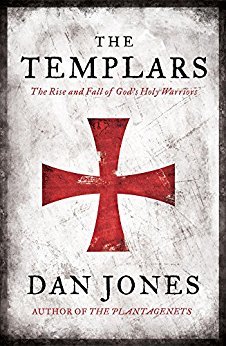
The Templars by Dan Jones, non fiction about the Knights Templars and the Crusades

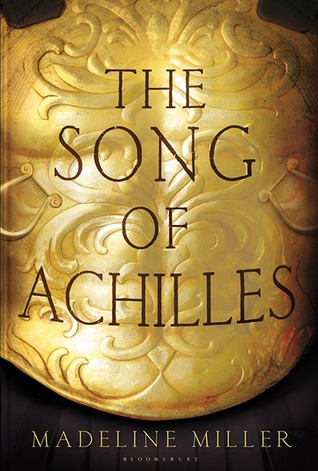
The Song of Achilles by Madeleine Miller, more historical fiction about the Trojan War and its heroes.

Blood and Sugar by Laura Shepherd-Robinson, historical crime fiction set in June, 1781 about the slave trade.

First Chapter First Paragraph: The Tea Planter’s Wife by Dinah Jefferies

Every Tuesday First Chapter, First Paragraph/Intros is hosted by Vicky of I’d Rather Be at the Beach sharing the first paragraph or two of a book she’s reading or plans to read soon.

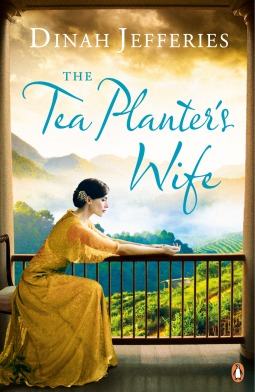
This week I’m featuring The Tea Planter’s Wife by Dinah Jefferies, one of the library  books I wrote about in this post last week.

The Tea Planter's Wife

Prologue


Ceylon, 1913

The woman held a slim white envelope to her lips. She hesitated for a moment longer, pausing to listen to the achingly sweet notes of a distant Sinhalese flute. She considered her resolve, turning it over as she would a pebble in her palm, then sealed the envelope and propped it against a vase of wilting red roses.

Chapter I

Twelve Years Later, Ceylon 1925

With her straw hat in one hand, Gwen leant against the salty railings and glanced down again. She’d been watching the shifting colour of the sea for an hour, tracing the shreds of paper, the curls of orange peel and the leaves drifting by. Now that the water had changed from deepest turquoise to dingy grey, she knew it wouldn’t be long. She leant a little further over the rail to watch a piece of silver fabric float out of sight.

Blurb (Amazon)

Nineteen-year-old Gwendolyn Hooper steps off a steamer in Ceylon full of optimism, eager to join her new husband. But the man who greets her at the tea plantation is not the same one she fell in love with in London.

Distant and brooding, Laurence spends long days wrapped up in his work, leaving his young bride to explore the plantation alone. It’s a place filled with clues to the past – locked doors, a yellowed wedding dress in a dusty trunk, an overgrown grave hidden in the grounds, far too small for an adult…

Gwen soon falls pregnant and her husband is overjoyed, but she has little time to celebrate. In the delivery room the new mother is faced with a terrible choice, one she knows no one in her upper class set will understand – least of all Laurence. Forced to bury a secret at the heart of her marriage, Gwen is more isolated than ever. When the time comes, how will her husband ever understand what she has done?

~~~

I think I’m going to enjoy this book – I really hope I will.

What do you think? Would you keep reading?

Destroying Angel by S G MacLean

Destroying Angel (Damian Seeker #3)

Destroying Angel is S G MacLean’s third book in her Damian Seeker series, historical crime fiction set during the Interregnum under Oliver Cromwell, the Lord Protector. Damian Seeker, Captain of Cromwell’s Guard, works for Thurloe, Cromwell’s Chief Secretary and spy master, in charge of the security of the regime. I have read The Black Friar, the second book in the series, but I have still to read first one, The Seeker – I have reserved this at the library, so hope to read it soon.

This third book is set in 1655 when Seeker is sent north by Colonel Robert Lilburne to the village of Faithly, on the Yorkshire moors. The Rule of the Major-Generals has begun in which England and Wales were divided into ten regions, each governed by a major-general who answered to the Lord Protector. Seeker is to brief the local commissioner, Matthew Pullan, on the latest anti-Royalist laws and the new  measures  and taxes to be imposed on Royalists, to prepare the way for the rule of the major-generals. As the vicar, Septimus Jenkins complains:

This England that Cromwell is making is not the England of free men. … Local officers – village constables – to be encouraged to inform on magistrates, justices of the peace, even, that they don’t consider well enough affected to the new ways. No race meetings nor cockfights nor bear-baitings to be held, no gatherings of Royalists in men’s private houses nor in public places even, for fear that should  a handful of themselves in one place they will have nothing to do but plot to overthrow Cromwell. Answer for your movements, don’t gather with your friends. (page 50)

These are hard times and Faithly is a place full of resentment and fear, brought to crisis point when Caleb Turner, a Trier appointed by the government to enforce Puritan morality arrives in the village. In particular he has come to try the vicar for ‘ungodly acts’. Added to that people have been whipped up into a frenzy of superstition at the suspicion of witchcraft. And that is made much worse when Gwendolen, Matthew’s young ward, who some suspect was a witch, dies from eating poisoned mushrooms – the deadly destroying angel fungus.

Faithly Manor, on Faithly Moor, is the home of Sir Edward Faithly, the local JP, whose father Sir Anthony and younger brother, Thomas had fought for the Stuarts. Sir Anthony was killed during the Civil War and Thomas had fled the country, whilst Edward had stayed on to run their estate. There are rumours that Thomas has now returned to England and Seeker had been sent to discover his whereabouts.

As well as searching for Thomas, Seeker has to find out how Gwendolen died – was it an accident or had the poison been intended for someone else and if so who and why? A large part of the book is set in York and, helped by the street plan showing the key areas and buildings, I enjoyed following Seeker’s walks around the City. Seeker is my favourite character in the book; an enigmatic character, a man both respected and feared, and a man to trust. I felt I knew very little, though, about his background so was pleased that as the story progressed more details of his personal history are revealed with the appearance of people from his past.

One reason I like S G MacLean’s books (her earlier books were written under the name of Shona MacLean) is that she has based them on solid historical research (she has an M.A. and Ph.D. in History from the University of Aberdeen). Another reason is that her style of writing suits me perfectly, the characters are just right, credible well-rounded people, and the plot moves along swiftly, full of atmosphere and tension.

The Bear Pit, the fourth Seeker book is due out this July, taking him back to London to investigate illegal gambling dens. And so I hope to find out yet more about Damian Seeker.

  • Paperback: 416 pages
  • Publisher: Quercus (12 July 2018)
  • Language: English
  • ISBN: 978-1-78648-4178
  • Source: Library book
  • My Rating: 4*

Destroying Angel qualifies for the When Are You Reading? challenge, the Calendar of Crime challenge in the category of a book originally published in July, and as it is a library book it also qualifies for the The Virtual Mount TBR challenge.

Six Degrees of Separation: from The French Lieutenant’s Woman to The Lieutenant

I love doing Six Degrees of Separation, a monthly link-up hosted by Kate at Books Are My Favourite and Best. Each month a book is chosen as a starting point and linked to six other books to form a chain. A book doesn’t need to be connected to all the other books on the list, only to the one next to it in the chain.

This month the chain begins with The French Lieutenant’s Woman by John Fowles, a book I read and loved years ago but now I’ve forgotten most of the details – I’ve been meaning to re-read it for years.

The French Lieutenant's Woman

But what I do remember is that it is a book with an alternative ending and what I first thought of for my first link is a book with no ending – The Mystery of Edwin Drood by Charles Dickens. It begins with a scene in an opium den where Jasper lies under the influence of several pipes of opium, trembling and almost incoherent from the visions that came to him.

Drood

Drood by Dan Simmons is also full of opium induced nightmares. In this book Drood is horrific, a half-Egyptian fiend who takes laudanum by the jugful. I didn’t enjoy this book – it’s too long, too wordy and full of unlikeable characters, but it does contain some vivid descriptions – the slums of London, the train accident at Staplehurst and the fantastical “Undertown” with its miles of tunnels, catacombs, caverns and sewers.

Elizabeth Barrett Browning

Elizabeth Barrett Browning: a biography by Margaret Forster reveals that from an early age Elizabeth took a tincture of opium (laudanum) prescribed to her for various illnesses, including ‘nervous hysteria‘. Elizabeth had a beloved spaniel, Flush, who shares her sickroom.

Dumb Witness (Hercule Poirot, #16)

Agatha Christie also had a much loved dog and dedicated Dumb Witness to him. Poirot investigates the death of Miss Emily Arundell. The ‘dumb witness’ of the title is Bob, Emily’s wire-haired terrier. After Emily fell down the stairs, tripping over Bob’s ball, she was convinced her relatives were trying to kill her.

TNow We Shall Be Entirely Freehis brings me to Now We Shall Be Entirely Free by Andrew Miller in which the main character, Captain John Lacroix, also takes opium and meets an Emily – Emily Frend, who is losing her sight. Lacroix, unable to face the memories of the horrors he experienced at the battle of Corunna is being tracked by Corporal Calley and a Spaniard, Lieutenant Medina, who have been ordered to kill him for his part in the battle.

The LieutenantMy final link is to another book about a lieutenant and also linking back to the start of the chain. It’s The Lieutenant by Kate Grenville, based on real events and set in 1788, about Daniel Rooke, a lieutenant and an astronomer with the First Fleet when it lands on the shores of New South Wales. Rooke gets to know the local Aboriginal people, and forges a remarkable connection with one child, which will change his life in ways he never imagined.
I like the circularity of this chain beginning and ending with books about lieutenants and containing a third book about yet another lieutenant. The chain passes through time and place from England in the 19th century to Australia in the 18th century, connected by the endings of books, opium addicts, a love of dogs and characters called Emily. I have read all the books except for The Lieutenant, which is one of my TBR books.

Next month (February 2, 2019), the chain begins with Fight Club by Chuck Palahniuk.

My Friday Post: World Enough & Time by Christian McEwan

Book Beginnings Button

Every Friday Book Beginnings on Friday is hosted by Gillion at Rose City Reader where you can share the first sentence (or so) of the book you are reading, along with your initial thoughts about the sentence, impressions of the book, or anything else the opener inspires.

World Enough & Time: On Creativity and Slowing Down

This week I’m featuring World Enough & Time: On Creativity and Slowing Down by Christian McEwen, a book I’ve borrowed from a friend:


When the Lilliputians first saw Gulliver’s watch, ‘that wonderful kind of engine … a globe, half silver and half of some transparent metal [glass!]’, they told themselves it had to be his god. After all, ‘he very seldom did anything without consulting it; he called it his oracle, and said it pointed out the time for every action of his life.’

Also every Friday there is The Friday 56, hosted by Freda at Freda’s Voice.

30879-friday2b56These are the rules:

  1. Grab a book, any book.
  2. Turn to page 56, or 56% on your eReader. If you have to improvise, that is okay.
  3. Find any sentence (or a few, just don’t spoil it) that grabs you.
  4. Post it.
  5. Add the URL to your post in the link on Freda’s most recent Friday 56 post.

Page 56:

Consider this quotation:

and this is what we mean by friends. Even when they are absent, they are with us … even when they are weak, they are strong; and … even when they are dead, they are alive.

CICERO

~~~

About the Book (extracted from Goodreads)

Slowness can open doors to sustained creativity, claims poet and teacher Christian McEwen. Over the course of ten years training teachers to write their own poems in order to pass the craft along to students, McEwen realized that nothing comes easily when life is conducted at a high rate of speed. She draws not only on personal experience, but on readings ranging from literary anecdote and poetry to Buddhism, anthropology, current news, and social history, all supplemented by interviews with contemporary writers and artists. This is a real reader’s book, one that stands up as both sustained narrative and occasional inspiration.

~~~

This is a book to take your time over reading it – you can read straight through or dip in and out of the chapters, focusing on different themes. I don’t want to rush through it – so at times, as I’m reading it I may quote further extracts  in future posts rather than writing a review.

What about you? Does it tempt you or would you stop reading?