WWW Wednesday: 27 March 2019

IMG_1384-0

WWW Wednesday is run by Taking on a World of Words.

The Three Ws are:

What are you currently reading?
What did you recently finish reading?
What do you think you’ll read next?


I’m currently reading:

A Life of My Own: A Biographer’s Life by Claire Tomalin – a book that Marina @ Finding Time To Write, so kindly sent to me. I’ve been reading this a few chapters at a time for some while and am getting to the end of this book. This morning I read about the death of her second daughter, Susanna – such a moving tribute.

Moriarty by Anthony Horowitz – I’ve only read a few chapters so far. This is a Sherlock Holmes novel but without both Holmes and Watson – Sherlock Holmes and Moriarty have fallen to their deaths at the Reichenbach Falls. The discovery of a brutally murdered body in a leafy suburb is investigated by Pinkerton agent Frederick Chase  and Inspector Athelney Jones, a devoted student of Holmes’s methods of investigation and deduction.

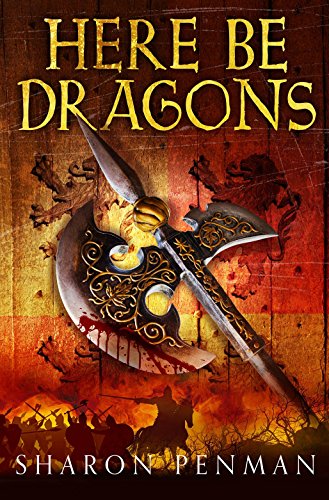
Here Be Dragons by Sharon Penman, historical fiction, the first of her trilogy about the medieval princes of Gwynedd and the monarchs of England. I’m reading this on my Kindle and finding it just as compelling reading as her wonderful book The Sunne in Splendour. It tells the story of Llewelyn, the Prince of North Wales, and his rise to power and fame. So far, I’m reading about his childhood and teenage years.

I’ve recently finished:

Fingers in the Sparkle Jar by Chris Packham, which I first read two years ago. A very special book that is just as amazing to read as it was for the first time.

Wakenhyrst by Michelle Paver, a gothic novel due to be published on 4 April 2019. I loved her Dark Matter, a ghost story in the form of a diary set in the Arctic and so expected to love this one too. It’s not as chilling, but is just as atmospheric and full of mystery. I’ll be writing my review very soon.

In Edwardian Suffolk, a manor house stands alone in a lost corner of the Fens: a glinting wilderness of water whose whispering reeds guard ancient secrets. Maud is a lonely child growing up without a mother, ruled by her repressive father.

When he finds a painted medieval devil in a graveyard, unhallowed forces are awakened. Maud’s battle has begun. She must survive a world haunted by witchcraft, the age-old legends of her beloved fen – and the even more nightmarish demons of her father’s past.

My next book could be:

At the moment I don’t know. But it could be The Evidence Against You by Gillian Mcallister, due to be published on 18 April 2019.

The Evidence Against You

It’s the day Izzy’s father will be released from jail.

She has every reason to feel conflicted – he’s the man who gave her a childhood filled with happy memories.

But he has also just served seventeen years for the murder of her mother.

Now, Izzy’s father sends her a letter. He wants to talk, to defend himself against each piece of evidence from his trial.

But should she give him the benefit of the doubt?

Or is her father guilty as charged, and luring her into a trap?

Have you read any of these books?  Do any of them tempt you? 

My Friday Post: Here Be Dragons by Sharon Penman

Book Beginnings Button

Every Friday Book Beginnings on Friday is hosted by Gillion at Rose City Reader where you can share the first sentence (or so) of the book you are reading, along with your initial thoughts about the sentence, impressions of the book, or anything else the opener inspires.

This week I’m featuring Here Be Dragons by Sharon Penman, one of my TBRs that I’ll be reading next. Set in 13th century Wales this is the story of Llewelyn, the Prince of North Wales, and his rise to power and fame and his love for Joanna, the illegitimate daughter of King John.

Here be dragons

It begins with a Prologue, describing Wales and the Welsh:

Prologue

Theirs was a land of awesome grandeur, a land of mountains and moorlands and cherished myths. They called it Cymru and believed themselves to be the descendants of Brutus and the citizens of Troy. They were a passionate, generous and turbulent people, with but one fateful flaw. They proclaimed themselves to be Cymry – ‘fellow countrymen’ – but they fought one another as fiercely as they did their English neighbours and had carved out three separate kingdoms out of their native soil.

Also every Friday there is The Friday 56, hosted by Freda at Freda’s Voice.

30879-friday2b56These are the rules:

  1. Grab a book, any book.
  2. Turn to page 56, or 56% on your eReader. If you have to improvise, that is okay.
  3. Find any sentence (or a few, just don’t spoil it) that grabs you.
  4. Post it.
  5. Add the URL to your post in the link on Freda’s most recent Friday 56 post.

Page 56:

‘Think you that no man Norman-born can be a fool? As for his Norman knighthood, that’ll count for naught against a Welsh longbow.’

~~~

I loved Sharon Penman’s The Sunne in Splendour and so I’m expecting Here Be Dragons to be just as good. I love the title, conjuring up notions of what lies beyond the edge of the known world and I think the imagery of the opening sentence is wonderful. 

What do you think? Would you keep reading?

Top Ten Tuesday: Books On My Spring 2019 TBR

top-ten-tuesday-new

Top Ten Tuesday is a weekly meme created by The Broke and the Bookish and now hosted by Jana at That Artsy Reader Girl. For the rules see her blog.

This week’s topic is Books On My Spring 2019 TBR. Some of these books have been on my shelves unread for a long time, some are new additions and others are e-books from NetGalley that will be published soon. I’d like to think I’ll read all these books soon but realistically I know that I’ll only read a few of them this Spring!

Broken Ground by Val McDermid – DCI Karen Pirie investigates the discovery of a body in the remote depths of the Scottish Highlands.

In Cold Blood by Truman Capote – Capote reconstructs the crime and the investigation into the murders of the four members of the Clutter family on November 15, 1959, in the small town of Holcomb, Kansas.

How Green Was My Valley by Richard Llewellyn – a story of life in a mining community in rural South Wales as Huw Morgan is preparing to leave the valley where he had grown up. He tells of life before the First World War.

On the Beach by Neville Shute – set in Melbourne, Australia this is a novel about the survivors of an atomic war as radiation poisoning moves toward Australia from the North.

Iris and Ruby by Rosie Thomas – the story of a teenage girl, Ruby, who runs away from home to live with her grandmother, Iris in Cairo.

Here Be Dragons by Sharon Penman – set in 13th century Wales this is the story of Llewelyn, the Prince of North Wales, and his rise to power and fame and his love for Joanna, the illegitimate daughter of King John. 

A Beautiful Corpse by Christi Daugherty – crime reporter Harper McClain unravels a tangled story of obsession and jealousy after a beautiful law student is shot in Savannah, Georgia.

A Snapshot of Murder by Frances Brody – set in Yorkshire in 1928, when  amateur detective, Kate Shackleton investigates a crime in Brontë country.

Gone Girl by Gillian Flynn – on the day of Nick and Amy’s fifth wedding anniversary, Amy suddenly disappears. The police suspect Nick. Amy’s friends reveal that she was afraid of him, that she kept secrets from him. He swears it isn’t true.

The Island by Ragnor Jonasson – Nordic noir, set on the island of Elliðaey,  off the Icelandic coast. Four friends visit the island during a long, hot summer but only three return. Detective Inspector Hulda Hermannsdóttir is sent to investigate.

Dear Mrs Bird by A J Pearce

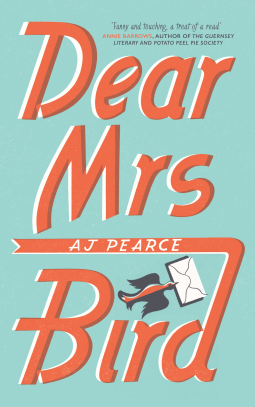
Picador|5 April 2018 |288 pages|Kindle edition |Review copy|3* I wasn’t sure I would like Dear Mrs Bird by A J Pearce because, although it’s historical fiction and one of my favourite genres, it has received so much hype that made me wonder if it was over-hyped and whether I’d find it a bit of a disappointment. 

The Man on a Donkey by H F M Prescott

The Man on a Donkey

Apollo|2016|756 pages|e-book|3.5*

This was first published in 1952.

Description:

In 1536, Henry VIII was almost toppled when Northern England rose to oppose the Dissolution of the Monasteries. For a few weeks Robert Aske, the leader of the rebels, held the fate of the entire nation in his hand … An enthralling novel about a moment in history when England’s Catholic heritage was scattered to the four winds by a powerful and arrogant king.

Opening paragraph:

Sir John Uvedale had business at Coverham Abbey in Wensleydale, lately suppressed, so he sent his people on before him to Marrick, to make ready for him, and to take over possession of the Priory of St. Andrew from the Nuns, who should all be gone by noon or thereabouts. Sir John’s steward had been there for a week already, making sure that the Ladies carried away nothing but what was their own, and having the best of the silver and gold ornaments of the Church packed up in canvas, then in barrels, ready to be sent to the King. The lesser stuff was pushed, all anyhow, into big wicker baskets; since it would be melted down, scratches and dints did not matter.

My thoughts:

The Man on a Donkey is the longest book I’ve read this year and at times I thought it was overlong. It certainly is not a book to read quickly, as John Cooper writes in his Introduction it ‘requires persistence from the reader.’ Hilda Prescott (1896 – 1972) was a historian and biographer as well as a novelist and based this novel on documentary evidence relating to the Pilgrimage of Grace in 1536 led by Robert Aske, a lawyer. It was a protest against Henry VIII‘s break with the Roman Catholic Church, the Dissolution of the Monasteries, and the policies of the King’s chief minister, Thomas Cromwell.

Related image

It’s written in the form of a chronicle, written from the various characters’ viewpoints. It’s as much about the ordinary people as the rich and powerful. There are many characters including many real historical people, such as Henry VIII, Katherine of Aragon, Anne Boleyn, Thomas Cromwell, Princess Mary and Thomas More amongst others. The two main characters are historical figures too – Robert (Robin) Aske and Christabel Cowper, the last Prioress of the Benedictine nunnery at Marrick in Yorkshire. They and the fictional characters came to life as I got used to their individual voices – some instantly likeable, such as Robin and Christabel despite their flaws and others so despicable. Henry VIII, a tyrant and Thomas Cromwell, a real villain, for example were much reviled as between them they created fear and terror in a totalitarian regime.

In fact this book is in line with much of what I had learnt of the period from history lessons at school, films, books and TV series up until I read Hilary Mantel’s books that portray a much kinder view of Cromwell. But just like Mantel’s books, this book transported me back to that time, with lyrical descriptions of the settings, both of the countryside and of the towns, of Marrick Priory and of the king’s court, of the people, and the mood of the times, both religious and political

The Pilgrimage of Grace was not a revolution against Henry but an attempt to get him to change his mind and to understand how people felt. They wanted Henry to stop the dissolution and his attacks on the monks and nuns and to return the country to following the Pope. There were several uprisings and thousands of people were involved, nobles as well as the ‘commons’. But it cost many people their lives in excruciating pain as they were hanged, drawn and quartered.

The source of the book’s title comes from the mystic, Malle, a  simple-minded young woman who the nuns had bought at a York market in the belief that she was a mermaid. She is a strange character who sees a vision of Christ riding on a donkey over a bridge across a stream in the Yorkshire countryside. Her visions and strange sayings continue to puzzle and frighten people throughout the book.

Reading A Man on a Donkey has reminded me that I have Tracy Borman’s biography of Thomas Cromwell still to read. It’s a detailed account of his life, subtitled ‘the untold story of Henry VIII’s most faithful servant’. I wonder what this will reveal about Cromwell’s controversial  character?

Six Degrees of Separation: from The Arsonist to The Ashes of London

I love doing Six Degrees of Separation, a monthly link-up hosted by Kate at Books Are My Favourite and Best. Each month a book is chosen as a starting point and linked to six other books to form a chain. A book doesn’t need to be connected to all the other books on the list, only to the one next to it in the chain.

The Arsonist: A Mind on Fire

This month the chain begins with The Arsonist by Chloe Hooper, a book I haven’t read. In fact, it isn’t to be published in the UK until May 2019. It’s non fiction about the scorching February day in 2009 that became known as Black Saturday, when a man lit two fires in Victoria’s Latrobe Valley.  It is also the story of fire in Australia, and of a community that owed its existence to that very element.

My chain begins by using the word ‘Saturday‘ as the link. It’s Saturday by Ian McEwan which follows one day in the life of a neurosurgeon, Henry Perowne as his life takes an unexpected turn of events. A minor car accident brings him into confrontation with Baxter, a man on the edge of violence.

Also following the life of one person in one day is Mrs Dalloway by Virginia Woolf, in which Clarissa Dalloway is preoccupied with the last-minute details of party she is to give that evening. Elsewhere in London, Septimus Smith is suffering from shell-shock and on the brink of madness. Mrs Dalloway first appeared in Virginia Woolf’s short story, Mrs Dalloway in Bond Street published in The Dial magazine in 1923.

The Murder on the Links by Agatha Christie was also published in 1923, her second book featuring Hercule Poirot. She had the idea for the book after reading newspaper reports of a murder in France, in which masked men had broken into a house, killed the owner and left his wife bound and gagged. From these facts she then invented her plot, setting the book in the fictional French town of Merlinville next to a golf course and overlooking the sea.

SaturdayMrs DallowayThe Murder on the Links (Hercule Poirot, #2)The Chalk Circle ManTitus GroanThe Ashes of London (Marwood and Lovett, #1)

The Chalk Circle Man by Fred Vargas is also set in France, her first book featuring Commissaire Jean-Baptiste Adamsberg. Strange blue chalk circles start appearing on the pavements of Paris and increasingly bizarre objects are found within them, including the body of a woman with her throat savagely cut. Like Poirot, Commissaire Jean-Baptiste Adamsberg is a detective who works on intuition.

Vargas’s books are full of eccentric characters as is Titus Groan by Mervyn Peake, the first of his Gormenghast books.  It begins with the birth of Titus, soon to be the 77th Earl of Gormenghast. His father, Lord Sepulchrave has endured despair and then madness after his beloved library was burnt down and Steerpike, a disrespectful youth, has clawed his way out of the castle’s kitchen to a position of some power, by manipulation and deceit.

This brings me full circle to a book about fire, or rather the aftermath of a fire in The Ashes of London by Andrew Taylor as people set about rebuilding London after the Great Fire had reduced a large part of it to ashes and rubble. Interwoven with a murder mystery, and the hunt for the regicides responsible for the execution of Charles I, it brings home the reality of being homeless – a refugee in your own country. I could hear the noise of the fire, smell the smoke and almost feel the heat and the pain of the victims of the fire.

So, the last link in my chain takes it back to the start of the chain, but to the results of a fire started by accident rather than arson. This month my chain has travelled from Australia to the United Kingdom, via France and the fantasy world of Gormenghast, connected by names, dates of publication, settings and eccentric characters.

Next month (April 6, 2019), the chain will begin with Ali Smith’s award-winning novel, How to be Both.