Six Degrees of Separation: from The Dry to The Song of Troy

I love doing Six Degrees of Separation, a monthly link-up hosted by Kate at Books Are My Favourite and Best. Each month a book is chosen as a starting point and linked to six other books to form a chain. A book doesn’t need to be connected to all the other books on the list, only to the one next to it in the chain. But for this chain the books are all connected in that they are all books on my TBR shelves.

The Dry

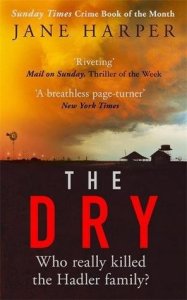
This month the chain begins with The Dry by Jane Harper, crime fiction set in a small country town in Australia, where the Hadler family were brutally murdered. I have had this book on my TBR shelves for quite some time now and I really want to read it as I loved Force of Nature and The Lost Man. I was thinking of linking to one of these books but decided to go for another book, one that I bought on the same day as The Dry. It’s Longbourn by Jo Baker, a story about the Bennet’s servants in a re-imagining of Jane Austen’s Pride and Prejudice.

Another book that is a re-imagining is Rebecca’s Tale by Sally Beauman, a companion novel to Daphne du Maurier’s Rebecca. It is set 20 years after the death of Rebecca and the burning of Manderley. I’m hoping I’ll  love it as much as I loved Rebecca and Hitchcock’s 1940 film of the book. Sally Beauman was a journalist before she became an author. She wrote Rebecca’s Tale after writing an article about the work of Daphne du Maurier in The New Yorker magazine.

My next link is through the author’s first name – Sally – to  another author called Sally,  Sally Gunning and her book, The Widow’s War. It’s historical fiction set in Cape Cod, Massachusetts during the years prior to the War of Independence. After Lyddie Berry’s husband of 20 years dies in a whaling accident she has to fight a ‘war’ for control of her own destiny. Under the laws of the colony widows had the use of only one third of their husbands’ real estate, and did not inherit the ownership.

A different type of war is the subject of Small Wars by Sadie Jones. This is historical fiction set in  Cyprus in the 1950s as the EOKA terrorists are fighting for independence from Britain and union with Greece.

Another book set on an island is The Island by Victoria Hislop.  Alexis Fielding discovers the story of her mother’s family on the island of Spinalonga, a tiny, deserted island off the coast of Crete – Greece’s former leper colony.  Victoria Hislop was also a journalist before she became an author.

As was Colleen McCullough, the author of numerous books including the Masters of Rome series. So, my final link is to one of her books – The Song of Troy in  which she recounts the tale of Helen and Paris, sparking the Trojan War. Colleen McCullough was also an Australian author so it links back to the first book, The Dry by Jane Harper, also an Australian author, who I’m delighted to see was also a journalist before becoming an author!

In addition to all the books being TBRs, four of the authors were journalists before becoming authors and two are Australian authors.

The chain moves through time from the present day back to late classical Antiquity, beginning in Australia and passing through England, America, Cyprus, Crete to Anatolia in modern Turkey.

Next month (June 1, 2019), the chain will begin with the winner of the 2019 Wellcome Prize, Murmur by Will Eaves.

My Friday Post: Iris and Ruby by Rosie Thomas

Book Beginnings Button

Every Friday Book Beginnings on Friday is hosted by Gillion at Rose City Reader where you can share the first sentence (or so) of the book you are reading, along with your initial thoughts about the sentence, impressions of the book, or anything else the opener inspires.

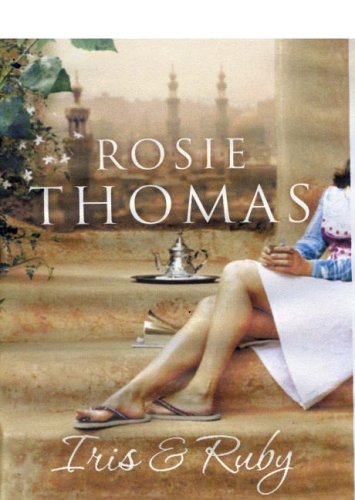
This week I’ve been looking at some of my TBRs deciding which one to read next and came across Iris and Ruby by Rosie Thomas. It’s been on my shelves a long time – 12 years – it really is time I read it!

Iris and Ruby

I remember.

And even as I say the words aloud in the silent room and hear the whisper dying away in the shadows of the house, I realise it’s not true.

Also every Friday there is The Friday 56, hosted by Freda at Freda’s Voice.

30879-friday2b56These are the rules:

  1. Grab a book, any book.
  2. Turn to page 56, or 56% on your eReader. If you have to improvise, that is okay.
  3. Find any sentence (or a few, just don’t spoil it) that grabs you.
  4. Post it.
  5. Add the URL to your post in the link on Freda’s most recent Friday 56 post.

Page 56:

‘I remember the Blitz. the beginning of it anyway. Then I came out here, to Cairo, to work.’

‘ Did you? How come?’

‘That’s the beginning of another long story.’

Blurb:

The unexpected arrival of her wilful teenage granddaughter, Ruby, brings life and disorder to 82-year-old Iris Black’s old house in Cairo. Ruby, driven away from England by her fraught relationship with her own mother, is seeking refuge with the grandmother she hasn’t seen for years.

An unlikely bond develops as Ruby helps Iris document her fading memories of the glittering, cosmopolitan Cairo of World War Two, and of her one true love – the enigmatic Captain Xan Molyneux – whom she lost to the ravages of war.

This lost love shaped Iris’s past – and will affect Ruby’s future in ways they could not have imagined…

~~~

What do you think? Would you keep reading?

A Snapshot of Murder by Frances Brody

A Snapshot of Murder (Kate Shackleton #10)


Crooked Lane Books |19 April 2019|Print length 339 pages|e-book review copy|3*

Blurb (Amazon):

Yorkshire, 1928. Indomitable sleuth Kate Shackleton is taking a well-deserved break from her detective work and indulging in her other passion: photography. When her local Photographic Society proposes an outing, Kate jumps at the chance to visit Haworth and Stanbury, in the heart of Brontë country, the setting for Wuthering Heights.

But when an obnoxious member of their party is murdered, the group is thrown into disarray. Is the murderer amongst them, or did the loud-mouthed Tobias have more enemies than they might have imagined?

Armed with her wit and wiles, and of course her trusty camera, it’s up to Kate to crack the case, and get that perfect shot too . . .

A Snapshot of Murder by  Francis Brody is the 10th in her Kate Shackleton series. I’ve read three of her earlier books and I have to say that I didn’t enjoy this one as much. I think, though, that the setting is excellent, particularly in Haworth when the Bronte Parsonage Museum was opened in 1928. But I was disappointed to find that the murder could have taken place anywhere – it no connection to the Brontes, or to the opening of the Museum, apart from the fact that the murderer took advantage of being in a crowd of people and managed to slip away unnoticed. 

I like Kate Shackleton – she’s a competent private investigator, but the murder mystery was too easy to solve. It began well but it was obvious who was going to end up dead and although there are several suspects, it soon became obvious who the culprit was and my interest waned. And any sympathy I had for the murderer had just disappeared by the end of the book.

My thanks to the publishers, Crooked Lane Books for my review copy via NetGalley.

The Seeker by S G MacLean

The Seeker (Damian Seeker, #1)

Quercus/ 9 May 2016/Paperback/ 432 pages/ Library Book/ 4*

The Seeker by S G MacLean is the first book in her Damian Seeker series, historical crime fiction set during the Interregnum under Oliver Cromwell, the Lord Protector. This one is set in 1654. I’ve read the second and third books in the series and whilst I  was happy to read them as standalones now I’ve read the first one I think it would have better if I had read them in order.

Damian Seeker, Captain of Cromwell’s Guard, works for John Thurloe, Cromwell’s Chief Secretary and spy master, in charge of the security of the regime, running a virtual secret service. He is an enigmatic character, and very little is revealed about his background until very near the end of the book. In the later books, particularly in the third, Destroying Angel, I learnt a lot more about him.

Like the later books The Seeker transported me to another time and place. It was as though I was back in England in the 17th century, a place of unrest, teeming with spies, exiles and assassins. Agents, sometimes clergymen or merchants, working for Cromwell, infiltrated the Royalists abroad supporting the future Charles II; the universities too were useful with dons expert at deciphering coded messages, and there was a highly effective postal service intercepting mail to suspect individuals before being resealed and delivered. And in London, bookshops, taverns and coffee houses were places where conversations were overheard and reported to the authorities.

England in 1654 is a Republic in name only, Parliament had been dissolved in 1653 and Cromwell was appointed as Lord Protector – King in all but name, he lived in the former Palaces of Whitehall and Hampton Court and his generals imposed even greater restrictions on the freedoms of the public.

It’s a complex novel, as Seeker investigates the murder of Lieutenant John Winter, one of Cromwell’s favoured officers in his New Model Army. He had found Elias Ellingworth, a radical lawyer and journalist, and an outspoken critic of Cromwell’s regime, standing over the bleeding body clutching a knife. But Seeker is not convinced of his guilt and thus the search for the real culprit begins. It takes in royalist plots, the slave trade, dodgy merchants’ deals and an attempt on Cromwell’s life. There are many characters and I had little idea who had killed Winter until right at the end, so I read eagerly trying to work it all out.

Having read three of  the series I particularly like Damian Seeker. He is definitely a man to have on your side, a man both respected and feared, and a man to trust. The books are based on solid historical research (S G Maclean has an M.A. and Ph.D. in History from the University of Aberdeen) bringing the atmosphere and tenor of the 1650s to life before my eyes. I particularly liked all the detail about Kent’s Coffee House. I thoroughly enjoyed it and wanting to know more about the period and Cromwell I’ve bought Antonia Fraser’s book, Cromwell: Our Chief of Men.

The Bear Pit, the fourth book in the Seeker series, is due out on 11 July this year.
Wakenhyrst by Michelle Paver

A tale of mystery and imagination laced with terror. 

Wakenhyrst

Head of Zeus|4 April 2019|e-book 5683 KB|Review copy|4*

Wakenhyrst by Michelle Paver is a dark and sinister tale, full of menace and suspense. It’s a slow-burner, told through different points of view, that builds to a climax with a sad twist in the story right at the end – one I hadn’t seen coming. It’s set in a remote hamlet in the Suffolk Fens, an eerie waterlogged landscape where Edmund Stearn, a historian, and his family live in a large manor house, Wake’s End, on the edge of the Fens, said to be the oldest and most rotten of fens. It was a place of dread, haunted by spirits and the home of eels and other foul creatures.

The novel begins with a magazine report in 1966 on the events that took place at Wake’s End in 1913 when sixteen-year old Maud Stearne watched her father, Edmund, leave the house, armed with an ice-pick and a geological hammer and murder the first person he came across in the orchard. Maud was the only witness. She is now a recluse and in 1913 she had only spoken briefly at his trial. But now she needs money to repair the ancient manor house that is her home and has invited the journalist to Wake’s End. He believes Edmund was innocent and hopes to discover the truth – was Edmund mad and what did he write in his notebook that Maud has never confirmed even existed? Maud’s evidence was full of holes – did she commit the murder and frame her father, who took the blame?

 Edmund never explained why he did it, or how he ended up in the well, screaming with terror as he fought off a mass of eels. He spent the rest of his life in an asylum, where he created three paintings that astonished the world – grotesque paintings full of colour and tiny malevolent faces leering out of the canvas, the stuff of nightmares. 

What follows is a story of disintegrating madness, revealed in Edmund Stearne’s notebook as the reporter persuades Maud to tell her story, going back to her childhood, when her mother was still alive. Her mother got the same illness every year, or so Maud believed – an illness where her middle swelled, resulting in a period of ‘groaning’, as her middle would burst and ending with either ‘a bloody chamberpot’, or a dead baby. When she died Maud blamed her father and believed he was insane when he became obsessed with the medieval painting  of the Last Judgement, known as the Doom, that he found in the churchyard. He connects the Doom with the writings of Alice Pyett, a medieval mystic whose book he was transcribing.

There is a sense of impending disaster as the tale unfolds. Whilst the fens are a source of dread and fear for Edmund, they are a place of solace and beauty for Maud. The book is full of the folklore and customs of the local people and their belief in the spirits that haunt the fen – ferishes, Jack-o’-Lanterns and Black Shuck – Michelle Paver notes in her Author’s Note that she has not invented these. Maud’s childhood, her fear of her father and his violence towards her and her mother, are scenes that are based on the misogynist attitudes of the period.

Maud’s life was run by her father’s rules. She had no friends or companions apart from the servants, whose lives were ruled by superstitions, until she met Jubal Rede, the wild man who lived in the fen. He was kind to her and taught her the ways of the fen. But there is also Chatterpie, the magpie she rescued from the well and grew to love, and then Clem, the young under-gardener who she also grew to love.

It’s a compelling story, steeped in atmosphere, with characters typical of an earlier age whose lives were oppressed and isolated from the wider world. I loved the setting, the mysterious fenland, the horrific gothic and dark nature of the story, the mystery of the murder and most of all I loved Maud and her independent spirit that brought her through the nightmare.

My thanks to the publishers, Head of Zeus for my review copy via NetGalley.

The King’s Evil by Andrew Taylor

London, 1667 – a royal scandal that could change the face of England forever…

The King's Evil HarperCollins|4 April 2019|464 pages|Hardback |Review copy|5* This is the third book in Andrew Taylor’s series following James Marwood and Cat (Catherine) Lovett. I loved the first two – The Ashes of London (set in 1666) and The Fire Court (set in 1667, eight months after the Great Fire of London), so I was delighted when Felicity Denham at HarperCollins asked me if I’d like a proof copy of The King’s Evil to review. It is not necessary to read the earlier books as I think they all work well as standalones, but I think it helps if you do. The King’s Evil carries on from where The Fire Court ended. Seven years after the restoration of the monarchy it’s still a time of political and social change. Whilst Charles II still had immense power as the King a new middle class, both professional and administrative, was evolving. James Marwood is a government agent in Whitehall, working as a clerk for William Chiffinch, one of the commissioners of the Board of Red Cloth. Chiffinch was also Keeper of the King’s Private Closet and Page of the Backstairs, an important position as he controlled private access to the King. In addition Marwood also works under Joseph Williamson, the Undersecretary to the Secretary of State for the South, one of Charles’s most powerful ministers. Charles had reinstated the ceremony of ‘touching for the King’s Evil’ as a demonstration of his divine right to rule – a ceremony in which the monarch touched those people suffering from scrofula, a disease, now known as  tuberculosis, that caused the swelling of the bones and lymphatic glands in the neck (the book cover illustrates the ceremony). It was believed that the King’s touch cured the disease. The novel begins as Marwood is in the Banqueting Hall at Whitehall watching the ceremony. Chiffinch had told him to attend on the orders of the King to meet Lady Quincy and do whatever she commanded. Lady Quincy, accompanied by a small African child, her footboy suffering from scrofula, tells Marwood to meet her outside the church near the Tower of London. She also warns him that Edward Alderley, her step-son, is out for revenge on Cat Lovett because of what she had done to him. (This refers to events in The Fire Court).  In order to keep her identity secret Cat, whose father had been one of the Regicides, is going by the name of Jane Hakesby. She had been working for Simon Hakesby, a surveyor and architect, on a garden pavilion project in the grounds of Clarendon House. Then Alderley is found dead in the well in the garden pavilion. Marwood is asked to look into the circumstances of Alderley’s death, under the King’s authority. He decides to keep his connection with Cat to himself, whilst he tries to find out where she has gone and who was responsible for Adderley’s death. Was it an accident, was it suicide, or was it murder? After Chiffinch received an anonymous letter naming Cat as the murdererhe sent officers to arrest her, but she had disappeared. So this was taken as a confession of her guilt. Marwood was afraid that this could implicate him too if it became known that he had told her that Alderley knew her whereabouts. In addition, Lord Clarendon is convinced that Alderley was involved in a conspiracy against him and also suspects that someone in his household is involved in the plot. He is out of favour with Charles, and had recently been removed from the office of Lord Chancellor.  But he’s still potentially politically powerful as his daughter is married to Charles’s brother, James, the Duke of York. His grandchildren, the Princesses Mary and Anne, are the next heirs in the line of succession if Charles remained childless. Marwood tries to find Cat, and also escorts Lady Quincy to Cambridge on a secret mission. Eventually his investigation into Alderley’s death leads him to discover who is behind the plot against Clarendon, and also to uncover a potential royal scandal in which Lady Quincy and the Duke of Buckingham, one of Charles’s favourites who had supplanted Clarendon, play important roles.  I loved the characterisation and all the details of the setting, bringing to life scenes at the royal court as well as in the refugee camps that housed the homeless as the work of rebuilding London continued. Andrew Taylor is a supreme storyteller, combining fact and fiction – his novels are full of historical details that slot seamlessly into his stories. The King’s Evil is historical fiction at its best, full of suspense and tension, an intricate and tightly plotted murder mystery, enhanced by the intrigue of a royal scandal.  I loved it. Many thanks to the publishers, HarperCollins for my review copy.