The Luminaries by Eleanor Catton

Sometimes I read books and have no desire to write about them, not because I didn’t enjoy them but because I just want to get on and read the next book. And this summer has been one of those times, so that now I’m finding difficult to remember all the details of the books I’ve read because I didn’t write about them soon after I finished reading. It’s been a strange time during this pandemic and it’s not been easy to concentrate. But I do want to keep a record of my reading and the only way now to catch up is to write some brief notes about each book, beginning with The Luminaries by Eleanor Catton, the winner of the 2013 Booker Prize,

Rating: 4 out of 5.

I downloaded The Luminaries by Eleanor Catton 3 years ago. I read it in July. It is a long and detailed book, written with such intricate plotting and numerous characters that it bewildered me at times. It’s historical fiction set in New Zealand in the 1860s, during its gold rush and it has everything – gold fever, murder, mystery and a ghost story too.

Blurb from Goodreads:

It is 1866, and young Walter Moody has come to make his fortune upon the New Zealand goldfields. On the stormy night of his arrival, he stumbles across a tense gathering of twelve local men who have met in secret to discuss a series of unexplained events: A wealthy man has vanished, a prostitute has tried to end her life, and an enormous fortune has been discovered in the home of a luckless drunk. Moody is soon drawn into the mystery: a network of fates and fortunes that is as complex and exquisitely ornate as the night sky. Richly evoking a mid-nineteenth-century world of shipping, banking, and gold rush boom and bust, The Luminaries is a brilliantly constructed, fiendishly clever ghost story and a gripping page-turner. 

I found the structure a bit of a stumbling block at first as the chapters halve in length from the very long opening chapter to the very short final chapter – so that from feeling overwhelmed by the length and detail of the opening chapters, by the time that I neared the ending I felt distinctly dissatisfied with the brevity of the concluding chapters – the early chapters are too long and the final ones are too short. And the significance of the astronomical headings completely bypassed me.

But if this sounds as though I didn’t enjoy this novel, that is wrong, because I did for the major part of the book. I loved the pictures it builds up of the setting in New Zealand, the frontier town and its residents from the prospectors to the prostitutes, and the obsessive nature of gold mining. And I did become fully absorbed in the story during the week it took me to read. it

These are the other books I read in July and August and have not yet reviewed:

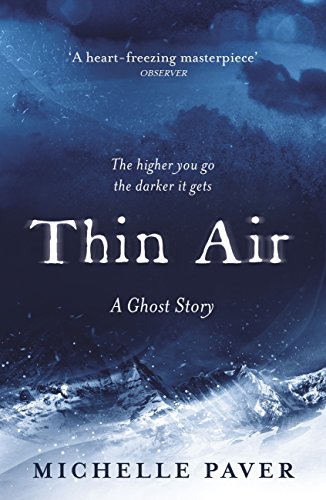
  • Thin Air by Michelle Paver
  • The Birdwatcher by William Shaw
  • Still Life by Val McDermid
  • Dead Man’s Footsteps by Peter James
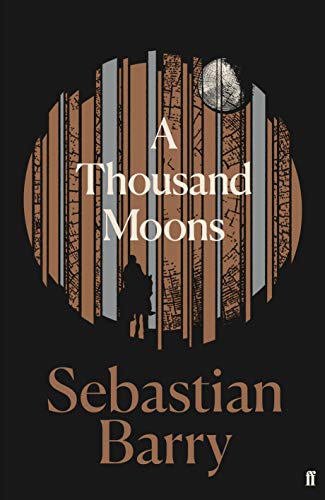
A Thousand Moons by Sebastian Barry

Faber and Faber Ltd/ 19 March 2020/ 256 pages/ Kindle edition/ 5*

Three years ago I read Sebastian Barry’s Days Without End which has to be one of the best books I’ve read, so I began reading A Thousand Moons with great anticipation of a good read. I wasn’t disappointed and I loved it. It continues the story of Thomas McNulty and John Cole, and Winona, the young Indian girl they had adopted. It really helps if you have read Days Without End first to understand the characters’ history and relationships and how they got to this stage in their lives.

Winona is a young Lakota orphan adopted by former soldiers Thomas McNulty and John Cole.
Living with Thomas and John on the farm they work in 1870s Tennessee, she is educated and loved, forging a life for herself beyond the violence and dispossession of her past. But the fragile harmony of her unlikely family unit, in the aftermath of the Civil War, is soon threatened by a further traumatic event, one which Winona struggles to confront, let alone understand.

They are living and working on a farm owned by Lige Magan in Tennessee, about seven miles from a little town called Paris. It is now the 1870s, some years after the end of the Civil War, but the town was still full of rough Union soldiers and vagabonds on every little byway. Dark skin and black hair were enough to get you beaten up – and it wasn’t a crime to beat an Indian. Life wasn’t any better for the other two workers on the farm, black ex-slaves, Rosalee Bouguereau and her brother, Tennyson. These are dangerous times not just in the town but also in the woods outside the town from Zach Petrie’s gang of ‘nightriders’.

Winona remembers little of her early life, beyond seeing in the back of her mind a ‘blackened painting’ of blood and screaming, bayonets, bullets, fire and death. But their lives are full of love at the farm; Winona is loved as a daughter by Thomas and John, who are themselves lovers. She works for lawyer Briscoe as his clerk and ventures into town for supplies, which was where she met Jas Jonski, a young man who declares he wants to marry her. At first she hopes that she might very much like to marry Jas. But, then things go disastrously wrong. First racism rears its ugly head as Jas is white and the Paris townspeople began to talk. As his employer said he thought Jas had gone mad or wicked in some way – ‘to want to go marrying something closer to a monkey than a man’ was how he put it.

And then came the dreadful day when Winona was brutally attacked so badly that she shook for two weeks and something deep within her was shaking a long time after. She can’t remember at first what had actually happened to her, except that she was plied with ‘distillery whiskey’, nor who had carried out the assault. But all the signs pointed to Jas Jonski. Then Tennyson Bouguereau was also attacked, and their peaceful happy life was shattered. Winona set out for revenge. And in so doing she began to remember more about her early life and about her mother, a strong Lakota woman, full of courage and pride.

‘A thousand moons’ was her mother’s deepest measure of time. To her time was ‘a kind of hoop or a circle not a long string and if you walked far enough she said you could find the people still living in the long ago’ – ‘a thousand years all at once’. As she sets off on her quest it is the thought of her mother’s courage that enabled Winona to find her own courage – the ‘courage of a thousand years’.

I just love everything about this book, so beautifully written, rendering the way the characters speak so that I could hear them, and describing the landscape so poetically and lyrically that the scenes unfolded before my eyes; and the characters too, all real people from the American West of the 1870s, as though I was there in their midst. It would make a superb film.

Sebastian Barry

Photo credit: ©Alan Betson, The Irish Times

Sebastian Barry was born in Dublin in 1955. His novels and plays have won, among other awards, the Kerry Group Irish Fiction Prize, the Costa Book of the Year award, the Irish Book Awards Best Novel, the Independent Booksellers Prize and the James Tait Black Memorial Prize. He also had two consecutive novels, A Long Long Way (2005) and The Secret Scripture (2008), shortlisted for the MAN Booker Prize. He lives in Wicklow with his wife and three children.

My thanks to Faber and Faber Ltd for my copy of this book, via NetGalley.

Top Ten Tuesday: Books With Colours in the Titles

Top Ten Tuesday is a weekly meme created by The Broke and the Bookish and now hosted by Jana at That Artsy Reader Girl. For the rules see her blog. This week’s topic is

Books With Colours in the Titles.

These are all books I really enjoyed reading.

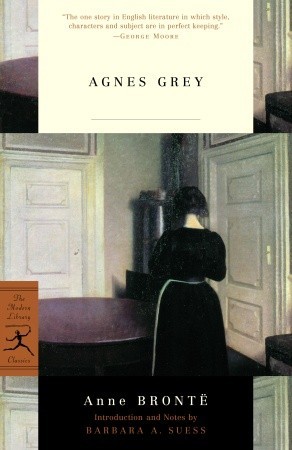
  • Agnes Grey by Anne Bronte like Jane Eyre, Agnes is a governess and this is the story of her experiences working for two families in Victorian England.
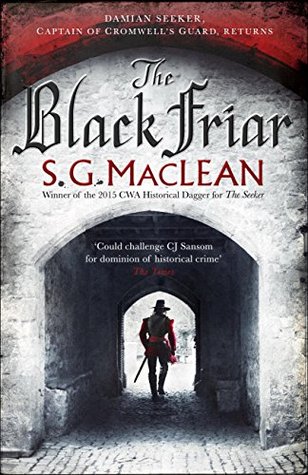
  • The Black Friar – the second book in the Damian Seeker series, historical crime fiction set in 1655 during the Interregnum under Oliver Cromwell, the Lord Protector. Damian Seeker is the Captain of Cromwell’s Guard.
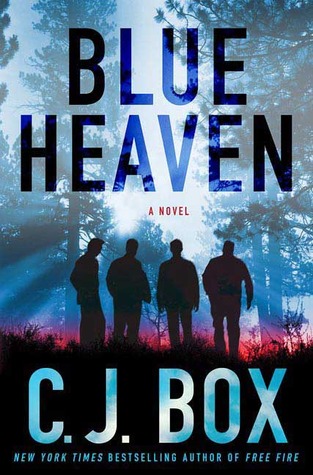
  • Blue Heaven by C J Box – set in North Idaho this a story about two children, Annie and William who decide to go fishing without telling their mother, Monica, and witness a murder in the woods. One of the killers sees them and they run for their lives.
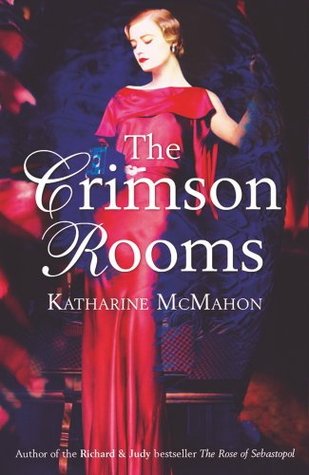
  • The Crimson Rooms by Katharine McMahon – set in London in 1924, Evelyn Gifford is one of the few pioneer female lawyers. It’s early days for women to be accepted as lawyers and this novel clearly shows the prejudice these women had to overcome
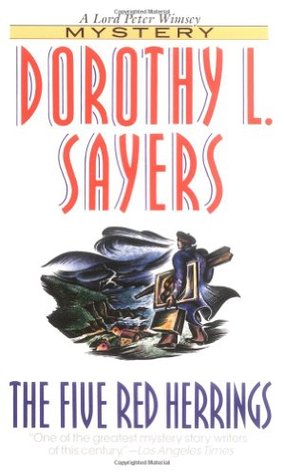
  • Five Red Herrings by Dorothy L Sayers – a Lord Peter Wimsey mystery in which he investigates the death of a landscape painter and fisherman who was found dead in a burn near Newton Stewart.
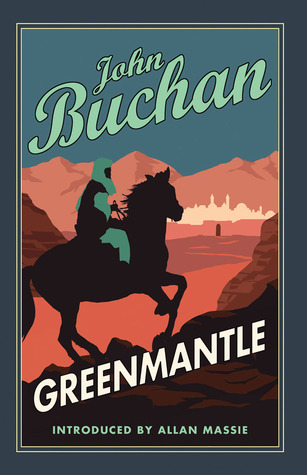
  • Greenmantle by John Buchan – this is basically an adventure and spy story with a highly improbable plot. It’s pure escapism.
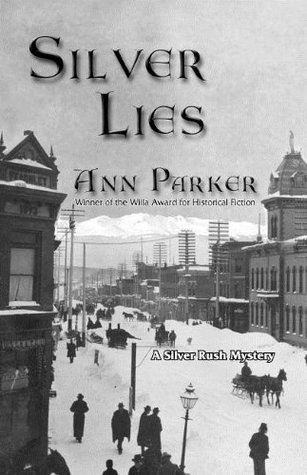
  • Silver Lies by Ann Parker  – historical crime fiction set in 1879/80 in the silver-mining town of Leadville, Colarado in the heart of the Rocky Mountains. Joe Rose, a silver assayer, is found dead in Tiger Alley propped up behind the Silver Queen saloon.
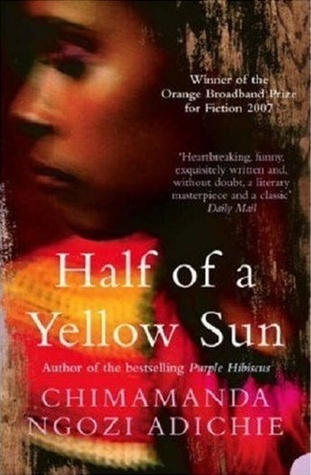
  • Half of a Yellow Sun by Chimamanda Ngozi Adichie, based on the Nigeria-Biafra War of 1967 – 70 this focuses on the struggle between the north and the south, the Igbo, Yoruba and Hausa people.
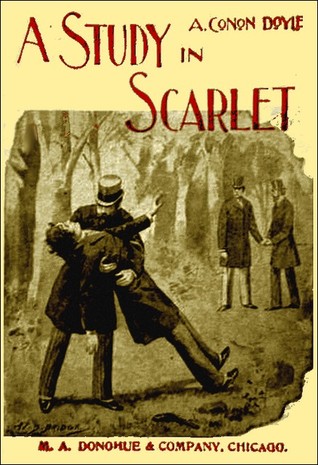
  • A Study in Scarlet by Arthur Conan Doyle Sherlock Holmes and Dr Watson investigate the murder of Enoch J Drebber, an American found dead in the front room of an empty house at 3 Lauriston Gardens, off the Brixton Road,  with the word “RACHE” scrawled in blood on the wall beside the body. The TV version A Study in Pink in the Sherlock series, which although very different in some respects is surprisingly faithful to the book in others.
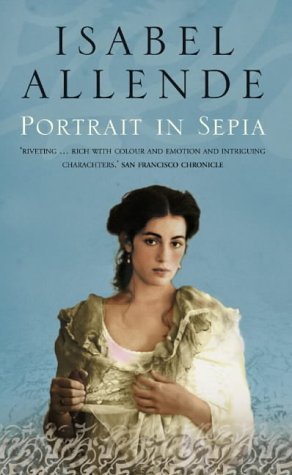
  • Portrait in Sepia by Isabel Allende – Aurora is the narrator and this is the story of her family. After giving details of her birth, in 1880 in San Francisco in the Chinese quarter, she goes back to 1862 beginning her story with details about her grandparents.

Top Ten Tuesday: Books I’ve Read But Not Reviewed

Top Ten Tuesday is a weekly meme created by The Broke and the Bookish and now hosted by Jana at That Artsy Reader Girl. For the rules see her blog. This week’s topic is a freebie and I decided to write about – Books I’ve Read But Not Reviewed.

These are all books I read before I began blogging in 2007. I’ve linked them to their pages on the Fantastic Fiction website.

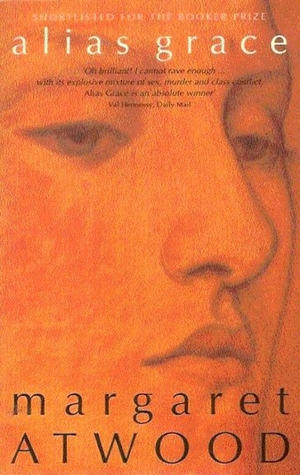
  1. Alias Grace by Margaret Atwood – Did Grace kill her employer Thomas Kinnear and his housekeeper/lover Nancy Montgomery? I couldn’t decide all the way through the book. I’ve enjoyed all of her books that I’ve read so far – this is one of my favourites.
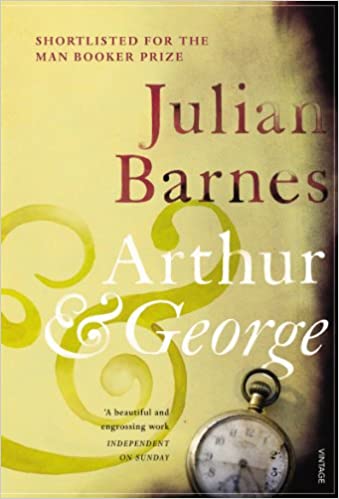
  2. Arthur and George by Julian Barnes – this is based on the true story of Arthur Conan Doyle and George Edalji, a solicitor from Birmingham. I’ve since read a few more of his books.
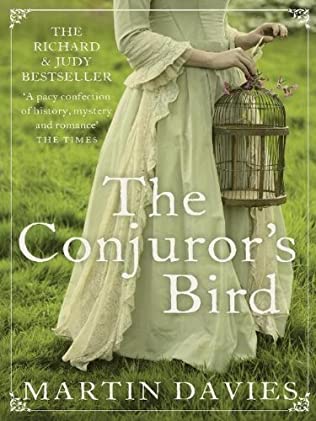
  3. The Conjuror’s Bird by Martin Davies about an extinct bird from Capt Cook’s second voyage, described on Davies’ website as a ‘novel of two narratives – one of the present day and one of the late 18th Century. As the two stories intertwine, the novel unfolds layer after layer of mystery and suspense.’
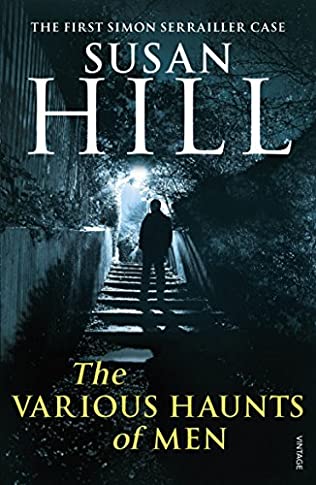
  4. The Various Haunts of Men by Susan Hill – the first book in the Simon Serrailler series. I’ve read seven books in the series – and then decided I’d have enough of them and haven’t read the later books.
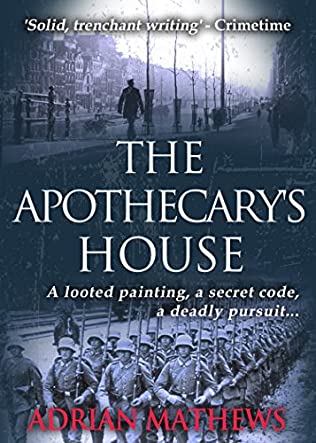
  5. The Apothecary’s House by Adrian Mathews – set in Amsterdam about the history of the piece of looted Nazi art, a painting with a disturbing wartime provenance. Archivist, Ruth Braams at the Rijks Museum, enters a series of increasingly lethal adventures as she investigates its secret symbolism.
  6. Dissolution by C J Sansom – the first in his Tudor murder mystery series featuring Matthew Shardlake. This is set in 1537 – Shardlake investigates the death of a Commissioner during the dissolution of the monasteries. I’ve read all of his subsequent Shardlake books.
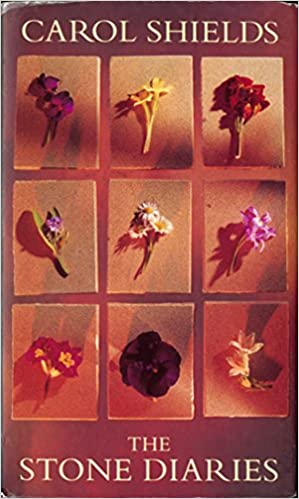
  7. The Stone Diaries by Carol Shields – the story of Daisy Goodwill, from her birth on a kitchen floor in Manitoba, Canada, to her death in a Florida nursing home nearly ninety years later.
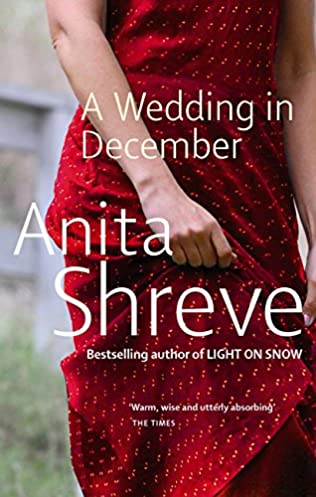
  8. A Wedding in December by Anita Shreve – at an inn in the Berkshire Mountains of western Massachusetts, seven former schoolmates gather for a wedding. It’s an astonishing weekend of revelation and recrimination, forgiveness and redemption. At one time I loved Anita Shreve’s but went off the more recent ones.
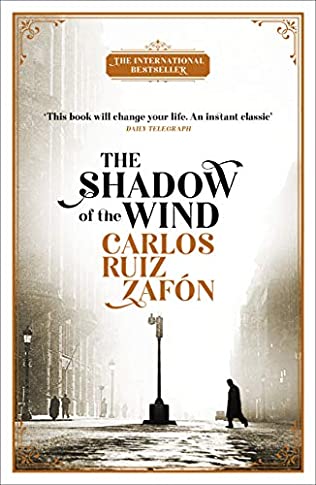
  9. The Shadow of the Wind by Carlos Ruiz Zafron – The discovery of a forgotten book leads to a hunt for an elusive author who may or may not still be alive.
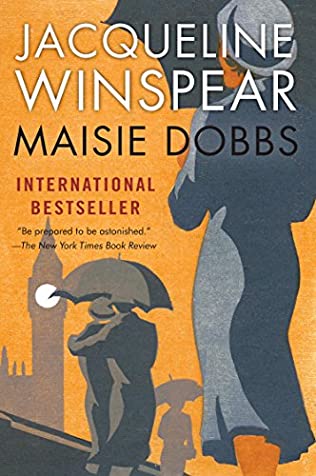
  10. Maisie Dobbs by Jacqueline Winspear – this is the first in the Maisie Dobbs series. In 1929 Maisie set herself up as a private investigator, having started as a maid to the London aristocracy, studied her way to Cambridge and served as a nurse in the Great War. I’ve read a few more of the series since I read this one.

WWW Wednesday: 22 July 2020

IMG_1384-0

WWW Wednesday is run by Taking on a World of Words.

The Three Ws are:

 What are you currently reading?
What did you recently finish reading?
What do you think you’ll read next?

The book descriptions are from Amazon.

Currently reading:

After much deliberation and starting several books from my 20 Books of Summer list I decided to read Thin Air: a Ghost Story by Michelle Paver.

Kangchenjunga. Third highest peak on earth. Greatest killer of them all.

Five Englishmen set off from Darjeeling, determined to tackle the sacred summit. But courage can only take them so far – and the mountain is not their only foe.

As mountain sickness and the horrors of extreme altitude set in, the past refuses to stay buried. And sometimes, the truth won’t set you free. . .

Recently Finished: 

I finished reading The Luminaries yesterday and am still mulling it over. I enjoyed it but I’m not sure I liked the structure, with the length of the chapters decreasing as the story progressed.

It is 1866, and young Walter Moody has come to make his fortune upon the New Zealand goldfields. On the stormy night of his arrival, he stumbles across a tense gathering of twelve local men who have met in secret to discuss a series of unexplained events: A wealthy man has vanished, a prostitute has tried to end her life, and an enormous fortune has been discovered in the home of a luckless drunk. Moody is soon drawn into the mystery: a network of fates and fortunes that is as complex and exquisitely ornate as the night sky.

Reading Next:

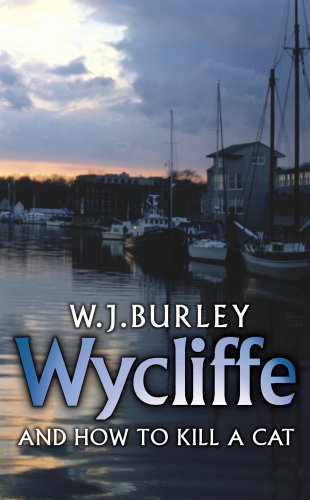
At the moment I think it could be Smallbone Deceased by Michael Gilbert. I wrote about the opening paragraph and included a quotation from page 55 in My Friday post. Ot it could be Wycliffe and How To Kill a Cat by W J Burley. But it might be a different book that takes my fancy when the time comes.

The girl was young, with auburn hair arranged on the pillow. Wycliffe could almost believe she was asleep – that is, until he saw her face. She had been strangled, and someone had brutally smashed her face – but after death, not before… She lay in a seedy hotel room down by the docks, but her luggage, her clothes and her make-up all suggested she had more class than her surroundings.

Superintendent Wycliffe was officially on holiday, but the case fascinated him. Who was the girl? Why was she lying naked in a shabby hotel room? What was she doing with a thousand pounds hidden underneath some clothing? And, above all, why had someone mutilated her after she was dead?

As Wycliffe begins to investigate, he finds there are too many suspects, too many motives – and too many lies . . .

What do you think – which one would you read next?

Top Ten Tuesday: Authors Whose Books I’ve Read the Most

Top Ten Tuesday is a weekly meme created by The Broke and the Bookish and now hosted by Jana at That Artsy Reader Girl. For the rules see her blog. This week’s topic is  Authors Whose Books I’ve Read the Most.

My list is of the authors whose books I’ve read the most since I began my blog. I’ve linked them to their pages on the Fantastic Fiction website. They are a mix of crime fiction and historical fiction.

  1. Agatha Christie
  2. Ian Rankin
  3. Ann Cleeves
  4. Peter Robinson
  5. Andrew Taylor
  6. Robert Harris
  7. Elly Griffiths
  8. Georges Simenon
  9. Daphne du Maurier
  10. Sharon Bolton