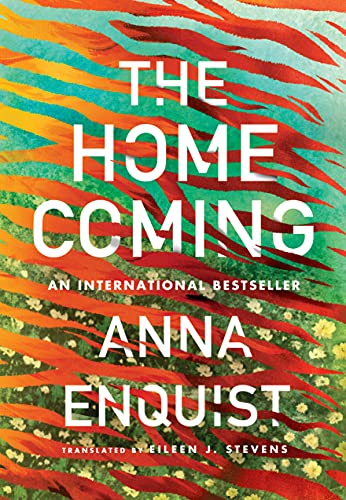
The Homecoming by Anna Enquist

Amazon Crossing| 1 April 2022| Print length 383 pages| 4*

I’ve read one book by Anna Enquist, a Leap, which is a collection of short stories, so when I saw The Homecoming was one of the Amazon First Reads for March this year I decided that was the one for me. It was first published in 2005 in Dutch and this English edition was translated by Eileen J Stevens in 2022.

There’s a lot written about Captain James Cook, the 18th century explorer, but I’d never come across anything about his wife, Elizabeth, before. The story is told from Elizabeth’s perspective and begins as she is at home in Mile End in London, preparing for James’s return home after his Second Voyage round the world in the ships Resolution and Adventure in 1775. This book is historical fiction, based on historical facts, although as the author writes in her Afterword: ‘the story is woven between the cracks of those verifiable cracks.’

So because there is little known about Elizabeth’s life, much of her story is the result of the author’s imagination and conjecture, but using the dates of births and deaths, of James’s departures and homecomings, and of letters and meeting. What is fact, is that she had six children – five sons and one daughter – and she outlived all of them. It is a heart-wrenching story as Elizabeth copes at home alone without her husband, a story of daily, domestic life at the end of the 18th century. She is a strong and resourceful woman who loves her husband, coping whilst desperately hoping he will not leave for a third voyage.

I was immediately drawn into the story and thoroughly enjoyed it, apart from the ending, which did spoil it somewhat. I can’t explain what happens at the end without giving away too much, except to say that it is Anna Enquist’s version of Cook’s death on Hawai’i as she imagines what was going on in his head as the days drew on towards the final tragedy – and it is strange, very strange.

Reading The Homecoming has made me want to know more about the Cook family and James’s life in particular. So, I was pleased to see there is a bibliography at the end of the book. And I also found there is another novel about Elizabeth: Mrs Cook: the Real and Imagined Life of the Captain’s Wife by Marele Day.

Other sources:

The Captain Cook Society

The Royal Naval Museum Information sheet on James Cook and a reading list

Book Beginnings & The Friday 56: The Homecoming by Anna Enquist

Every Friday Book Beginnings on Friday is hosted by Gillion at Rose City Reader where you can share the first sentence (or so) of the book you are reading. You can also share from a book you want to highlight just because it caught your fancy.

This week I’m featuring The Homecoming by Anna Enquist, to be published on 1 April 2022. This is my Amazon First Reads choice this month – where you can choose to download a free e-book from a choice of eight early release titles if you subscribe to Amazon Prime.

The Book Begins:

He’ll expect an empty table when he comes home, she thought. He’ll be lugging chests and sacks into the house, filled with journals, sketches and maps.

Also every Friday there is The Friday 56, hosted by Freda at Freda’s Voice, where you grab a book and turn to page 56 (or 56% of an eBook), find one or more interesting sentences (no spoilers), and post them.

Page 56:

How could he, from one minute to the next, become a father again, or a husband? In the brief span of time between dusk and darkness, there was no way to catch up on three years. They would have to take a leap of faith and trust that, in the coming weeks and months, they could fill in the gaps.

I was beginning to think I wouldn’t choose an Amazon First Reads book this month, until I came to the Literary Historical Fiction choice (I notice that this is a different choice from the US selection). I chose this book because I like historical fiction and this one is about Elizabeth Cook, the wife of the eighteenth-century explorer, Captain James Cook. I also chose it because it’s by Anna Enquist, (the pen name of one of the more popular authors in the Netherlands, Christa Widlund-Broer.) She is a musician, and a psychoanalyst as well as a poet and novelist, and I have read one of her books before, a Leap, a very short book (80 pages) made up of six dramatic monologues. Overall they are sad, even tragic stories and I liked her style of writing, which is clear and brings the people and places to life. 

I started to read The Homecoming as soon as I downloaded it and so far I am enjoying it very much.

Synopsis:

After twelve years of marriage to English explorer James Cook, Elizabeth has yet to spend an entire year with her husband. In their house by the Thames, she moves to the rhythms of her life as a society wife, but there is so much more to her than meets the eye. She has the fortitude to manage the house and garden, raise their children, and face unbearable sorrow by herself—in fact, she is sometimes in thrall to her own independence.

As she prepares for another homecoming, Elizabeth looks forward to James’s triumphant return and the work she will undertake reading and editing his voluminous journals. But will the private life she’s been leading in his absence distract her from her role in aid of her husband’s grand ambitions? Can James find the compassion to support her as their family faces unimaginable loss, or must she endure life alone as he sails off toward another adventure?

An intimate and sharply observed novel, The Homecoming is as revelatory as James Cook’s exploration of distant frontiers and as richly rewarding as Elizabeth’s love for her family. With courage and strength, through recollection and imagination, author Anna Enquist brilliantly narrates Elizabeth’s compelling record of her life, painting a psychological portrait of an independent woman ahead of her time and closely acquainted with history.

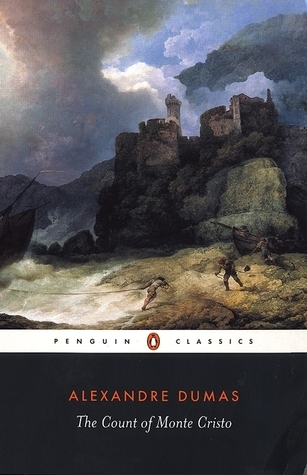
The Count of Monte Cristo by Alexandre Dumas

Penguin| Revised edition 2003| 1313 pages| 4*

I have had a paperback copy of The Count of Monte Cristo for many years. This year I joined in Karen’s Back to the Classics 2021 Reading Challenge, which gave me the incentive to read it now, as it meets the criteria for category five: a classic by a non-white author. It’s also a book on my Classics Club list. Dumas was born in 1802. His father was the illegitimate son of the Marquis de La Pailleterie and Marie Cessette Dumas, a black slave from Haiti. He was a prolific writer, producing 41 novels, 23 plays, 7 historical works and 6 travel books.

The Count of Monte Cristo was first serialised in a French newspaper in 18 parts in 1844 and later translated into English. There have been several translations, editions and abridged versions since then. I really had very little idea of the plot and had not watched any of the film or TV adaptations. As I found it hard to read my paperback version I read an e-book version, so much easier to see!

It begins in 1815 when Edmond Dantès, a sailor, having returned to Marseilles, and celebrating his betrothal to Mercedes is wrongly accused of being a Bonapartist and imprisoned in the Chateau d’If on the Isle of Monte Cristo, for fourteen years. His accusers were Fernand, who was also in love with Mercedes, assisted by Danglars, one of Dantès’ shipmates and Caderousse, a drunkard who went along with the others’ plot to get rid of him. The King’s Attorney, Villefort has his own reasons for condemning Dantès to conceal his father’s involvement with the Bonapartists.

I was quickly drawn into the story with the account of how Dantès survived his imprisonment after meeting the Abbé Faria, who tells him of a great hoard of treasure and offers to share it with him. He educates Dantès in languages, culture, mathematics, chemistry, medicine, and science and together they plan to escape. But the Abbé dies and Dantès ingeniously uses his death to make his own miraculous escape. Whilst in prison Dantès had vowed to get his revenge on the four men responsible for his imprisonment and the rest of the books tells how he went about it. It’s a complicated and elaborate plan that he carries out remorselessly, one that takes him several years to achieve.

It’s a great story, action-packed, and full of high drama and emotion. It’s a love story, a story of revenge and retribution, about justice, intrigue and betrayal. There’s imprisonment and a daring escape, bandits, murder, madness, and suicide. In addition there’s a female poisoner, a scene of torture, an execution, drug-induced sexual fantasies and above all a conflict between good and evil.

But it is very long (Dumas was paid by the line) and a difficult book to review as there is so much in it.There’s a wealth of characters, but the absolute star of the book is the Count of Monte Cristo himself, in his several guises. It’s a theatrical drama, melodramatic in parts, a book I found difficult to put down and it had me turning page after page as I just had to find out what would happen next. There are episodes that really beggar belief, and it has its slow moments where I just wanted Dumas to get on with the story and for Monte Cristo to get his revenge, but it all wove together to make a spectacular whole.

I loved it!

Novellas in November: Translation Week: Pietr the Latvian by Georges Simenon, Translated by David Bellos

This week’s  Novellas in November is Translation Week and I’ve chosen Georges Simenon’s Pietr the Latvian, translated by David Bellos (165 pages). It is officially the first Maigret book, although it was originally published in instalments in the magazine Ric et Rac between July and October 1930.

Rating: 3 out of 5.

Jules Maigret is a Detective Chief Inspector of the Flying Squad in Paris and we get a really detailed description of him – he was a broad heavy man, aged forty-five:

His clothes were well cut and made of fairly light worsted. He shaved every day and looked after his hands.

But his frame was proletarian. He was a big bony man. Iron muscles shaped his jacket sleeves and quickly wore through new trousers.

He had a way of imposing himself just by standing there. His assertive presence had often irked many of his own colleagues.

It was something more than self-confidence but less than pride. He would turn up and stand like a rock with his feet wide apart. On that rock all would shatter, whether Maigret moved forward or stayed exactly where he was.

His pipe was nailed to his jawbone. (page 21)

He has received messages that Pietr the Latvian, an international criminal, is en route by train from the Netherlands to Paris. He has a description of Pietr and went immediately to the Gare du Nord to intercept him. But on spotting him he had to let him go because a man had been murdered on the train – and that man also matched Pietr’s description. From that point on. I became increasingly confused. Who is Pietr the Latvian? Was he the man who got off the train or the man who was murdered?

There are many characters and for quite a lot of the book I struggled to work out who was who. Maigret spends his time going from place to place and interviewing many people and I really had little idea of what was going on. The question of identity plays a major part. Pietr was thought to be the head of a major international ring mainly involved in fraud, counterfeit money and forged documents and his known associates seem to be mainly British and American. The setting in the 1930s is a mix of glamorous hotels and bars in Paris, seedy back streets, and the seaside town of Fécamp in Normandy. The book does feel dated now along with the anti-antisemitism some of the characters voiced.

If you haven’t read any of the Maigret books I suggest you start with one of the later books, which are much better. What I liked about it is that it establishes Maigret’s character and appearance right from the beginning. He feels like a real person with solidity and presence. He’s also tough, carrying on chasing around after Pietr even after he’s been shot. I think it’s an interesting story, in which a lot happens and even if I was mystified at first it did become clearer as I read on and I was pleased to find that I had worked out Pietr’s identity before it was revealed.

Pietr the Latvian is included in the Inspector Maigret Omnibus 1. The four titles are Pietr the Latvian, The Hanged Man of Saint-Pholien, The Carter of ‘La Providence’, The Grand Banks Café.

Previously I’ve read:

and