Little, Brown Book Group UK| 1 October 2020| 337 pages| Kindle review copy| 4*
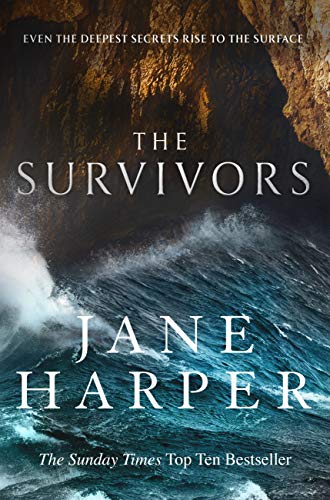
Kieran Elliott has moved back to his home town of Evelyn Bay on the island of Tasmania twelve years after the death of his older brother, Finn. His father has dementia and he has come home to help his mother move house. He feels guilty as Finn died trying to rescue him during a violent storm at sea and he has always thought that his parents blamed him for the loss of their favourite son. On that same day twelve years earlier, a teenage girl went missing. Her bag was later found on the beach, washed up by the tide, but her body was never found. The day after Kieran’s arrival, Bronte, a waitress at the Surf and Turf bar, is found dead on the beach, which stirs up memories of the events of twelve years ago.
I struggled reading the first part of this book. I couldn’t easily make out who was who, especially between the male characters, and I had no idea who or what the ‘Survivors‘ in the title were. There were hints about what had happened twelve years ago, but it wasn’t really compelling me to read on to find out who did what, where and how – until, that is, I’d read about 25% of the book. I was on the point of giving up, when things became clearer, the characters came to life and I realised what was going on – and I just had to read on.
Evelyn Bay is a small community where everyone knows everyone else. There are plenty of rumours flying around, and suspicion falls on several people. Just who and what the ‘Survivors‘ are plays a major role in the story – along with the sea, the caves and the tides. So, this is a slow-burner at first, that turns into an emotionally charged book rather than one of high tension and suspense. I enjoyed it, but not as much as Jane Harper’s earlier books, The Dry, Force of Nature or The Lost Man, which all had me enthralled.
My thanks to the publishers and NetGalley for my review copy.
Every Friday Book Beginnings on Friday is hosted by Gillion at Rose City Readerwhere you can share the first sentence (or so) of the book you are reading. You can also share from a book you want to highlight just because it caught your fancy.
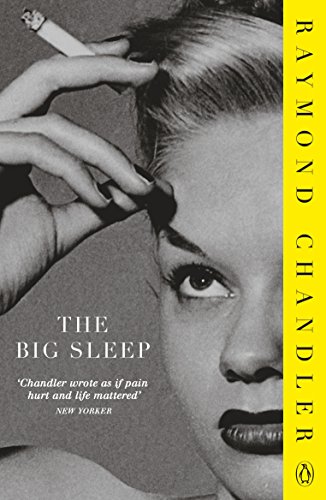
It was about eleven o’clock in the morning, mid October, with the sun not shining and a look of hard wet rain in the clearness of the foothills. I was wearing my powder-blue suit, with dark blue shirt, tie and display handkerchief, black brogues, black wool socks with dark blue clocks on them. I was neat, clean shaved and sober, and I didn’t care who knew it. I was everything the well-dressed private detective ought to be. I was calling on four million dollars.
Also every Friday there is The Friday 56, hosted by Freda at Freda’s Voice. *Grab a book, any book. *Turn to Page 56 or 56% on your ereader . If you have to improvise, that is okay. *Find a snippet, short and sweet, but no spoilers!
These are the rules:
Grab a book, any book.
Turn to page 56, or 56% on your eReader. If you have to improvise, that is okay.
Find any sentence (or a few, just don’t spoil it) that grabs you.
Post it.
Add the URL to your post in the link on Freda’s most recent Friday 56 post.
Grab a book, any book.
Turn to page 56, or 56% on your eReader. If you have to improvise, that is okay.
Find any sentence (or a few, just don’t spoil it) that grabs you.
Post it.
Add the URL to your post in the link on Freda’s most recent Friday 56 post.
Page 56:
I smiled. He didn’t like the smile. His eyes got nasty.
Blurb:
Los Angeles PI Philip Marlowe is working for the Sternwood family. Old man Sternwood, crippled and wheelchair-bound, is being given the squeeze by a blackmailer and he wants Marlowe to make the problem go away. But with Sternwood’s two wild, devil-may-care daughters prowling LA’s seedy backstreets, Marlowe’s got his work cut out – and that’s before he stumbles over the first corpse . . .
~~~
I’ve just started to read this book, a crime fiction classic, the first in Chandler’s Philip Marlow series set in Los Angeles. In the introduction Ian Rankin writes that it opens with his favourite opening paragraph in all crime fiction and that it is
a story of sex, drugs, blackmail and high society narrated by a cynical tough guy, Philip Marlowe‘ and that it is ‘such fun to read that you won’t notice how clever its author is being.
Quercus Books| 1 October 2020| 352 pages| Review copy| 4*
From the sleepy seaside town of Shoreham to the granite streets of Aberdeen, The Postscript Murders is a literary mystery for fans of Anthony Horowitz, Agatha Christie and anyone who’s ever wondered just how authors think up such realistic crimes..
PS: Trust no one.
My thoughts:
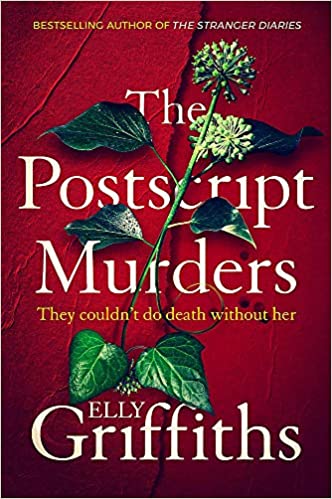
I enjoyed Elly Griffiths’ first DS Harbinder Kaur book, The Stranger Diaries, so I was keen to read the second book, The Postscript Murders. It’s very different, in a much lighter style and I think Elly Griffiths was enjoying herself writing this poking fun at crime fiction writers and the book world, with book bloggers and a literary festival. I really enjoyed it. It’s very readable, cleverly plotted, with interesting and well defined characters.
Peggy Smith is ninety, living in a retirement flat at Seaview Court in Shoreham. The book begins as she is ‘lurking’ in a bay window watching the world go by and writing down details of everyone she sees. But when Natalka, Peggy’s Ukranian carer, finds her sitting in her armchair by the window, she knows immediately that she is dead and suspects that something is wrong, especially when she finds a business card – ‘Mrs M Smith, Murder Consultant’. For Peggy is a woman with a past, who helps crime fiction writers with their plots and gory ways for people to die.
But Peggy had a heart condition and DS Harbinder Kaur certainly sees nothing to concern her about her death and initially she does not feature much in the book. Natalka enlists the help of Peggy’s friends, ex-monk Benedict, the local cafe owner and Edwin, who also lives at Seaview Court to help her investigate. When they find sinister notes with the threatening message We are coming for you, and Natalka and Benedict are threatened by a mysterious gunman who bursts into Peggy‘s flat, both D S Kaur and D S Neil Winston then take on an active role.
Their investigations lead them to Peggy’s author friends and another murder victim. Then Natalka, Benedict and Edwin then travel from Shoreham to Aberdeen to a literary festival to warn another of Peggy’s author friends, J D Monroe, Julie, that she too might be in danger, thinking she is the next victim. From then on the mystery deepens, and the suspects increase. There are plenty of red herrings and twists and turns, that kept me guessing throughout.
Many thanks to the publishers and NetGalley for my review copy.
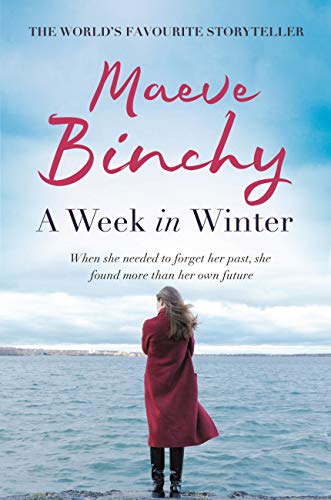
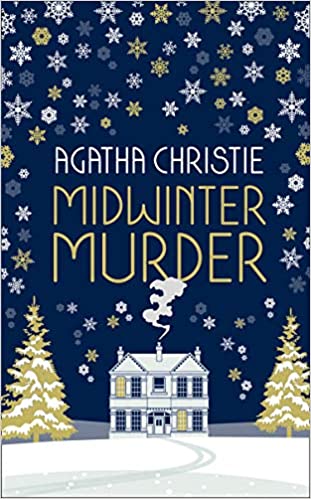
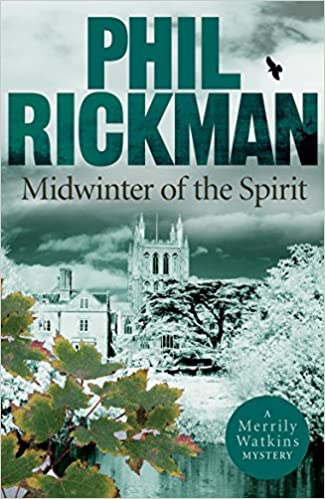
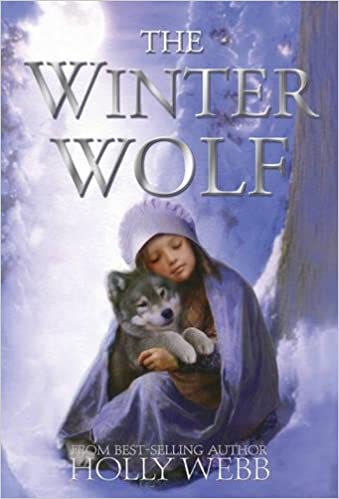
This week’s topic is a Holiday/Seasonal Freebie (holiday books/covers/titles, wintry reads, snow on cover, cool color covers, etc. So I’ve chosen ten books with the word ‘Winter‘ in the titles.
A Week in Winter by Maeve Binchy – Stone House, set high on the cliffs on the west coast of Ireland, overlooking the windswept Atlantic Ocean, was falling into disrepair – until one woman, with a past she needed to forget, breathed new life into the place. Now a hotel, with a big warm kitchen and log fires, it provides a welcome few can resist.
Midwinter Murder by Agatha Christie – a winter-themed collection of short stories by Agatha Christie, some featuring Hercule Poirot and Miss Marple. Beware of deadly snowdrifts and dangerous gifts, poisoned meals and mysterious guests.
Midwinter of the Spirit by Phil Rickman – as an early winter slices through the old city of Hereford, a body is found in the River Wye, an ancient church is desecrated and signs of evil appear in the cathedral itself, where the tomb of a medieval saint lies in pieces.
The Winter Wolf by Holly Webb – Amelia is exploring the huge, old house where her family are spending Christmas when she finds a diary hidden in the attic. It was written by a boy struggling to look after an abandoned wolf pup. Before she knows it, Amelia is transported into the wintry world of the diary.
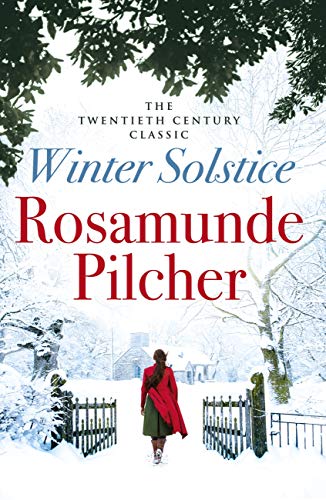
Winter Solstice by Rosamunde Pilcher – the Christmas season weaves its magical spell and for Elfrida and Oscar, in the evening of their lives, the winter solstice brings love and solace.
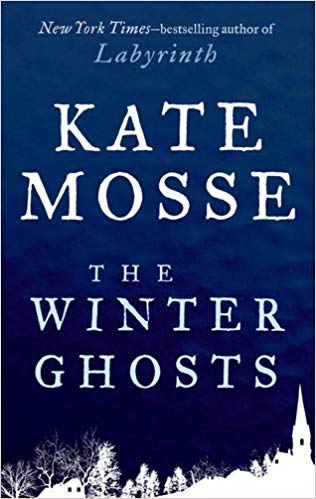
The Winter Ghosts by Kate Mosse – Traveling through the French Pyrenees to process the horrors of World War I, Freddie meets a lovely young woman also in mourning with whom he exchanges stories that unravel a centuries-old mystery.
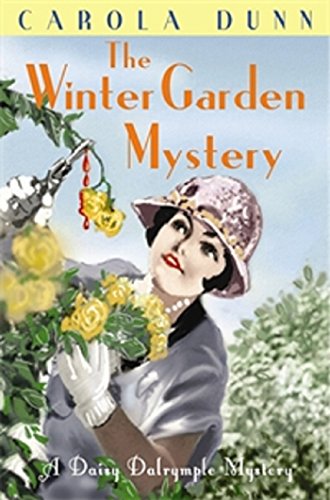
The Winter Garden Mystery by Frances Brody – set in 1923 Daisy Dalrymple is visiting Occles Hall in Cheshire, the home of her school friend Bobbie, to write an article for the Town and Country magazine and discovers a corpse buried in the Winter Garden.
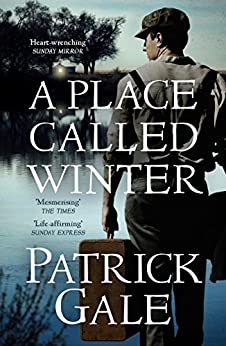
A Place Called Winter by Patrick Gale – a shy but privileged elder son, Harry Cane has followed convention at every step. Even the beginnings of an illicit, dangerous affair do little to shake him – until the shock of discovery and the threat of arrest force him to abandon his wife and child and sign up for emigration to Canada.
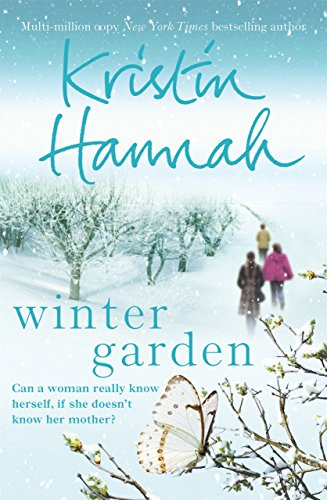
Winter Garden by Kristin Hannah – a mysterious love story that spans sixty-five years and moves from frozen, war torn Leningrad to modern-day Alaska. Sisters, Meredith and Nina finally learn the secret of their mother’s past and uncover a truth so terrible it will shake the foundation of their family and change who they think they are.
Winter of the World by Ken Follett – set in 1933 and shaken by the tyranny and the prospect of war, five interconnected families’ lives become ever more enmeshed. An international clash of military power and personal beliefs is sweeping the world, but what will this new war mean for those who must live through it?
I last wrote about the books I’ve borrowed from the library in February – just before the lockdown in March. Although the libraries opened up a while ago with a Select and Collect service I haven’t used it and now there is time-limited browsing at some branches, and the mobile library is also operating. On Tuesday it came here and I ventured up the road to the library van.
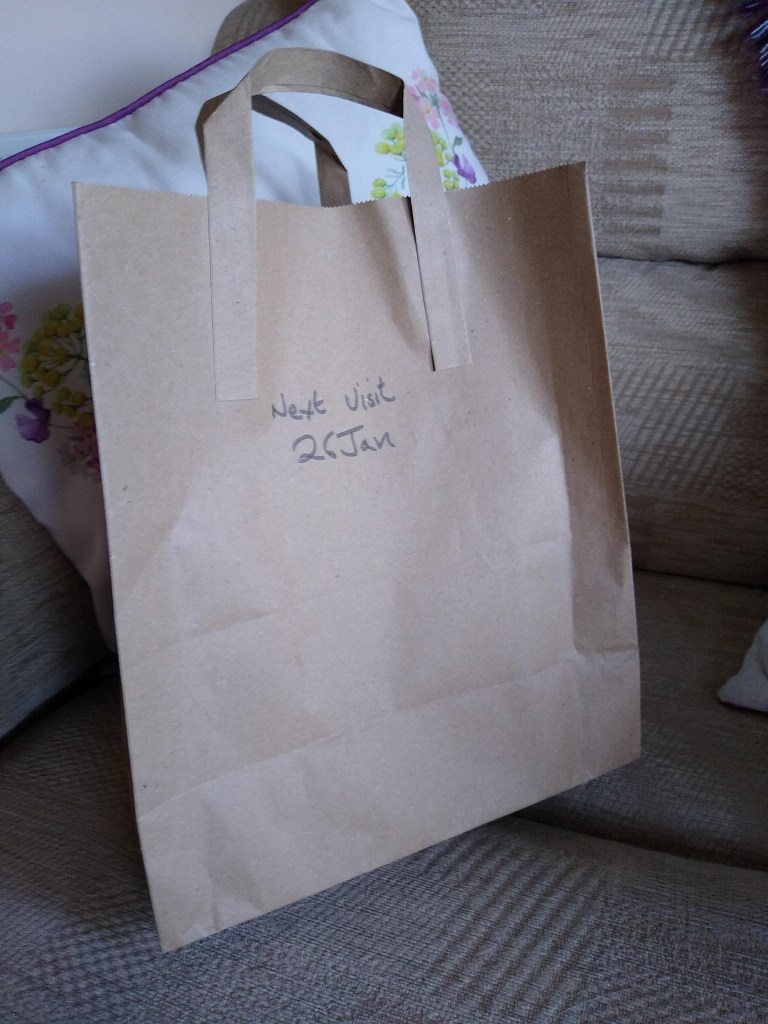
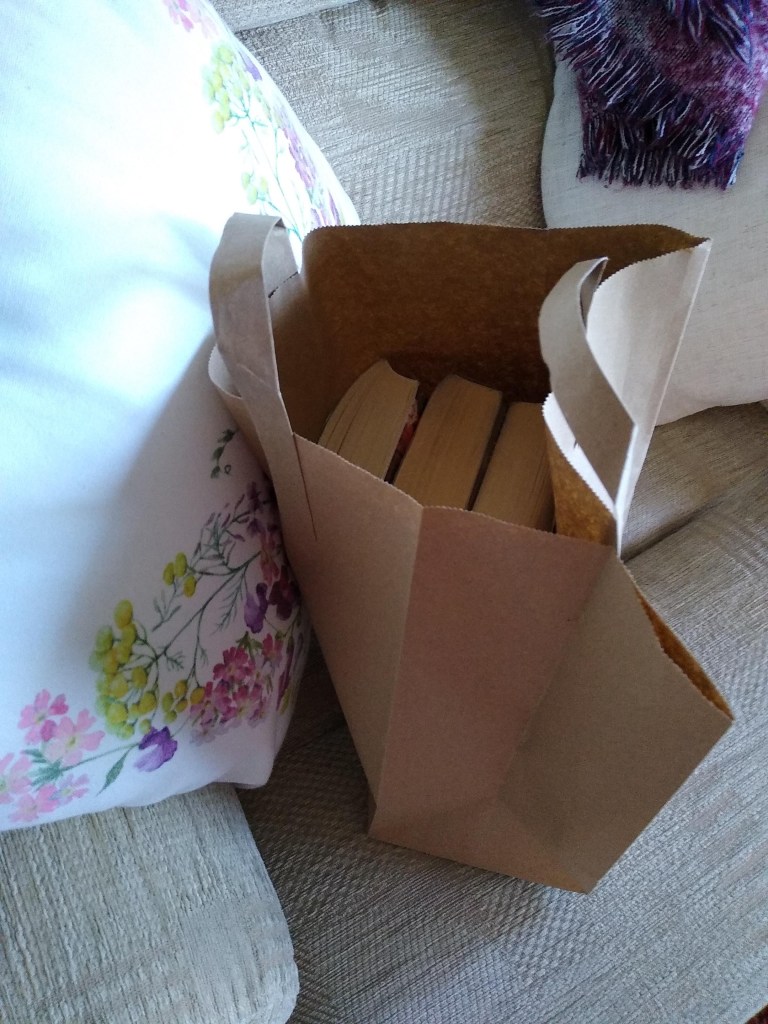
We can’t actually go into it but I could ask for books – I came home with just three. I had to wait for a couple of days before I could actually touch them. Here they are in a library bag showing the date of the next mobile visit.
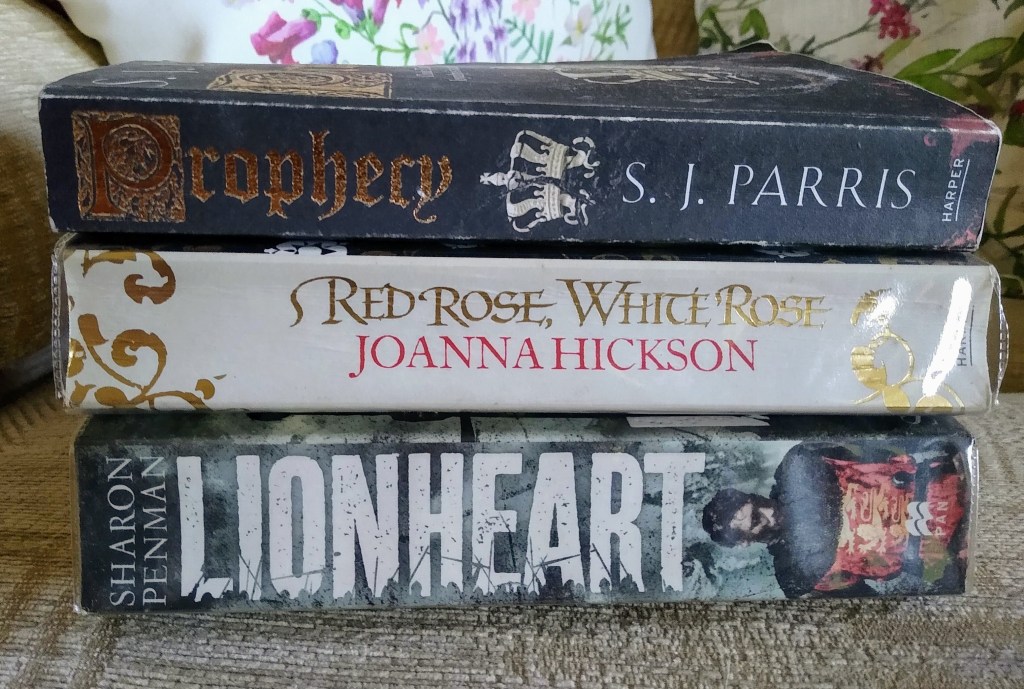
Today I took them out of the bag – all historical fiction:
I haven’t read any of S J Parris’ books before but Prophecy looks very interesting. It’s the second in her Giordano Bruno series set in the reign of Elizabeth I. Bruno was a monk, poet, scientist, and magician on the run from the Roman Inquisition on charges of heresy for his belief that the Earth orbits the sun and that the universe is infinite. In this book set in 1583, Elizabeth’s throne is in peril, threatened by Mary Stuart’s supporters scheme to usurp the rightful monarch.
Next Red Rose, White Rose by Joanna Hickson, set in 15th century England during the Wars of the Roses when Cecily Neville was torn between both sides. Her father was Richard Neville, the Duke of Westmorland and a staunch Lancastrian and she married Richard Plantagenet of York and became the mother of Edward IV and Richard III. I’ve read and enjoyed two of her books, The Tudor Crown and The Lady of the Ravens, so I’m expecting to like this book too.
I’ve always been fascinated by stories of Richard the Lionheart, so Lionheart by Sharon Penman about Richard I appeals to me. Richard was crowned King in 1189 and set off almost immediately on the Third Crusade to regain the Holy Land. Sharon Penman’s The Sunne in Splendour is one of my all time favourite books, and I have four more by her in my Kindle waiting to be read – Here Be Dragons, The Queen’s Man, Prince of Darkness and When Christ and His Saints Slept. So I can see that next year will be a Penman reading feast – and I may have to buy an e-book copy of Lionheart as the font is minute in the printed book!
It’s time again for Six Degrees of Separation, a monthly link-up hosted by Kate atBooks Are My Favourite and Best. Each month a book is chosen as a starting point and linked to six other books to form a chain. A book doesn’t need to be connected to all the other books on the list, only to the one next to it in the chain.
This month it begins with a book that is celebrating its 50th birthday this year – Are You There God? It’s Me Margaret by Judy Blume. I’ve not read this book, but the title, with my name in it, intrigues me. Margaret Simon, almost twelve, likes long hair, tuna fish, the smell of rain, and things that are pink. She’s just moved from New York City to Farbook, New Jersey, and is anxious to fit in with her new friends.
There are several ways I thought of to go from this book – my name, or the author’s name, or the subject matter of a coming of age novel, or a relationship with God.
After several false starts, I chose another coming , bof age novel. TheHighest Tideby Jim Lynch is about Miles O’Malley, a thirteen year old boy and about life, growing up, relationships and love. It’s narrated by an adult Miles, looking back at that summer when he found a giant squid, dying on the mudflats at Skookumchuck Bay, at the southern end of Puget Sound, near his house. That was the summer he had a crush on Angie, his ex-babysitter, and his best friend, old Florence was getting sicker each week.
Moving on to another book about ‘tides‘ toThe Sea Detective by Mark Douglas-Hume set in Scotland on the fictional island of Eilean Iasgaich. Cal McGill uses his knowledge of tides, winds and currents to solve mysteries, which helps in the investigation of the appearance of severed feet in trainers that had been washed on shore on islands miles apart. It’s a story of unsolved mysteries both from the present day and from the Second World War, and of two Indian girls, sold into the sex trafficking trade.
And the next link is the word ‘sea‘ in the title in The Sea Change by Joanna Rossiter set in lost landscapes this is a novel revolving around a mother and daughter caught up in catastrophic events. The lost landscapes are the village of Imber, a Wiltshire village that was requisitioned by the army during World War Two, where Violet had grown up, and the coastal village of Kanyakumari in Southern India, where her daughter Alice was caught up in the tsunami that devastated the area in 1971.
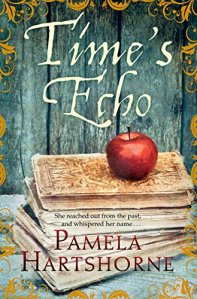
Time’s Echo by Pamela Hartshorne is a time-slip story with an element of mystery and suspense. Grace Trewe is drawn into Hawise Aske’s life, four and a half centuries earlier in York, 1577. Grace likes to travel and although she survived the Boxing Day tsunami she is suppressing her memories of what happened. As she learns how Hawise died it gets to the point where she dreads slipping out of current time into not only Hawise’s past but also into her own as she remembers what happened to her in the tsunami.
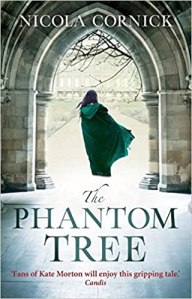
Another time-slip novel is The Phantom Tree by Nicola Cornick which alternates between the Tudor period and the present day following the life of Alison Banestre (known as Bannister in the present day) as she moves between the centuries trying to find out what happened to Mary Seymour. It’s a mystery, based on the true story of Mary Seymour, the daughter of Katherine Parr (Henry VIII’s sixth wife) and ThomasSeymour, who she married after Henry’s death.
Thomas Seymour was Jane Seymour’s brother. Their family home wasWolf Hall, an early 17th-century manor house where Mary Seymour was taken in 1557 as an unwanted orphan and presumed dead after going missing as a child. This brings me to Hilary Mantel’s trilogy, Wolf Hall and specifically to the second book in the trilogy, Bring Up the Bodies, which begins at Wolf Hall, where Henry VIII is visiting the Seymours. And it is at Wolf Hall that Henry begins to fall in love with Jane.
My chain this month includes a coming of age novel, books with tides and seas in their titles, time-slip novels and books in which Wolf Hall features. It begins in America in 1970, moves forward and backwards in time and place to the 16th century in England.
Next month (January 2, 2021), we’ll start with the winner of the 2020 Women’s Prize for Fiction, Hamnet by Maggie O’Farrell.