Top Ten Tuesday: Most Anticipated Books Releasing During the Second Half of 2024

Top Ten Tuesday is a weekly meme created by The Broke and the Bookish and now hosted by Jana at That Artsy Reader Girl. For the rules see her blog.

The topic this week is Most Anticipated Books Releasing During the Second Half of 2024. I don’t own any of these books – but I do fancy reading them:

To be published 2 July 2024:

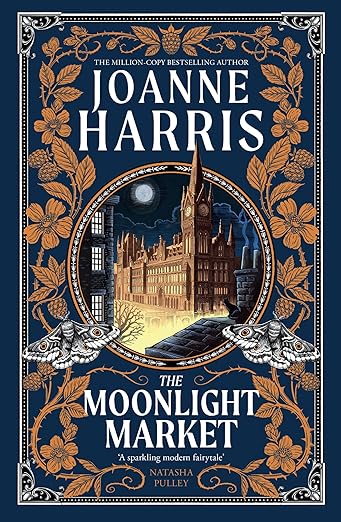
The Moonlight Market by Joanne Harris, a ‘modern fairy tale’ about a secret market that appears only in moonlight, where charms and spells are bought with memories.

To be published 18 July 2024:

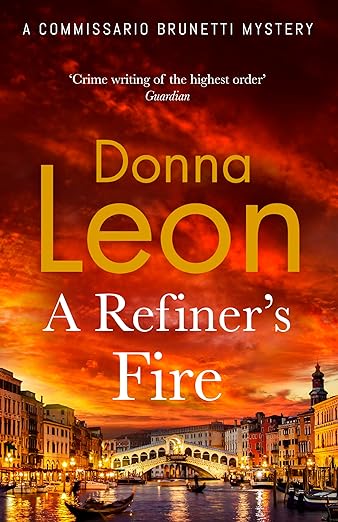
A Refiner’s Fire by Donna Leon, the 33rd Commissario Guido Brunetti in which he confronts a present-day Venetian menace and the ghosts of a heroism that never was.

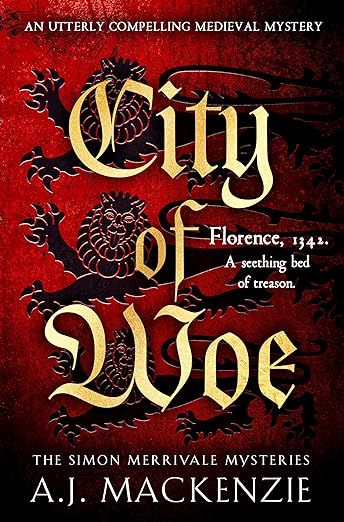
City of Woe by A.J. Mackenzie, the 2nd Simon Merrivale mystery. Florence, 1342. A city on the brink of chaos. Restored to favour at court, King’s Messenger Simon Merrivale accompanies an English delegation to Florence, to negotiate a loan to offset King Edward III’s chronic debt.

To be published 22 August 2024:

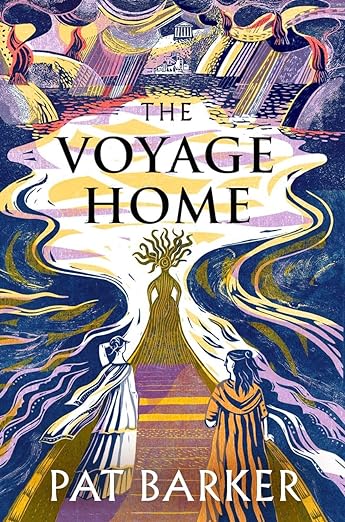
The Voyage Home by Pat Barker, the 3rd book in the Troy series, historical fiction, the follow-up to The Women of Troy and The Silence of the Girls.

To be published 29 August 2024:July 2024:

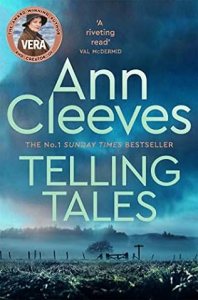
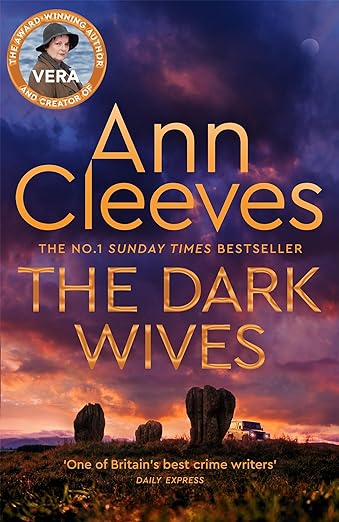
The Dark Wives by Ann Cleeves , Vera, Book 11, crime fiction, following on from The Rising Tide, which I loved.

Precipice by Robert Harris, historical fiction, summer 1914, 26-year-old Venetia Stanley – aristocratic, clever, bored, reckless – is having a love affair with the Prime Minister, H. H. Asquith, a man more than twice her age.

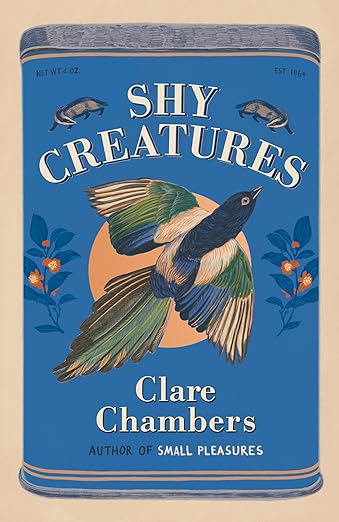
Shy Creatures by Clare Chambers, a novel about love, family and the joy of freedom.

To be published 12 September 2024:

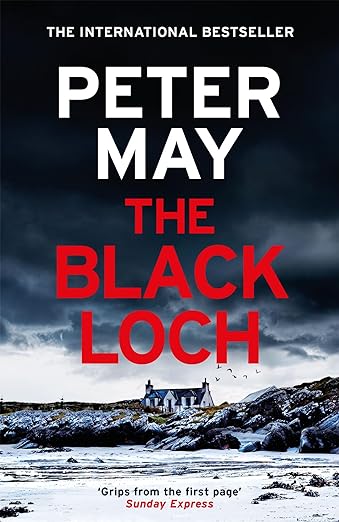
The Black Loch by Peter May, the return of Fin Macleod, hero of the Lewis Trilogy. A body is found abandoned on a remote beach at the head of An Loch Dubh – the Black Loch – on the west coast of the Isle of Lewis.

To be published 10 October 2024:

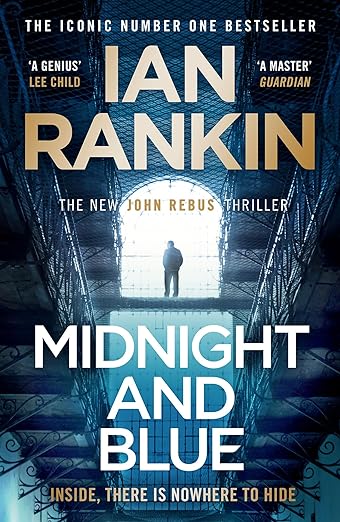
Midnight and Blue by Ian Rankin, a John Rebus thriller. John Rebus spent his life as a detective putting Edinburgh’s most deadly criminals behind bars. Now, he’s joined them…

To be published 24 October 2024:

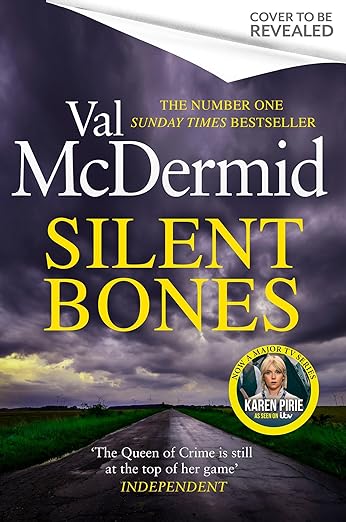
Silent Bones by Val McDermid. Book 8 in the Karen Pirie series. At the moment there is little information about this book, but as I’ve read a lot of the earlier books I’m expecting this one to be good. ‘The ingenious plot kept me guessing all the way through. It delivers on every level‘ MARIAN KEYES

WWW Wednesday: 19 June 2024

WWW Wednesday is run by Taking on a World of Words.

The Three Ws are:

What are you currently reading?
What did you recently finish reading?
What do you think you’ll read next?

The books in this post are all from my 20 Books of Summer list.

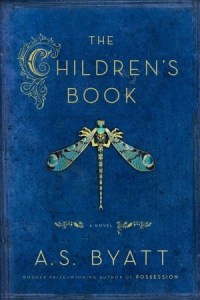
Currently I’m reading The Children’s Book by A S Byatt. I’ve started this book a few time before but now I am at last settled into reading it.

Description from Amazon UK:

‘Famous author Olive Wellwood writes a special private book, bound in different colours, for each of her children. In their rambling house near Romney Marsh they play in a story-book world – but their lives, and those of their rich cousins and their friends, the son and daughter of a curator at the new Victoria and Albert Museum, are already inscribed with mystery. Each family carries its own secrets. 

They grow up in the golden summers of Edwardian times, but as the sons rebel against their parents and the girls dream of independent futures, they are unaware that in the darkness ahead they will be betrayed unintentionally by the adults who love them. This is the children’s book.’

The last book I read was The Silence Between Breaths by Cath Staincliffeoner. I thoroughly enjoyed it. It’s about a group of people on the 10.35 train from Manchester Piccadilly to London Euston. It’s a story of s routine journey that takes a terrifying turn.

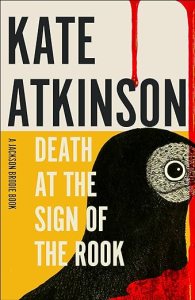
Next, I’m thinking of reading Death at the Sign of the Rook by Kate Atkinson

Synopsis from Amazon:

The stage is set. The players are ready. By night’s end, a murderer will be revealed. 
Ex-detective Jackson Brodie is staving off a bad case of midlife malaise when he is called to a sleepy Yorkshire town, and the seemingly tedious matter of a stolen painting. But one theft leads to another, including the disappearance of a valuable Turner from Burton Makepeace, home to Lady Milton and her family. Once a magnificent country house, Burton Makepeace has now partially been converted into a hotel, hosting Murder Mystery weekends.
As paying guests, a vicar, an ex-army officer, impecunious aristocrats, and old friends converge, we are treated a fiendishly clever mystery; one that pays homage to the masters of the genre—from Agatha Christie to Dorothy Sayers.

WWW Wednesday: 12 June 2024

WWW Wednesday is run by Taking on a World of Words.

The Three Ws are:

What are you currently reading?
What did you recently finish reading?
What do you think you’ll read next?

The books in this post are all from my 20 Books of Summer list.

Currently I’m reading The Silence Between Breaths by Cath Staincliffe. This is a book I’ve been meaning to read for ages, so I am really pleased that at long last I am reading it. I’m up to page 147 out of 263, so I’m making good progress. It’s set on the 10.35 train from Manchester Piccadilly to London, Euston. Some of the passengers are on their way to work, some going on holiday, one family off to a wedding and some hoping to escape from the demands of their family, wanting a new start and one person is desperate to get back home to her little girl. It’s a tense journey full of daily life – until it moves into tragedy.

Another book I’m reading is Where Water Lies by Hilary Tailor. I’ve only read the opening chapter so far, so there’s a long way to go yet. But I reckon I can start another novel at the moment. (see below)

The last book I read was The Innocent by Matthew Hall, a prequel to his series of books about Jenny Cooper, a coroner. I read the first one several years ago and just came across this novella (226 pages). Before Jenny was a coroner, she was a lawyer and in this book Hall writes about why she became a coroner. I really enjoyed it.

Next, I’m planning to read The Silence of the Girls. It is the first book in Pat Barker’s Troy series, historical fiction retelling the story of the Trojan war from the point of view of the women. I put this on my 20 Books of Summer list because it’s a book I’ve been thinking of reading for years – and I reckon the time has come.Pat

Synopsis from Amazon:

There was a woman at the heart of the Trojan War whose voice has been silent – until now. Discover the greatest Greek myth of all – retold by the witness that history forgot . .

Briseis was a queen until her city was destroyed. Now she is a slave to the man who butchered her husband and brothers. Trapped in a world defined by men, can she survive to become the author of her own story?

Although this is a weekly meme I’m only taking part occasionally.

The Black Tulip by Alexandre Dumas

4*

The Black Tulip is historical fiction, a love story, mixing historical characters with fictional ones. It was first published in 1850. I loved The Count of Monte Cristo by Alexandre Dumas, so I was hoping to enjoy The Black Tulip too. I did, but not quite as much. I think it’s because I don’t know much about Dutch history and so I found the early chapters, about the brothers Cornelius and Johan de Witt, a bit difficult to follow. They were Dutch statesmen, accused of treason, who were brutally killed by a mob in the Hague in 1672, during a period of political upheaval, when they escaped from prison.

The story centres on Cornelius von Baerle, the fictional godson of Cornelius de Witt and his desire to grow a black tulip. He became involved in the de Witts’ affairs when Cornelius de Witt left a sealed parcel of his correspondence with the French war minister, with him for safekeeping. He didn’t open the parcel and didn’t know what it contained.

When the Tulip Society of Haarlem offered a prize of a hundred thousand guilders for the development of a tulip ‘without a spot of colour‘, this set the tulip growers into a frenzy of activity, including Van Baerle and his neighbour, Isaac Boxtel. Boxtel spied on Van Baerle’s experiments to grow a black tulip, which were having more success than his own efforts. Indeed Boxtel was obsessed with what Van Baerle was doing, neglecting his own tulips to wither and rot as he observed, through a telescope, what his neighbour was doing both in his garden and in his laboratory.

Whilst observing Van Baerle’s laboratory, Boxtel had seen the meeting between Cornelius de Witt and Van Baerle when he entrusted his papers to his godson. On hearing that the de Witt brothers had been arrested Boxtel realised he could inform against Van Baerle and get him arrested, thus giving himself the opportunity to steal the bulb Van Baerle had produced. And the hundred thousand guilder prize would be his.

And so Van Baerle was thrown into prison, wrongly convicted of treason and under sentence of death. However William of Orange, Stadtholder of Holland granted him his life but condemned him to imprisonment for life. He was sent to the fortress of Loewestein and there kept in solitary confinement. What follows is a dark and somewhat farcical tale, as aided by the jailer’s daughter Rosa he continues to cultivate his tulip bulbs. He and Rosa fall in love, despite all the difficulties that assault them.

It’s a great story, full of drama and emotion. It’s a love story, a story about passion, hatred, jealousy, obsession and injustice. After the difficulties I had with the first four or five chapters (I had to re-read them to work out how the rest of the story was connected) I found it difficult to put down, keen to find out what would happen next. I didn’t love it like I loved The Count of Monte Cristo, but I really liked it.

WWW Wednesday: 5 June 2024

WWW Wednesday is run by Taking on a World of Words.

The Three Ws are:

What are you currently reading?
What did you recently finish reading?
What do you think you’ll read next?

It’s been several weeks since I wrote a WWW Wednesday post. The books in this post are all from my 20 Books of Summer list.

Currently I’m reading Black Roses by Jane Thynne, a book I bought 10 years ago. It’s set in Germany in 1933 as Hitler came to power. Clara Vine, an attractive young Anglo-German actress, arrives in Berlin to find work at the famous Ufa studios. Through a chance meeting, she is unwillingly drawn into a circle of Nazi wives, among them Magda Goebbels, Anneliese von Ribbentrop and Goering’s girlfriend Emmy Sonnemann. (Goodreads). I’m enjoying this book so far, although it’s moving very slowly and I am getting a bit confused by the minor characters.

The last book I read was Great Meadow by Dirk Bogarde, subtitled on the cover, An Evocation. I couldn’t resist the cover of this book when I spotted it at a bookstall at the local village fair in July 2010. When I read the opening words in the Author’s Note at the beginning of the book I knew I wanted to read it:

An evocation, this, of the happiest days of my childhood: 1930 – 34. The world was gradually falling apart all around me, but I was serenely unaware. I was not, alas, the only ostrich. (page vii)

It has been sitting on my bookshelves since then. and I’m kicking myself that I took so long to get round to reading it because I loved it. I’ll be writing more about this book soon.

Next I’m planning to read Where Water Lies by Hilary Tailor. I put this on my 20 Books of Summer list because I loved her first book The Vanishing Tide.

Synopsis from Amazon UK

Eliza has lived two lives – one before she fell into an obsessive teenage friendship with Eric and Maggie, and the one after it was destroyed in a single afternoon. To Eliza, Eric and Maggie were irreplaceable, so she hasn’t. Instead, drifting through life alone, she spends every morning diving into her memories as she swims in Hampstead Ponds, her guilt never far below the surface.

Twenty years might have passed, yet Eliza still can’t help searching for Maggie everywhere. Then one day she spots a woman who looks just like her. Eliza has spent half her life wondering what really happened that afternoon and if Maggie’s back, will it help her finally get answers?

But memories are like ripples on water, and can be deceptive. As the past and present collide, Eliza begins to wonder: will learning the truth set her free – or will it only drag her down deeper?

Although this is a weekly meme I’m only taking part occasionally.

Hamlet, Revenge! by Michael Innes

A Golden Age Mystery

Hamlet, Revenge! by Michael Innes has been languishing on my TBR shelves for 9 years, mainly because it is in such a small font making it difficult for me to read. It was first published in 1937. My copy was published in 1961 in paperback with the cover shown in the photo above.

Synopsis:

A Scotland Yard detective probes a high-society house party for someone rotten when a government official is murdered in this classic British mystery.

Preparations are underway for a grand party at Scamnum Court, the sweeping English country estate of the fabulously wealthy Duke of Horton. Some of the nation’s elite are invited for dinner, and some are even set to star in a semi-amateur production of Hamlet on an authentic Elizabethan stage in the banqueting hall. No expense is spared, but one guest soon pays with his life. Before the play ends, a shot is fired, and the actor playing Polonius―Lord Auldearn, the Lord Chancellor of England―is dead.

With war looming on the horizon, suspicions arise over the possibility of espionage. Therefore, the prime minister sends Insp. John Appleby not only to investigate, but to also find a confidential government document. Appleby is lucky there’s a mystery novelist eager to lend a hand with the extensive guest list at Scamnum Court. He will need all the help he can get if he hopes to prevent the killer from making an encore performance . . .

My thoughts

This is the second Inspector John Appleby book. And like the first, Death at the President’s Lodging (my review) it is a most complex mystery. When Lord Auldearn, Lord Chancellor of England is murdered on stage during an amateur production of Hamlet at Scamnum Court the Prime Minister asks Appleby to investigate. Because there’s a possibility that espionage is involved, the PM tells Appleby not to trust anybody. It’s all very vague. The PM tells him there’s a document concerning

… the organization of large industrial interests on an international basis, in the event of a certain international situation. The general drift towards the matter such a document embodies cannot, you realize, well be secret; nothing big can be secret. But the details may be. And this document might be useful in two ways: the detailed information might be useful to one powerful interest or another: and accurate possession of the details, as circumstantial evidence of something already known in general terms, might be useful to an unfriendly government.

…War? said Appleby … (pages 83,84)

The book begins with a Prologue.which is is longer than most prologues. It sets the scene, describing Scamnum Court in detail. It’s the family seat of the Crispin family, described as ‘a big place: two counties away it has a sort of little brother in Blenheim Palace.’ All the characters are introduced, including Giles Gott, who was also in Death at the President’s Lodging. An eminent Elizabethan scholar, he is the director of the play. The other characters are also introduced; Lord Auldearn, the Lord Chancellor of England, who plays Polonius, and numerous other family members, guests and members of the Scamnum Court staff.

There are thirty people involved in the play, actors and those behind the scenes, plus twenty seven in the audience. I found this section too long (74 pages in my copy) and it took me more than a while to identify who was who! My attention was drooping as I read pages of long meandering, descriptive paragraphs and I wondered when there would be a murder. And there is a lot of information about the staging of the play and numerous Shakespearean references. Before the performance the murderer delivered a number of warning messages about revenge, so everybody is on edge.

Appleby doesn’t appear until the second section and then the pace picks up considerably as he and Gott question the suspects. It gets more complicated when a second murder, that of Mr Bose, the prompter who was on stage and who could possibly have seen who shot Lord Auldearn. I was puzzled for much of the time as I read – it’s a book that you can’t read quickly and it requires concentration. I had no idea who the culprit was as Appleby and Gott tried to eliminate the suspects and answer numerous questions, such as why was Lord Auldearn shot and not stabbed as Polonius the character he played was, why did the murderer come onto the stage to shoot him and risk being seen by Bose, why did he send the mysterious messages about revenge – what revenge was being sought, and was the possible espionage plot the reason behind the shooting? Or was the reason a personal one?

From being confused and overwhelmed by the puzzle I became thoroughly absorbed by the mystery and was eagerly turning the pages to find out all the answers. It’s a book I really need to re-read to get to grips with it – I’m sure I missed so much. My post falls far short of doing justice to the book!