This Week in Books: 20 May 2015

My week in books

This Week in Books is a weekly round-up hosted by Lypsyy Lost & Found, about what I’ve been reading Now, Then & Next. A similar meme is run by Taking on a World of Words.

Now:

I’m currently  reading three books.

Golden Age etc

The Golden Age of Murder by Martin Edwards – the story of detective fiction written by the authors in the Detection Club between the two World Wars.  I’m reading this slowly, enjoying all the details about authors whose books I’ve read such as Agatha Christie and authors I’ve only heard of. I can see I’m going to have a long list of books to read by the end of this book.

Harbour Streetthe sixth Vera Stanhope murder mystery by Ann Cleeves. In Newcastle, Detective Joe Ashworth and his daughter Jessie travel home on the busy Metro. The train is stopped unexpectedly, and Jessie sees that one woman doesn’t leave with the other passengers: Margaret Krukowski has been fatally stabbed. This was adapted for television and I watched it when it was first broadcast last year but can’t remember the identity of the murderer!

Poirot and Me by David Suchet – his account of how he came to play Hercule Poirot in TV’s Agatha Christie’s Poirot in 1988 until the final episode in 2013. I think I must have watched all the episodes, some more than once and it’s interesting to get David Suchet’s perspective.

Then:
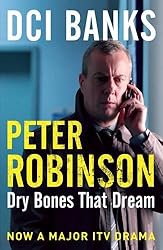
A few days ago I finished reading Dry Bones That Dream by Peter Robinson, a DCI Banks Mystery. I wrote about it earlier this week in this post.

Next:

As usual I’m not sure what I’ll read next. I’m very tempted to read one of the books I added to the TBR piles yesterday when I went to Barter Books in Alnwick. Yesterday was also the fortnightly visit of the library van and I collected three books I’d reserved- I’ll do a separate post about all these books.
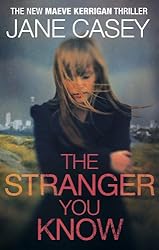
The one that is calling to me right now is The Stranger You Know by Jane Casey. This is the fourth Maeve Kerrigan book and I’ve read the first three.

Maeve is investigating the murders of three women who have been strangled in their homes by the same killer. It appears that they knew their killer and had let him in.

Dry Bones That Dream by Peter Robinson: Book Notes

I read Peter Robinson’s DCI Banks books set in the Yorkshire Dales, every now and then, so I’m reading them totally out of order. It doesn’t seem to matter. Dry Bones That Dream is the 7th book in the series and the cover of my copy shows  Stephen Tompkinson as Banks. I don’t remember seeing this one on ITV, but I probably did as I see from the list of episodes in Wikipedia that it was broadcast in 2012.

Dry Bones That Dream was first published in the UK in 1995 and in the US later in as Final Account.

Summary from Peter Robinson’s website:

One May evening, two masked gunmen tie up Alison Rothwell and her mother, take Keith Rothwell, a local accountant, to the garage of his isolated Yorkshire Dales farmhouse, and blow his head off with a shotgun. Why? This is the question Detective Chief Inspector Alan Banks has to ask as he sifts through Rothwell’s life. Rothwell was generally known in the area as a mild-mannered, dull sort of person, but even a cursory investigation raises more questions than answers. When Banks’s old sparring partner, DS Richard ‘Dirty Dick’Burgess, turns up from the Yard, the case takes yet another unexpected twist, and Banks finds himself racing against time as the killers seem to be dogging his footsteps. Only after he pits his job against his sense of justice does he discover the truth. And the truth leads him to one of the most difficult decisions of his career.

My Thoughts:

I read this quite quickly, even though it’s just over 350 pages, in between mammoth gardening sessions (more about that later maybe). It really centres around identity and unearthing the secrets the characters have kept hidden from their family and friends. There’s also money-laundering and international and political shenanigans involved.

Much of the book revolves around Banks and his relationships, with family, colleagues and the people he interviews in connection with Keith Rothwell. Banks seems to be at a pivotal moment in his personal life. As usual with the DCI Banks books  we are told what music Banks listens to which got a bit monotonous for me and the descriptions of what each character looked like and the clothes they were wearing didn’t add anything to the plot. I did have an inkling about the truth about Rothwell’s murder but thought I was being too fanciful and that it was an unlikely scenario – it wasn’t. But I did enjoy reading it anyway even with these drawbacks.

Book Beginnings: Firmin

Book Beginnings ButtonEvery Friday Book Beginnings on Friday is hosted by Gillion at Rose City Reader where you can share the first sentence (or so) of the book you are reading, along with your initial thoughts about the sentence, impressions of the book, or anything else the opener inspires.

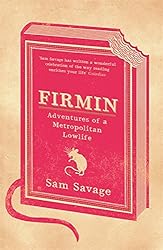
I’ve been meaning to read this book for ages and I’ve listed it as one of the books to read for Once Upon A Time IX this year, so now is the time to read it. It is Firmin: Adventures of a Metropolitan Lowlife by Sam Savage ‘“ the tale of a rat living in the basement of a bookstore who develops the ability to read.

It begins:

I had always imagined that my life story, if and when I wrote it, would have a great first line: ‘Lolita. light of my life, fire of my loins’; or, if I could not do lyric, then something sweeping like Tolstoy’s ‘All happy families are alike, but every happy family is unhappy in it’s own way.’ People remember those words, even when they have forgotten everything else about the books. When it comes to openers, though, the best in my view has to be Ford Madox Ford’s The Good Soldier: ‘This is the saddest story I have ever read.’ I’ve read that one dozens of times and it still knocks my socks off. Ford Madox Ford was a Big One.

Not just one book beginning, but four!

From the back cover:

Firmin is a debonair soul, trapped in a rat’s body. He lives in the basement of a ramshackle old bookstore run by Norman Shine, where as the runt of his litter, he chews the books around him in order to survive. Thanks to his unusual diet Firmin develops the ability to read … and a very unratlike sense of the world and his place in it.

This week I’m joining in with The Friday 56, hosted by Freda at Freda’s Voice.

These are the rules:

  1. Grab a book, any book.
  2. Turn to page 56, or 56% on your eReader.
  3. Find any sentence (or a few, just don’t spoil it) that grabs you.
  4. Post it.
  5. Add the URL to your post in the link on Freda’s most recent Friday 56 post.

Page 56:

My intellect grew sharper than my teeth. Soon I could do a four-hundred-page novel in an hour, knock off Spinoza in a day.

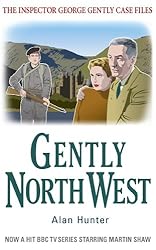
Gently North West by Alan Hunter

I first came across Inspector George Gently through the TV drama with Martin Shaw as Gently. There are 46 books in Alan Hinter’s Gently series and I’ve  read the first two , Gently Does It and Gently by the Shore and now the 14th book, Gently North West (first published in 1967). The full list of the Gently books is on Fantastic Fiction.  In the TV version Gently is based in Northumberland, whereas the books are mainly set in Norfolk.

Summary (Amazon)

There’s blood in the heather and a murderer on the loose when Gently pays a quiet visit to the Highlands of Scotland. Had Brenda Merryn not been such a strong-willed woman and had she not been so much in love with George Gently, driving all the way to Scotland for a holiday with Gently’s sister and brother-in-law might have been a bit of a challenge. Spying on a heavily armed private army of nationalists, being held at gunpoint on the hillside, being held prisoner in a filthy outhouse and becoming involved in a murder would be unthinkable. For Gently, it’s all in a day’s work and his holiday is put on hold while he stalks a murderer in the mountains, with Brenda by his side.

My view:

Gently North West is set in the fictitious village of Strathtudlem in Scotland in 1967 where Gently is on holiday with his friend, Barbara Merryn and his sister, Bridget and her husband. There is quite a lot of detailed descriptions not only of the Scottish Highlands but also of the route of Gently’s journey from London to Scotland. On their journey a man with a red beard nearly crashes into Gently’s car.

Then on their first evening in the Highlands, Gently and Brenda go for a walk and see the same man, standing high on a crag above the glen, peering at them through his binoculars.  The next morning, the body of Donnie Dunglass is found, stabbed in the back, face down on the heather near where Gently had seen the man with the red beard. He feels it is his duty to inform the local constabulary about the man he saw and so becomes involved in the search for the killer.

In this book there are several references that set the book firmly in the late 1960s with reference to the Scottish Nationalists ‘ activities during that time and even to Mary Quant. But what particularly interested me about Gently North West is not the actual murder mystery which I think is rather far-fetched, but the fact that Gently is no longer an Inspector working in Norfolk but is living in London, a Chief Superintendent with Scotland Yard. Obviously since the events in the second book Gently had been promoted several times!

Now I’m wondering if I want to read all the books to find out more about Alan Hunter’s Gently.

Alan Hunter was born in Hoveton, Norfolk in 1922. He left school at the age of fourteen to work on his father’s farm, spending his spare time sailing on the Norfolk Broads and writing nature notes for the Eastern Evening News. He also wrote poetry, some of which was published while he was in the RAF during the Second World War. By 1950, he was running his own book shop in Norwich and in 1955, the first of what would become a series of forty-six George Gently novels was published.  He died in 2005, aged eighty-two.

He dedicated Gently North West to his mother, Isabella Hunter, nee Andrews, who was from Culsalmond in Aberdeenshire. In his own words she ‘contrived to possess her son with an indelible prejudice for the land of heroes and poets. Rest her well where she lies and greetings to my unknown Scottish cousins.

Reading Challenge: this is the fifth book I’ve read that qualifies for the Read Scotland Challenge 2015.

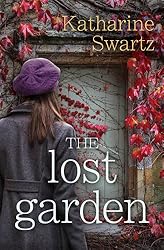
The Lost Garden by Katharine Swartz

The Lost Garden is  an emotionally intense novel of love, loss and grief, set in both the past and the present day, in a small village on the Cumbrian coast.

In 1919 Eleanor, the daughter of the vicar of Goswell, is struggling to adjust to the loss of her brother, Walter who died just before the Armistice was declared and in the present day half-sisters Marin and Rebecca are coming to terms with the death of their father and his wife.

The link between the two stories centres around the walled garden at the back of the Bower House, a small house next to the church. It was said to have been the herb garden for the monastery before the Reformation.

In 1919 the garden is covered in brambles and Eleanor decides she wants to make it into a garden of remembrance, a place to just be, to remember or to forget as much as you need. And she begins to restore it with the help of the church gardener, Jack. As they do so the garden begins to blossom as winter moves into spring and summer, but the mood of both the family and the country remains sombre as they come to terms with the aftermath of the First World War.

In the present day, Marin has bought the Bower House, not knowing its history. Rebecca discovers the walled garden once more overgrown with brambles and weeds and it captures her imagination. And when Marin she sees a photo of a young woman in the garden, thought to have been taken around 1920 she is determined to find out more – just who was the young woman and what is underneath the brambles. With the help of the local gardener, Joss, she begins to restore the garden and in doing so they discover secrets about both the past and the present.

The Lost Garden is a gentle story, well told and an enjoyable read, switching between the past and the present. The differences in attitudes and social conventions of the times provide a distinct contrast and highlights the parallels between the two stories. I liked the story-lines for both Marin and Eleanor, both have difficult relationships with their sisters and both are coming to terms with their grief, but on the whole I was more interested in Eleanor’s story, set against the backdrop of the post First World War.

My thanks to Lovereading for providing an advance proof of this novel, due to be published 15 May 2015. The Lost Garden is the second book in Katharine Swartz’s Tales from Goswell series – the first is The Vicar’s Wife.

Gray Mountain by John Grisham

Years ago, well before I began this blog, I read many of John Grisham’s books and loved them. Then, somehow, he went off my radar, but when I saw Gray Mountain on display in the library I remembered how much I used to enjoy his books and borrowed it.

Gray Mountain


I don’t think he has changed much – this book is just as much a campaign against injustice and the misuse of power, about the good little guys against the big bad guys as his earlier books are. In this case it’s the big coal companies that come under the microscope, companies that are  ruining the environment by strip-mining in the Appalachian mountains. I was amazed to read the details – clear-felling the forests, scalping the earth and then blasting away the mountain tops to get at the coal. All the trees, topsoil and rocks are then dumped into the valleys, wiping out the vegetation, wildlife and streams. Gray Mountain is one of the mountains destroyed in this way.

But this is running ahead in the book. It begins in 2008 when Samantha Kofer has lost her job as a highly paid third-year associate with New York’s largest law firm following the bankruptcy of the Lehman Brothers bank. One of the options open to her is to work for free for twelve months as an intern at the Mountain Legal Aid Clinic in Brady, Virginia, run by Mattie Wyatt.  After that there is the possibility that she could get her old job back.

Up until then Samantha had only worked in corporate law and had never been in a courtroom, but she soon became immersed in a variety of  cases, including meths dealers and people suffering from black lung disease.

Gray Mountain is owned by Mattie’s nephew, Donovan Gray, also a lawyer, who is taking on cases against the Big Coal companies.  One of the cases involves the Tate family, two little boys who were killed when a boulder from the rock clearance crashed into the trailer where they were sleeping.  Although Samantha is horrified by the situation and wants to help Donovan and his brother Jeff in their search for justice, she feels reluctant to get involved as Donovan’s  methods are sometimes not strictly legal – and she doesn’t feel she belongs in Brady. And there is still the opportunity for her to work in New York, when a former colleague offers her a job.

But she gets emotionally involved with the people and their problems and begins to like litigation:

This was the rush, the high, the narcotic that pushed trial lawyers to the brink. This was the thrill that Donovan sought when he refused to settle for cash on the table. This was the overdose of testosterone that inspired men like her father to dash around the world chasing cases. (page 197)

She has to decide whether to stay with the Clinic or take the job in New York, and she loves the city life. It’s not an easy decision, and it is not revealed until right at the very end of the book.

Although Gray Mountain doesn’t quite match up to my memories of Grisham’s earlier books, I still enjoyed it. At first I thought he was introducing too much detail about the coal companies’ mining practices, but I soon realised how essential it is to understanding the issues. At times it’s like reading a series of short stories, but the main theme is well maintained. I liked the view of the small town community, the mountain scenery, the legal cases large and small and the tension created by the danger of opposing the big coal companies.

Reading Challenge: Color Coded Reading Challenge, with the word ‘Gray’ in the title and the cover being mainly grey in colour it qualifies for the category a book with ‘Black’or any shade of black in the title/on the cover.