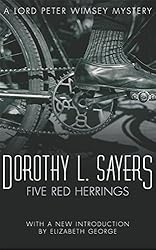
Five Red Herrings by Dorothy L Sayers

Five Red Herrings by Dorothy L Sayers  was first published in 1931, the seventh Lord Peter Wimsey murder mystery. Wimsey is on holiday in Kirkcudbright and Gatehouse of Fleet in Galloway, Scotland, in a fishing and painting community where he is known and where he is

… received on friendly and even affectionate terms. He could make a respectable cast, and he did not pretend to paint, and therefore, although English and an ‘incomer’, gave no cause of offence. The Southron is tolerated in Scotland on the understanding that he does not throw his weight about, and from this peculiarly English vice Lord Peter was laudably free. True, his accent was affected and his behaviour undignified to a degree, but he had been weighed in the balance over many seasons and pronounced harmless, and when he indulged in any startling eccentricity, the matter was dismissed with a shrug and a tolerant, ‘Christ, it’s only his lordship.’ (page 2)

When Campbell, a local landscape painter and fisherman is found dead in a burn near Newton Stewart, it seems he must have slipped whilst painting near to the edge of a ravine, a steep and treacherous granite slope. At first it looks as though it was an accident, but  Wimsey is convinced it was murder and an autopsy reveals that Campbell was dead before he fell into the burn. Campbell was not a popular man, described as ‘ a devil when he is drunk and a lout when he is sober.’ There are 6 possible suspects – all of whom had quarrelled with or been assaulted by Campbell, all of them artists.

What follows is an intricately plotted story as Wimsey and the police investigate the mystery. It is complicated by immense detail about train times, routes, bicycles, moving the body, alibis, and varying styles of painting – I gave up trying to understand it all and just read along enjoying the puzzle.

The five red herrings are, of course, the five innocent suspects, and Wimsey introduces another possibility that it might not be any of the six suspects, when having heard the case against each of them, he announces that all the theories are wrong, before he gives his verdict. And then he sets in motion a re-enactment of the crime from beginning to end to show how it was carried out, down to the most minute detail.

Sayers doesn’t play fair with the reader in not revealing a clue Wimsey noticed at the scene of the crime whilst he was searching through the contents of Campbell’s pockets and satchel and announced something was missing. In an added note Sayers explained that Wimsey

… told the Sergeant what he was look for and why, but as the intelligent reader will readily supply these details for himself, they are omitted from this page. (page 21)

I didn’t ‘readily supplied the details’  for myself but eventually I guessed what it was. But overall, that is just a minor complaint and I thoroughly enjoyed this mystery, the characters are striking and the setting is well grounded.

Five red herrings map 001

There is a map at the beginning of the book that helped me follow the action and in the Foreword Sayers explained that

All the places are real places and all the trains are real trains, and all the landscapes are correct, except that I have run up a few new houses here and there.

and goes to clarify that

… none of the people are in the least like real people, and that no Galloway artist would ever think of getting intoxicated or running away from his wife or bashing a fellow citizen over the head. All that is just for fun and to make it more exciting.

The Gateway of Fleet website has an interesting page on ‘Dorothy L Sayers in Galloway‘, which states that she and her husband Mac Fleming first visited  Galloway in 1928 when they stayed at the Anwoth Hotel (mentioned in Five Red Herrings) in Gatehouse of Fleet and from 1929 they rented a studio in The High Street, Kirkcudbright next door to the well-known artist Charles Oppenheimer. They got to know Galloway well, especially the artistic community in Kirkcudbright and Gatehouse, on which her detective novel Five Red Herrings is based.http://Dorothy L Sayers in Galloway

I realised after I’d read Five Read Herrings that it fits into a couple of reading challenges – the Colour Coded Challenge (a book with ‘red’ in the title) and the Read Scotland Challenge (a book set in Scotland).
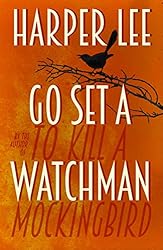
First Chapter, First Paragraph: Go Set a Watchman

Every Tuesday Diane at Bibliophile by the Sea hosts First Chapter, First Paragraph Tuesday Intros, where you can share the first paragraph, or a few, of a book you are reading or thinking about reading soon.

My choice this week is Go Set a Watchman by Harper Lee which is published today. It begins:

Since Atlanta, she had looked out the dining-car window with a delight almost physical. Over her breakfast coffee, she watched the last of Georgia’s hills recede and the red earth appear, and with it tin-roofed houses set in the middle of swept yards, and in the yards the inevitable verbena grew, surrounded by whitewashed tires. She grinned when she saw her first TV antenna atop an unpainted Negro house; as they multiplied her joy rose.
Jean Louise Finch always made this journey by air, but she decided to go by train from New York to Maycomb Junction on her fifth annual trip home. For one thing, she had the life scared out of her the last time she was on a plane: the pilot had elected to fly through a tornado. For another, flying home meant her father rising at three in the morning, driving a hundred miles to meet her in Mobile, and doing a full day’s work afterwards: he was seventy-two now and this was no longer fair.

I loved To Kill a Mockingbird when I read it a couple of years ago but I’m still not sure I want to read Go Set a Watchman, so I downloaded a sample on my Kindle to have a look at the beginning.

What do you think? Are you going to read it?

The Outcast by Sadie Jones

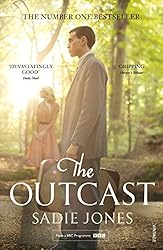
I noticed trailers for a new drama on BBC for The Outcast and wondered if it’s based on the book of the same name by Sadie Jones ‘“ a book that has sat on my shelves for a few years (well nearly 7 years) and I still haven’t read it. That’s what happens when you move house, box the books and then double shelve them, putting this one at the back! It was shortlisted for the Orange Broadband Prize for Fiction in 2008.

And it is the same book (although my copy being much older has a different cover) ‘“ the TV version begins tomorrow on BBC One at 9 pm. It’s been adapted by Sadie Jones, so I hope this means it’s faithful to the book. I’ve started to read it ‘“ won’t finish it by tomorrow night but will definitely finish it before the second episode is broadcast the following Sunday.

It’s set in the 1950s, when Lewis Aldridge aged nineteen, is released from jail, and returns to the village where he grew up: the village where, a decade earlier, tragedy tore his family apart, leaving him to a troubled adolescence with a father he barely knew.

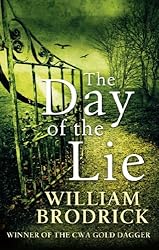
The Day of the Lie by William Brodrick

William Brodrick’s books are meaty, books that make me think. Nothing is straight forward, they’re layered books, delving into the past, uncovering secrets and revealing crimes. They are well researched, bringing the past to life.

In The Day of the Lie (the 4th Father Anselm book) the past in question is post Second World War Poland, covering  the early 1950s, the early 1980s and the present day.

Blurb from the back cover of my paperback copy:

In present day Cambridge, Father Anselm receives a visit from an old friend with a dangerous story to tell – the story of a woman in Eastern Europe in the icy grip of the Cold War. She was brave, brilliant … and betrayed by someone close to her – someone still unknown. What became of this woman and the dark secret she kept?

No one can be trusted. Nothing is as it seems. Before more blood is spilt, Anselm must peel back years of history, decades of secrets and a half-century of lies in order to expose a secret so shocking that some would rather die than see it revealed.

Father Anselm’s old friend John has asked him to investigate who had betrayed  Roza Mojeska. She had been part of an underground resistance movement, had been arrested and tortured by the secret police, in particular by Otto Brack, in order to uncover the identity of the Shoemaker, the author of a dissident newspaper, Freedom and Independence.

Never explicitly graphic, Brodrick conveys the horror of the torture chamber and as Anselm’s Prior warns him he had to enter ‘the world of Otto Brack, this frightening man who learned how to bring about evil by exploiting someone who is good, laying – in part – the evil at their door.‘ (page 75-6) It’s a world where ‘twisted people lead twisted lives and the roads they build around them are never straight and true.’

My knowledge of the period is limited, so I found the historical setting quite difficult to follow, as the narrative switches between the time periods, but once I had sorted out the relationships between the characters (or I thought I had) it became clearer. But there is also the problem of working out who is ‘good’ and who is ‘bad’, just who is telling the truth, whose recollection of the past is ‘correct’? I thought I knew, but then there was a shift and I wasn’t sure right up to the end of the book.

Looking back on the book now (I finished reading it over a week ago) I can say I did enjoy it, but it was hard work in parts.

William Brodrick became a barrister, having been an Augustinian monk for six years (the other way round from his fictional character, Father Anselm). After 10 years at the Bar, his interest in writing led him to writing the Father Anselm books.

The Father Anselm books (with links to my posts) are:

  1. The Sixth Lamentation (2003)
  2. The Gardens of the Dead (2006)
  3. A Whispered Name (2008) – the best one in my opinion
  4. The Day of the Lie (2012)
  5. The Discourtesy of Death (2013)

And the latest book has just been published:

The Silent Ones by William Brodrick published 2 July 2015.

The Day of the Lie fits into the Mount TBR Challenge and is also a book I identified as one for the 10 Books of Summer Challenge.

First Chapter ˆ¼ First Paragraph

First chapterEvery Tuesday Diane at Bibliophile by the Sea hosts First Chapter ˆ¼ First Paragraph Tuesday Intros, where you can share the first paragraph, or a few, of a book you are reading or thinking about reading soon.

I read Old Filth by Jane Gardam in 2008 and loved it, without realising at that time that there were more books about Old Filth QC (Failed in London, Try Hong Kong). So I was delighted to find there are two more.

I’ve recently read the second book, The Man in the Wooden Hat, and I’m currently reading the third, Last Friends – nearly finished it actually.


It begins:

The Titans were gone. They had clashed their last. Sir Edward Feathers, affectionately known as Filth (Failed in London, Try Hong Kong), and Sir Terence Veneering, the two greatest exponents of English and International Law in the engineering and construction industry and the current experts upon the Ethics of Pollution, were dead. Their well-worn armour had fallen from them with hardly a clatter and the quiet Dorset village to which they had retired within a very few years of each other (accidentally, for they had hated one another for over fifty years) mourned their passing and wondered who would be distinguished enough to buy their houses.

My reviews of  Last Friends and The Man in the Wooden Hat will follow shortly.

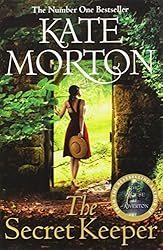
The Secret Keeper by Kate Morton

This is a book that really captured my imagination. I loved everything about it – the descriptive passages, the mystery, the secrets and the people involved. It was all real to me. It’s one of the best books, if not the best book, I’ve read this year.

The Secret Keeper by Kate Morton has been sitting unread for two years on my bookshelves, but if I’d read it earlier I wouldn’t have had the pleasure of reading it now – it was well worth the wait!

It begins on a summer’s day in 1961 in Suffolk when sixteen-year old Laurel is shocked when she sees her mother stabbing a stranger who had come to their farm. Fast forward 50 years Laurel and her three sisters and brother are coming to terms with the fact that their mother, Dorothy is moving closer to the end of her life. Laurel realises that there is so much she doesn’t know about Dorothy’s life and when they find a photograph of Dorothy and a friend, Vivien, in a book of the play Peter Pan, it arouses old and ugly memories for Laurel – images of her mother’s frightened face as she confronted the stranger. Who was Vivien and who was the stranger? Why was Dorothy so scared? Laurel is determined to find out.

It’s a story moving between time periods from 2011, back to the 1960s and also to the 1940s when Dorothy first met and fell in love with Jimmy, a war photographer, and also became friends with the wealthy and beautiful Vivien, married to a successful novelist.  Laurel, with the help of her brother, Gerry, tracks down records throwing light on Dorothy’s and Vivian’s past, back to war-time England and pre-war Australia.

It’s not a straight forward story. By that I don’t mean it’s difficult to read, because each time period is clearly headed and the characters are clearly defined. But there are so many twists and turns – I thought several times I’d got things clear and knew where the story was heading only a bit later on to realise that not all the clues had been revealed and I had to revise my thoughts. It’s so cleverly written and so well plotted that it was only near the end that I had an inkling of Dorothy’s relationship with Vivien and what had really happened to them all. It really is a book I didn’t want to put down and also a book I wanted to enjoy as long as possible. By the end, though, I couldn’t turn the pages fast enough!

Kate Morton’s next book, The Lake House is due to be published in October 2015. I’m looking forward to reading it.

Note: as well as being my 17th book for the Mount TBR Challenge 2015 this is my 3rd book for the TBR Pile Challenge 2015. And the 9th book for the Historical Fiction Reading Challenge 2015.