I’ve had The Brimstone Wedding by Barbara Vine sitting on my unread shelves for a while and when the R.I.P. IX Challenge came up I thought it would be a good book to include in the challenge, because the cover blurbs describe it as a ‘horrifying mystery’, ‘chilling’ and with a ‘horrible climax’.
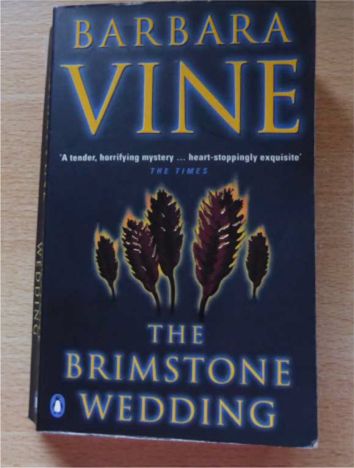
My copy is a second-hand paperback, which is no longer in print, but The Brimstone Wedding is available as an e-book.
Jenny Warner is a carer at a retirement home, Middleton Hall where she meets Stella Newland, who is dying of lung cancer. At first Stella never mentions her husband or her past life, but gradually she confides in Jenny, telling her things she has never said to her son and daughter – things about her life she doesn’t want them to know.
Their stories intertwine, some narrated by Jenny and some by Stella as she records events in her life on a tape recorder which she leaves to Jenny. They have more in common than Jenny initially thought and as Stella slowly reveals her past the tension in the book begins to mount.
The atmosphere is mysterious, a house isolated in the fens, seems to hold the key to the past. The description of the house is superb, set in an overgrown garden, with clothes still hanging in the wardrobe, food and champagne still sitting in the fridge and a red Ford Anglia locked in the garage. It’s all very subtle at first with tantalising hints about what had really happened in Stella’s past, but the full horror is left to the end, which by that time I was itching to find out if it was what I suspected it was. I was not disappointed; it’s not horrific in the overblown graphic sense, but in a sinister, psychological way that really is ‘chilling’ and inexpressibly sad.
Ruth Rendell, writing as Barbara Vine, writes beautifully and powerfully yet in a controlled manner, nothing is left out but there are no superfluous characters or sub-plots. Everything ties in well and the subtle horror of what I was reading gripped me. It is indeed a ‘chilling’ book. It’s about love, hate and indifference, about relationships between couples and families, and about obsession, deceit and betrayal.
Here are just a few quotations that I noted as I read. The opening sentences, set the scene and illustrate Jenny’s superstitious nature. Throughout the book there are numerous examples of her beliefs:
The clothes of the dead don’t wear long. They fret for the person who owned them. Stella laughed when I said that. She threw back her head and laughed in the surprisingly girlish way she had. I was telling her Edith Webster had died in the night and left cupboards full of clothes behind her, and she laughed and said she’d never known anyone as superstitious as me. (page 3)
and
When you deceive people you make fools of them. You make them act stupidly, act as if things which are aren’t and things which aren’t are. And that’s what fools do or people who are mentally disturbed and we look down on them for it or if we’re unkind we laugh at them. (page 17)
She is also aware of ill omens – a bird dying in your hand means your hands will shake for ever, it also means a death in the family and red and white flowers mixed are the worst possible omen at a funeral meaning there will be another death. I was wondering what significance the title has: Jenny has been married for thirteen years, which according to her mother is a ‘Brimstone Wedding’ anniversary. Jenny thinks:
Maybe because it’s explosive or because it’s hard and dark like a burning stone, which is what brimstone means. (page 231)
I think The Brimstone Wedding is one of the best of Barbara Vine’s books that I’ve read – nearly as good as A Dark-Adapted Eye and writing under her real name, Ruth Rendell, A Judgement in Stone. It certainly qualifies not only for the R.I.P. Challenge, but also for the Mount TBR Challenge 2014 and the My Kind of Mystery Challenge.
 Wycliffe and the House of Fear
 The next one I read is the short story (just 27 pages),
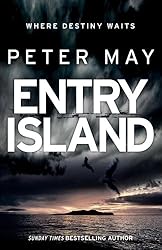
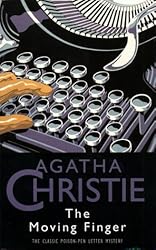
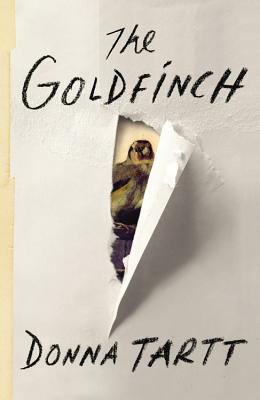 Donna Tartt’s The Goldfinch for example at 771 pages is not a quick read. I’m nearing the end on page 623, but even so my Kindle tells me that it will take me another 2 hours and 38 minutes to finish the book. I’m not sure I really like this feature, maybe it sounds better saying I’ve read 81%, or that I have 148 pages left to read! I began to think this book was too long ages ago, with too much description and too many minor characters, but then I come across sections that have me gripped and wanting to carry on regardless. So, I will be glad to finish it – the story could really have been over pages ago!
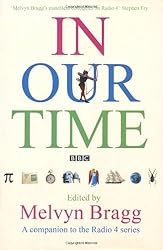 One of the other books I’m reading is also long at nearly 600 pages. This is non-fiction, though, and I’m deliberately taking it slowly, reading short sections most days. It’s In Our Time edited by Melvyn Bragg, which has episodes from his radio programmes – a selection from several hundred episodes broadcast over eleven years. It’s ideal for anyone, who like me, likes to read a wide variety of subjects. It covers such a wide range of subjects, such as The Field of the Cloth of Gold in 1520, programmes about Darwin, The Peasants’ Revolt in 1381 (I haven’t got to this chapter yet), programmes about the Origins of Mathematics, and Anti Matter, Shakespeare’s Language and J S Mill to mention just a few. My copy is a hardback book, which is a pleasure to read – even if a little heavy to hold, so I can’t read it in bed. I have no idea how long it will take me to finish it, but in contrast to The Goldfinch, I’ll be sorry when I reach the end.
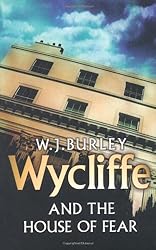 As always I keep looking at my TBRs – those books that I’ve had for a while (years for some of them) and I find myself itching to read them. So this morning whilst my Kindle was re-charging I got Wycliffe and the House of Fear down off the shelves and began that. I think it’s just starting to rain so I’m going to get back to it this afternoon (and maybe read a bit of The Goldfinch too).
 BooksPlease