The Tenderness of Wolves by Stef Penny

The Tenderness of Wolves

Quercus| 2006|450 p|2.5* rounded up to 3* on Goodreads

The Tenderness of Wolves was first published 2006 when it won the both the Costa First Novel Award and the Costa Book of the Year. It has been on my TBR shelves since May 2007 when I first heard about it and thought it sounded fantastic. And yet it has sat on my shelves ever since, mainly because it’s in such a small font. And then at the beginning of March I included it in my S and T post of TBRs and encouraged by the comments  began to read it.

Stef Penney is a screenwriter and the author of three novels: The Tenderness of Wolves, The Invisible Ones (2011), and Under a Pole Star (2016, winner of the 2017 Wilbur Smith Adventure Writing Prize). She has also written extensively for radio, including adaptations of Moby Dick, The Worst Journey in the World, and, mostly recently, a third instalment of Peter O’Donnell’s Modesty Blaise series.

It’s set in Canada in 1867 beginning in a small place called Dove River on the north shore of Georgian Bay, narrated in part by Mrs Ross in the first person present tense (*see at the end of the post) and also occasionally in the third person past tense. Mr and Mrs Ross were the first people to settle in Dove River – the name she gave to it. Other people came later and settled near the river mouth.

It begins dramatically as she describes the last time she saw the French-Canadian trapper, Laurent Jammet alive ‘he was in Scott’s store with a dead wolf over his shoulder‘. He was the Ross’s closest neighbour and the next time she saw him was in his cabin, lying dead on his bed, his throat cut and he had been scalped. Francis, the Ross’s adopted teenage son is missing and is immediately suspected of being the murderer. But Mrs Ross is convinced of his innocence. With no police force as such it is the Hudson Bay Company (the Company) employees and the local magistrate, Andrew Knox who lead the investigation. William Parker a half Indian tracker is also a suspect and is taken into custody. But Knox isn’t convinced Parker is guilty and releases him. Parker and Mrs Ross then set off to follow her son’s tracks into the wilderness.

That’s it in a nutshell, but it is much much more complicated than this. There’s a large cast of characters and at first I found it confusing, unsure of their identity and how they interacted. In fact some of them are just minor characters that don’t feature in the main plot, which is a problem when you’re trying to sort out who is important.

Following Mrs Ross and Parker are the Company employees, Donald Moody and Jacob, another half Indian. Then there is Thomas Sturrock, who says he had business with Jammet who had agreed to sell him something. He describes himself as a lawyer and an archaeologist by inclination and the object he is looking for is a bone tablet inscribed with strange markings that could be some sort of writing. Sturrock was also involved in the search for two young girls who years earlier had disappeared from their home presumed to have been abducted by Indians. Added into the mix are Susannah and Maria Knox, Andrew’s teenage daughters, a group of religious Norwegian settlers, and the employees of the Company, some of them very strange, in an isolated outpost deep in the wilderness.

This is one of the most difficult books to summarise in a coherent way and without giving away too many spoilers.

The plot moves very slowly, switching between locations and characters as very little progress is made in the search for the murderer. I found it frustrating. I never quite acclimatised myself to the use of the present tense which kept distracting me from the story. But when the pace picked up nearer to the end of the book I was keen to find out what happened – and by that time I had worked out who all the characters were. But I was left with a few questions – I really would have liked to know more about the relevance and meaning of the bone or ivory tablet, for example.

Overall, despite my criticism of this book, I did enjoy it and the descriptions of the landscape and climate set it in geographic context, but it just took so long to read particularly with so many sub-plots to hold in my head! I think some of the sub-plots that don’t contribute much to the story could easily have been developed into books in their own right. And the ending seemed so abrupt. I’m not sure I want to read any more of Stef Penney’s books.

* I want to analyse why I find the use of the present tense a problem as I hardly notice it in some books but in others such as this one I find it so irritating that it clouds my judgement. Perhaps it will help if I write my thoughts in a separate post … *


Six Degrees of Separation from Memoirs of a Geisha to …

I love doing Six Degrees of Separation, a monthly link-up hosted by Kate at Books Are My Favourite and Best. Each month a book is chosen as a starting point and linked to six other books to form a chain. A book doesn’t need to be connected to all the other books on the list, only to the one next to it in the chain.

This month the chain begins with Memoirs of a Geisha by Arthur Golden, a book I haven’t read.

Memoirs of a Geisha

It’s described on Goodreads as the extraordinary story of a geisha -summoning up a quarter century from 1929 to the post-war years of Japan’s dramatic history, and opening a window into a half-hidden world of eroticism and enchantment, exploitation and degradation. A young peasant girl is sold as servant and apprentice to a renowned geisha house. She tells her story many years later from the Waldorf Astoria in New York.

Japan is the first link in my chain with An Artist of the Floating World by Kazuo Ishiguro.

An Artist of the Floating World (Faber Fiction Classics) by [Ishiguro, Kazuo]

It is set in 1948 as Japan is rebuilding her cities after the calamity of World War Two. The celebrated artist, Masuji Ono, fills his days attending to his garden, his house repairs, his two grown daughters and his grandson. He spends his evenings drinking with old associates in quiet lantern-lit bars. But his memories continually return to the past – to a life and career deeply touched by the rise of Japanese militarism  and a dark shadow begins to grow over his serenity.

The word ‘world‘ takes me to the next link – Eowyn Ivey’s To the Bright Edge of the World a novel about Lieutenant Colonel Allen Forrester’s journey in 1885 from Perkins Island up the Wolverine River in Alaska. The Wolverine is the key to opening up Alaska and its rich natural resources to the outside world, but previous attempts have ended in tragedy. It’s a book full of love, the love of Allen and Sophie, his wife, and the love of the country, the landscape and its people.

A Cold Day for Murder (Kate Shugak #1)

Also set in Alaska is A Cold Day for Murder by Dana Stabenow, the first in her Kate Shugak series. This is crime fiction in which Kate Shugak returns to her roots in the far Alaskan north, after leaving the Anchorage D.A.’s office. Her deductive powers are definitely needed when a ranger disappears. Looking for clues among the Aleutian pipeliners, she begins to realise the fine line between lies and loyalties–between justice served and cold murder.

Silver Lies (Silver Rush, #1)

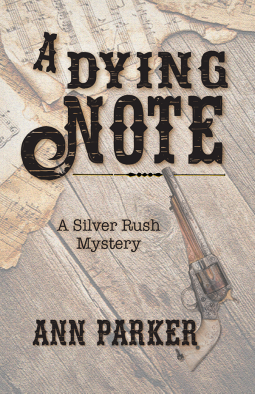
The next link is also to crime fiction – Silver Lies by Ann Parker, historical fiction set in 1879/80 in the silver-mining town of Leadville, Colarado in the heart of the Rocky Mountains. Leadville was a colourful place, a boom-town, bustling with life -everything is there – the Silver Queen saloon and the Crystal Belle Saloon, Leadville’s leading parlor house, a brick built opera house, whose patrons ‘swelled the after-midnight crowds’ in the Silver Queen saloon, five banks and a small white church with a steeple.

Pompeii

Pompeii by Robert Harris is also historical fiction, set in August AD 79, recounting the eruption of Vesuvius destroying the town of Pompeii and killing its inhabitants as they tried to flee the pumice, ash and searing heat and flames. My favourite character is the hero of the book, engineer Attilius. Before Vesuvius erupted he realised the danger when the aqueduct Aqua Augusta failed to supply water to the people in the nine towns around the Bay of Naples, and attempted to repair the aqueduct.

Part of the book’s appeal to me was because I visited Pompeii and had a trip up to the summit of Vesuvius some years ago and so I could easily picture the location.

Murder on the Eiffel Tower (Victor Legris, #1)

This leads me on to Murder on the Eiffel Tower by  Claude Izner because this is also a place I’ve visited. It’s also historical fiction featuring a crime – that of the murder of Eugénie Patinot when she takes her nephews and niece to the newly-opened Eiffel Tower in 1889. She collapses and dies, apparently from a bee-sting. This book is full of historical detail but the mystery element is not really convincing.

My chain this month has a lot of crime fiction and historical fiction, but it has travelled through time and space from the first century AD to the 20th century through Japan, Alaska, Canada, Italy and France. It has followed artists, explorers, silver miners and detectives and looked in on the eruption of Mount Vesuvius and the opening of the Eiffel Tower.

Next month  (May 5, 2018), we’ll begin with Barbara Kingsolver’s bestselling novel, The Poisonwood Bible.

My Friday Post: Saint Thomas’s Eve by Jean Plaidy

Book Beginnings Button

Every Friday Book Beginnings on Friday is hosted by Gillion at Rose City Reader where you can share the first sentence (or so) of the book you are reading, along with your initial thoughts about the sentence, impressions of the book, or anything else the opener inspires.

This week’s book is St Thomas’s Eve by Jean Plaidy, one of my TBRs that I’ve only just started to read. It’s the sixth in her Tudor Saga, telling the story of Sir Thomas More and his ambitious daughters.

Saint Thomas's Eve: (Tudor Saga) by [Plaidy, Jean]

It begins:

‘And who is this man who dares oppose us?’ demanded the King. ‘Who is this Thomas More? Eh? Answer me that.’

I like this opening, setting the scene with an angry King (Henry VII) as he questions the identity of Thomas More who had refused to grant him the money he wanted.

Also every Friday there is The Friday 56, hosted by Freda at Freda’s Voice.

30879-friday2b56These are the rules:

  1. Grab a book, any book.
  2. Turn to page 56, or 56% on your eReader.
  3. Find any sentence (or a few, just don’t spoil it) that grabs you.
  4. Post it.
  5. Add the URL to your post in the link on Freda’s most recent Friday 56 post.

Page 56:

The King was dead. And fear had died with him.

A new King had come to the throne – a boy not yet eighteen. He was quite different from his father; there was nothing parsimonious about him, and the people looked forward to a great and glorious reign. The household of Thomas More need not now consider uprooting itself.

Blurb (Amazon):

Henry VII once warned his son, the future King of England, not to trust Thomas More; years later that same son made More his confidante and advisor. But the allegiance is dangerously one-sided. A family man, lawyer and writer, More’s ambitions are humble, whilst Henry’s are endless.

As More’s career at court rises so too does his religious fervour, much to the concern of his eldest daughter, Margaret More. Meg, as she is fondly called, is torn between her heretic husband and the secrets her father has confided in her, and already fears that one day her father will make the ultimate sacrifice for his faith.

~~~

Jean Plaidy is the pen name of the prolific English author Eleanor Hibbert, also known as Victoria Holt. I read many of Jean Plaidy’s books years ago, but I’m sure I haven’t read all of them. I just read all I could find in my local library. So, I may have read this years ago but I don’t remember it now. Although I know quite a lot about Thomas More from other books and films, when I saw this book in a secondhand book sale I just had to buy it, if only to see if I still love Jean Plaidy’s books as much now as I did years ago.

Will it live up to my expectations, I wonder? If you’ve read this or any of Jean Plaidy’s books what do you think?

My Week in Books: 4 April 2018

This Week in Books is a weekly round-up hosted by Lypsyy Lost & Found, about what I’ve been reading Now, Then & Next.

IMG_1384-0

A similar meme,  WWW Wednesday is run by Taking on a World of Words.

Currently reading:

I have started to read The Fire Court by Andrew Taylor, due to be published 5 April 2018 and it’s looking good so far.

Blurb:

Somewhere in the soot-stained ruins of Restoration London, a killer has gone to ground…

The Great Fire has ravaged London, wreaking destruction and devastation wherever its flames spread. Now, guided by the incorruptible Fire Court, the city is slowly rebuilding, but times are volatile and danger is only ever a heartbeat away.

James Marwood, son of a traitor, is thrust into this treacherous environment when his ailing father claims to have stumbled upon a murdered woman in the very place where the Fire Court sits. Then his father is run down and killed. Accident? Or another murder…?

Determined to uncover the truth, Marwood turns to the one person he can trust – Cat Lovett, the daughter of a despised regicide. Marwood has helped her in the past. Now it’s her turn to help him. But then comes a third death… and Marwood and Cat are forced to confront a vicious and increasingly desperate killer whose actions threaten the future of the city itself.

Recently finished:

The Tenderness of Wolves

The last book I finished is The Tenderness of Wolves by Stef Penney, historical fiction set in Canada in 1867. I am so, so pleased to finish this as it has taken me almost 4 weeks to read it. I found it really hard to get into it at first and disliked the use of the present tense throughout. But overall I did like the story and will try to expand on these thoughts in a separate post.

Next:

Now the difficult part – what to read next!

Little Dorritt

I really should get back to reading Little Dorrit which I temporarily put on the back burner so that I could finish The Tenderness of Wolves. It’s my Classics Club Spin book but haven’t got very far with it yet and it’s looking extremely unlikely that I’ll finish it by the end of April!

But I am so tempted to read The Seven Deaths of Evelyn Hardcastle by Stuart Turton that I’ve borrowed from my local library as I suspect I won’t be able to renew it.

The Seven Deaths of Evelyn Hardcastle

Blurb (Goodreads):

How do you stop a murder that’s already happened?

At a gala party thrown by her parents, Evelyn Hardcastle will be killed–again. She’s been murdered hundreds of times, and each day, Aiden Bishop is too late to save her. Doomed to repeat the same day over and over, Aiden’s only escape is to solve Evelyn Hardcastle’s murder and conquer the shadows of an enemy he struggles to even comprehend–but nothing and no one are quite what they seem.

Deeply atmospheric and ingeniously plotted, The Seven Deaths of Evelyn Hardcastle is a highly original debut that will appeal to fans of Kate Atkinson and Agatha Christie.

Have you read any of these books?  Do any of them tempt you? 

The Ashes of London by Andrew Taylor

Harper Collins UK|7 April 2016|497 p|e-book|Review copy|5*

Book Beginning: Deja Dead by Kathy Reichs

Book Beginnings Button

Every Friday Book Beginnings on Friday is hosted by Gillion at Rose City Reader where you can share the first sentence (or so) of the book you are reading, along with your initial thoughts about the sentence, impressions of the book, or anything else the opener inspires.

This week’s book is Déjà Dead by Kathy Reichs, one of my TBRs.

Déjà Dead (Temperance Brennan, #1)


It begins:

I wasn’t thinking about the man who’d blown himself up. Earlier I had. Now I was putting him together.

30879-friday2b56Also every Friday there is The Friday 56, hosted by Freda at Freda’s Voice.

These are the rules:

  1. Grab a book, any book.
  2. Turn to page 56, or 56% on your eReader.
  3. Find any sentence (or a few, just don’t spoil it) that grabs you.
  4. Post it.
  5. Add the URL to your post in the link on Freda’s most recent Friday 56 post.

Page 56:

‘These murders have me pretty much uptight.’ I regretted saying it immediately.

‘What murders?’ Her voice was becoming thick, the words rounded and soft on the edges.

‘A pretty nasty one came in last Thursday.’ I didn’t go on, Gabby has never wanted to hear about my work.


Blurb (Goodreads):

The meticulously dismembered body of a woman is discovered in the grounds of an abandoned monastery.

Enter Dr Temperance Brennan, Director of Forensic Anthropology for the province of Quebec, who has been researching recent disappearances in the city.

Despite the cynicism of Detective Claudel who heads the investigation, Brennan is convinced that a serial killer is at work. Her forensic expertise finally convinces Claudel, but only after the body count has risen…

Tempe takes matters into her own hands, but her determined probing places those closest to her in mortal danger. Can Tempe make her crucial breakthrough before the killer strikes again?

~~~

Kathy Reichs is one of those authors that I keep seeing around, but I’ve never read any of her books. I wondered if I’d like them, so when I saw this book  in Barter Books a few years ago I brought it home with me – it’s been sitting on my shelves ever since. It’s the first in her Temperance Brennan series – and her debut novel.

Thisé quotation from The Times on the back cover makes the book sound irresistible:

Déjà Dead is terrific and terrifying in its own right, easily rising above Cornewellian similarities … Excellent plotting, appealingly headstrong heroine and superb mastery of tension.

Will it live up to such high praise, I wonder? If you’ve read it what did you think?