Imperium by Robert Harris

With not many days left until Christmas and the New Year I’ve just about got time to write a bit about two books I’ve read this month from my to-be-read books. I’ll be writing about the second book in a later post.

The first one is Imperium by Robert Harris, the first in his Cicero Trilogy.
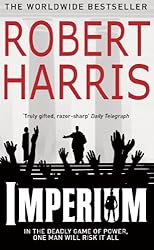
I love historical fiction and over the years I’ve read quite a lot of it, including novels set in Ancient Rome, so I’m familiar with the characters in this book, but not about all the details that Robert Harris has packed into Imperium.

Beginning in 79 BC, this book set in the Republican era is a fictional biography of Marcus Tullius Cicero by Tiro, his slave secretary. Tiro was a real person who did write a biography of Cicero, which has since been lost in the collapse of the Roman Empire. Tiro is credited with the invention of shorthand. Harris has based Imperium on, among other sources, Cicero’s letters, which Tiro had recorded, successfully interweaving Cicero’s own words with his own imagination.  It is basically a political history, a story filled with intrigue, scheming and treachery in the search for political power as Cicero, a senator, works his way to power as one of Rome’s two consuls.

The first part of the book (and I think the best part) covers the trial of Verres, a corrupt governor of Sicily. I found this gripping as it was by no means obvious that Verres would be found guilty. Cicero builds the case against him and the resulting trial is a dramatic showdown.

After that the book dragged just a little bit for me as it moved on to describing a complicated struggle to change Rome’s government from a Republic to having an Emperor as absolute ruler. But it picked up again towards the end and overall I thought this was a very good book and I’m keen to read the second in the trilogy, Lustrum.

In such a short post as this is I cannot go into much detail – and the novel is very detailed. I marked many passages that struck me as interesting and felt much of the struggle for power applies as much today as it did in Ancient Rome. I’ll finish this post with one quotation (there are plenty of others I could have chosen):

You can always spot a fool, for he is the man who will tell you he knows who is going to win an election. But an election is a living thing – you might almost say, the most vigorously alive thing there is – with thousands upon thousands of brains and limbs and eyes and thoughts and desires, and it will wriggle and turn and run off in directions no one ever predicted, sometimes just for the joy of proving the wiseacres wrong. (page 471)

The Official TBR Pile Challenge 2015

official tbr challenge

This year I’ve been attempting to do The Official TBR Pile Challenge 2015, hosted by Adam from Roof Beam Reader. The Challenge was to read 12 books from my ‘to be read’pile. Two alternates were allowed, just in case you just couldn’t finish a book for whatever reason.

The books you read must have been on your bookshelf or ‘To Be Read’list for AT LEAST one full year and you have to list them in advance.

For the final wrap up post Adam asks:

If you didn’t finish; what kind of progress did you make?  1 of 12?  6 of 12?  Even reading one book is a step in the right direction, so if you gave it a shot ‘“ good for you!

Which books from your list did you love?  Which ones did you hate?  Plan to read any of the leftovers in 2016?

I was a bit doubtful that I’d complete this challenge because I often find that planning in advance what I’m going to read doesn’t work for me ‘“ I seem to find reasons for reading other books instead of the ones on my list!

These were the 14 books I listed:

TBR pile 2015

I didn’t read all the books, but  I didn’t do too badly, finishing 8 books out of 14.

Books I finished:

  1. The Robber Bride by Margaret Atwood (pub 1994 ‘“ on my TBR since 2009) Finished 2 September 2015. At times I thought it was too detailed and I just wanted to get on with the story. But overall I thought it was very good, and in parts excellent.
  2. The Burning by Jane Casey (pub 2010 ‘“ on my TBR since 2013) Finished 9 February 2015. I really enjoyed this, the first the DC Maeve Kerrigan series.
  3. Zen there was Murder by H R F Keating (pub 1960 ‘“ on my TBR since 2012) Finished 22 July 2015.It’s a mixture of Zen Buddhism and murder and For most of the time I was completely bamboozled!
  4. Mrs Jordan’s Profession by Claire Tomalin (pub 1995 ‘“ on my TBR since 2011) Finished 12 November 2015. I loved this book about the actress Dora Jordan and her relationship with the Duke of Clarence, later King William IV .
  5. Fresh from the Country by Miss Read (pub 1960 ‘“ on my TBR since 2012) Finished 21 August 2015. Set in the early 1950s , this is a novel about Anna Lacey, a newly qualified teacher. A bit disappointing compared to Miss Read’s Fairacre and Thrush Green novels.
  6. The Interpretation of Murder by Jed Rubenfeld (pub 2006 ‘“ on my TBR since 2007) Finished 9 April 2015. This began well but I lost interest and at times I felt it was slowed down too much by psychological exposition and debate.
  7. The Secret Keeper by Kate Morton (pub 2010 ‘“ on my TBR since 2013) Finished 21 June 2015. A book that really captured my imagination. I loved everything about it.
  8. Diamonds are Forever by Ian Fleming (pub 1956 ‘“ on my TBR since 2011) – Finished 18 December 2015. An entertaining if not a mind-stretching book. I enjoyed it.

Books I didn’t read/finish:

  1. The House of the Spirits by Isabel Allende (pub 1994 ‘“ on my TBR since 2008)
  2. The Needle in the Blood by Sarah Bower (pub 2007 ‘“ on my TBR since 2007) I began reading this but  abandoned it as I found it so confusing and I don’t like the fact that  it’s written in the third person present tense, which I find awkward.
  3. Martin Chuzzlewit by Charles Dickens (pub 1844 ‘“ on my TBR since 2007)
  4. Bad Land by Jonathan Raban (pub 1985 ‘“ on my TBR since 2011)
  5. We Were the Mulvaneys by Joyce Carol Oates (pub 1997 ‘“ on my TBR since 2011) – I’ve started reading this one.
  6. Nineteen Eighty Four by George Orwell (pub 1949 ‘“ on my TBR since 2011)

Apart from The Needle in the Blood I hope to read these books next year.

This was my first attempt at this challenge and will be the last as Adam at RoofBeamReader will not be hosting this next year!

Stacking the Shelves: 19 December 2015

STSmall

Stacking The Shelves is all about sharing the books you are adding to your shelves. This means you can include ‘˜real’ and ‘˜virtual’ books (ie physical and ebooks) you’ve bought, books you’ve borrowed from friends or the library, review books, and gifts.

I’ve added just one book to my Kindle this week:

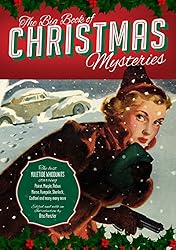
The Big Book of Christmas Mysteries: The Most Complete Collection of Yuletide Whodunits Ever Assembled

Blurb

Here, for your yuletide reading pleasure, are the collected crimes of Christmases Past and Present: sixty classic Christmas crime stories gathered together in the largest anthology of its kind ever assembled. And its an all-star line-up: Sherlock Holmes, Brother Cadfael, Miss Marple, Hercule Poirot, Ellery Queen, Rumpole of the Bailey, Inspector Morse, Inspector Ghote, A.J. Raffles, Nero Wolfe and many, many more of the world’s favourite detectives and crime fighters face unscrupulous Santas, festive felonies, deadly puddings, and misdemeanors under the mistletoe. Almost any kind of mystery you’re in the mood for – suspense, pure detection, humour, cozy, private eye, or police procedural – can be found within these pages.

Includes stories from (many of which are difficult or nearly impossible to find anywhere else): Arthur Conan Doyle, Robert Louis Stevenson, Thomas Hardy, Isaac Asimov, Sara Paretsky, Ed McBain, Agatha Christie, Ellis Peters, Mary Higgins Clark, H.F Keating, Donald E. Westlake and John Mortimer and more.

I couldn’t resist getting it! Some of the authors are familiar to me, some I’ve heard of and some are completely new-to-me. I hope to read some before Christmas.

I’ve also borrowed two from the library this week, which I’ll probably leave until after New Year. They are:

Blurb

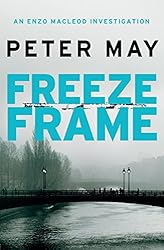
A promise made to a dying man leads forensics ace Enzo Macleod, a Scot who’s been teaching in France for many years, to the study which the man’s heir has preserved for nearly twenty years. The dead man left several clues there designed to reveal the killer’s identity to the man’s son, but ironically the son died soon after the father.

So begins the fourth of seven cold cases written up in a bestselling book by Parisian journalist Roger Raffin that Enzo rashly boasted he could solve (he’s been successful with the first three). It takes Enzo to a tiny island off the coast of Brittany in France, where he must confront the hostility of locals who have no desire to see the infamous murder back in the headlines. An attractive widow, a man charged but acquitted of the murder–but still the viable suspect, a crime scene frozen in time, a dangerous hell hole by the cliffs, and a collection of impenetrable messages, make this one of Enzo’s most difficult cases.

I’ve enjoyed Peter May’s Lewis Trilogy. I hope this works well as a stand alone book as it’s the fourth Enzo Macleod book and I haven’t read the first three.

And

Blurb

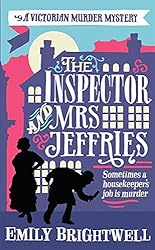
This charming series of Victorian murder mysteries features mild-mannered Inspector Witherspoon of Scotland Yard and, more importantly, Mrs Jeffries, his housekeeper. A policeman’s widow herself, her quick wits allow her to nudge the Inspector in the right direction to solve the crime.

When a doctor is discovered dead in his own office, Mrs Jeffries is on the look-out for a prescription for murder, determined to discover the culprit, despite how her employer feels about interviewing suspects . . . “He hated questioning people. He could never tell whether or not someone was actually lying to him, and he knew, shocking as it was, that there were some people who lied to the police on a regular basis.”

Emily Brightwell is a new-to-me author. I thought I’d see what this one is like.

Diamonds Are Forever by Ian Fleming

Diamonds Are Forever by Ian Fleming has been on my TBR shelves since 2011 and is one of the books I listed to read as part of the To Be Read Pile Challenge 2015.

This is the edition I read

I’ve seen most of the James Bond films but never read any of the books before. It was not as action packed as I expected but full of quite lengthy descriptions of what the characters looked like and the clothes they wore, and about gambling and horse racing. I like description but this got a bit tedious, although I did like Fleming’s descriptions of the locations from the African desert to Hatton Garden jewellers and the casinos of Las Vegas. Here for example is a description of the view from the plane taking Bond to New York, as the sun came up

… over the rim of the world and bathed the cabin in blood.

Slowly with the dawn, the plane came alive. Twenty thousand feet below, the houses began to show like grains of sugar spilt across a brown carpet. Nothing moved on the earth’s surface except a thin worm of smoke from a train, the straight white feather of a fishing boat’s wake across an inlet, and the glint of chromium from a toy motor car caught in the sun; but Bond could almost see the sleeping humps under the bedclothes beginning to stir and, where there was a wisp of smoke rising into the still morning air, he could smell coffee brewing in the kitchens. (page 62)

There is very little action until about half way through the book. It is easy to read and moves at a decent place, once it gets going and despite all the descriptive passages. The plot is quite simple – Bond is assigned to infiltrate and close down a diamond smuggling operation, run by the Spangled Mob, operating from Africa to the UK and the USA. It’s run by a couple of American gangsters, the Spang brothers, and the mysterious character known as ABC.

He meets Tiffany Case, a beautiful blonde, an intelligent and resourceful woman, who was gang-raped as a teenager. By the end of the book she and Bond have fallen in love and survived almost impossibly dangerous situations. Also helping Bond is the American Felix Leiter now no longer working for the CIA,  having lost an arm and a leg in a shark attack, but as a private detective employed by the Pinkerton  Detective Agency.

The James Bond in this book is not quite the James Bond of the movies, but still a very likeable character, with obstinate eyes in a lean brown face – Bond is maybe the one character in this book with not much description. The villains are not as evil and sinister as the movie villains – for example, there’s no Blofeld, or Rosa Kleb or Goldfinger. The Spang brothers are Jack and Serrafimo, who owns a western ranch and ghost town called Spectreville. Then there are a couple of thugs, Wint and Kidd, who come across as caricatures, but they are a serious threat to Bond, who gets quite a severe beating (no gory descriptions), when he is captured, only to  escape with Tiffany, ending in a wild chase across the western desert.

So, overall I think this is an entertaining if not a mind-stretching book. I enjoyed it.

Nagasaki: Life After Nuclear War by Susan Southard

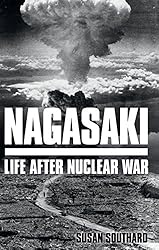
Nagasaki: Life after Nuclear War by Susan Southard is an amazing, heart-wrenching book.

The facts are horrendous – on August 9th 1945, two days after the atomic bombing of Hiroshima, a five-ton plutonium bomb was dropped on the small coastal town of Nagasaki. The effects were cataclysmic.

This must be one of the most devastatingly sad and depressing books I’ve read and yet also one of the most uplifting, detailing the dropping of the bomb, which killed 74,000 people and injured another 75,000. As the subtitle indicates this book is not just about the events of 9 August 1945 but it follows the lives of five of the survivors from then to the present day. And it is their accounts which make this such an emotive and uplifting book, as it shows their bravery, how they survived, and how they were eventually able to tell others about their experiences. Along with all the facts about the after effects of the bombing, the destruction, and radiation, it exposes the true horror of atomic warfare, making it an impressive and most compelling account of pain, fear, bravery and compassion.

Throughout the book the black and white photos illustrate the true horror of the effects of the bomb – photos of Nagasaki both before and after the bomb was dropped, of five survivors – Wada Kohi (aged 18 in August 1945), a street car operator; Nagano Etsuko (aged 16), who worked on a production line in a Mitsubishi airplane parts factory;  Taniguchi Sumiteru (aged 16), who worked at Minchino-o Post Office; Yoshida Katsuji (aged 13), a student at Nagasaki Prefecture Technical School on a ship building course; and Do-oh Mineko (aged 15), formerly a student at Keiho Girls High School, working at the Mitsubishi Arms Factory Onashi Plant. There are also maps showing Japan today and of Nagasaki 1945 showing the Scope of Atomic Bomb Damage.

Susan Southard’s ten years of research has resulted in this impressive book as she reveals what happened in particular to these five survivors, their immediate injuries, the radiation-related cancers and illnesses they have suffered, and their difficulties of daily living still in pain both physical and emotional.

In addition to all that Nagasaki ‘reveals the censorship that kept the suffering endured by the hibakusha [atomic bomb-affected people] hidden around the world. For years after the bombings news reports and scientific research were censored by U.S. occupation forces and the U.S. government led an efficient campaign to justify the necessity and morality of dropping the bombs’ (from the jacket sleeve).

I knew a bit about Hiroshima and Nagasaki before I read this book but it has opened my eyes to the true horror of nuclear war and the need to prevent anything like this happening again.

Many thanks to Souvenir Press Ltd for sending me a complimentary copy for review.

  • Hardcover: 416 pages
  • Publisher: Souvenir Press Ltd (2 Nov. 2015)
  • Language: English
  • ISBN-10: 0285643274
  • ISBN-13: 978-0285643277

Virginia Woolf Read-a-Long

Virginia woolf2

Heavenali is holding a Virginia Woolf read-a-long taking place in 2016.

Starting in January 2016 – the aim is to read 6 books (or indeed more for the real enthusiasts) by or about Virginia Woolf. For each section you simply choose the book or collection that you most want to read.

First and foremost there are no rules ‘“ drop in and out as it suits you ‘“ if you only want to read the first book ‘“ that’s fine. Ali will post six (one every two months) ‘˜how are we doing’/discussion style posts where links to other posts can be shared.

This is not a reading challenge – I’m thinking of it as a project and one with no goal to read a set number of books. I love the fact that there are no rules with Ali’s read-a-long . I’ll read what I can.

January/February ‘“ Getting started with a famous Woolf novel ‘“ To the Lighthouse or Mrs Dalloway

March/April ‘“ beginnings and endings ‘“ The Voyage Out/ Night and Day (Woolf’s first and second novels ‘“ or Between the Acts ‘“ Woolf’s final novel

May/June ‘“ shorter fiction ‘“ any collection of short stories. This list of possibles from Wikipedia:
‘¢ Kew Gardens (1919)
‘¢ Monday or Tuesday (1921)
‘¢ A Haunted House and Other Short Stories (1944)
‘¢ Mrs Dalloway’s Party (1973)
‘¢ The Complete Shorter Fiction (1985)
‘¢ Carlyle’s House and Other Sketches (2003)
Oxford World Classics now produce a collection called The Mark on the Wall and other short Fiction ‘“ though I don’t know which stories it contains.

July/August ‘“ biographies ‘“ either Flush, Orlando or a biography of Virginia Woolf.

September/ October nonfiction ‘“essays or diaries. Any essay collection you fancy ‘“ there are a lot to choose from but you might want to consider: A Room of One’s Own, Three Guineas, The Common Reader or Virginia Woolf’s diaries. There seem to be a couple of diary collections, including Vintage books Selected Diaries and Persephone book’s A Writer’s Diary (edited by Leonard Woolf).

November/December ‘“ another novel ‘“ The Years/ Jacobs Room/ The Waves

So far I think I’ll be reading at least some of her short stories/essays, The Voyage Out and Virginia Woolf: a Writer’s Life by Lyndall Gordon and re-reading Mrs Dalloway, and any other of Woolf’s books that come my way next year.