Books Read in June 2015

I shan’t finish any  of the three books I’m  currently today, so my total for June is 6 books – not quite as many as other months this year. But it’s summer and I’ve been busy with family things too. Two of my current books are non-fiction, which slows my rate of reading down considerably and I hope to finish both of them in July.

Here’s the list of the books I’ve finished, in the order I read them and with links to my posts on them:

I’ve had a bit of a binge-read of Jane Casey’s Maeve Kerrigan books this month, reading three, all of them really good books, but it was the fourth in the series that really caught my imagination, The Stranger You Know.

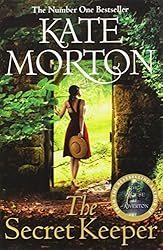
My book of the month for June is the one that I loved from beginning to end – it’s The Secret Keeper by Kate Morton. Even though I wanted it to last forever, by the end I couldn’t turn the pages fast enough. It’s one of the best books of the year so far.


The Secret Keeper by Kate Morton

This is a book that really captured my imagination. I loved everything about it – the descriptive passages, the mystery, the secrets and the people involved. It was all real to me. It’s one of the best books, if not the best book, I’ve read this year.

The Secret Keeper by Kate Morton has been sitting unread for two years on my bookshelves, but if I’d read it earlier I wouldn’t have had the pleasure of reading it now – it was well worth the wait!

It begins on a summer’s day in 1961 in Suffolk when sixteen-year old Laurel is shocked when she sees her mother stabbing a stranger who had come to their farm. Fast forward 50 years Laurel and her three sisters and brother are coming to terms with the fact that their mother, Dorothy is moving closer to the end of her life. Laurel realises that there is so much she doesn’t know about Dorothy’s life and when they find a photograph of Dorothy and a friend, Vivien, in a book of the play Peter Pan, it arouses old and ugly memories for Laurel – images of her mother’s frightened face as she confronted the stranger. Who was Vivien and who was the stranger? Why was Dorothy so scared? Laurel is determined to find out.

It’s a story moving between time periods from 2011, back to the 1960s and also to the 1940s when Dorothy first met and fell in love with Jimmy, a war photographer, and also became friends with the wealthy and beautiful Vivien, married to a successful novelist.  Laurel, with the help of her brother, Gerry, tracks down records throwing light on Dorothy’s and Vivian’s past, back to war-time England and pre-war Australia.

It’s not a straight forward story. By that I don’t mean it’s difficult to read, because each time period is clearly headed and the characters are clearly defined. But there are so many twists and turns – I thought several times I’d got things clear and knew where the story was heading only a bit later on to realise that not all the clues had been revealed and I had to revise my thoughts. It’s so cleverly written and so well plotted that it was only near the end that I had an inkling of Dorothy’s relationship with Vivien and what had really happened to them all. It really is a book I didn’t want to put down and also a book I wanted to enjoy as long as possible. By the end, though, I couldn’t turn the pages fast enough!

Kate Morton’s next book, The Lake House is due to be published in October 2015. I’m looking forward to reading it.

Note: as well as being my 17th book for the Mount TBR Challenge 2015 this is my 3rd book for the TBR Pile Challenge 2015. And the 9th book for the Historical Fiction Reading Challenge 2015.

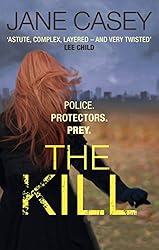
The Kill by Jane Casey: Book Notes

Yet again I’m reading faster than I’m reviewing, so this post is not a full review but a few thoughts on The Kill by Jane Casey. Unless I write about a book straight after I finish reading it gets pushed to the back of my mind and sadly that is what has happened in this case, which is a shame as it’s a brilliant book, the fifth in her DC Maeve Kerrigan series and I fully agree with the quotation from the Sunday Times that ‘Jane Casey’s police procedurals go from strength to strength.’

The book begins in Richmond Park in London at 00.43 where a couple are badger-watching but to their horror are witnesses, albeit at a distance, to a murder.

The victim is a police officer. But this is just the first murder and yet more police officers are killed. Maeve and her boss, DI Josh Derwent are part of the Met’s team assigned to investigate. They have no idea about the motive for the murders as the attacks seem to be random, from the first victim alone in his car (why was he there at that time anyway?), to the officers of the Territorial Support Unit killed as they patrolled the Maudling Estate – is it a reaction to the police killing a young and innocent black teenager? The MP, Geoff Armstrong thinks so.

This is a fast-paced novel, with an intriguing and complex plot and featuring characters that have appeared in the earlier books, developing their relationships. Some issues look as though they have been resolved, such as Superintendent Godley’s guilty secret, and others such as Maeve’s relationship with her boyfriend Rob, also a police officer come to a head, whereas Derwent and Maeve continue to have a confrontational working relationship and the interaction between them and DCI Una Burt gets even worse. I suppose it’s possible to read this as a standalone, but because of the back stories I think it is better to read them in order.

I found it absolutely compelling reading.

First Chapter ˆ¼ First Paragraph Intros

First chapterEvery Tuesday Diane at Bibliophile by the Sea hosts First Chapter ˆ¼ First Paragraph Tuesday Intros, where you can share the first paragraph, or a few, of a book you are reading or thinking about reading soon.

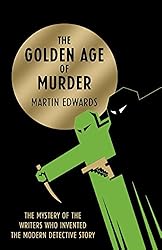
I’m currently reading The Golden Age of Murder by Martin Edwards, described on the back cover as

‘the extraordinary story of British detective fiction between the two World Wars, and the fascinating people who wrote it. A gripping real-life detective story, this book investigates how Agatha Christie and her colleagues in the mysterious Detection Club transformed crime fiction. Their work cast new light on unsolved murders, whilst hiding clues to their authors’ darkest secrets, and their complex and sometimes bizarre private lives.

First Chapter:

Chapter I, The Ritual in the Dark

On a summer evening in 1937, a group of men and women gathered in the darkness to perform a macabre ceremony. They had invited a special guest to witness their ceremony. She was visiting London from New Zealand and a thrill of excitement ran through her as the appointed time drew near. She loved drama, and at home she worked in the theatre. Now she felt as tense as when the curtain was about to rise. To be a guest at this dinner was a special honour. What would happen next she could not imagine.

Many congratulations to Martin Edwards who is to be the next President of  the Detection Club when Simon Brett, the current President retires in November. I really cannot think of a better choice than Martin, a well-deserved honour indeed!

Stacking the Shelves: 20 June 2015

STSmall

Stacking The Shelves is all about sharing the books you are adding to your shelves. This means you can include ‘˜real’ and ‘˜virtual’ books (ie physical and ebooks) you’ve bought, books you’ve borrowed from friends or the library, review books, and gifts.

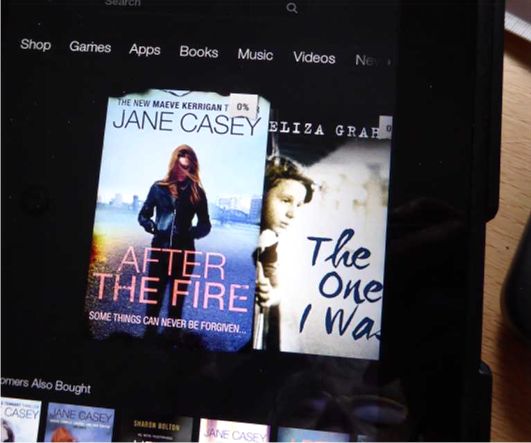
This week I’ve added two books to my Kindle:

After the fire The one I was

  • After the Fire by Jane Casey, which was published on 18 June. It’s the sixth Maeve Kerrigan book. I’ve read the previous five and just have to read this one too.
  • The One I Was by Eliza Graham – I read her first book, Playing with the Moon  back in 2007 and have been meaning to read more of her books, so when this one came up on the Kindle Daily Deal earlier this week I snapped it up. She’s written three more books since then, which I’ve missed.

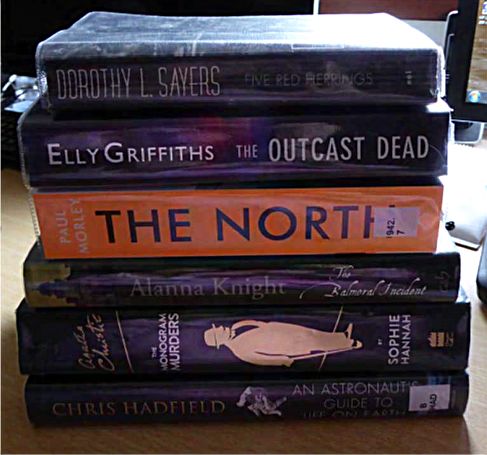
and a pile of library books:

Liby Bks June 2015

They are from top to bottom:

  • Five Red Herrings by Dorothy L Sayers – a Lord Peter Wimsey mystery.
  • The Outcast Dead by Elly Griffiths – the sixth Ruth Galloway book. I’m behind with this series – the seventh book was published earlier this year.
  • The North (And Almost Everything In It) by Paul Morley – this is about the north of England. I can’t remember where I read about this book, but it looked interesting and as I’m a northerner I thought I’d have a look at it and reserved it.
  • The Balmoral Incident (Rose McQuinn series 8) by Alanna Knight. I’ve read the first book in the series, so this is another series I’ll be reading out of order.
  • The Monogram Murders (The new Hercule Poirot mystery) by Sophie Hannah – I’m not at all sure that I’ll read this book. My experience of reading prequels and sequels by a different author than the original has not been good. I’ve read reviews both praising and criticising this book, so when I saw it in the library I was tempted to borrow it.
  • An Astronaut’s Guide to Life on Earth by Chris Hadfield. I saw Chris Hadfield on Sunday Brunch on Channel 4 a little while ago and thought he was brilliant and after I read Jackie’s review on her Farm Lane Books Blog I reserved the book.

Books like these are the reasons I don’t get round to reading my own unread books – those to-be-reads that I’ve had for years!

If you’ve read any of these do let me know what you think of them and also what you found to add to your shelves this week.

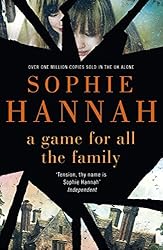
A Game For All the Family by Sophie Hannah

I’ve recently finished reading A Game For All the Family by Sophie Hannah, a standalone book, described as ‘ a literary puzzle to unlock the dark side of the mind.’

Publishers’ blurb:

Justine thought she knew who she was, until an anonymous caller seemed to know better…

After escaping London and a career that nearly destroyed her, Justine plans to spend her days doing as little as possible in her beautiful home in Devon.

But soon after the move, her daughter Ellen starts to withdraw when her new best friend, George, is unfairly expelled from school. Justine begs the head teacher to reconsider, only to be told that nobody’s been expelled – there is, and was, no George.

Then the anonymous calls start: a stranger, making threats that suggest she and Justine share a traumatic past and a guilty secret – yet Justine doesn’t recognise her voice. When the caller starts to talk about three graves – two big and one small, to fit a child – Justine fears for her family’s safety.

If the police can’t help, she’ll have to eliminate the danger herself, but first she must work out who she’s supposed to be…

Practically from the start I had my doubts about Justine. Was she an unreliable narrator? Could I believe her story, told in the third person but revealing what was going through her mind? Or was her daughter Ellen right when she told her mother that she was a ‘nutter‘? That sense of distrust pervaded my reading. Obviously something had happened to make Justine give up her job in TV drama production and want to ‘do Nothing’, something traumatic and life-changing – had it affected her mental stability or had it happened because she was mentally unstable? I couldn’t decide.

What I can say is that it’s a book about the truth – just who is telling the truth, just who is who they purport to be, and most of all about identity. Who is real, who is making it all up (well Sophie Hannah, obviously).

It is described as a ‘chilling ‘ novel, but I didn’t find it spine tingling, or scary, because it came over to me as artificial, and contrived. It’s also long-winded and mostly completely unbelievable, which made it lose any sense of tension or suspense. But it is a cleverly complicated plot, with stories within stories, – it’s just not chilling.

As well as the anonymous threatening phone calls, and the head teacher’s denial that George had not been expelled and indeed her insistence that he had never even been at the school, Justine is also puzzled by the story that Ellen is writing for her creative writing homework – a story set in their house about a strange family who had lived there in the past and a murder that had taken place there. Where did Ellen get this story, is it based on fact? Ellen simply won’t tell her. Are the phone calls connected to this story and to George?

Maybe it’s too complicated, because at times I just wished the endless questions that went through Justine’s mind would come to an end. They did of course and by the time I did get to the end I still couldn’t decide whether Ellen was right – is Justine a nutter and as I suspect an unreliable narrator, or not?

I didn’t love this book, but it certainly filled my mind and made me think both whilst I was reading it and for days afterwards – and I like that about a book. If Justine is a reliable narrator and was telling the truth all along then she is still a nutter, because if what she described actually happened at the end of the story it was terrible and she was mentally ill and in that case, definitely a chilling ending. I just can’t decide! It is an extraordinary and weird book.

My thanks to Lovereading for sending me an uncorrected proof copy of this book that has had me puzzling for days. A Game For All the Family is due to be published on 13 August 2015 by Hodder & Stoughton.