Top 5 Tuesday:Books set in Europe

Top 5 Tuesday was created by Shanah at Bionic Book Worm, and it is now being hosted by Meeghan at Meeghan Reads. For details of all of the latest prompts for April to June, see Meeghan’s post here

We’re continuing reading around the world this month and today the topic is Europe. The books I’ve chosen are crime fiction and historical fiction.
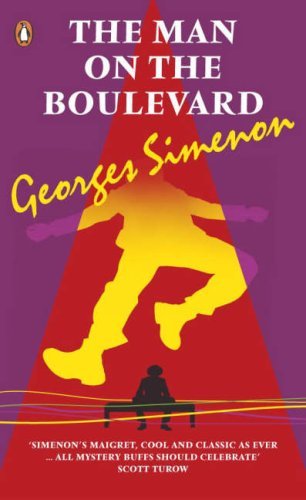
France: When I think of French crime fiction Georges Simenon’s Maigret immediately pops into my mind.  Simenon was actually Belgian, not French, but the Maigret books are set in France (mainly in Paris). Simenon wrote 75 novels and 28 short stories featuring Commissaire Jules Maigret and I first knew of them from a friend at school who loved the books. Then there were the numerous TV productions with Rupert Davies as Maigret and more recently Rowan Atkinson has played the role of Chief Inspector Maigret in the 2016 ITV series.

I’ve read several of the Maigret books. The Man on the Boulevard is the 41st book in the series. There were lots of things I liked in this book – the attention to detail, the descriptions of the weather (cold and wet), and the characters themselves.  It’s set in Paris and without knowing the location of the various boulevards I could still get a good impression of the city and its suburbs. 

It has a puzzling murder to solve – Louis Thouret is found stabbed in a little alleyway. Seemingly a perfectly ordinary man of regular habits who had left his home in the suburbs to go to his job as a storekeeper in Paris for the past twenty five years. It turns out that Louis had a double life that his wife knew nothing about. It appears he had been having an affair and for the past three years he had not had a job. I liked the theme of a man following a double life and the way Louis resolves his problem of keeping up appearances with his wife and family although I thought his method of maintaining his income was rather implausible.

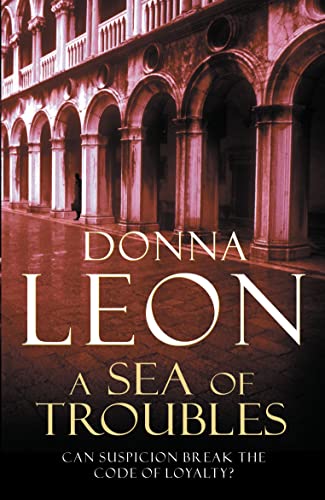
Italy: A Sea of Troubles by Donna Leon, whose books are crime fiction, but also discuss various social and cultural issues and A Sea of Troubles, the 10th Commissario Guido Brunetti novel, is no exception. Brunetti is one of my favourite detectives. He is happily married with two children. He doesn’t smoke or drink to excess and often goes home for lunch to his beautiful wife Paolo, who is a wonderful cook – in this book she treats him to a delicious apple cake made with lemon and apple juice and ‘enough Grand Marnier to permeate the whole thing and linger on the tongue for ever.’ (page 238)

I read it eagerly, keen to get to the bottom of the mystery surrounding the deaths of two clam fishermen, father and son, off the island of Pellestrina, south of the Lido on the Venetian lagoon, when their boat suddenly exploded. As well as the mystery the issues Leon highlights in this book are concerning pollution and the overfishing of clams that is destroying the clam beds.

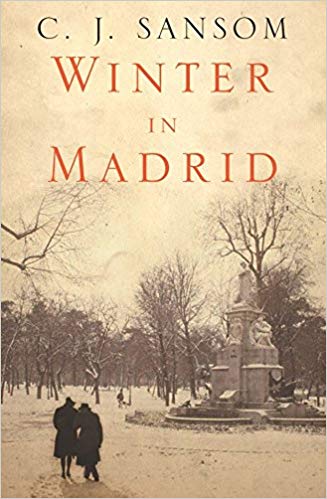
Spain:  C J Sansom’s Winter in Madrid, which I think is one of the best books I’ve read, a book that had me in tears as I was reading about the devastation, desolation and waste of war. It is an action packed thrilling war/spy story and also a moving love story and historical drama all rolled into this tense and gripping novel. Sansom vividly conveys the horror and fear of the realities of life in Spain during the Spanish Civil War and the first two years of the Second World War.

The opening chapter dramatically sets the tone for the book with the brutality of the Battle of Jarama in 1937 then leaps straight into the bombing of London in 1940. Then Harry Brett, traumatised by his injuries at Dunkirk is sent to Spain to spy for the British Secret Service. He is plunged into the terrible living conditions in Madrid where people are starving, children are left homeless to fend for themselves and wild dogs roam the rubble of bombed houses.

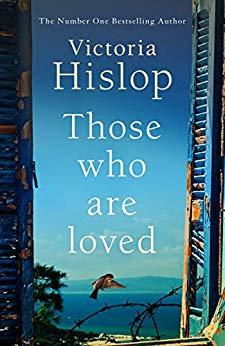
Greece: Those Who Are Loved by Victoria Hislop, one of the most moving novels I’ve read. It is historical fiction ‘set against the backdrop of the German occupation of Greece, the subsequent civil war and a military dictatorship, all of which left deep scars’. It begins slowly and it was only at about the halfway stage that it really took off for me. But then, the book sprang to life, the pace increased, and I was totally gripped and moved as history and fiction came together dramatically in glorious technicolor, telling the story of the characters personal lives and their parts in the action.

The main character is Themis Koralis/Stravidis (in Greek mythology Themis is the personification of fairness and natural law). In 2016 she is a great grandmother and realising that her grandchildren knew very little about Greek history she decided to tell them her life story, beginning from when she was a small child in the 1930s, through the German occupation of Greece during the Second World War, the civil war that followed, then the oppressive rule of the military junta and the abolition of the Greek monarchy, up to the present day.

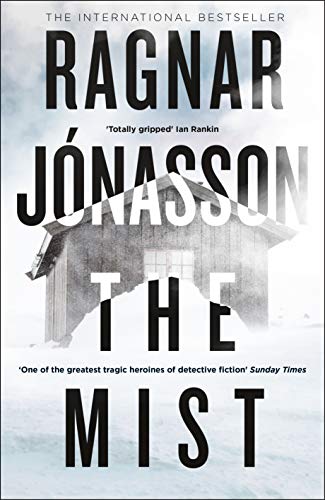
Iceland: The Mist by Ragnar Jonasson, the third novel in the Hidden Iceland series. Detective Inspector Hulda Hermannsdottir is worrying about her daughter, Dimma and her relationship with her husband, Jon. Alongside the story of what is happening in her personal life, she is also investigating the disappearance of a young woman and a suspected murder case, a particularly horrific one in an isolated farmhouse in the east, where Erla and her husband, Einar live. When a stranger, lost in a snowstorm arrives Erla invites him in and the nightmare begins.

I loved the setting, Jonasson’s writing bringing the scenery and the weather to life – you can feel the isolation and experience what it is like to be lost in a howling snowstorm. The emotional tension is brilliantly done too, the sense of despair, confusion and dread is almost unbearable. 
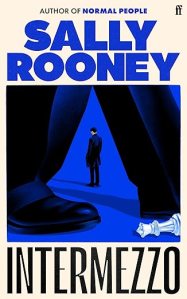
Six Degrees of Separation from  Intermezzo by Sally Rooney to White Nights

It’s time again for Six Degrees of Separation, a monthly link-up hosted by Kate at Books Are My Favourite and Best. Each month a book is chosen as a starting point and linked to six other books to form a chain. A book doesn’t need to be connected to all the other books on the list, only to the one next to it in the chain.

This month starts with Intermezzo by Sally Rooney. I haven’t read this book, so this is the description on Amazon UK:

Aside from the fact that they are brothers, Peter and Ivan Koubek seem to have little in common.

Peter is a Dublin lawyer in his thirties – successful, competent and apparently unassailable. But in the wake of their father’s death, he’s medicating himself to sleep and struggling to manage his relationships with two very different women – his enduring first love Sylvia, and Naomi, a college student for whom life is one long joke.

Ivan is a twenty-two-year-old competitive chess player. He has always seen himself as socially awkward, a loner, the antithesis of his glib elder brother. Now, in the early weeks of his bereavement, Ivan meets Margaret, an older woman emerging from her own turbulent past, and their lives become rapidly and intensely intertwined.

For two grieving brothers and the people they love, this is a new interlude – a period of desire, despair and possibility – a chance to find out how much one life might hold inside itself without breaking.

My first link is Thin Air, a novel by Michelle Paver also about two brothers. Kanchenjunga, the third highest mountain in the world, had claimed many lives and no one had reached the summit. Held to be a sacred mountain, it is one of the most dangerous mountains in the world – believed to be the haunt of demons and evil spirits. An unsuccessful attempt had been made in 1907, led by Edmund Lyell, when only two men had returned. The group in 1935, led by Major Cotterell, attempted to follow the 1907 route up the south-west face. Their story is narrated by medic, Dr. Stephen Pearce, accompanying his older brother, Kits. The brothers have always been rivals and this continues as they make their way up the mountain. Things start to go wrong almost straight away and Stephen is full of foreboding.

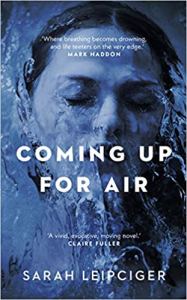
My second link is a book that also has ‘air’ in the title – Coming Up For Air, Sarah Leipciger’s second novel. It is a beautiful novel, a story of three people living in different countries and in different times. How their stories connect is gradually revealed as the novel progresses. As the author explains at the end of the novel it is a mix of fact and fiction and has its basis in truth. There is grief and loss and despair in each story, but above all, it is about love, and the desire to live. I think Sarah Leipciger is a great storyteller. It is an inspiring book, beautifully written, which emphasises the importance of the air we breathe and the desire to live. I read this book in June 2021.

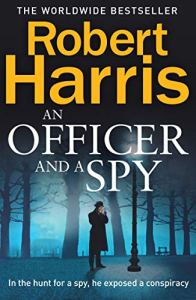
My third link is An Officer and a Spy, historical fiction by Robert Harris, another book I read in June 2021. It is a gripping book about the Dreyfus affair in 1890s France. Alfred Dreyfus, a young Jewish officer, was convicted of treason by passing secrets to the Germans in 1895 and sent to solitary confinement on Devil’s Island. It’s narrated by Colonel George Picquart, who became convinced that Dreyfus was innocent. Harris goes into meticulous detail in staying accurate to the actual events, but even so this is a gripping book and I was completely absorbed by it from start to finish.

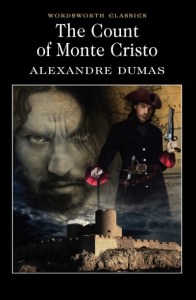
My fourth link is The Count of Monte Cristo, historical fiction by Alexandre Dumas, in which the main character is also wrongly imprisoned on an island. It begins in 1815 when Edmond Dantès, a sailor, having returned to Marseilles is wrongly accused of being a Bonapartist and imprisoned in the Chateau d’If on the Isle of Monte Cristo, for fourteen years. It’s a great story, action-packed, and full of high drama and emotion. Montecristo is a real island in the Tyrrhenian Sea, part of the Tuscan Archipelago, and administered by the municipality of Portoferraio in the province of Livorno.

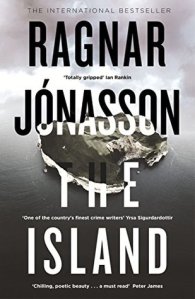
So My fifth link is also set on a real island, that of the isolated island of Elliðaey off the coast of Iceland in Ragnar Jónasson’s novel The Island, a murder mystery with elements of horror. Four friends visit the island ten years after the murder of a fifth friend, Katla, but only three of them return. One of them, Klara, fell to her death from a cliff – but did she jump or was she pushed? Detective Inspector Hulda Hermannsdóttir is sent to investigate. A suspect had been charged, but had committed suicide before the verdict was announced and the case had been closed. But are the two murders connected, even though they are ten years apart? This book is the second in Jónasson’s Hidden Iceland series.

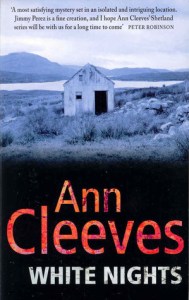
My final link is also the second book in a series, that is White Nights by Ann Cleeve, the second in her Shetland Quartet, featuring Detective Jimmy Perez. It’s set mainly in the village of Biddista, when Kenny Thomson finds a man’s body hanging in the hut where the boat owners of the village keep their lines and pots. At first it looks as though the man, his face covered by a clown’s mask, has committed suicide, but he’d been dead before he was strung up. As well as the mystery of who killed the man in the clown mask and why, there is also the disappearance 15 years earlier of Kenny’s older brother Lawrence. It was thought that he left the island after Bella had broken his heart. Kenny hadn’t heard from him since and at first thought the dead man could be him.

The books in my chain are mainly a mix of crime and historical fiction. And the chain has become a circle with the last book connecting to the starting book and the first book, all containing two brothers.

What is in your chain, I wonder?

Next month (December 7, 2024), we’ll start with a beach read – Sandwich by Catherine Newman.

Six Degrees of Separation from  After Story by Larissa Behrendt to The Butterfly Room by Lucinda Riley

It’s time again for Six Degrees of Separation, a monthly link-up hosted by Kate at Books Are My Favourite and Best. Each month a book is chosen as a starting point and linked to six other books to form a chain. A book doesn’t need to be connected to all the other books on the list, only to the one next to it in the chain.

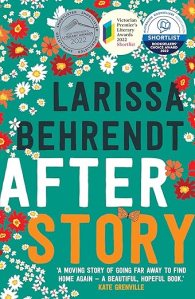
This month starts  After Story by Larissa Behrendt. This is the description on Amazon UK:

When Indigenous lawyer Jasmine decides to take her mother, Della, on a tour of England’s most revered literary sites, Jasmine hopes it will bring them closer together and help them reconcile the past. Twenty-five years earlier the disappearance of Jasmine’s older sister devastated their tight-knit community. This tragedy returns to haunt Jasmine and Della when another child mysteriously goes missing on Hampstead Heath. As Jasmine immerses herself in the world of her literary idols – including Jane Austen, the Brontë sisters and Virginia Woolf – Della is inspired to rediscover the wisdom of her own culture and storytelling. But sometimes the stories that are not told can become too great to bear. Ambitious and engrossing, After Story celebrates the extraordinary power of words and the quiet spaces between. We can be ready to listen, but are we ready to hear?

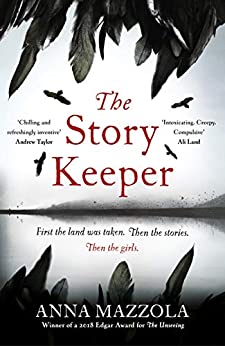
My first link is using the word Story, in the title, and it’s also a book about storytelling – The Story Keeper, set on the Isle of Skye in 1857, by Anna Mazzola. It stresses the importance of folk tales – stories that have been told to make sense of the world and reflect people’s strengths, flaws, hopes and fears. 

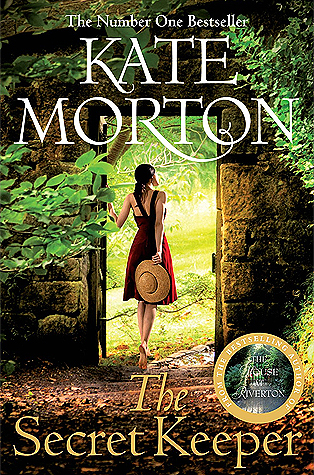
My second link is The Secret Keeper by Kate Morton, a story moving between time periods from 2011, back to the 1960s and also to the 1940s. It begins in 1961 in Suffolk when sixteen-year old Laurel is shocked when she sees her mother stabbing a stranger who had come to their farm. 

In my third link another sixteen year old girl, Nouf ash-Shrawi, disappears from her home in Jeddah, in The Night of the Mi’raj by Zoë Ferraris, just before her arranged marriage. Her body is eventually found in a desert wadi. It appears that her death was an accident and that she died by drowning in the wadi after a sudden storm.

My fourth link is Salmon Fishing in the Yemen by Paul Torday about a project to introduce salmon fishing in the waters of the Wadi Aleyn in the heart of the mountains of Heraz, in Yemen.

My fifth link takes the chain from the mountains of Heraz to the Appalachian Mountains in Flight Behaviour by Barbara Kingsolver in which a young mother discovers a beautiful and terrible marvel of nature: the monarch butterflies have not migrated south for the winter that year.

My final link is to The Butterfly Room by Lucinda Riley. The story revolves around Posy Montague and her family home, Admiral House in the Suffolk countryside. Her father encouraged her to draw plants and showed her how to catch butterflies. As a child Posy thought The Butterfly Room in the Folly in the grounds of Admiral House  looked like a fairy-tale castle with its turret made of yellow sandy brick. But the Folly was not the wonderful place she imagined – and there is a dark secret hidden behind its locked door.

The books in my chain are all fiction including historical fiction, mysteries and crime fiction. The chain travels through Australia, the UK, Saudi Arabia, Yemen and the USA,

Next month (October 5, 2024), we’ll start with Colm Tóibín’s Long Island.

Six Degrees of Separation from The Museum of Modern Love to:

It’s time again for Six Degrees of Separation, a monthly link-up hosted by Kate at Books Are My Favourite and Best. Each month a book is chosen as a starting point and linked to six other books to form a chain. A book doesn’t need to be connected to all the other books on the list, only to the one next to it in the chain.

This month starts with The Museum of Modern Love by by Heather Rose (Kate’s pick was inspired by Sue’s recent post about writers and artists). I haven’t read this, but I would like to. This is the description on Amazon UK:

Arky Levin, a film composer in New York, has promised his wife that he will not visit her in hospital, where she is suffering in the final stages of a terminal illness. She wants to spare him a burden that would curtail his creativity, but the promise is tearing him apart. One day he finds his way to MOMA and sees Mariana Abramovic in The Artist is Present. The performance continues for seventy-five days and, as it unfolds, so does Arky. As he watches and meets other people drawn to the exhibit, he slowly starts to understand what might be missing in his life and what he must do.

My first link is via a terminal illness to The Salt Path, Raynor Winn’s memoir about walking the South Coast Path when Moth her husband was diagnosed with a terminal illness. They were homeless, with no means of income except for £48 pounds a week. They had lost their home, business and livelihood, after investing in one of a friend’s companies that had failed. It is about the determination to live life, about overcoming pain and hardship, and the healing power of nature. It is about homelessness and the different reactions and attitudes of the people they met when they told them they were homeless.

My second link is How to Catch a Mole by Marc Hamer, part memoir, part a nature study of the British countryside, part poetry, and, of course, about moles. After leaving school Marc Hamer was homeless for a while. He has worked in art galleries, marketing, graphic design and taught creative writing in a prison before becoming a gardener. And before writing this book he had been a traditional molecatcher for years.

My third link is Hilary Mantel’s Giving Up the Ghost, a remarkable memoir. It came across to me as being clear, honest and very moving. She thought it was because of her that her parents were not happy and that without her they would have had a chance in life. It didn’t get any better when her father left home and she was left to live with two younger brothers, their mother and her mother’s lover. Home was a place where secrets were kept and opinions were not voiced. Her experience of ghosts at the age of 7 was horrifying as she felt as though something came inside her, ‘some formless, borderless evil’.

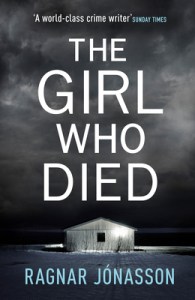
My fourth link is The Girl Who Died by Ragnar Jonasson, Icelandic noir, a mix of horror and psychological thriller, with a strong sense of place. Skálar is a close-knit community that doesn’t welcome newcomers, keeping its secrets well hidden. The only person who welcomes Una, to the village is Salka, the mother of Edda, one of the two girls Una is to teach. Her house is said to be haunted by the ghost of a young girl who had died fifty years earlier,

My fifth link is Asking for the Moon by Reginald Kill, a collection of four novellas. Two of them feature ghosts, Pascoe’s Ghost and Dalziel’s Ghost. But I think that the best one is the first story, The Last National Service Man which tells how Dalziel and Pascoe first met. Neither of them are impressed by the other. Dalziel thinks Pascoe is everything he dislikes – a graduate, well spoken, and a Southerner from south of Sheffield. Pascoe thinks Dalziel is an archetypical bruiser who got results by kicking down doors and beating out questions in Morse code on a suspect’s head.

My final link is to the final Inspector Morse novel, The Remorseful Day by Colin Dexter. The plot is detailed, complex and as usual, with Morse, a puzzle type murder mystery with plenty of challenging clues. Sergeant Lewis is left to investigate the murder of nurse Yvonne Harrison that had remained unsolved for a year. When Morse phones to say he is feeling unwell Lewis is most concerned – Morse seldom mentioned his health, what is wrong with him?

The main focus of the book is on Morse and how he copes with his illness and his drinking habits. It becomes obvious just how alone he is in the world and how devastating his situation is to Lewis.

The first three books in my chain are memoirs and the other three are crime fiction/psychological thriller novels. Beginning in America it travels to the UK, then to Iceland, before ending back in the UK.

Next month (September 7, 2024), we’ll start with  After Story by Larissa Behrendt.

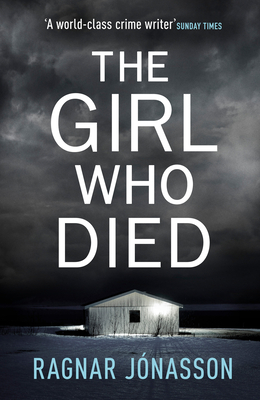
The Girl Who Died by Ragnar Jonasson, translated from the Icelandic by Victoria Cribb

Penguin| 3 June 2021| 328 pages| Review Copy| 3*

‘TEACHER WANTED AT THE EDGE OF THE WORLD . . .’

After the loss of her father, Una sees a chance to escape Reykjavík to tutor two girls in the tiny village of Skálar – population just ten – on Iceland’s storm-battered north coast.

But city life hasn’t prepared her for the unforgiving weather nor inhospitable village life. Worse, the creaky old house where she lives is playing on her already fragile mind when she’s convinced she hears the ghostly sound of singing.

Then, at midwinter, a young girl is found dead.

And one of the villagers must have blood on their hands . . .

The Girl Who Died is Icelandic noir, a mix of horror and psychological thriller, with a strong sense of place. Skálar is a close-knit community that doesn’t welcome newcomers, keeping its secrets well hidden. The only person who welcomes Una, to the village is Salka, the mother of Edda, one of the two girls Una is to teach. But even her welcome is short lived.

When Una arrived she had the feeling that it was like being a folk tale, an ominous supernatural tale set in a vague shifting world where nothing was solid or real, almost like a ghost town. The feeling grows stronger when she sees a little girl with long, pale hair in the window of Salka’s house – but Salka tells her that Edda was in bed. Later she discovers that the ghost of a young girl who had died fifty years earlier was said to haunt the house.

The supernatural elements of the story and the dark brooding atmosphere add to the mystery, but it is not quite as creepy or chilling as I’d thought it would be, mainly because of the slow plodding pace. Also I’m in two minds about Una as I really didn’t find her a very interesting character. And I began to care less and less about what was happening to her. Overall I found it a bit disappointing, and I found the ending puzzling.

However, the Author’s Note is interesting. Jonasson explains that Skálar is a real place. But it was abandoned in the mid 1950s, so the setting is real, but the buildings and the characters are fictitious. However, he has tried to give an accurate representation of the history of Skálar that describes in the book. He has also used the folk tales in Sigfús Sigfússon’s collections of Icelandic tales and legends.

My thanks to the publishers for a review copy via NetGalley.

Can’t-Wait Wednesday: The Girl Who Died by Ragnar Jónasson

Can’t-Wait Wednesday is a weekly meme hosted by Wishful Endings, to spotlight and discuss the books we’re excited about that we have yet to read. Generally they’re books that have yet to be released.

This week I’m featuring The Girl Who Died by Ragnar Jónasson, release date 3 June 2021. I’ve read just two of Ragnar Jónasson’s books in his Icelandic Hulda series and enjoyed both of them. So, I’m keen to read this one, which is a standalone novel.

Description


‘TEACHER WANTED ON THE EDGE OF THE WORLD . . .’
.

Una knows she is struggling to deal with her father’s sudden, tragic suicide. She spends her nights drinking alone in Reykjavik, stricken with thoughts that she might one day follow in his footsteps.

So when she sees an advert seeking a teacher for two girls in the tiny village of Skálar – population of ten – on the storm-battered north coast of the island, she sees it as a chance to escape.

But once she arrives, Una quickly realises nothing in city life has prepared her for this. The villagers are unfriendly. The weather is bleak. And, from the creaky attic bedroom of the old house where she’s living, she’s convinced she hears the ghostly sound of singing.

Una worries that she’s losing her mind.

And then, just before midwinter, a young girl from the village is found dead. Now there are only nine villagers left – and Una fears that one of them has blood on their hands . . .

What upcoming release are you eagerly anticipating?