Top Ten Tuesday: Genre freebie

Top Ten Tuesday is a weekly meme created by The Broke and the Bookish and now hosted by Jana at That Artsy Reader Girl. For the rules see her blog

The topic today is a Genre freebie (Pick any genre you’d like and build a list around it. You can even narrow the topic if you’d like, such as: thrillers with unreliable narrators, fantasy romance with fae characters, or historical romance with suspense elements.)

I decided to list ten of my favourite historical fiction books:

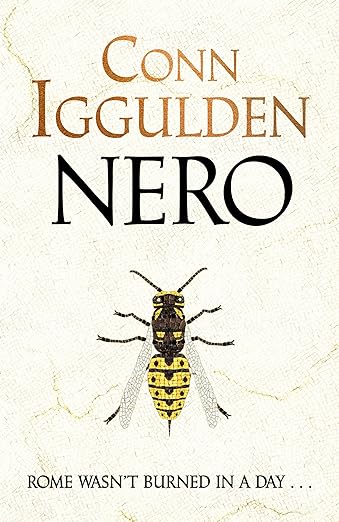
  1. Nero by Conn Iggulden. Ancient Rome (beginning in AD37)
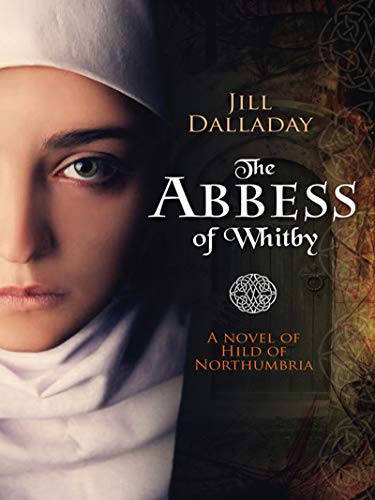
  2. The Abbess of Whitby: a Novel of Hild of Northumbria by Jill Dalladay (7th century Britain)
  3. The Raven’s Head by Karen Maitland  (13th century England)
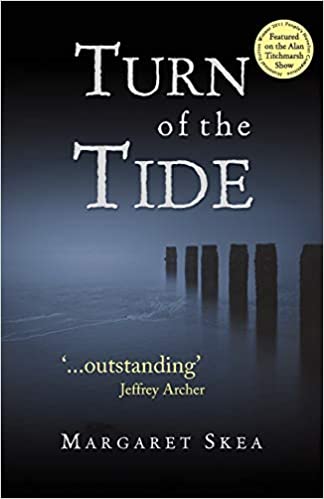
  4. Turn of the Tide by Margaret Skea (16th century Scotland)
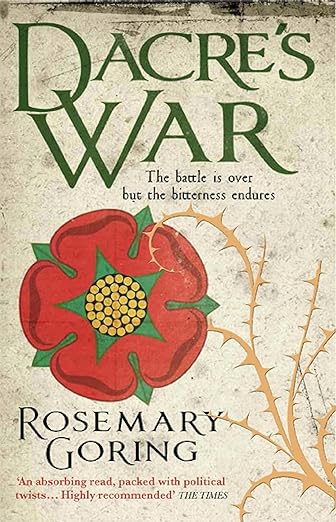
  5. Dacre’s War by Rosemary Goring (16th century Scotland and England)
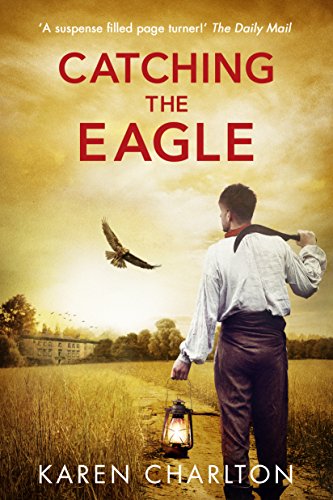
  6. Catching the Eagle by Karen Charlton (1809 -1811 Northumberland)
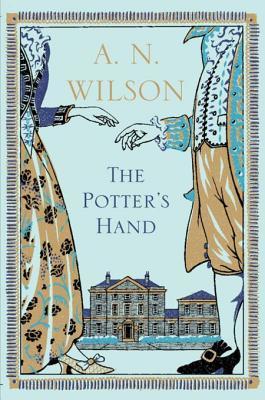
  7. The Potter’s Hand by A N Wilson (the Wedgewood family 1785 – 1805)
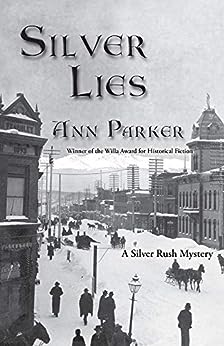
  8. Silver Lies by Ann Parker (1880s USA)
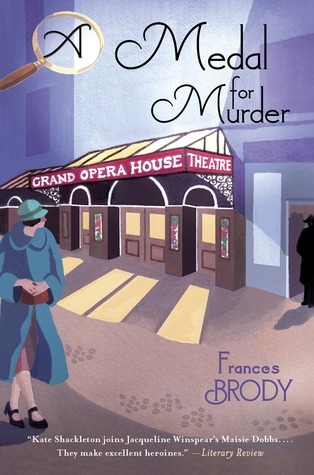
  9. A Medal for Murder by Frances Brody (1922 England and 1899 South Africa – the Boer War)
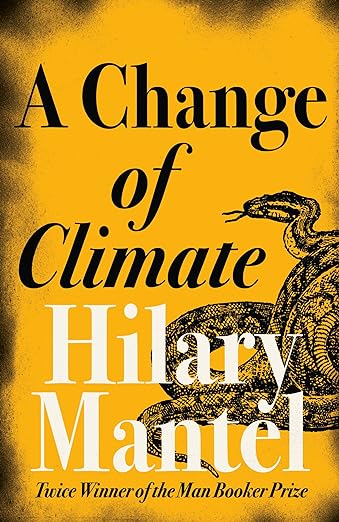
  10. A Climate of Change by Hilary Mantel (1950s Africa and 1980s England)

Top Ten Tuesday: Books with the Word HOUSE in the Title

Top Ten Tuesday is a weekly meme created by The Broke and the Bookish and now hosted by Jana at That Artsy Reader Girl. For the rules see her blog.

The topic this week is Books with the Word “[Insert Word Here]” in the Title. I decided to choose books with the word HOUSE in the title. These ten books are all books I’ve read.

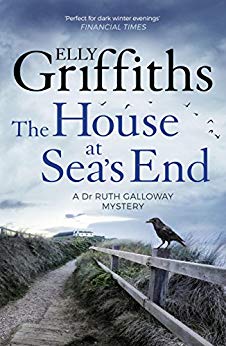
The House at Sea’s End by Elly Griffiths – a Ruth Galloway mystery.

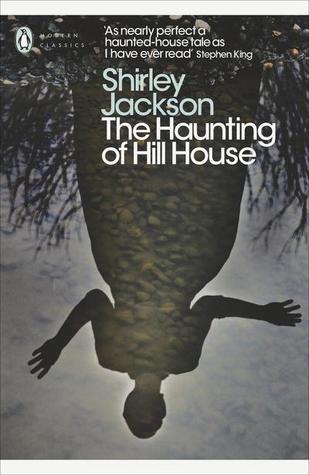
The Haunting of Hill House by Shirley Jackson – more of a psychological study than a horror story.

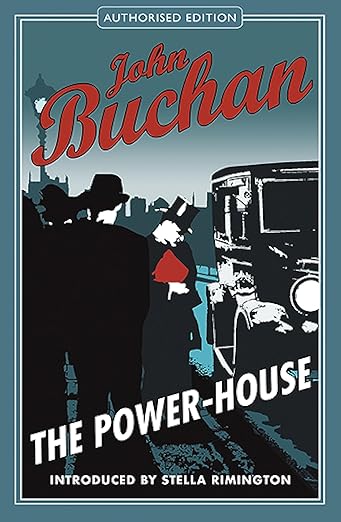
The Power-House by John Buchan – a thriller, the first of five featuring the barrister and Tory MP Edward Leithen.

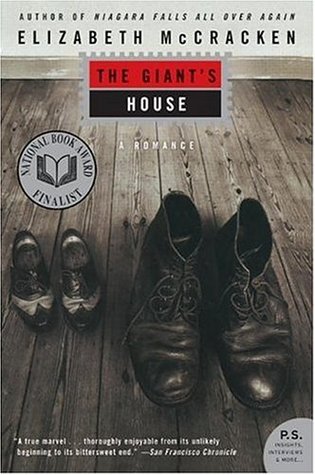
The Giant’s House by Elizabeth McCracken – a love story.

Slade House by David Mitchell – a mixture of a ghost story, science fiction and horror.

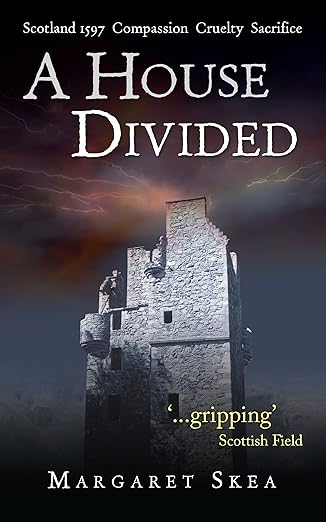
A House Divided by Margaret Skea – historical fiction set in 15th century Scotland.

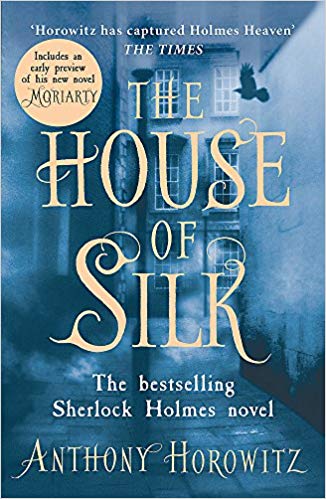
The House of Silk by Anthony Horowitz – a Sherlock Holmes novel.

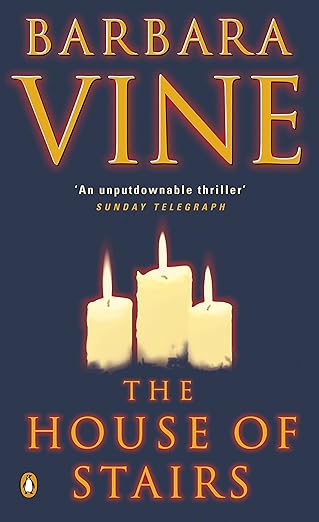
The House of Stairs by Barbara Vine – a psychological thriller.

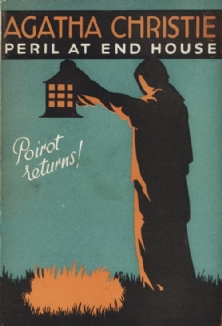
Peril at End House by Agatha Christie – a Poirot mystery.

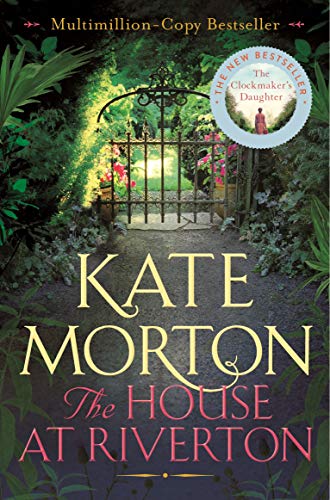
The House at Riverton by Kate Morton – historical fiction.

Have you read any of them?

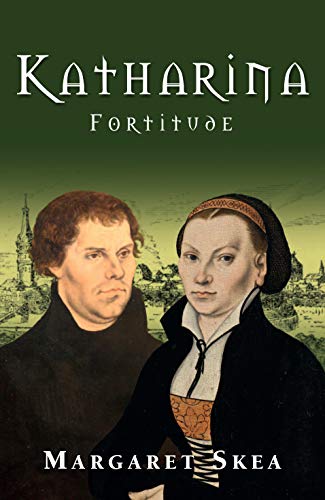
Katharina: Fortitude by Margaret Skea

Katharina fortitude

Last week I wrote about Margaret Skea’s latest book, Katharina: Fortitude, historical fiction based on the life of Katharina von Bora, the escaped nun who married Martin Luther. I loved it. It is beautifully written and meticulously researched giving a vivid portrait of Katharina from the beginning of her married  life with Luther in 1525 to her death in 1552.

For the whole of August it is on sale for 99p in the UK and $0.99 in the USA – a real bargain!

Here’s the link that takes you straight to the book page, whatever country you are in:

https://books2read.com/u/meBAgA

Katharina: Fortitude by Margaret Skea

Historical fiction at its best

‘We are none of us perfect, and a streak of stubbornness is what is needed in dealing with a household such as yours, Kat… and with Martin.’ 

Katharina fortitude

Sanderling Books|23 July 2019|print length 446 pages|e-book review copy|5*

My thoughts:

I loved this book; beautifully written and meticulously researched Katharina: Fortitude by Margaret Skea it presents a vivid portrait of Katharina von Bora from the beginning of her married  life with Martin Luther in 1525 to her death in 1552. It is the conclusion to Katharina: Deliverance, which covered the early years of her life from 1505 up to her wedding to Luther.

They both work well as standalone novels but I think reading both gives a fully rounded picture of her life. Margaret Skea is a skilful storyteller and seamlessly blends historical fact into her fiction. She is an award winning author both for her short stories and her historical novels – and Katharina: Deliverance was Runner-up in the Historical Novel Society Novel Award 2018.

Just as in Katharina: Deliverance, I was transported back in time and place to Reformation Germany, and in particular to Wittenberg in Saxony, experiencing the social, cultural and political situation. It’s also an intensely personal novel and I feel I really came to know Katharina and Martin very well. They lived through turbulent times, suffering outbreaks of plague, political and religious conflict as well as coping with the death of two of their children. Their marriage, initially one of convenience, opposed by some of his friends and fellow reformers, eventually became full of their love for each other and Martin came to value Katharina’s candid opinions and the support she gave him.

I felt immense admiration for Katharina, for her strength of character, resilience and courageous spirit. She gave birth to six children, whilst looking after Martin, who was often ill and suffered from depression. And in addition she also managed the daily life of the Lutherhaus in Wittenberg, often under financial difficulties because of Martin’s generosity towards others. She catered for the students and all the visitors and boarders, as well as working in the garden, with its vegetable beds and herb garden, the brewhouse, stable and piggery. Luther continued to be involved in religious controversy, whilst lecturing students, and holding his Table Talk sessions discussing a variety of topics ranging from theology and politics to diseases and their remedies.  He also translated the Bible into German, composed hymns, catechisms and treatises. 

I have often written in my reviews that I am not a fan of novels written in the present tense, but I had no issues with it in either of these books about Katharina and I think it fits the story perfectly. I was totally immersed in the story, enhanced by the richly descriptive writing, which made it compulsively readable for me.

In her Author’s Note Margaret Skea states that her book, based on a research trip in Saxony, ‘is a work of fiction, and though based on extensive research, the Katharina depicted here is my own interpretation’. There is a list of the main characters, a glossary of German terms and a map showing Saxony and Surroundings to help with the locations. It is a remarkable story, full of drama, centred on Katharina, a strong and courageous woman who never gave up no matter the difficulties that life with Luther brought her. I loved it.

With many thanks to Margaret Skea for sending me an advance review copy.


By Sword and Storm by Margaret Skea

By Sword and Storm (The Munro Scottish Saga Book 3)

Two of the best historical fiction books I’ve read in recent years are Margaret Skea’s Munro Scottish Sagas, Turn of the Tide,  and A House Divided, both of which transported me  back in time to 16th century Scotland and France, specifically to the world of the feuding clans of Cunninghame and Montgomerie.

By Sword and Storm is the third book in the Munro Saga. It stands well on its own but I recommend reading the earlier books to get the whole picture of what happened in the years before. It is now 1598 and the Munro family, Adam, his wife, Kate, and children, Robbie, Maggie and Ellie  are living in France. Adam and Robbie are in the Scots Gardes, serving Henri IV of France: Adam is a colonel  and Robbie is a sergeant.  The Scots Gardes were an elite Scottish regiment whose duties included the provision of a personal bodyguard to the French King.

The story is well grounded in research and based on historical facts, seamlessly interweaving fact and fiction. It is  complex novel with several plot lines, locations and characters, some based on real historical figures and others fictitious, such as the Munro family. There’s a useful list of the main characters and a map at the start of the book and a glossary and historical note at the end.

As the story begins the French Wars of Religion are drawing to an end and the Edict of Nantes has established religious freedom, placating the Catholics whilst making concessions to the Huguenots – but not in Paris or at the French court, where Protestants are still banned from openly practising their religion. When Adam saves Henri’s life as a shot is fired from the crowd, he and his family are summoned to live at the French court, despite their religious beliefs. Life in Paris holds many dangers for the Munros, especially for Robbie when he falls in love with a girl from a Huguenot family.

Back in Scotland some members of the Cunninghame and Montgomerie factions are still feuding, notably Hugh Montgomerie, the Laird of Braidstane and William, the son of the head of the Cunninghame clan, whilst other clan members try to maintain the peace.  James VI has banned duelling but that doesn’t deter Hugh and William. Meanwhile, Hugh’s wife, Elizabeth, pregnant and left on her own in the depths of winter with only her children and a servant for company, faces her own dangers.

There is so much to enjoy in this book – first of all the story itself, expertly narrated, full of tension and surprise, and also the characters. But I also loved the personal touches, revealing what life was like in the 16th century,  how both ordinary people and royalty lived, and the dangers that faced them in their daily lives, particularly for women in childbirth and sickness and for those who dissented from the established religion.

I loved all the details about the French court, in particular about Henri’s mistress and the relationship between her and Kate. As in the earlier books Margaret Skea writes such beautifully descriptive passages, bringing to life the details of the French court and of the landscape in both Scotland and France as well as the dangers of travelling by sea.

This is ostensibly the end of the Munro saga – but Margaret Skea has revealed on her blog that she is hoping to revisit the Munro story at a later date. I hope she does, but if not this is an excellent end to the series.

  • Format: Kindle Edition – also available in paperback
  • File Size: 1339 KB
  • Publisher: Corazon Books (Historical/Saga) (11 July 2018)
  • Source: Advance copy from the publisher
  • My rating 4*

Katharina: Deliverance by Margaret Skea

‘It is very shameful that children, especially defenceless young girls, are pushed into the nunneries. Shame on the unmerciful parents who treat their own so cruelly.’ Martin Luther

Katharina: Deliverance (Katharina #1)

Publication: Sanderling Books, 18 October 2017

Source: review copy from the author

My rating: 4*

Summary from Goodreads:

Germany 1505

Following the death of her mother and her father’s remarriage, five-year-old Katharina is placed in the convent at Brehna. She will never see her father again. 
Sixty-five miles away, at Erfurt in Thuringia, Martin Luder, a promising young law student, turns his back on a lucrative career in order to become a monk. 

The consequences of their meeting in Wittenberg, on Easter Sunday 1523, will reverberate down the centuries and throughout the Christian world.

A compelling portrayal of Katharina von Bora, set against the turmoil of the Peasant’s War and the German Reformation … and the controversial priest at its heart.

My thoughts:

I love historical fiction and Margaret Skea’s books about the Munro family, Turn of the Tide and A House Divided set in 16th century Scotland are two of the best I’ve read over the last few years. Her latest novel, Katharina: Deliverance is just as fascinating, also set in the 16th century, but this time in Germany. Katharina was the wife of Martin Luther and the book is written in the present tense from Katharina’s viewpoint and from two time periods. I like the dual aspect time line giving a glimpse of what is to come.

2017 marks the 500th anniversary of the start of the Reformation, which was set in motion when Martin Luther, a doctor of theology at the University of Wittenberg published his 95 theses, attacking papal abuses and the sale of indulgences. I remembered this from school history but it was only reading Katharina: Deliverance that the period and both Katharina and Martin really came to life for me.

It’s a most moving story that transported me back in time to the 16th century and I felt as though I was inside Katharina’s mind and could feel what she was feeling.  It covers the early years of her life from 1505 up to her wedding to Martin Luther in 1525 and includes, at intervals, scenes from the end of Katharina’s life in 1552. I was fascinated and so anxious for her right from the start when as a small child, she was taken from her home and unwillingly enters the convent at Brehna. Four years later, at the age of ten, she was transferred to the Marienthron convent at  Nimbschen where her aunt was the abbess. It was a difficult change for Katherina – to a silent order where communication was by sign language. She was consecrated as a nun in 1515.

Although isolated from the outside world news of Martin Luther’s teaching reached the nuns as the abbess says:

The wind of change is blowing in the outside world and will buffet us in due time. And perhaps sooner than we think, for it is our own provincial vicar, the Reverend Dr Martin Luther, who makes the challenge, and I find myself tempted to agree with his sentiment, if not his rhetoric.

Although the Church denounced Luther and his writings and ordered his books to be burnt some of the nuns, including Katharina, were inspired by his ideas and beliefs. They escaped from the convent at Easter 1523 and arrived at Wittenburg where several families helped them settle into life outside the convent. It was here that Katharina met Luther and the next phase of her life began.

Although written in the present tense, which can often be a stumbling block for me, I love Margaret Skea’s beautifully descriptive writing in passages such as this:

The year turns, the darkness of December giving way to the brilliance of a landscape cloaked in snow. The hollows on the hill behind us are smoothed out, the river below sluggish, swollen with slush. Wind blows through the valley, piling the snow in drifts, obliterating the track, neither workers nor visitors able to reach us. Within our walls, ice hangs in long fingers from roofs and windowsills, and crusts the tops of fences. Paths turn to glass and stray stems of plants snap like kindling when trodden on. In the orchard, branches bow under the weight of snow, sweeping the ground, so that we fear for their survival, and the root vegetables we would normally harvest as we needed them are set into ground so hard they are impossible to shift. Outside, the water in the troughs freezes solid, so that fresh supplies from the well must be drawn daily for the animals, and indoors, standing water forms a thick skin overnight.

In her Author’s Note Margaret Skea states that her ‘book is a work of fiction, and though based on extensive research, the Katharina depicted here is my own interpretation’. I think it works very well weaving the historical facts into this dramatic and emotional story.  I loved it and am looking forward to the next book, Katharina: Fortitude which will be published in 2018!

  • Format: Kindle Edition
  • File Size: 529 KB
  • Print Length: 384 pages
  • Publisher: Sanderling Books (18 Oct. 2017)