Six Degrees of Separation from All Fours to Sausage Hall

It’s time again for Six Degrees of Separation, a monthly link-up hosted by Kate at Books Are My Favourite and Best. Each month a book is chosen as a starting point and linked to six other books to form a chain. A book doesn’t need to be connected to all the other books on the list, only to the one next to it in the chain.

This month we start with All Fours by Miranda July, shortlisted for the Women’s Prize for Fiction 2025 and several other awards. I haven’t read it and probably won’t. This is Amazon’s description:
A semi-famous artist turns forty-five and gives herself a gift – a cross-country road trip from LA to New York, without her husband and child. But thirty minutes after setting off, she spontaneously exits the freeway, beds down in a nondescript motel – and embarks on the journey of a lifetime.

Miranda July’s second novel confirms the brilliance of her unique approach to fiction. With July’s wry voice, perfect comic timing, unabashed curiosity about human intimacy, and palpable delight in pushing boundaries, All Fours tells the story of one woman’s quest for a new kind of freedom. Part absurd entertainment, part tender reinvention of the sexual, romantic, and domestic life of a forty-five-year-old female artist, All Fours transcends expectation while excavating our beliefs about life lived as a woman. Once again, July hijacks the familiar and turns it into something new and thrillingly, profoundly alive.
First link: I have read another book that was shortlisted for the previous year’s Women’s Prize for Fiction – Restless Dolly Maunder by Kate Grenville.

Dolly Maunder is born at the end of the 19th century, when society’s long-locked doors are just starting to creak ajar for determined women. Growing up in a poor farming family in rural New South Wales, Dolly spends her life doggedly pushing at those doors. A husband and two children do not deter her from searching for love and independence.

This is the fictionalised life story of Kate Grenville’s maternal grandmother, Sarah Catherine Maunder, known as Dolly. She was not only restless but also clever and determined – she knew what she wanted and she did her best to achieve it.
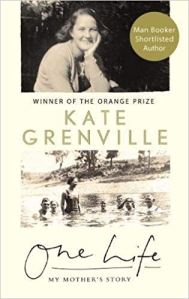
Second link: One of my favourite books by Kate Grenville is One Life: My Mother’s Story, her biography of Nance Russell, based on Nance’s memories, making it much more than a factual account of a person’s life. It’s a book that casts light not only on Nance’s life but also on life in Australia for most of the 20th century. Nance was born in 1912 and died in 2002, so she lived through two World Wars, an economic depression and a period of great social change. Nance wasn’t famous, the daughter of a rural working-class couple who became pub-keepers, but she was a remarkable woman.

It’s a vivid portrait of a real woman, a woman of great strength and determination, who had had a difficult childhood, who persevered, went to University, became a pharmacist, opened her own pharmacy, brought up her children, and helped build the family home. She faced sex discrimination and had to sell her pharmacy in order to look after her children at home.
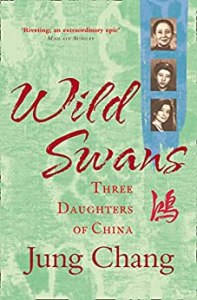
Third link: Wild Swans: Three Daughters of China by Jung Chang, a family memoir – the story of three generations of women in Jung Chang’s family – her grandmother, mother and herself, telling of their lives in China up to and during the years of the violent Cultural Revolution. Her family suffered atrociously, her father and grandmother both dying painful deaths and both her mother and father were imprisoned and tortured. She casts light on why and how Mao was able to exercise such paralysing control over the Chinese people. His magnetism and power was so strong and coupled with his immense skill at manipulation and his ability to inspire fear, it proved enough to subdue the spirit of most of the population; not to mention the absolute cruelty, torture and hardships they had to endure.
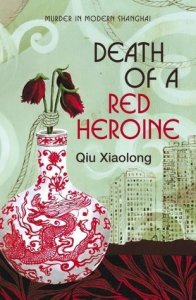
My fourth link moves from a memoir to crime fiction in Death of a Red Heroine by Qiu Xiaolong, the first book featuring Chief Inspector Chen. Chen is a reluctant policeman, he has a degree in  English literature and is a published poet and translator. This is as much historical fiction as it is crime fiction. There is so much in it about China, its culture and its history before 1990 – the Communist regime and then the Cultural Revolution in the 1960s – as well as the changes brought about in the 1990s after the massacre of Tiananmen Square. This does interfere with the progress of the murder investigation as Chen has to cope with the political ramifications and consequently there are several digressions and the pace is slow and lacking tension. As Chen is a poet as well as a policeman there are also references to Chinese literature.
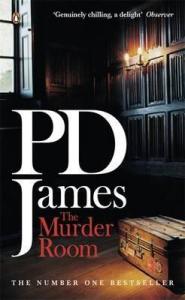
Fifth link: Another fictional Chief Inspector who writes poetry is Adam Dalgleish in The Murder Room by P D James. The Murder Room itself is in the Dupayne Museum, displaying the most notorious murder cases of the 1920s and 30s, with contemporary newspaper reports of the crimes and trials, photographs and actual exhibits from the scenes of the murders. These were actual crimes and not fictional cases made up by P D James.

The novel  begins, as Adam Dalgleish visits the Dupayne in the company of his friend Conrad Ackroyd who is writing a series of articles on murder as a symbol of its age. A week later the first body is discovered at the Museum and Adam and his colleagues in Scotland Yard’s Special Investigation Squad are called in to investigate the killing, which appears to be a copycat murder of one of the 1930s’ crimes.
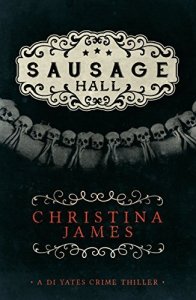
Another crime fiction writer with the surname James is my sixth link: Sausage Hall by Christina James, the third novel in the DI Yates series. It has a sinister undercurrent exploring the murky world of illegal immigrants, and a well researched historical element. It’s set in the South Lincolnshire Fens and is an intricately plotted crime mystery, uncovering a crime from the past whilst investigating a modern day murder. Sausage Hall is home to millionaire Kevan de Vries, grandson of a Dutch immigrant farmer.  I liked the historical elements of the plot and the way Christina James connects the modern and historical crimes, interwoven with the history of Kevan’s home, Laurieston House, known to the locals as ‘Sausage Hall’ and the secrets of its cellar.

My chain is made up of novels shortlisted for the Women’s Prize for Fiction, a biography, a memoir and three murder mysteries. It travels from New York to the UK via Australia and China.

Where does your chain end up, I wonder?

Next month (July 5, 2025), we’ll start with the 2025 Stella Prize winner, Michelle de Kretser’s work of autofiction, Theory & Practice.
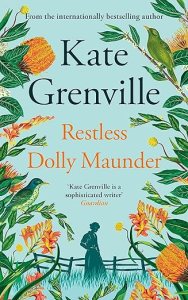
Restless Dolly Maunder by Kate Grenville

Canongate Books| 2 November 2023|257 pages| Review copy| 4*

Synopsis

Dolly Maunder is born at the end of the nineteenth century, when society’s long-locked doors are just starting to creak ajar for determined women. Growing up in a poor farming family in rural New South Wales, Dolly spends her life doggedly pushing at those doors. A husband and two children do not deter her from searching for love and independence.

Restless Dolly Maunder
 is a subversive, triumphant tale of a pioneering woman working her way through a world of limits and obstacles, who is able – despite the cost – to make a life she could call her own.

My thoughts:

Kate Grenville is one of my favourite authors, so I was looking forward to reading Restless Dolly Maunder. I was not disappointed.

This is the fictionalised life story of Kate Grenville’s maternal grandmother, Sarah Catherine Maunder, known as Dolly. She was the sixth child of Thomas and Sarah Maunder, born in Currabubula, New South Wales, Australia in 1881. She was not only restless but also clever and determined – she knew what she wanted and she did her best to achieve it.

As a child she longed to be a pupil-teacher but in a world where women were subservient to men she had to obey her father who wouldn’t allow it. She could marry or be a spinster. Eventually she married Bert Russell and began a life away from the farm and her family, moving from place to place and from one business to the next to better herself and her family – a shop, a boarding house, a pub, and a grand hotel.. But she was a difficult person, not easy to like and unable to show love. Hers was a success story but also a tragedy as her wanderlust impelled her to keep striving for more and better things in life.

Restless Dolly Maunder casts light not just on Dolly’s life but also on life in Australia for most of the 20th century. The book has a relentless pace as it tells her life story as she propels herself from place to place and from business to business, enjoying success whilst it lasted and enduring all else, not stopping to pause breath in her restless pursuit of what came next.

Many thanks to the publishers for a review copy via NetGalley.

I can recommend all of Kate Grenville’s books. One of my favourites is One Life:My Mother’s Story, her biography of Nance Russell, Dolly’s daughter. Hers was a happier and more fulfilled life.

Nonfiction November: Week 2 Book Pairings

Week 2: (November 8-12) – Book Pairing with Katie at Doing DeweyThis week, pair up a nonfiction book with a fiction title. It can be a “If you loved this book, read this!” or just two titles that you think would go well together. Maybe it’s a historical novel and you’d like to get the real history by reading a nonfiction version of the story. 

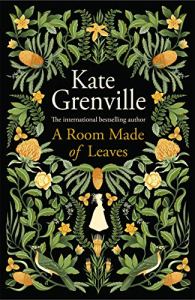
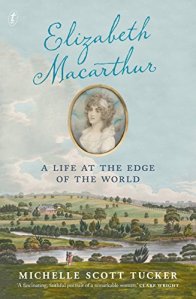
Earlier this year I read the novel A Room Made of Leaves by Kate Grenville and I’m pairing it with Elizabeth Macarthur: A Life at the Edge by Michelle Scott Tucker, which I haven’t read yet.

Kate Grenville is one of my favourite authors, so I was very keen to read A Room Made of Leaves. It’s historical fiction telling the story of the Macarthurs, Elizabeth and John Macarthur, who settled in Australia at the end of the eighteenth century. It’s based on the real lives of the Macarthurs using letters, journals and official documents of the early years of the New South Wales colony. Her writing suits me – historical fiction, with good descriptive writing setting the scenes vividly in their locations. I find her books difficult to put down and they stay in my mind long after I’ve finished reading. This one is no exception.

Whenever I read historical fiction I always want to know how much is fact and how much is fiction, how accurate it is. And so this novel intrigued me because Kate Grenville’s book begins with an editor’s note about ‘the ‘incredible discovery of Elizabeth Macarthur’s secret memoirs’ in a tin box containing old papers, revealing the real person behind the few letters she wrote home to her family and friends and a lot of ‘dull correspondence with her adult children’. Was this true, I wondered. So I turned to the back of the book to read Grenville’s Author’s Note and in that she clarifies that this is not history and, although the extracts from Elizabeth’s letters are from the letters of the real Elizabeth Macarthur, she has ‘taken some liberties in order to shape this work of fiction’. The old documents were Grenville’s ‘inspiration and guide’. In other words you have to bear in mind the epigraph, an actual quotation from one of Elizabeth’s letters: Believe not too quickly, a reminder that this is fiction.

It made me want to know more about the Macarthurs, and what was indeed their history, so I was delighted to find out that Kate Grenville references Michelle Scott Tucker’s biography: Elizabeth Macarthur: A Life at the Edge of the World as the standard biography in her Acknowledgements and I was even more delighted to see that it’s available as a ebook. So it is now in my Kindle and I’m keen to read it as soon as possible. I want to see what Michelle Scott Tucker has made of the same historical sources – history, after all, is an interpretation of the facts from the records, trying to explain what happened and why, dependent on available evidence. Fiction is more flexible and can fill in the gaps where the documentary evidence is lacking.

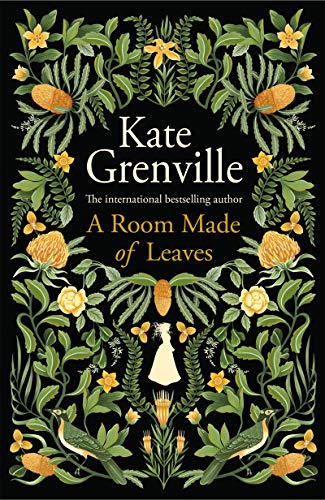
A Room Made of Leaves by Kate Grenville

Canongate| 6 August 2020| 325 pages| e-book| Review copy| 4*

I’m late getting round to reading A Room Made of Leaves, because I am behind with reviewing my NetGalley books. But it was well worth the wait. It’s historical fiction telling the story of the Macarthurs, Elizabeth and John Macarthur, who settled in Australia at the end of the eighteenth century. It’s based on the real lives of the Macarthurs using letters, journals and official documents of the early years of the New South Wales colony. But, although based on fact this is not history, it is fiction, as Kate Grenville makes clear in her Author’s Note at the end of the book (which I read after I read the opening paragraphs of the Editor’s Note at the start of the book).

Description

It is 1788. Twenty-one-year-old Elizabeth is hungry for life but, as the ward of a Devon clergyman, knows she has few prospects. When a soldier, John Macarthur promises her the earth one midsummer’s night, she believes him and with a baby on the way she marries him. Only then he tells her he is to take up a position as Lieutenant in a New South Wales penal colony and she has no choice but to go. Sailing for six months to the far side of the globe with a child growing inside her, she arrives to find Sydney Town a brutal, dusty, hungry place of makeshift shelters, failing crops, scheming and rumours.

All her life she has learned to be obliging, to fold herself up small. Now, in the vast landscapes of an unknown continent, Elizabeth has to discover a strength she never imagined, and passions she could never express. 

Inspired by the real life of a remarkable woman, this is an extraordinarily rich, beautifully wrought novel of resilience, courage and the mystery of human desire.

My thoughts:

I’ve enjoyed all of the books by Kate Grenville that I’ve read so far. Her writing suits me – historical fiction, straight-forward story-telling, with good descriptive writing setting the scenes vividly in their locations. I find her books difficult to put down and they stay in my mind long after I’ve finished reading. This one is no exception.

It begins in Devon where Elizabeth was born and grew up, first with her parents and then after her father died on her grandfather’s sheep farm and then with the local vicar’s family, whose daughter, Bridie is her friend. There she meets John Macarthur, an ensign. When she becomes pregnant they marry and then he tells her he has signed on as a lieutenant in the New South Wales Corps in the penal colony at Sydney Cove. But their married life is not a happy one. John was rash, impulsive, changeable, self-deceiving, and given to embarking on grandiose schemes. He was quick to take offence and was dangerously unbalanced. Over the course of their marriage he was forced to return to England twice, at first for four years and later for nine. During that time Elizabeth made the best of life, carrying on with their sheep farm at Parramatta, where she improved the flock, and helped to establish New South Wales as a reliable supplier of quality wool.

One of the outstanding parts of the book for me is her relationship with William Dawes, an astronomer with the Corps, who was mapping the night sky. He had an observatory near Elizabeth’s farm and it was there that she met some of the local inhabitants and learned a bit of their language and about their ways of life. And it is with William that Elizabeth learns to appreciate not just the night sky, but also the landscape and its flora and fauna and in particular the ‘room made of leaves’ – a private space enclosed on three sides by greenery, a place where you could simply be yourself.

This is a book that captivated me from the opening paragraphs, and there is so much more in it than I have mentioned in this post. It gave me much to think about, in particular bearing in mind the epigraph, an actual quotation from one of Elizabeth’s letters: Believe not too quickly, reminding me that this is a work of fiction. I enjoyed it immensely. And it makes me want to know more about the Macarthurs. I came across Michelle Scott Tucker’s biography: Elizabeth Macarthur: A Life at the Edge of the World and I was delighted to see that Kate Grenville references this book as the standard biography in her Acknowledgements. It is now on my wishlist!

Many thanks to the publishers and NetGalley for my review copy.

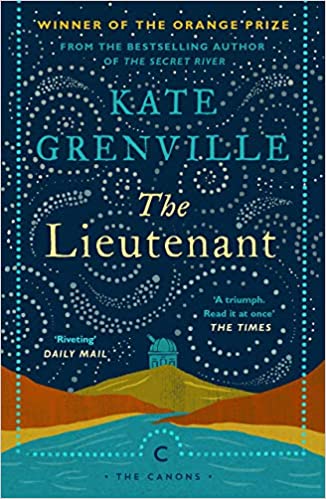
My Friday Post: The Lieutenant by Kate Grenville

Every Friday Book Beginnings on Friday is hosted by Gillion at Rose City Reader where you can share the first sentence (or so) of the book you are reading. You can also share from a book you want to highlight just because it caught your fancy.

I’m currently reading A Room Made of Leaves by Elizabeth Grenville, her latest book, and have nearly finished it. I love her books and as I’ve nearly finished it I was wondering which book to read next and remembered I have one of her earlier books, The Lieutenant still waiting to be read. To my surprise when I opened it this morning I found that it is another book about one of the characters in A Room Made of Leaves. That character is William Dawes, a real person, a soldier in the first days of the Colony of New South Wales.

The Lieutenant  is about Daniel Rooke, based on real events in William Dawes’ life, using his notebooks in which he recorded his conversations with a young girl, Patyegarang, (also in A Room Made of Leaves), in his efforts to learn the language of the indigenous people of Sydney. It is a novel that stays close to the historical events. 

It begins:

Daniel Rooke was quiet, moody, a man of few words. He had no memories other than of being an outsider.

Also every Friday there is The Friday 56, hosted by Freda at Freda’s Voice. *Grab a book, any book. *Turn to Page 56 or 56% on your  ereader . If you have to improvise, that is okay. *Find a snippet, short and sweet, but no spoilers!

  1. Grab a book, any book.
  2. Turn to page 56, or 56% on your eReader. If you have to improvise, that is okay.
  3. Find any sentence (or a few, just don’t spoil it) that grabs you.
  4. Post it.
  5. Add the URL to your post in the link on Freda’s most recent Friday 56 post.

Page 56:

It seemed that the natives did not like the surgeon’s music any more than they had enjoyed his performance with the pistol. Their faces were stony. After a minute they took the two pieces of shield and disappeared into the woods.

Book description:

1788 Daniel Rooke sets out on a journey that will change the course of his life. As a lieutenant in the First Fleet, he lands on the wild and unknown shores of New South Wales. There he sets up an observatory to chart the stars. But this country will prove far more revelatory than the skies above.

Based on real events, The Lieutenant tells the unforgettable story of Rooke’s connection to an Aboriginal child – a remarkable friendship that resonates across the oceans and the centuries.

One Life: My Mother’s Story by Kate Grenville

One Life: My Mother’s Story

Australian author, Kate Grenville has written a beautiful biography of her mother Nance Russell. A book that casts light not only on Nance’s life but also on life in Australia for most of the 20th century. Nance was born in 1912 and died in 2002, so she lived through two World Wars, an economic depression and a period of great social change. Nance wasn’t famous, the daughter of a rural working-class couple who became pub-keepers, but she was a remarkable woman.

Kate’s mother had wanted to write her own story and had left fragments of stories about her ancestors, stories her mother had told her, about her childhood, but most about her adult life up to her mid-forties. (Kate Grenville has used some of the stories of her ancestors in her own novels – such as The Secret River, a wonderful historical novel).

So this biography reads like a novel, but is based on Nance Russell’s memories, making it much more than a factual account of a person’s life. It’s is a vivid portrait of a real woman, a woman of great strength and determination, who had had a difficult childhood, who persevered, went to University, became a pharmacist, opened her own pharmacy, brought up her children, and helped build the family home. She faced sex discrimination and had to sell her pharmacy in order to look after her children at home.

Nance had wanted to be a teacher, but when she said this to her mother she ‘exploded. Over her dead body Nance was going to be a teacher!‘  But her parents thought that pharmacy was ‘good for a girl‘. It was 40  years later, after her own children were grown up, that Nance took an arts degree, then a teaching diploma and a diploma in teaching English as a foreign language. ‘She taught French in schools, taught English to newly arrived migrant children, and ran her own business teaching English to the wives of Japanese business men.

My bare account of Nance’s life doesn’t do justice to this book, in which Kate Grenville brings to life both the good times and the bad times, writing about her mother’s heartache, worries, joys and sorrows, of the hard times during the economic depression, all of it as a whole making a rich and fulfilled life. Very near to the end of the book Kate Grenville writes:

One of her last trips [to Europe] was to Florence, where she stood in front of the frescoes that Dante had seen. A line came into her mind from somewhere in all her reading: Suffering pierces the shield of habit. It was a thought that made sense of the unhappiness she’d known, and also the happiness. She knew that ultimately it didn’t matter what happened to you. In the light of eternity, in the light of all those dead writers in whose work she’d recognised the great truths, only one thing mattered. What other people did was up to them. Your job was to live – as richly and honestly as you could – your one life. (page 246)

Reading Challenges: Non Fiction Reading Challenge 2015 and What’s in a Name? 2015 in the category of a book with a familial relation in the title.