Today I’m linking up with Davida @ The Chocolate Lady’s Book Review Blogfor Throwback Thursday. It takes place on the Thursday before the first Saturday of every month (i.e., the Thursday before the monthly #6Degrees post). The idea is to highlight one of your previously published book reviews and then link back to Davida’s blog.
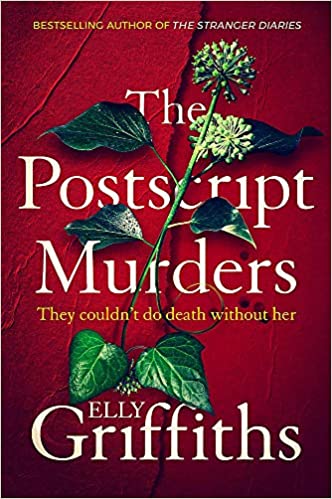
I enjoyed Elly Griffiths’ first DS Harbinder Kaur book, The Stranger Diaries, so I was keen to read the second book, The Postscript Murders. It’s very different, in a much lighter style and I think Elly Griffiths was enjoying herself writing this poking fun at crime fiction writers and the book world, with book bloggers and a literary festival. I really enjoyed it. It’s very readable, cleverly plotted, with interesting and well defined characters
Top Ten Tuesday is a weekly meme created by The Broke and the Bookish and now hosted by Jana at That Artsy Reader Girl. For the rules see her blog
Today the topic is a Freebie and I’ve chosen books Books Set in the 1950s.
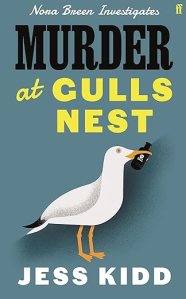
Murder at Gulls Nest by Jess Kidd. The first in a sparkling new 1950s seaside mystery series, featuring sharp-eyed former nun Nora Breen.
After thirty years in a convent, Nora Breen has thrown off her habit and set her sights on the seaside town of Gore-on-Sea. Why there? Why now? Instinct tells her it’s better not to reveal her reasons straight away. She takes a room at Gulls Nest guest house and settles in to watch and listen.
I enjoyed this. It’s quirky with some odd characters. At times it feels like a cosy crime mystery, but it’s also rather dark and foreboding, whereas at other times there’s some humour and also a hint of a romance. The setting is good in a fictional 1950s British seaside town.
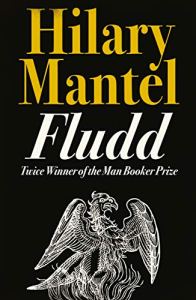
Fludd by Hilary Mantel. I enjoyed this immensely – partly about religion and superstition, but also a fantasy, a fairy tale, told with wit and humour and with brilliant characterisation. It’s one of her earlier novels, set in Fetherhoughton, a drab, dreary town somewhere in a magical, half-real 1950s north England, a preserve of ignorance and superstition. The story centres on Fludd, a young priest who comes to the Church of St Thomas Aquinas to help Father Angwin, a cynical priest who has lost his faith. The Bishop, a modern man, is concerned about Father Angwin and wants to bring him and the Catholic community up to date – so the statues in the church have to go. This has a most disturbing effect on all concerned – not just the church and Father Angwin, but also the the nuns in the convent, and the school, both under the stern eye of Mother Perpetua.
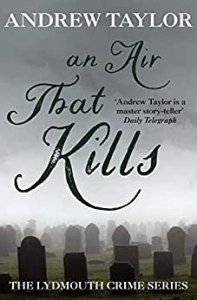
An Air That Kills by Andrew Taylor, the first book in his Lydmouth crime series. The setting is Lydmouth, a small market town on the Welsh/English border in the early 1950s, just after the end of the Second World War. It begins as journalist, Jill Francis arrives to stay with her friends, Philip and Charlotte in Lydmouth, to recover from a bad experience. Also new to the town is Inspector Richard Thornhill, who is finding it difficult to adjust to working in the local police force. Workmen digging out a drain discover a wooden box containing baby’s bones, an old brooch and some scraps of yellowed newspaper. When Major Harcutt, the local historian is consulted he found that there could be a connection to an old murder trial.
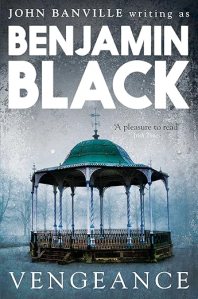
Vengeance by Benjamin Black (a pseudonym used by John Banville), number five in Black’s Quirke Mysteries series set in Ireland in the 1950s. It begins with a suicide, that of Victor Delahaye, a business man who takes his boat out to sea and shoots himself. He had taken his partner’s son, Davy Clancy out to sea with him. The Delahayes and Clancys are interviewed – Mona Delahaye, the dead man’s young and very beautiful wife; James and Jonas Delahaye, his identical twin sons; Marguerite his sister; Jack Clancy, his ambitious, womanizing partner and Sylvia, Jack’s long-suffering wife. Then there is a second death. Why did Victor kill himself and who is the murderer, wreaking vengeance on the families?
The setting is excellent, both in location and time, with the characters wreathed in cigarette smoke, and having to find public telephones for example.
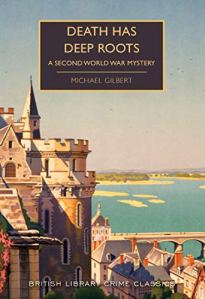
Death Has Deep Roots: a Second World War Mystery by Michael Gilbert. Set in 1950 it’s a mix of courtroom drama, spy novel and an adventure thriller. Victoria Lamartine, a hotel worker, and an ex-French Resistance fighter is on trial for the murder of Major Eric Thoseby, her supposed lover, and alleged father of her dead child. She is the obvious suspect – she was found standing over Thoseby’s dead body in his room at the Family Hotel in Soho, a room that was only accessed by one staircase – making this a variation on a locked room murder mystery. It was written not long after the end of the Second World War and it conveys a vivid impression of what life was like in both France and England, with memories of the war still fresh on people’s minds.
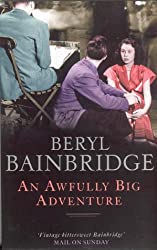
An Awfully Big Adventure, a semi-autobiographical novel set in 1950, based on Beryl Bainbridge’s own experience as an assistant stage manager in a Liverpool. A Liverpool repertory theatre company are rehearsing its Christmas production of Peter Pan. The story centres around Stella, the assistant stage manager. On the face of it this is a straight forward story of the theatre company but underneath it’s packed with emotion, pathos and drama. And it’s firmly grounded in a grim post-war 1950s England, food rationing still in operation and bombed buildings still in ruins overgrown with weeds.
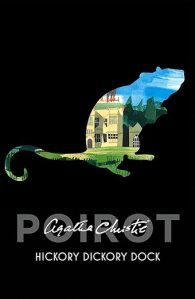
Hickory Dickory Dock by Agatha Christie, a Poirot mystery, first published in 1955. It’s set in a crowded London house, owned by Mrs Nicolstis, a Greek and full of a mixed group of young students from a variety of backgrounds and cultures – from America, West Africa and India as well as an assortment from the British Isles.Items have gone missing and then one of the students commits suicide – or is it murder? And more deaths follow.
Agatha Christie reveals contemporary attitudes (1950s) to race and politics, as the characters’ prejudices come out in their discussions. There are some interesting reflections on crime and the psychology of behaviour.
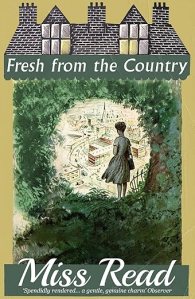
Fresh from the Country by Miss Read, set in the 1950s, thisis a stand-alone novel telling the story of Anna Lacey, a newly qualified teacher, as she spends her first year teaching in Elm Hill, a new suburb in London. It highlights the differences between life in the country and the suburbs, which transported me back to the 1950s, when children were taught in large classes and the pace of life was slower than today. It was a bit disconcerting to read that Anna enjoyed smoking, but then the dangers of cigarettes were not emphasised in those days and many people did smoke.
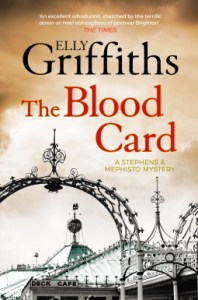
The Blood Card by Elly Griffiths, the third book in the DI Stephens and Max Mephisto series. Known as the ‘Magic Men’ they had been part of a top-secret espionage unit during the War. This book captures the atmosphere of 1953 – a time of great change and optimism. Britain is looking forward with eager anticipation to the new Queen’s coronation. The newspapers and newsreels are full of it and more than half the homes in the country have bought a television in order to watch the coronation live- it was the first British coronation to be broadcast on television, a momentous occasion. But there are fears that an anarchist group is plotting to disrupt the coronation.
I enjoyed the insight into the history of television as Max is sceptical about performing magic on TV thinking the ‘smug grey box’ will be the death of the days of music hall, that magic tricks needed to be performed on stage not in close up with a camera over his shoulder. But he is persuaded to take part in a new show after the coronation.
It’s time again for Six Degrees of Separation, a monthly link-up hosted by Kate atBooks Are My Favourite and Best. Each month a book is chosen as a starting point and linked to six other books to form a chain. A book doesn’t need to be connected to all the other books on the list, only to the one next to it in the chain.
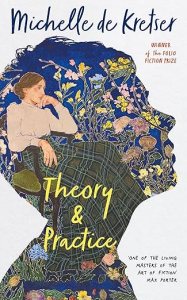
This month we start with Theory & Practice by Michelle de Kretser, the winner of the Stella Prize for Fiction 2025, praised for its innovative structure and exploration of young love, jealousy, and literary inheritance. I’ve not read it but it looks interesting. This is Amazon’s description:
It’s 1986, and ‘beautiful, radical ideas’ are in the air. A young woman arrives in Melbourne to research the novels of Virginia Woolf. In bohemian St Kilda, she meets artists, activists, students – and Kit. He claims to be in a ‘deconstructed’ relationship, and they become lovers. Meanwhile, a dismaying discovery throws her work on ‘the Woolfmother’ into disarray.
Theory & Practice is a mesmerising account of desire and jealousy, truth and shame. It makes and unmakes fiction as we read, expanding our notion of what a novel can contain. Michelle de Kretser, one of Australia’s most celebrated writers, bends fiction, essay and memoir into exhilarating new shapes to uncover what happens when life smashes through the boundaries of art..
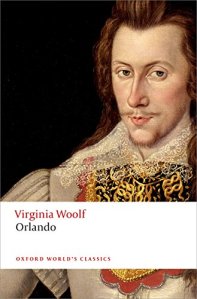
I’ve read some of Virginia Woolf’s books, including my first link: Orlando, a fictionalised biography of Vita Sackville-West, based on her life. It tells the tale of an extraordinary individual who lives through centuries of English history, first as a man, then as a woman. This is a book steeped in history showing how the passage of time had changed both the landscape and climate of England along with its society. There are many vivid passages – such as her description of the ‘Great Frost’ of 1608, when the Thames was frozen for six weeks and Frost Fairs were held on the ice.
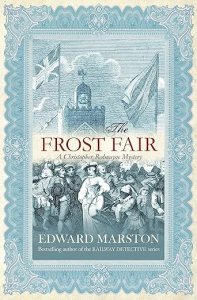
Second link: There have been several Frost Fairs over the centuries. Another one in 1669 is described in Edward Marston’s The Frost Fair, the fourth in the Christopher Redmayne Restoration series about an architect and Jonathan Bale, a parish constable. They are both visiting the fair when one of Bale’s sons gets into trouble on thin ice. They rescue the boy but in the process make a grim discovery – the frozen corpse of a man. The dead man is Jeronimo Maldini, an Italian fencing master who has been missing for some time. Redmayne is inclined to dismiss the case and leave the investigation to Bale; but all that changes when his own brother, Henry Redmayne, is charged with the murder.
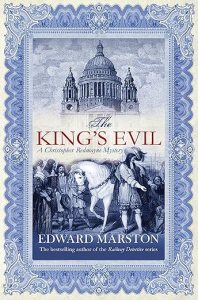
Third link: The first Christopher Redmayne book is The King’s Evil set in London in September 1666, just as the Great Fire of London has begun, eventually devastating a large part of the old medieval City of London. It’s also a murder mystery. Redmayne is working to restore London after the Fire, when he becomes involved in investigating the murder of Sir Ambrose Northcott. whose body was found in the cellars of his partly built new house.
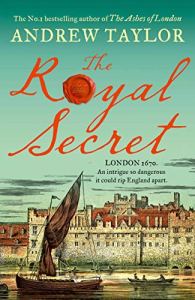
Which links nicely to my fourth link about another architect, Cat (Catherine) Hakesby: The Royal Secret by Andrew Taylor set in 1670. This is the 5th book in the Marwood and Lovett series. After designing a poultry house for the young daughter of Lord Arlington, the Secretary of State, Cat Hakesby (formerly Lovett) gains a commission to design one for Charles II’s sister, ‘Minette,’ the Duchess of Orléans. This is a complicated book, as Marwood is investigating the mysterious death of Richard Abbott, one of Lord Arlington’s men. It’s full of political intrigue, danger and conspiracy, involving witchcraft, poisonings, and tricky international relationships.
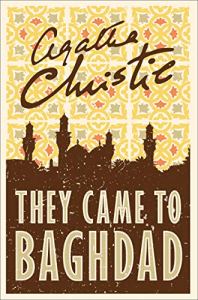
My Fifth link is conspiracy, which brings me to Agatha Christie’s They Came to Baghdad. Set in 1950 this is a story about international espionage and conspiracy. The heads of the ‘great powers‘ are secretly meeting in Baghdad, where if it all goes wrong ‘the balloon will go up with a vengeance.’ And an underground criminal organisation is out to make sure it does go wrong, aiming at ‘total war – total destruction. And then – the new Heaven and the new Earth.’ Victoria Jones, a short-hand typist, a courageous girl with a ‘natural leaning towards adventure’ and a tendency to tell lies gets involved after meeting with a young man, Edward, who is going out to Baghdad the following day to join an archaeological dig.
My sixth link is archaeology in The Night Hawks by Elly Griffiths. Ruth Galloway is now Head of the Department of Archaeology at her old university, the fictional University of North Norfolk. The body of a young man who Detective Chief Inspector Nelson guesses is an illegal immigrant, an asylum seeker, is found on the beach at Blakeney Point. Then a skeleton, buried in a mound of what appears to be Bronze Age weapons, is also discovered on the beach by the group known as the Night Hawks when they were searching for buried treasure. Ruth, however is more interested in the hoard of Bronze Age weapons.
My chain is mostly made up of two of my favourite genres, historical fiction and crime fiction. What is in your chain?
Next month (August 5, 2025), we’ll start with the 2025 Women’s Prize winner, The Safekeep by Yael Van Der Wouden.
Top Ten Tuesday is a weekly meme created by The Broke and the Bookish and now hosted by Jana at That Artsy Reader Girl. For the rules see her blog.
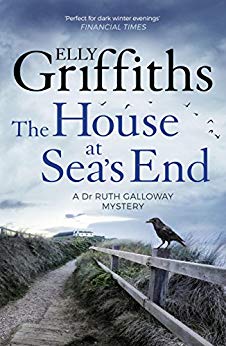
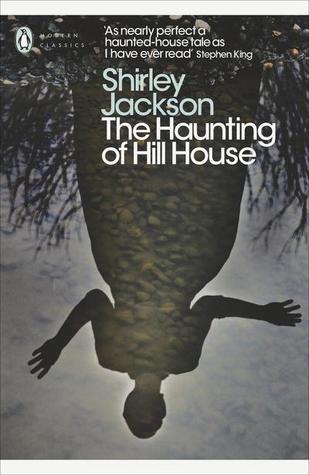
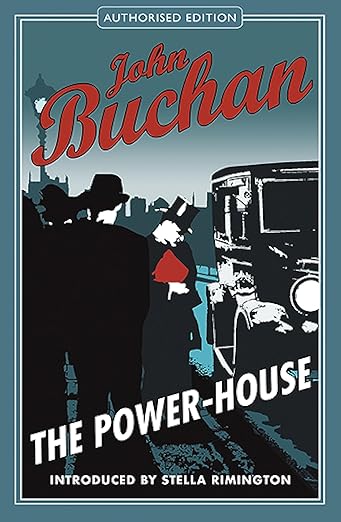
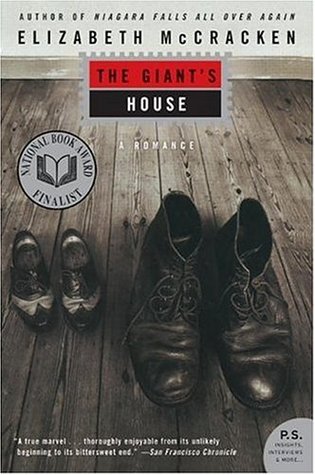
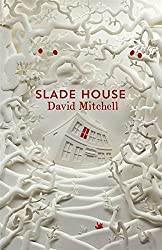
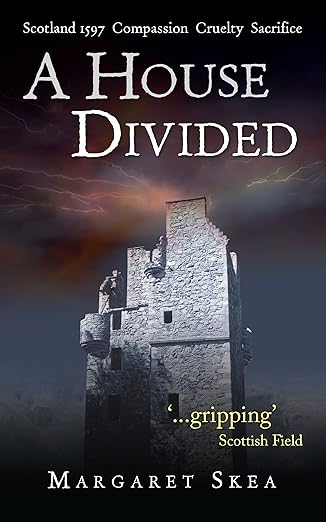
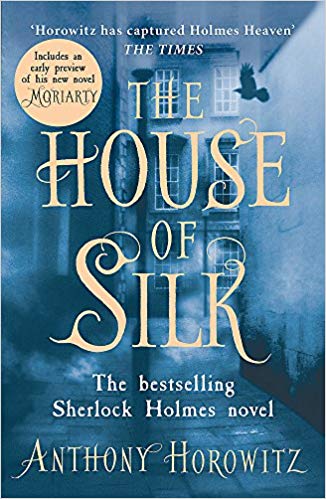
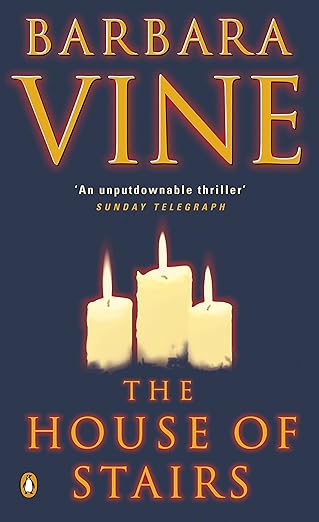
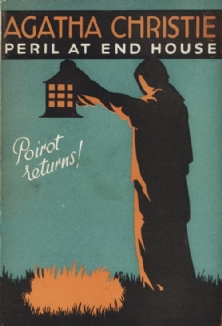
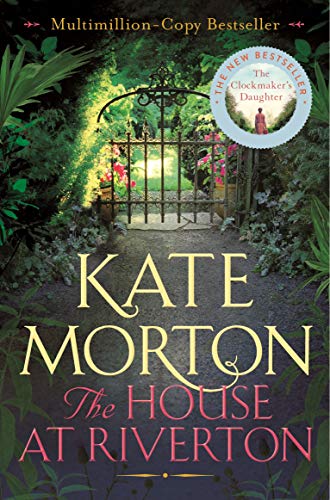
The topic this week is Books with the Word “[Insert Word Here]” in the Title. I decided to choose books with the word HOUSE in the title. These ten books are all books I’ve read.
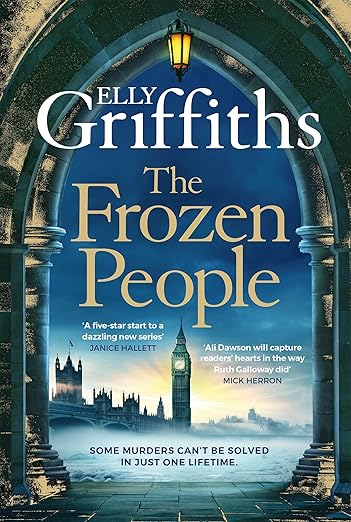
Quercus/ 13 February 2025/ 354 pages/review copy/e-book |Review copy| 5*
The Frozen People is the first in a new series, the Ali Dawson Mysteries, by Elly Griffiths. It’s not like her other books, but it’s still a murder mystery. Ali is fifty, a Detective Sergeant in a cold case team that investigates crimes in a unique way – by travelling back in time, physically, to do their research and interview the witnesses. You do need to suspend your disbelief but that wasn’t hard for me to do, as Elly Griffiths is an excellent storyteller.
I can’t say I understood how Serafina Jones, a physicist has developed a way of moving atoms in space. There are no concrete details about how it’s achieved and it’s all a bit vague. Jones explains it by saying it’s as if you create a space and then fill it with that exact person. The team calls it ‘going through the gate’. No matter, I never understood how Captain James T Kirk and his crew travelled through time and space in Star Trek, but I still loved it. And just as in Star Trek, Ali and her team are instructed not to interfere with historical events, and are required to maintain the timeline, to prevent history from being altered.
Ali and her colleague, Dina, have made a few trips back in time to collect evidence, but for their current case Ali has to go back in time further than she has gone before – to 1850, to the time and place when Ettie Moran, an artist’s model was murdered. She was found in a building used by artists owned by Cain Templeton, an influential man, who was a suspect, although he was never charged with the murder. He was part of a club called The Collectors. To be a member you had to have killed a woman. Cain’s great great grandson, Isaac, the MP Finn works, for is the Secretary of State for Justice and he wants to clear Cain’s name. So, Ali is assigned to the case. So far, so good. But it all starts to go wrong when Ali finds that she can’t get back to the present day it’s her biggest fear. She is stuck in 1850!
I was quickly drawn into this absorbing story. It’s a combination of two genres I love, crime fiction and historical fiction. The main characters come over as real people, the historical facts and the setting are detailed and convincing. And the plot held me captivated throughout.
I’m looking forward to reading more Ali Dawson books in the future.
Many thanks to the publishers for a review copy via NetGalley.
It’s Saturday and time for Stacking the Shelves, hosted by Marlene at Reading Realityand the details are on her blog, as well as a huge amount of book reviews. Why not visit her blog if you haven’t already found it? The gorgeous graphic is also used courtesy of the site.
The idea is to share the books you are adding to your shelves, may they be physical or virtual. This means you can include books you buy in physical stores or online, books you borrow from friends or the library, review books, gifts and of course e-books!
These are all e-books I’ve either bought or acquired for free from Amazon since the beginning of this year:
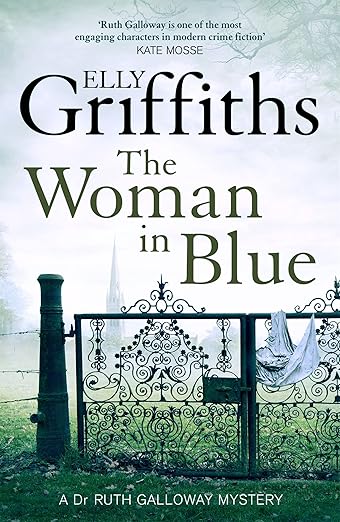
The Woman In Blue: The Dr Ruth Galloway Mysteries 8 by Elly Griffiths. Somehow I missed reading this book when it first came out in 2016, so when I saw it was 99p on Amazon I bought it. It’s book 8 out of 15 in the series. When Ruth’s friend Cathbad* sees a vision of the Virgin Mary, in a white gown and blue cloak, in Walsingham’s graveyard, he takes it in his stride. Walsingham has strong connections to Mary, and Cathbad is a druid after all; visions come with the job. But when the body of a woman in a blue dressing-gown is found dead the next day in a nearby ditch, it is clear that a horrible crime has been committed, and DCI Nelson and his team are called in for what is now a murder investigation.
*I’ve read most of this series. Cathbad is one of my favourite characters.
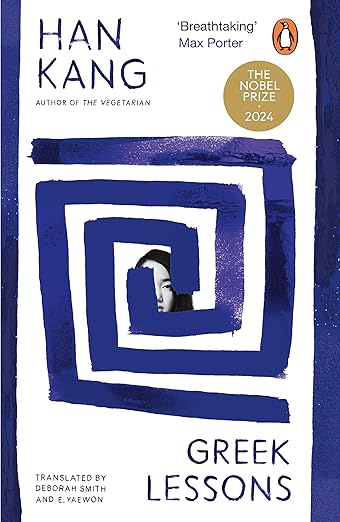
Greek Lessons by Han Kang, the winner of the 2024 Nobel Prize in Literature, a new-to-me author. This is a new translation by Deborah Smith and Emily Yae Won, of the 2011 novel that explores how a teacher losing his sight and a pupil losing her voice form a poetic bond. It is a short book, of just 149 pages narrated by the two unnamed characters, one a woman grieving for her mother and her son, now in the custody of her ex-husband. She is also experiencing the loss of her ability to speak. The other is a man losing his connection to place and family, as well as the loss of his eyesight. They meet when the woman attends his Ancient Greek lessons.
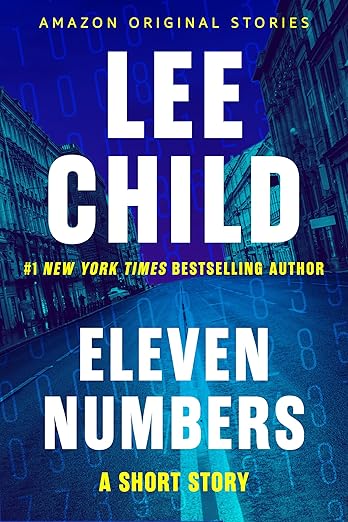
Eleven Numbers, a short story by Lee Child. Nathan Tyler is an unassuming professor at a middling American university with a rather obscure specialty in mathematics—in short, a nobody from nowhere. So why is the White House calling? Summoned to Washington, DC, for a top-secret briefing, Nathan discovers that he’s the key to a massive foreign intelligence breakthrough. Reading between the lines of a cryptic series of equations, he could open a door straight into the heart of the Kremlin and change the global balance of power forever. All he has to do is get to a meeting with the renowned Russian mathematician who created it. But when Nathan crashes headlong into a dangerous new game, the odds against him suddenly look a lot steeper.
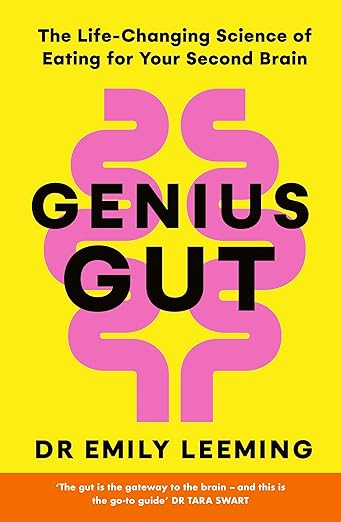
Genius Gut: 10 New Gut-Brain Hacks to Revolutionise Your Energy, Mood, and Brainpower by Emily Leeming. Microbiome scientist and registered dietitian Dr Emily Leeming explains the ground-breaking evidence on the relationship between food and mood, unveiling the powerful gut-brain connection…and exciting new links to your gut bacteria. I downloaded the sample before deciding to buy this book and think it looks very interesting and easy to read for a non-scientist like me. I never thought much about my gut until I had bowel cancer eighteen months ago!
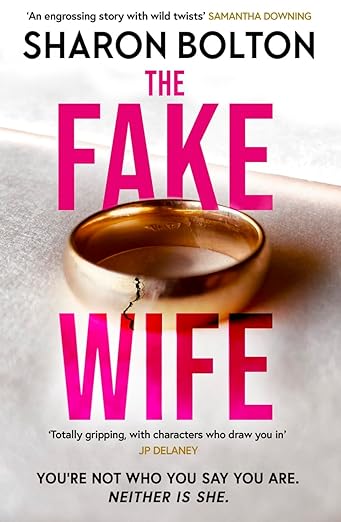
The Fake Wife by Sharon Bolton. I’ve a lot of her books and have enjoyed them all, so this is one I’m really looking forward to reading. It’s described as an absolutely gripping psychological thriller with jaw-dropping twists. Olive Anderson is dining alone at a hotel when a glamourous stranger joins her table, pretending to be her wife. What starts as a thrilling game quickly turns into something dangerous. But as much as the fake wife has her secrets, Olive just might have more . . .



 BooksPlease