Spell the Month in Books – October 2025

Spell the Month in Books is a linkup hosted by Jana on Reviews From the Stacks on the first Saturday of each month. The goal is to spell the current month with the first letter of book titles, excluding articles such as ‘the’ and ‘a’ as needed. That’s all there is to it! Some months there are optional theme challenges, such as “books with an orange cover” or books of a particular genre, but for the most part, any book you want to use is fair game!
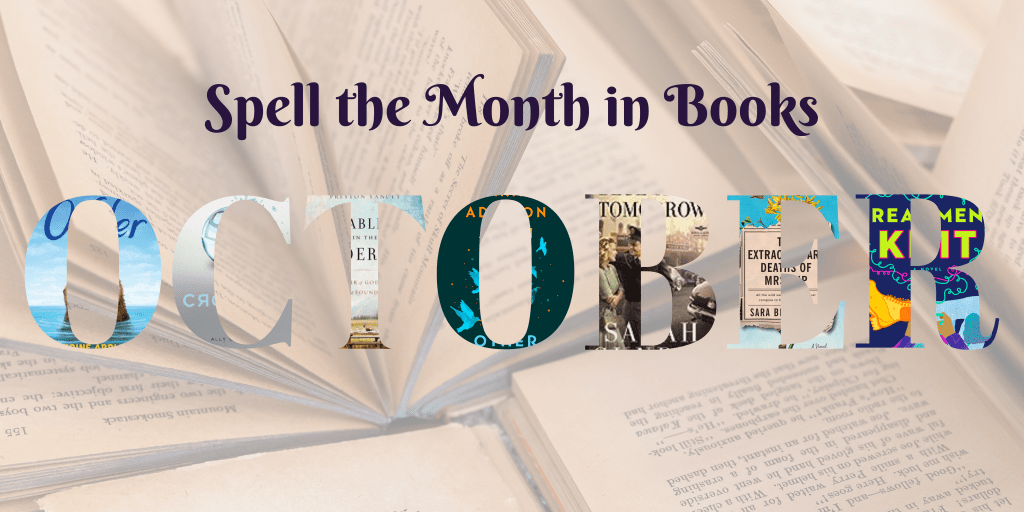
This month’s theme is Trick or Treat: books that you feel strongly about, whether positively or negatively.

I don’t like tricks so my books are all books I’ve enjoyed – real treats!
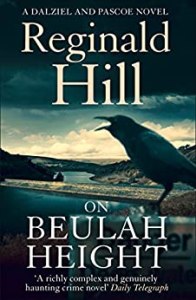
O is for On Beulah Height by Reginald Hill

Reginald Hill’s 17th Dalziel and Pascoe novel, set in a Yorkshire village, Dendale. Three little girls had gone missing from the village one summer. Their bodies were never found, and the best suspect, a strange lad named Benny Lightfoot, was held for a time, then released. Fifteen years later another little girl, Lorraine, aged seven went out for a walk one morning with her dog before her parents got up and didn’t return home, reviving memories of the missing children from fifteen years earlier. It was a case that has haunted Dalziel.

This book is tightly plotted with many twists that made me change my mind so many times I gave up trying to work out who the murderer was and just read for the pleasure of reading. Hill’s descriptive writing is rich and full of imagery. The main characters are fully rounded people and the supporting cast are believable personalities, often described with wry humour.
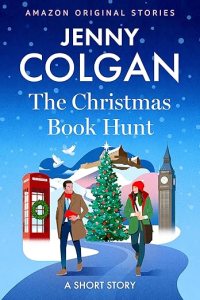
C is for The Christmas Book Hunt by Jenny Colgan.

Mirren is looking for a copy of A Child’s Garden of Verses by Robert Louis Stevenson, a particular one that had belonged to her Great Aunt Violet. It was a special edition, with hand-drawn plates by Aubrey Beardsley and now Great Aunt Violet, who is in hospital seriously ill would love to see the book for Christmas. I loved that book as a child, so this is what made the story irresistible for me. She went to the book town Hay-on-Wye, bookshops in Edinburgh and a secondhand bookshop in Northumberland that sounds very like Barter Books in Alnwick, my favourite bookshop. She bumps into mysterious, charming Theo, who, unbeknownst to her, is searching for the same book for reasons of his own…
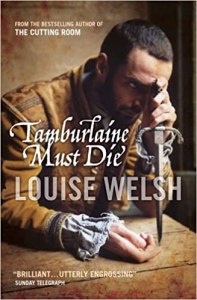

T is for Tamburlaine Must Die by Louise Welsh

It was a real treat to read Tamburlaine Must Die, a short book of only 140 pages, that I read in a day. Weaving together fact and fiction and set in 1593 this is a tense, dramatic story of the last days of Christopher Marlowe, playwright, poet and spy. Accused of heresy and atheism, his death is a mystery, although conjecture and rumours abound. It has an immediacy, that drew me into the late Elizabethan world.
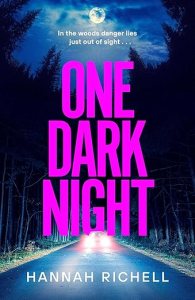
O is for One Dark Night by Hannah Richell

I loved the spooky, tense atmosphere and as soon as I started reading it knew I was going to enjoy this book. The settings are vividly described, the characters come across as real people, and the plot is amazing, multi- layered, with plenty of suspects for the murder and numerous twists and turns to throw me off the scent. For quite a while you don’t even know the name of the victim, who was found in the woods, called ‘Sally in the Wood’. It’s a police procedural centred on Ellie, a pupil at the private school, where her mother Rachel works as the school counsellor and her father, Ben, a detective sergeant who is on the investigation team
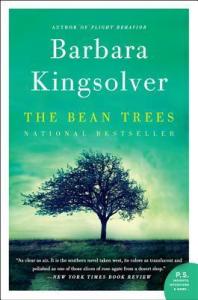
B is for The Bean Trees by Barbara Kingsolver

I loved this book. Barbara Kingsolver writes in such a way that I can easily visualise the scenes, beginning with the opening paragraph in which she describes a tractor tire blowing up, flinging a man up in the air and throwing him over the top of a Standard Oil sign. Taylor (originally called Marietta/Missy) grew up in rural Kentucky. She left home when she had saved enough to buy a car, an old VW. She changed her name to Taylor after the first place where she ran out of petrol, which just happened to be Taylorville. She drove on until the car broke down in the middle of nowhere, on land owned by the Cherokee tribe. And it was there at a garage that an Indian woman abandoned a baby girl in Taylor’s car – she called the baby, Turtle.
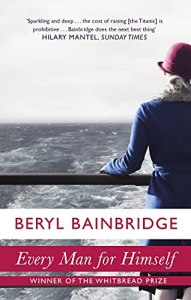
E is for Every Man For Himself by Beryl Bainbridge.

This the story of Morgan’s voyage on the Titanic, divided into four days as he tells it. It’s mainly about the young rich people as they drink and party their way across the Atlantic. Morgan is part of the crowd but he is not rich, and although he has connections, he’s a young American who has to earn his living. Day four is the day the Titanic sank. I could easily imagine what it was like to be a passenger, people rushing about the boat, trying to get on the lifeboats and being separated from friends and family. And the final scenes bring home the reality that it really was a case of every man for himself with the callous attitude towards the steerage passengers, the lack of lifeboats and the disregard of the ice warnings. And so the boat described as unsinkable, sank.
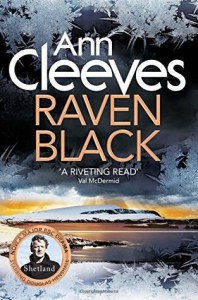
R is for Raven Black by Ann Cleeves, the first in her Shetland series, crime novels set in the Shetland Islands, to the north of mainland Scotland. This is a murder mystery investigated by Inspector Jimmy Perez.

It begins on New Year’s Eve as Magnus Tait is seeing the new year in on his own, until two teenage girls knock on his door to wish him a Happy New Year. A few days later one of the girls is found dead in the snow not far from Magnus’s house, strangled with her own scarf.

The book has a strong sense of location and a terrific atmosphere – the landscape, the sea, the weather, the circling ravens and the spectacle of Up Helly Aa (the Fire Festival), all anchor the story and bring the book to life.

Upcoming Themes

November 1: Nostalgia

December 6: Giftable – Books you would give or would like to receive as a gift

January 3, 2026: New Books – Ones you have received recently or are looking forward to reading or seeing published this year
Spell the Month in Books May 2024: Nature

Spell the Month in Books is a linkup hosted by Jana on Reviews From the Stacks on the first Saturday of each month. The goal is to spell the current month with the first letter of book titles, excluding articles such as ‘the’ and ‘a’ as needed. That’s all there is to it! Some months there are optional theme challenges, such as “books with an orange cover” or books of a particular genre, but for the most part, any book you want to use is fair game!

This month’s theme is Nature. This is a vast topic and looking through my books, both read and those I’ve yet to read, I have lots to choose from, but I only found a few that fit this theme in titles that begin with letters to spell the word MAY. I have read two of these books and the other one is one of my TBRS.

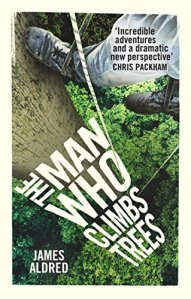
M is for The Man Who Climbed Trees by James Aldred 5*

If you have ever wondered how wildlife/nature documentaries are filmed this book has the answers.

James Aldred, a professional tree climber, wildlife cameraman, and adventurer, explains how he discovered that trees are places of refuge as well as providing unique vantage points to view the world. Trees enthral him, right from the time he first climbed into the canopy of an oak tree in the New Forest. Climbing trees gives him peace within himself and with the world around him. Since he first began climbing trees he has travelled the world climbing many of the world’s tallest trees, filming for the BBC and National Geographic magazine.

The Man Who Climbs Trees is a wonderful book, full of James Aldred’s adventures and his views on life and spirituality. I loved it. His travels brought him into contact with dozens of different religions and philosophies all containing ‘profound elements of truth’ that he respects very much, concluding that ‘spirituality is where you find it’ and he finds it ‘most easily when up in the trees’.

A is for All Among the Barley by Melissa Harrison, a TBR.

I bought this book because I enjoyed Melissa Harrison’s novella, Rain: Four Walks in English Weather, which is about four rain showers, in four seasons, across Wicken Fen, Shropshire, the Darent Valley and Dartmoor. I like the way she writes about the natural world and All Among the Barley looks as though it will bring to life a world governed by the old rural traditions, in an evocation of place and a lost way of life. It’s a novel set in the autumn of 1933 on a farm describing rural traditions as harvest time approaches.

Y is for The Year Without Summer by Guinevere Glasfurd 5*

The volcanic eruption of Mount Tambora on Sumbawa Island in Indonesia in 1815 had a profound and far reaching impact on the world. It led to sudden cooling across the northern hemisphere, crop failures, famine and social unrest in the following year, which became known as The Year Without Summer and in North America as Eighteen hundred and froze to death. But it wasn’t until the mid twentieth century that volcanic eruptions were shown to affect climate change.

Guinevere Glasfurd’s novel illustrates how the impact of the extreme weather conditions affected the lives of six people. They never meet, or know each other, but their stories are intertwined throughout the book in short chapters, giving what I think is a unique look at the events of 1816. I enjoyed all the stories.

The next link up will be on June 1, 2024 when the optional theme will be History.

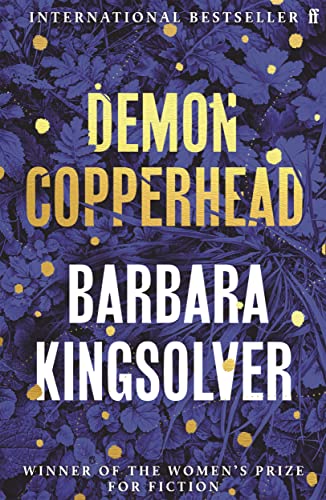
Book Beginnings & The Friday 56: Demon Copperhead by Barbara Kingsolver

Every Friday Book Beginnings on Friday is hosted by Gillion at Rose City Reader where you can share the first sentence (or so) of the book you are reading. You can also share from a book you want to highlight just because it caught your fancy.

I’ve borrowed Demon Copperhead from the library and I’ve started reading it – even though I’m currently in the middle of two other books. As it’s had such good reviews, I’m a bit worried that it won’t live up to all the hype for me. It’s a retelling of David Copperfield, which I read earlier this year.

My Book Beginning:

First, I got myself born. A decent crowd was on hand to watch, and they’ve always given me that much: the worst of the job was up to me, my mother being let’s just say out of it.

Also every Friday there is The Friday 56, hosted by Freda at Freda’s Voice, where you grab a book and turn to page 56 (or 56% of an eBook), find one or more interesting sentences (no spoilers), and post them.

Page 56:

Finally Miss Barks turned round with her elbow on the back of the seat and said let’s talk about where we are going. I’d be staying with a gentleman named Mr Crickson that took kids for short-term only. He had boys there now. The Cricksons had been regular fosters until his wife passed away, and now he just took in the odd hardship case.

So, I’m guessing Miss Barks and Mr Crickson are the equivalent characters of Mr Barkis and Mr Creakle in David Copperfield. I have a feeling I should not approach this book as a retelling of David Copperfield, or I’ll be forever comparing the two and not really reading it as a book in its own right, as it were.

Synopsis:

Demon’s story begins with his traumatic birth to a single mother in a single-wide trailer, looking ‘like a little blue prizefighter.’ For the life ahead of him he would need all of that fighting spirit, along with buckets of charm, a quick wit, and some unexpected talents, legal and otherwise.

In the southern Appalachian Mountains of Virginia, poverty isn’t an idea, it’s as natural as the grass grows. For a generation growing up in this world, at the heart of the modern opioid crisis, addiction isn’t an abstraction, it’s neighbours, parents, and friends. ‘Family’ could mean love, or reluctant foster care. For Demon, born on the wrong side of luck, the affection and safety he craves is as remote as the ocean he dreams of seeing one day. The wonder is in how far he’s willing to travel to try and get there.

Suffused with truth, anger and compassion, Demon Copperhead is an epic tale of love, loss and everything in between.

~~~

What do you think? Have you read it, or are you going to read it? Do you like books that retell classics?

My Friday Post: Book Beginnings & The Friday 56

Every Friday Book Beginnings on Friday is hosted by Gillion at Rose City Reader where you can share the first sentence (or so) of the book you are reading. You can also share from a book you want to highlight just because it caught your fancy.

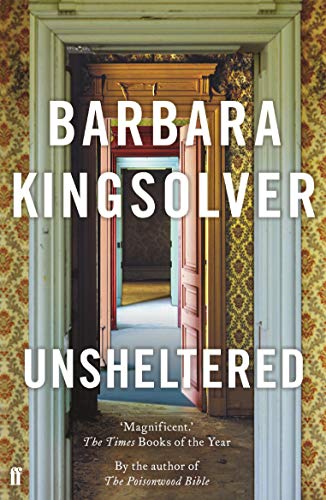
This week I’m featuring one of my library books, Unsheltered by Barbara Kingsolver.

‘The simplest thing would be to tear it down,’ the man said. ‘ The house is a shambles.’

Barbara Kingsolver, who has been one of my favourite authors ever since I read The Poisonwood Bible and these opening sentences certainly drew me into the book.

Also every Friday there is The Friday 56, hosted by Freda at Freda’s Voice. *Grab a book, any book. *Turn to Page 56 or 56% on your  ereader . If you have to improvise, that is okay. *Find a snippet, short and sweet, but no spoilers!

Page 56:

Willa’s mother had always promised Tig would ‘settle out’, but she hadn’t survived to see it, and now Willa wondered who among them would live long enough to stop being flabbergasted by the girl.

Set in Vineland, New Jersey, this is a dual timeline novel, about two families living in the same house – one in the present century and the other in the nineteenth.

From Amazon:

Meet Willa Knox, a woman who stands braced against a world which seems to hold little mercy for her and her family – or their old, crumbling house, falling down around them. Willa’s two grown-up children, a new-born grandchild, and her ailing father-in-law have all moved in at a time when life seems at its most precarious. But when Willa discovers that a pioneering female scientist lived on the same street in the 1800s, could this historical connection be enough to save their home from ruin? And can Willa, despite the odds, keep her family together?

Books from the Mobile Library: June 2021

On Tuesday I borrowed three books from the mobile library, all by authors whose books I’ve read and enjoyed. I often can’t decide which books to borrow, but this week I picked these books off the shelves straight away and knew I wanted to read them:

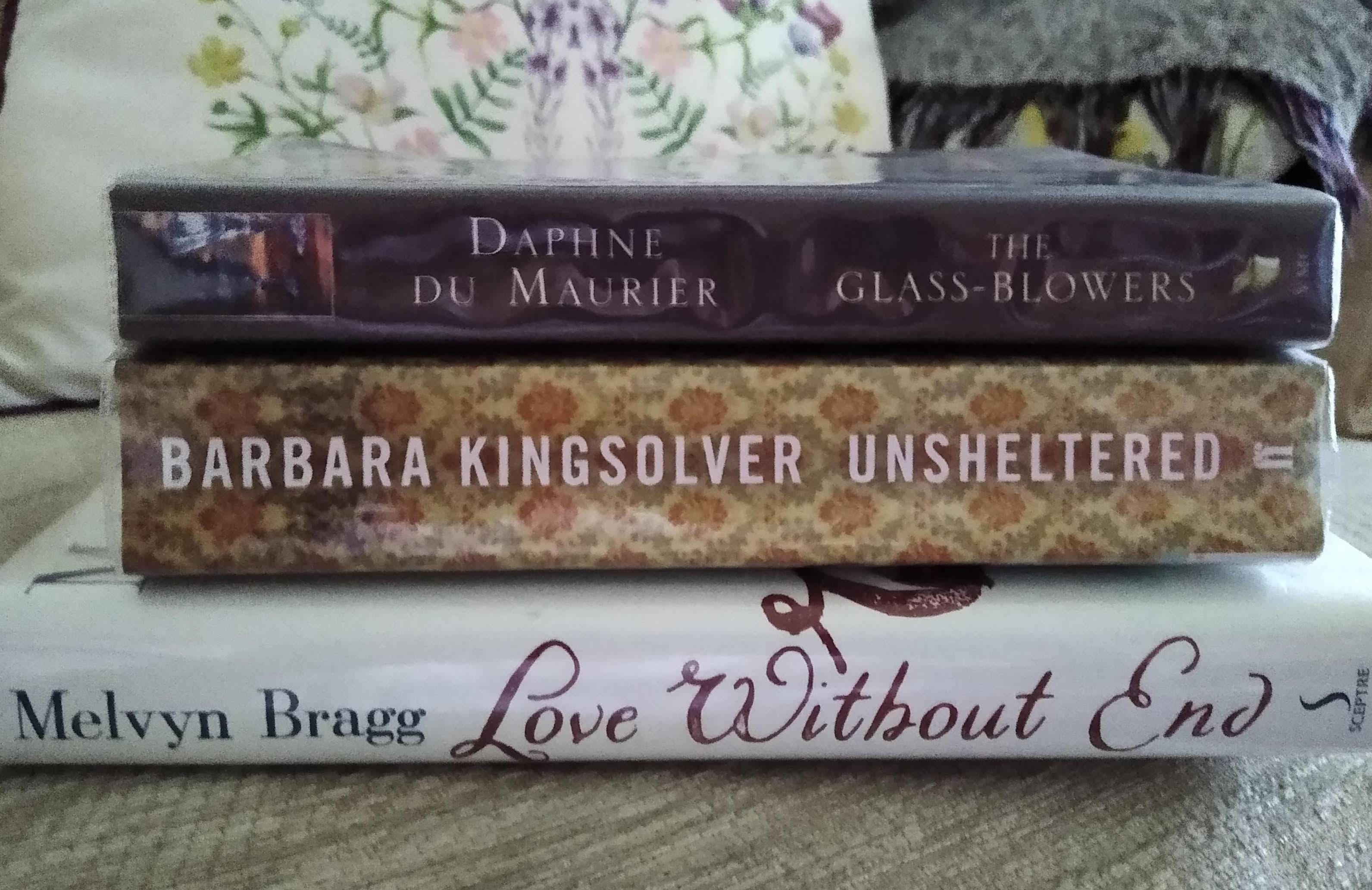
The Glass-Blowers by Daphne du Maurier, one of my favourite authors. The first book of Daphne du Maurier’s that I read was my mother’s copy of Rebecca, which I first read as a young teenager and I loved it. Since then I’ve read most of her books, but there are a few that I haven’t read including this one. It’s a fictionalised reworking of her own family history. She was a descendant of a French master craftsman who settled in England during the French Revolution.

Unsheltered by Barbara Kingsolver, who has been one of my favourite authors ever since I read The Poisonwood Bible. It’s a long book of over 500 pages, so I’m hoping I’ll be able to renew it as I doubt I’ll managed to read it by 13 July. Set in Vineland, New Jersey, this is a dual timeline novel, about two families living in the same house – one in the present century and the other in the nineteenth. Just reading the first two sentences made me to know more – ‘The simplest thing would be to tear it down,’ the man said. ‘The house is a shambles.’

Love Without End: A Story of Heloise and Abelard by Melvynn Bragg. It was reading his Soldier’s Return trilogy that first made me want to read more of his books. This is another novel with a dual timeline. It’s set in Paris in 1117 about the love affair of Heloise and Peter Abelard and nine centuries later about Arthur as he writes a novel about the couple, aiming to bring Heloise out of history’s shadows. I’ve never read the medieval story of Abelard and Heloise, so this will all be new to me.

Have you read any of these books? Are you tempted?

A-Z of TBRs: E-Books: D, E and F

Earlier this year I looked through my TBRs – the ‘real’ books – and as it prompted me to read more of them, I’ve decided to take a fresh look at some of the TBRs on my Kindle. I have a bad habit of downloading books and then forgetting all about them – it’s as though they’ve gone into a black hole.

This is the second instalment of my A – Z of my e-book TBRs – with a little ‘taster’ from each. These are all fiction.

Daisy in Chains

D is for Daisy in Chains by Sharon Bolton (on my Kindle since November 2014.)  I can’t quite believe I haven’t read this book as Sharon Bolton is one of my favourite authors, but there it is – I can see I started it as I’m on page 22. It’s about a convicted murderer, Hamish Wolfe who tries to convince, defence barrister Maggie Rose that he is innocent.

The Times Online, Monday, 8 September 2014

CONTROVERSY IN COURT AS WOLFE TRIAL OPENS

Accused surgeon, Hamish Wolfe, refused to enter a plea on the first day of his trial at the Old Bailey today. In accordance with English law, he will now be tried as if he had pleaded not guilty.

Dressed in a dark grey suit, white shirt and blue tie, Wolfe appeared to be paying close attention to proceedings, but when asked to speak he remained silent, in spite of the judge, Mr Justice Peters, on three occasions, advising him that it was not in his interests to do so. (page 13)

There are letters, emails, and court transcripts as well as newspaper reports and the story is told from multiple viewpoints, told mainly as far as I can see from the little I’ve read, in the present tense, as in the following extract where Sandra, Hamish’s mother is talking to Maggie as she drives her home from the beach:

I came here today to talk to you,’ she says. I didn’t want to come to your house, I didn’t want to intrude, so I thought I’d wait for you at the beach. And then Daisy ran off just before you arrived. It all nearly went so horribly wrong.’

… ‘I drove over this morning,’ Sandra says before she’s even changed gear. ‘And yesterday morning too. I watched your car pull out of your drive. I guessed you were coming here. And that you come at high tide. (page 9)

Exposure

E is for Exposure by Helen Dunmore, on my Kindle since July 2017. It’s set in London in 1960 when the Cold War is at its height, and a spy may be a friend or neighbour, colleague or lover. At the end of a suburban garden, in the pouring rain, a woman buries a briefcase deep in the earth. She believes that she is protecting her family. What she will learn is that no one is immune from betrayal or the devastating consequences of exposure.

Another book written in the present tense, which again might be the reason I stopped reading this book at page 56:

It starts with a whistle of a train, shearing through the cold, thick dust of a November afternoon. Lily Callington hears it as she digs over her vegetable patch at the bottom of her garden in Muswell Hill. For a second she’s startled, because the whistle sounds so close, as if a rain is rushing towards her along the disused railway line at the bottom of the garden. She straightens and listens intently, frowning. the whistle goes through her, touching nerves so deep that Lily doesn’t even know where they are. The children! They aren’t here. She can’t see them, touch them, keep them safe.

Stop it you fool. They are not babies any more. Paul is ten, Sally almost nine. Even Bridget is five. They’re at school. What could be safer than a primary school in Muswell Hill?

(pages 4-5)

Flight Behaviour

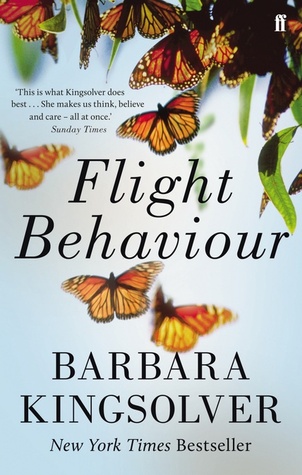
F is for Flight Behaviour by Barbara Kingsolver, on my Kindle since February 2014. On the Appalachian Mountains above her home, a young mother discovers a beautiful and terrible marvel of nature: the monarch butterflies have not migrated south for the winter this year. Is this a miraculous message from God, or a spectacular sign of climate change? Entomology expert, Ovid Byron, certainly believes it is the latter. He ropes in Dellarobia to help him decode the mystery of the monarch butterflies.

Dellarobia is a restless farm wife who gave up her own plans when she accidentally became pregnant at seventeen. Now, after a decade of domestic disharmony on a failing farm, she has settled for permanent disappointment but seeks momentary escape through an obsessive flirtation with a younger man. As she hikes up a mountain road behind her house to a secret tryst, she encounters a shocking sight: a silent, forested valley filled with what looks like a lake of fire.

The flame now appeared to lift from the individual treetops in showers of orange sparks, exploding the way a pine log does in a camp fire when it’s poked. The sparks spiralled upwards in swirls like funnel clouds. Twisters of brightness against gray sky. In broad daylight with no comprehension she watched. From the tops of the funnels the sparks lifted high and sailed out undirected above the dark forest.

A forest fire, if that’s what it was, would roar. This consternation swept the mountain in perfect silence. The air remained cold and clear. No smoke, no crackling howl. she stopped breathing for a second and closed her eyes to listen, but heard nothing. Only a faint patter like rain on leaves. (page 19)

If you’ve read any of these please let me know what you think?